

Phase 1: Empathy (Story-Driven Opening)
안녕하세요! 매일한글 에디터입니다.
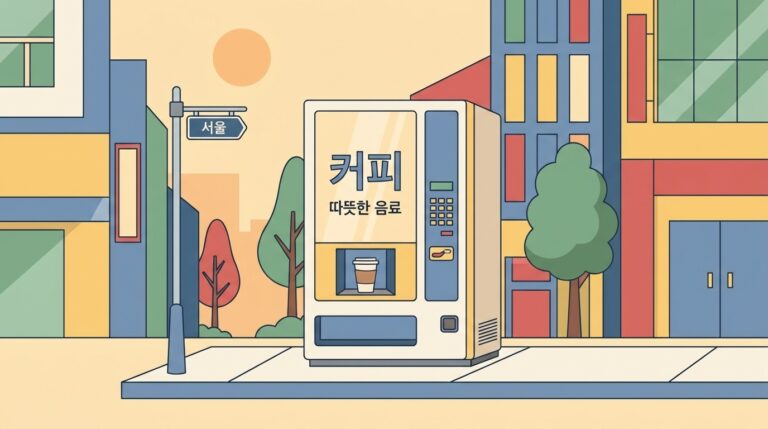
Have you ever stood in front of a classic Korean paper-cup vending machine—perhaps inside a subway station, a university lounge, or outside a roadside rest stop—and noticed something intriguing? Long before the machine finishes pouring the hot mixture of instant coffee, sugar, and creamer, local Koreans already have their hands shoved deep inside the dispensing flap! Their fingers hover millimeters away from the hot paper cup, ready to snatch it the microsecond the last drop falls.
To an outsider, this looks like a risky game of hot-liquid roulette. But to Koreans, it is the ultimate micro-expression of Pali-Pali (빨리빨리 – Hurry, Hurry) culture. It’s not just about saving two seconds; it’s a mindset where waiting passively feels unnatural. If you’ve ever felt bewildered by how fast life moves in Seoul, or wondered how to express your own growing impatience (or ask others to slow down) in natural B2-level Korean, you are in the right place! Based on feedback from hundreds of intermediate learners, this guide unpacks the linguistic and cultural nuances of Korea’s speed-driven etiquette.
Phase 2: Core Expressions Deep Dive
1. 벌써 나왔어요? (Beolsseo nawasseoyo?)
- Pronunciation: [Beol-sseo na-wa-sseo-yo?] (Sounds like “ball-saw na-wah-ssoe-yo”)
- Meaning: “Has it come out already?” / “Is it done already?”
- K-Culture Moment: Used in K-dramas when a character orders food at a fast-paced bunsikjib (snack bar) or gets a vending machine coffee and is amazed by the lightning-fast service.
- Editor’s Insight: 벌써 means “already,” implying pleasant surprise at the speed of an outcome. It flatters the server or highlights the extreme efficiency of Korean automation.
- Situation Spectrum: Casual ✅ | Semi-formal ✅ | Formal ⚠️
- 🤔 Think About It: Does your native culture prioritize speed as a form of hospitality, or is slow, relaxed service considered higher quality?
2. 제가 좀 성격이 급해서요 (Jega jom seonggyeogi geubhaeseoyo)
- Pronunciation: [Je-ga jom seong-gyeo-gi geub-hae-seo-yo] (Sounds like “jeh-ga jom sung-gyuh-gee gub-hae-suh-yo”)
- Meaning: “It’s because I’m a bit impatient / quick-tempered.”
- K-Culture Moment: Said with a self-deprecating laugh when you catch yourself grabbing your cup before the vending machine chime finishes.
- Editor’s Insight: Instead of sounding rude or demanding, framing impatience as a personal personality trait (성격이 급하다) softens any potential awkwardness and builds instant rapport.
- Situation Spectrum: Casual ✅ | Semi-formal ✅ | Formal ⚠️
- 🤔 Think About It: In many Western cultures, calling yourself impatient sounds like a flaw. Why do you think Koreans view admitting 성격이 급하다 as relatable and humanizing?
3. 천천히 하셔도 돼요 (Cheoncheonhi hasyeodo dwaeyo)
- Pronunciation: [Cheon-cheon-hi ha-syeo-do dwae-yo] (Sounds like “chuhn-chuhn-hee ha-syuh-doh dwae-yo”)
- Meaning: “You can take your time” / “No need to rush.”
- K-Culture Moment: Spoken to a convenience store clerk or colleague who is rushing frantically to complete a task for you.
- Editor’s Insight: This is the ultimate polite antidote to Pali-Pali culture. Using 하셔도 돼요 (honorific permission) shows deep empathy (눈치 – Nunchi) for the person working under time pressure.
- Situation Spectrum: Casual ⚠️ | Semi-formal ✅ | Formal ✅
- 🤔 Think About It: How do you balance adapting to a fast-paced culture while maintaining personal calmness?
Phase 3: Textbook Korean vs. Real Native Korean
Situation 1: Waiting for your drink or food
- 📖 Textbook Korean: “음료가 나올 때까지 기다리십시오.” (Please wait until the drink comes out.)
- 🗣️ Real Native Korean: “아직 멀었어요? / 금방 나오죠?” (Is it still going to take long? / It’s coming out soon, right?)
- 💡 Why the difference? Textbook phrasing uses rigid instructional forms. Native Koreans in daily life use lightweight, conversational questions to gauge remaining time without sounding pushy.
Situation 2: Telling someone not to rush
- 📖 Textbook Korean: “서두르지 마십시오.” (Do not rush.)
- 🗣️ Real Native Korean: “천천히 하세요, 안 늦었어요!” (Take your time, we’re not late!)
- 💡 Why the difference? Prohibition commands like -지 마십시오 sound authoritative or cold. Native speakers reassure the other person by adding context like “we’re not late!”
Phase 4: K-Culture Deep Dive & Non-Verbal Manners
4-1. Nunchi & Vending Machine Gestures
When grabbing a drink from a Korean vending machine, non-verbal communication is everything:
* The Stance: Lean forward slightly, bent at the waist, placing one hand over the plastic trapdoor.
* The Finger Tap: While waiting 5 seconds for the coffee powder to mix, tap your index finger on the side of the machine. This signals to anyone waiting behind you that you are ready to vacate the spot immediately.
* The Soft Grab: As soon as the mechanical hatch unlocks, slide your thumb and index finger in to stabilize the cup. Warning: Do not insert your hand while the boiling liquid is pouring to avoid steam burns!
4-2. Cultural Code Analysis: Speed as Consideration
In K-dramas and modern Korean society, Pali-Pali is often misunderstood as pure anxiety. In reality, speed in Korea is considered the highest form of consideration (배려 – Baeryeo). Delivering results quickly means you value the other person’s precious time. From super-fast 5G networks to instant vending machines, fast service shows respect for the community.
Phase 5: Real-Life Roleplay Scenario
Setting: A university rest lounge in Seoul. Learner (You) and Korean friend Minjun (민준) are getting coffee from a traditional paper-cup vending machine.
- Turn 1 (Minjun): (자판기에 동전을 넣으며) 자, 마침 피곤했는데 다방커피 한 잔 마시자.
(Japangee-e dongjeon-eul neoeumyeo) Ja, machim pigonhaenneunde dabang-keopi han jan masija.
“(Putting coins into the vending machine) Here, I was feeling tired anyway, let’s have a cup of traditional sweet coffee.”
🎭 Action: Smiles and presses the light-up button for Sweet Coffee. -
Turn 2 (Learner): 좋다! 그런데 손을 벌써 자판기 안에 넣고 있네?
Joda! Geureonde soneul beolsseo japangee ane neohgo igne?
“Sounds great! But wait, you already put your hand inside the vending machine slot?”
🎭 Action: Points curiously at Minjun's hand crouching in the dispenser. -
Turn 3 (Minjun): (웃으며 손가락을 꼼지락거린다) 아, 이거? 한국인들은 컵 떨어지기 전에 손부터 들어가잖아.
(Useumyeo songarageul kkomjirakgeorinda) A, igeo? Hangukindeureun keop tteoreojigi jeone sonbuteo deureogajana.
“(Laughing, wiggling fingers) Ah, this? Koreans always put their hands in before the cup even falls.”
🎭 Action: Chuckles playfully and taps the hatch flap. -
Turn 4 (Learner): 위험하지 않아요? 뜨거운 커피 나오는데…
Wiheomhaji anayo? Ttegeoun keopi naonde…
“Isn’t that dangerous? Boiling coffee is coming out…”
🎭 Action: Widens eyes with slight concern. -
Turn 5 (Minjun): 타이밍이 생명이지! 타이밍 잘 맞추면 안 데여. 내가 성격이 좀 급해서 그래.
Taiming-i saengmyeong-iji! Taiming jal matchumyeon an deyeo. Naega seonggyeog-i jom geubhaeseo geurae.
“Timing is everything! If you time it right, you won’t get burned. I’m just a bit impatient.”
🎭 Action: Nods proudly as the cup drops with a loud click. -
Turn 6 (Learner): 벌써 나왔어요? 진짜 속도전이네요!
Beolsseo nawasseoyo? Jinjja sokdojeon-ineyo!
“Is it out already? That really is a battle of speed!”
🎭 Action: Claps hands in amazement. -
Turn 7 (Minjun): (커피를 건네며) 자, 마셔봐. 한국에서 공부하려면 이 정도 스피드에 적응해야 해!
(Keopireul geonnemyeo) Ja, masyeobwa. Hanguk-eeseo gongbuhalryeomyeon i jeongdo seupideu-e jeogeunghaya hae!
“(Handing coffee) Here, drink up. To study in Korea, you gotta adapt to this speed!”
🎭 Action: Hands the small steaming paper cup carefully. -
Turn 8 (Learner): 고마워! 다음엔 천천히 뽑아도 돼요, 안 늦었으니까!
Gomawo! Daeumen cheoncheonhi ppobado dwaeyo, an neujeosseunika!
“Thanks! Next time you can take your time dispensing it, we’re not late!”
🎭 Action: Takes the cup with both hands and smiles warmly.
🔀 Interactive Branching Choice
Minjun asks: “너도 다음번에 손 먼저 넣고 기다려볼래?” (Do you want to try putting your hand in first next time?)
- Option A: “네! 저도 완벽한 한국인이 되려면 빨리빨리 연습해야겠어요!”
- Option B: “아니요, 저는 뜨거워서 손가락 데일까 봐 무서워요.”
- Option C: “상관없지만, 커피 떨어지는 소리 들릴 때 넣는 게 안전해요.”
Feedback:
* Option A (Best): Fantastic choice! Shows enthusiastic cultural immersion and humor. Minjun will laugh and welcome you as a true local.
* Option B (Bad): A bit too literal and buzzkill. It breaks the humorous mood of the cultural bonding moment.
* Option C (Risk): Pragmatic and grammatically correct, but slightly overly formal/cautious for a playful banter between friends.
Phase 6: 10-Second Emotion Shadowing Drill
Practice reading these lines aloud with the specified emotion and rhythm breaks (/):
[😊 기쁘고 탄복하며]벌써 / 나왔어요? / 진짜 빠르네요!
(Beolsseo / nawasseoyo? / Jinjja ppareuneyo!)[😅 멋쩍게 웃으며]제가 / 성격이 좀 급해서 / 손이 먼저 갔어요.
(Jega / seonggyeogi jom geubhaeseo / son-i meonjeo gasseoyo.)[🥰 따뜻하고 다정하게]서두르지 말고 / 천천히 하셔도 돼요!
(Seodureuji malgo / cheoncheonhi hasyeodo dwaeyo!)
Phase 7: K-Culture Mini Dictionary
- 빨리빨리 (Pali-Pali) | Hurry-Hurry culture | The societal drive in Korea prioritizing high speed, prompt response, and maximum efficiency in daily tasks.
- 성격이 급하다 (Seonggyeog-i geubhada) | To be impatient / quick-tempered | Frequently used in self-introductions or casual excuses to explain why one rushes things.
- 속도전 (Sokdojeon) | Speed battle / Race against time | Colloquially used when completing tasks rapidly, like registration for classes or grab-and-go vending orders.
- 여유 (Yeoyu) | Leisure / Relaxed mindset | The prized antithesis to Pali-Pali culture; having peace of mind and taking things step-by-step.
Phase 8: Traveler’s Survival Kit
Survival Expressions Top 3
- 천천히 주셔도 돼요. (Cheoncheonhi jusyeodo dwaeyo.) – You can serve me slowly / No rush.
- 금방 나와요? (Geumbang nawayo?) – Will it come out soon?
- 조심하세요, 뜨거워요! (Josimhaseyo, tteugeowayo!) – Be careful, it’s hot!
Editor’s Travel Note
When navigating Korea’s fast-paced public transit and food stops, having real-time navigation is key to staying ahead. Make sure to get the 네이버 지도 앱 다운로드 before your trip to check real-time bus arrivals down to the exact second!
Phase 9: A Step Deeper (Reflective Essay)
Korea’s paper-cup vending machines are disappearing in favor of modern cafes, yet the habit of hovering hands inside the dispenser remains etched in collective muscle memory. It reveals how cultural values transcend technology. What started as an era of rapid industrial development has shaped a unique interpersonal dynamic where speed equals care. However, modern young Koreans are increasingly seeking a balance between efficiency and 여유 (leisure).
💬 Your Turn: Have you ever caught yourself adopting a local habit without realizing it while traveling? Share your experience in the comments below!
Phase 10: Structured FAQ & Common Mistakes
Q: Is putting your hand inside a vending machine actually dangerous in Korea?
A: Standard Korean paper-cup vending machines mix ingredients internally before dropping the cup, but steam or stray drips can occur. It is safer to wait until the auditory ‘beep’ signals completion before reaching in!
Q: How can I tell someone to slow down in Korean without sounding disrespectful?
A: Add soft qualifiers like 천천히 (slowly) along with honorific endings, such as “천천히 하셔도 괜찮습니다” (It is totally fine to take your time).
Q: Is calling someone ‘성격이 급하다’ an insult in Korean?
A: Not necessarily. It is often used humorously or affectionately among friends. However, calling a superior or stranger impatient directly should be avoided.
🚨 Common Mistakes TOP 3
- Mistake 1: Saying “빨리 하세요!” (Do it fast!) to elders or staff.
- Correct Action: Say “천천히 하셔도 됩니다” or politely ask “얼마나 걸릴까요?” (How long will it take?).
- Mistake 2: Confusing 벌써 (already) with 아직 (yet/still).
- Correct Action: Use 벌써 when amazed by speed (“벌써 나왔어요?”) and 아직 when waiting (“아직 안 나왔어요?”).
- Mistake 3: Using imperative -지 마라 commands with acquaintances.
- Correct Action: Soften prohibitions using -아/어 도 돼요 (permission structure).
Phase 11: Action Mission
- 🥉 Bronze Mission: Practice saying “제가 좀 성격이 급해서요” aloud 3 times in front of a mirror with a self-deprecating smile.
- 🥈 Silver Mission: Spot a Pali-Pali habit in a K-drama (e.g., hanging up phone calls instantly, grabbing receipts before printing) and post it on your SNS tagging
#DailyHangul! - 🥇 Gold Mission: Visit a local Korean supermarket or cafe, order a drink, and politely use “천천히 하셔도 돼요” to the clerk.
🎮 K-Culture Mission: Watch an episode of a modern Korean office drama (like Work Later, Drink Now or Incomplete Life) and tally how many times characters finish drinks or tasks at hyper-speed!
Phase 12: Interactive Quiz Challenge
Quiz 1: Situation Judgment
You are at a Korean snack bar and the cook is rushing frantically to prepare your ramen. What is the most polite and natural thing to say?
* A) 빨리 만들어 주세요!
* B) 천천히 하셔도 돼요, 괜찮아요!
* C) 왜 이렇게 늦게 나와요?
🔍 Click to view Answer & Explanation
Correct Answer: B) 천천히 하셔도 돼요, 괜찮아요!
Explanation: Offering reassurance that there is no rush demonstrates empathy (눈치) and helps relieve the worker’s stress.
Quiz 2: Fill-in-the-Blank
“음식이 _____ 나왔네요! 진짜 빨라요!” (The food came out already! That’s really fast!)
* A) 아직
* B) 벌써
* C) 천천히
🔍 Click to view Answer & Explanation
Correct Answer: B) 벌써
Explanation: 벌써 translates to “already” and expresses pleasant surprise at the speed of service.
Quiz 3: True / False Cultural Trivia
Statement: In Korea, putting your hand inside a vending machine slot before the cup drops is considered a formal cultural rule.
* True
* False
🔍 Click to view Answer & Explanation
Correct Answer: False
Explanation: It is not a formal rule, but rather a subconscious reflex stemming from Korea’s widespread Pali-Pali (speed) culture!







