

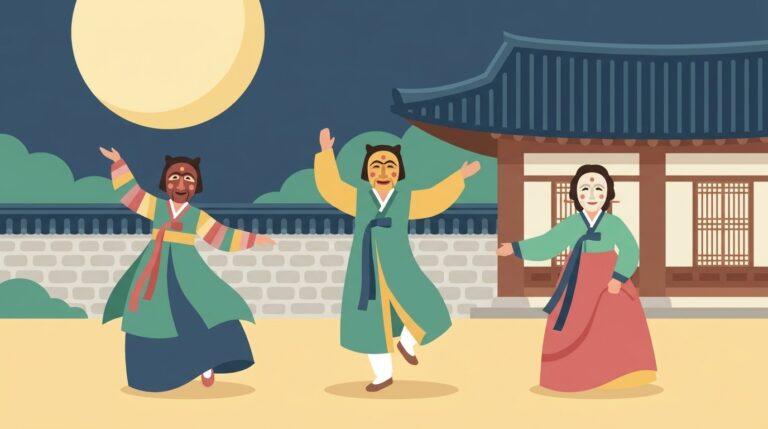
안녕하세요! 매일한글 에디터입니다. Have you ever watched a Korean historical drama like Kingdom or a modern masterpiece like Parasite and felt that beneath the humor lay a sharp, biting commentary on society? If you are analyzing Korean classical literature at the C1 level, you have likely encountered the captivating dual concepts of 해학 (Haehak – Sympathetic Humor) and 풍자 (Pungja – Biting Satire).
Many advanced Korean learners tell us: “I understand individual vocabulary words in classical texts like Chunhyangjeon or Heungbujeon, but I miss the subtlety of the social critiques and the double meanings!” That is a completely normal hurdle. Reading classical literary criticism requires jumping from simple comprehension to deciphering nuanced cultural sarcasm, wordplay (언어유희), and historical grief turned into laughter.
Based on feedback from hundreds of advanced Korean learners, this guide serves as your cultural navigator. By mastering these expressions, you will not only write compelling literary critiques in Korean but also gain profound insight into how Koreans historically used wit to overcome adversity. Let’s dive deep into the art of Korean classical satire!
1. 돌려 까다 (Dollyeo kkada)
- Pronunciation: [Dollyeo-kkada] (Sounds like “Dohl-ryuh-kka-dah” — imagine peeling an onion layer by layer while circling around it!)
- Meaning: Direct translation: “To peel around” / Actual nuance: To roast or critique someone indirectly through subtle sarcasm or allegorical humor.
- K-Culture Moment: In classical mask dances (Bongsan Talchum), the servant Malttugi subtly roasts the corrupt aristocrats (Yangban) using clever play-on-words without openly confronting them.
- Editor’s Insight: While standard satire is expressed as ‘풍자하다’ (Pungja-hada) in formal essays, native speakers and critics informally use ‘돌려 까다’ to describe clever indirect roasts.
- Situation Spectrum: Casual (✅) / Semi-formal (⚠️) / Formal (🚫)
- 🤔 Think About It: Why do you think historical Korean commoners preferred indirect critiques over direct confrontation? How does your culture express subtle rebellion in art?
2. 웃프다 (Utpeuda)
- Pronunciation: [Ut-pEU-da] (A mashup of ‘웃기다’ [funny] and ‘슬프다’ [sad]. Pronounce it like a sigh that turns into a chuckle).
- Meaning: Direct translation: “Funny-sad” / Actual nuance: Bittersweet; tragicomically funny.
- K-Culture Moment: Think of the classic folk tale Heungbujeon. Heungbu gets slapped in the face with a rice scoop by his greedy sister-in-law, yet he licks the rice off his cheek in joy because he is starving.
- Editor’s Insight: This is the core essence of traditional Korean 해학 (Haehak). It doesn’t mock the victim; instead, it finds warmth and resilience in tragic human suffering.
- Situation Spectrum: Casual (✅) / Semi-formal (✅) / Formal (⚠️ – prefer ‘해학적이다’ in academic papers)
- 🤔 Think About It: Can tragedy and comedy coexist in literary criticism in your native language? What is your favorite ‘웃프다’ moment in literature?
3. 뼈 있는 농담 (Ppeyeo inneun nongdam)
- Pronunciation: [Ppyeo-in-neun nong-dam] (Literally “a joke with bones in it” — pronounce ‘ppyeo’ with a sharp, crisp double ‘p’ sound).
- Meaning: Direct translation: “A joke containing bones” / Actual nuance: A seemingly light joke that conceals a sharp, painful truth or critique.
- K-Culture Moment: When a servant in classical novels makes a playful joke about an aristocrat’s ignorance, delivering a hidden socio-political jab.
- Editor’s Insight: In literary analysis, this phrase bridges lighthearted wit (해학) and biting criticism (풍자).
- Situation Spectrum: Casual (✅) / Semi-formal (✅) / Formal (✅)
- 🤔 Think About It: How do literature and media in your home country balance humor with serious socio-political critiques?
Scenario 1: Discussing Aristocratic Satire in Classical Novels
📖 교과서 한국어: 이 고전 소설은 양반 계층의 허위의식을 강하게 비판하고 있습니다. (This classical novel strongly criticizes the false consciousness of the aristocrat class.)
🗣️ 진짜 한국어: 이 작품은 해학적인 정서 뒤에 양반들의 허세와 무능함을 아주 매섭게 돌려 까고 있어요. (Behind its humorous tone, this work is sharply roasting the vanity and incompetence of the aristocrats.)
💡 왜 다를까? Textbook Korean uses formal academic terms like ‘비판하다’ (criticize). However, advanced native critics use expressions like ‘돌려 까다’ to highlight the indirect, artistic technique of classical Korean satire.
Scenario 2: Analyzing Tragicomic Scenes
📖 교과서 한국어: 주인공의 비참한 상황이 슬프면서도 희극적으로 묘사되었습니다. (The protagonist’s miserable situation is depicted tragically yet comically.)
🗣️ 진짜 한국어: 가난한 상황인데도 웃음을 잃지 않는 모습이 정말 웃프면서도 따뜻하게 느껴져요. (Even in dire poverty, the way they don’t lose their smile feels tragicomic yet deeply heartwarming.)
💡 왜 다를까? Expressing complex emotions using portmanteaus like ‘웃프다’ captures the empathetic warmth (해학) inherent in Korean literature better than sterile academic phrasing.
4-1. 눈치 (Nunchi) & Non-verbal Gestures
When analyzing or discussing classical Korean performances like Pansori (epic storytelling) or Talchum (mask dance), non-verbal cues are vital. Traditional performers use playful side-glances (눈짓), exaggerated shrugs, and sudden pauses (추임새 responses from the audience like “잘한다!”) to heighten satire. Recognizing when humor masks sorrow requires fine-tuned Nunchi (cultural perception).
4-2. Cultural Code: The Difference Between 해학 (Haehak) and 풍자 (Pungja)
- 해학 (Haehak): Sympathetic humor rooted in warmth and empathy. It laughs with the victim of hardship (e.g., a poor farmer laughing at his own misfortunes).
- 풍자 (Pungja): Biting, subversive satire targeted at the ruling or oppressor class (e.g., mocking corrupt officials through puppet shows).
Understanding this distinction is the ultimate key to writing high-level C1 Korean literary criticism!
Setting: A university seminar room at Seoul National University. You are discussing classical Korean satire with Professor Min (민 교수님).
- 민 교수님: 이번 조선 후기 판소리계 소설 읽으셨죠? 작가가 양반층을 표현한 방식에 대해 어떻게 생각하시나요?
(Did you read the late-Joseon Pansori novel? What do you think about how the author portrayed the aristocrats?) - You: 네, 교수님! 겉으로는 희극적이지만, 그 속에 뼈 있는 농담이 숨어 있다고 느꼈습니다.
(Yes, Professor! It seems comedic on the surface, but I felt there were jokes with sharp bones hidden inside.) - 민 교수님: 그렇군요. 어떤 구절에서 그런 풍자적 의도가 가장 잘 드러났나요?
(I see. In which passage did that satirical intention stand out the most to you?) - You: 🎭 (책장을 넘기며) 하인이 양반의 권위를 서투른 언어유희로 해체하는 장면입니다.
(Flipping through the book) The scene where the servant deconstructs the noble’s authority using clumsy wordplay. - 민 교수님: 아주 정확해요. 지배층을 직접 비난하지 않고 슬쩍 돌려 까는 기법이지요.
(Very accurate. It’s the technique of roasting the ruling class subtly without direct accusation.) - You: 맞습니다. 가난하고 억압받는 민중의 삶을 다루면서도 슬픔에 빠지지 않고 웃프게 풀어낸 점이 인상적이었습니다.
(Correct. I was impressed by how it handled the impoverished masses’ lives tragipop-comically without sinking into pure sadness.) - 민 교수님: 훌륭한 비평입니다! 한국 고전 문학 특유의 ‘해학’을 아주 잘 이해하고 계시네요.
(Wonderful critique! You truly understand the unique ‘Haehak’ of Korean classical literature.) - You: 🎭 (미소를 지으며) 감사합니다! 고전 작품 속에 담긴 백성들의 해탈과 위트에 깊이 감동했습니다.
(Smiling) Thank you! I was deeply moved by the enlightenment and wit of the common people in classical works.
🔀 Interactive Choice Point
How would you respond if Professor Min asks: “Which modern K-content best inherits this traditional satire?”
* Choice A (Best): “영화 <기생충>이 계급 갈등을 풍자하면서도 블랙 유머로 풀어낸 방식이 조선시대 탈춤과 닮았다고 생각합니다.” (It draws a clear literary parallel between modern cinema and classical mask dance.)
* Choice B (Risk): “그냥 요즘 K-드라마가 다 재밌어서 비슷하다고 봅니다.” (Too vague for a C1 literary discussion; lacks critical insight.)
* Choice C (Bad): “고전 문학은 옛날 일이라 현대 매체와는 전혀 상관이 없습니다.” (Dismisses cultural continuity in literary criticism.)
Practice pronouncing these critical commentary lines out loud with deep emotional resonance!
[😏 겉으로는 웃기지만 씁쓸하게]/ 이 장면은 단순한 희극이 아니라 / 사회의 모순을 / 매섭게 돌려 까는 장면입니다.[🥹 감동적이고 가슴 뭉클하게]/ 비참한 현실 속에서도 / 희망을 잃지 않는 모습이 / 참 웃프면서도 아름답습니다.[🧐 날카롭고 진지하게]/ 가벼운 언어유희처럼 보이지만 / 그 속에는 / 지배층을 향한 뼈 있는 농담이 담겨 있습니다.
- 해학 (Haehak) | Sympathetic Humor | A warm, empathetic form of humor that lightens tragic situations without hostility.
- 풍자 (Pungja) | Satire / Sarcasm | Social critique that uses irony, sarcasm, or ridicule to expose corruption and power abuses.
- 양반 (Yangban) | Joseon Aristocrats | The ruling class in traditional Korea, often the primary target of classical satire.
- 해탈 (Haetal) | Transcendence / Liberation | Overcoming suffering through laughter and spiritual detachment.
Survival Expressions for Literary & Cultural Travelers
- 이 작품의 핵심은 해학인가요, 풍자인가요? (Is the core of this work Haehak or Pungja?)
- Pro Tip: Ask this to museum curators at National Folk Museum of Korea to instantly sound like a literature scholar!
- 고전 문학 번역본 추천해 주실 수 있나요? (Could you recommend a translated volume of classical literature?)
- Pro Tip: Perfect when visiting traditional bookstores in Insadong.
- 탈춤 공연 표는 어디서 예매하나요? (Where can I book tickets for a Korean mask dance performance?)
Editor’s Travel Note
When exploring Korean classical literature and art, check out events via the official 대한민국 구석구석 (Korea Tourism Organization App). Don’t forget to visit the National Museum of Modern and Contemporary Art or National Folk Museum in Seoul for vivid historical context!
In classical Korean literature, laughter was never merely for amusement; it was a survival strategy (해학) and a peaceful weapon of resistance (풍자). Commoners who worked the fields all day would wear masks at night to mock corrupt aristocrats, transforming sorrow into collective healing. Understanding this emotional landscape reveals why modern Korean entertainment excels at blending dark comedy with sharp social commentary.
💬 Your Turn: What is a classic literary work from your country that uses humor to critique society? Leave a comment below using the Korean expression ‘돌려 까다’ or ‘웃프다’!
Q: Can I use ‘돌려 까다’ in an academic university thesis?
A: ‘돌려 까다’ is an informal, vivid expression suitable for speeches, literary blogs, and conversational analysis. In a formal academic paper, replace it with formal terms like ‘간접적으로 비판하다’ (critique indirectly) or ‘풍자하다’ (satirize).
Q: What is the main difference between ‘해학’ and ‘풍자’?
A: ‘해학’ (Haehak) embraces suffering with sympathy and warmth (laughing together), while ‘풍자’ (Pungja) targets bad behavior or authority with sharp irony and critique (laughing at someone).
Q: Why is classical Korean language so full of wordplay (언어유희)?
A: Under strict strict socio-political hierarchies in Joseon, direct insults to aristocrats were punishable. Wordplay allowed commoners to embed secret insults in plain sight.
🚨 Common Mistakes Checklist
- ❌ Mistake: Using ‘풍자’ to describe a lighthearted, sweet romantic joke.
- ✅ Correct Action: Use ‘해학’ or ‘유머’ instead. Save ‘풍자’ for socio-political criticism!
- ❌ Mistake: Pronouncing ‘웃프다’ as [ut-seu-peu-da].
- ✅ Correct Action: Pronounce it smoothly as [웃프다 / Ut-peu-da].
- ❌ Mistake: Thinking ‘돌려 까다’ means physically peeling fruit in a circle.
- ✅ Correct Action: Remember it metaphorically means roasting someone indirectly!
- Bronze Mission: Write one Korean sentence using ‘웃프다’ to describe a funny-sad situation you experienced this week.
- Silver Mission: Post a short review of a K-drama or Korean film on Instagram/X using the phrase ‘뼈 있는 농담’ and tag
#DailyHangul! - Gold Mission: Read a short excerpt from Heungbujeon or Chunhyangjeon in Korean and identify 1 example of 해학 and 1 example of 풍자.
🎮 K-Culture Mission: Watch the movie Parasite or The King and the Clown (왕의 남자) this weekend. Spot the moments where characters use humor to ‘돌려 까다’ (indirectly roast) authority figures!
Quiz 1: Situation Judgment
Q: Next time you read a classical Korean novel where a poor peasant laughs off his broken roof while telling a witty joke, what literary concept is best displayed?
A) 풍자 (Pungja)
B) 해학 (Haehak)
🔍 Click to See Answer & Explanation
Answer: B) 해학 (Haehak)
Explanation: The peasant is taking a tragic, miserable situation and enduring it with warm humor rather than attacking someone. This is the classic definition of Haehak!
Quiz 2: Fill in the Blank
Q: “겉으로는 웃기지만 지배층을 향한 ______ 이/가 담겨 있는 대사네요.”
A) 뼈 있는 농담
B) 맛있는 음식
🔍 Click to See Answer & Explanation
Answer: A) 뼈 있는 농담
Explanation: ‘뼈 있는 농담’ means a joke that contains a sharp truth or socio-political criticism inside it.







