

Phase 1: 공감 (스토리 몰입형 오프닝)
안녕하세요! 매일한글 에디터입니다. 👋
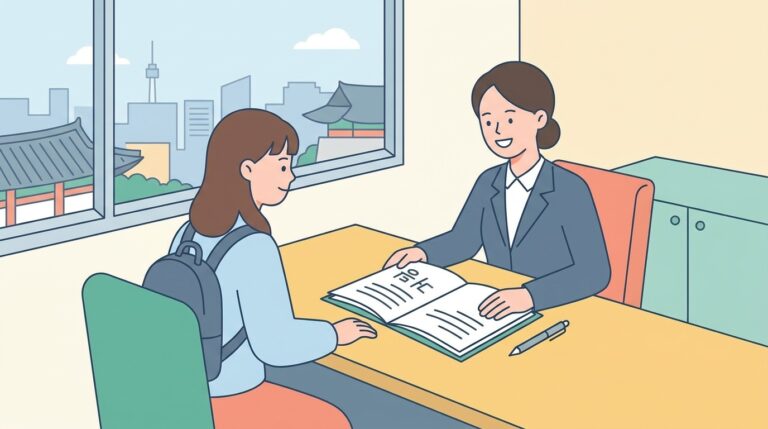
Imagine this: You’ve finally found your dream studio apartment in Seongsu-dong! It’s sunlit, spacious, and right next to your favorite bakery. Excitedly, you sit down with the real estate agent (부동산 중개인) to sign the contract. Just as you reach for your pen, the agent slides a intimidating, official-looking printout across the desk packed with dense legal text.
“등기부등본(Deung-gi-bu Deung-bon) 먼저 확인하셔야죠.”
Suddenly, cold sweat drops. Is this place safe? Does the landlord actually own it? Is there a hidden mortgage that could eat up your deposit?
Reading a Korean Certified Register of Title (등기부등본) is notorious for confusing even native Koreans! However, mastering this process is your ultimate shield to safeguard your hard-earned deposit (보증금). Based on feedback from hundreds of global residents in Seoul who successfully secured their homes, this guide breaks down legal jargon into clear, practical language. Let’s turn you into a confident, scam-proof house hunter today!
Phase 2: 핵심 표현 3선 심층 분석
1. 근저당권이 설정되어 있어요 (Geun-jeor-dang-gwon-i seol-jeong-doe-eo iss-eo-yo)
- Pronunciation: [gun-juh-dang-gwon-ee seol-jung-doe-aw-iss-aw-yo] (Sounds like “Gun-Jaw-Dang” – imagine a security guard holding a gun at the jaw of a debt collector!)
- Meaning: “There is a maximum legal mortgage/collateral set on this property.”
- K-Culture Moment: Seen in housing dramas where tenants panic after discovering the landlord took out a bank loan using the house as collateral.
- Editor’s Insight: ‘근저당권’ (Maximum Mortgage) tells you how much money the owner borrowed from the bank. If the house goes to auction, the bank gets paid before you unless you take safety measures!
- Situation Spectrum: Casual ⚠️ | Semi-formal ✅ | Formal ✅
- 🤔 Think About It: In your home country, do tenants check public register records directly, or is it strictly handled by lawyers?
2. 갑구랑 을구를 확인해야 돼요 (Gap-gu-rang Eul-gu-reul hwak-in-hae-ya dwae-yo)
- Pronunciation: [gap-goo-rang eol-goo-reul hwag-in-hae-ya dwae-yo]
- Meaning: “You must check both Section A (Gap-gu) and Section B (Eul-gu).”
- K-Culture Moment: When a savvy friend accompanies you to a real estate agency and points straight to the paper: “갑구랑 을구부터 보자!”
- Editor’s Insight: ‘갑구’ (Section A) shows who owns the house (check if the ID matches your contract partner!). ‘을구’ (Section B) shows debts and mortgages (check bank loans!).
- Situation Spectrum: Casual ✅ | Semi-formal ✅ | Formal ✅
- 🤔 Think About It: ‘갑’ and ‘을’ originate from traditional East Asian order rankings. Why do you think modern legal forms still retain these letters?
3. 선순위 채권이 얼마예요? (Seon-sun-wi chae-gwon-i eol-ma-yeo-yo?)
- Pronunciation: [seon-soon-wee chae-gwon-ee eol-mah-yeh-yo?]
- Meaning: “How much is the senior debt/prior lien on this property?”
- K-Culture Moment: Asking this question instantly changes the agent’s tone—they realize you are a pro who cannot be fooled!
- Editor’s Insight: ‘선순위’ means “priority right.” If the total senior debt plus your deposit exceeds 70-80% of the house’s market price, it’s considered risky!
- Situation Spectrum: Casual 🚫 | Semi-formal ✅ | Formal ✅
- 🤔 Think About It: How does knowing financial metrics empower foreign tenants in unfamiliar legal systems?
Phase 3: 교과서 한국어 vs 진짜 한국어
Situation 1: Checking if there is any debt on the house
- 📖 교과서 한국어: “이 부동산에는 은행 대출이 존재하지 않습니다.”
(There is no bank loan present on this real estate property.) - 🗣️ 진짜 한국어: “여기 집 융자 하나도 없어서 깨끗해요!”
(This house has zero loans, so it’s squeaky clean!) - 💡 왜 다를까? Agents and locals rarely use ‘대출 존재’ in conversation. They prefer the shorter term ‘융자’ (mortgage/loan) and the slang adjective ‘깨끗하다’ (clean) to indicate that a register has no legal claims.
Situation 2: Verifying the identity of the landlord
- 📖 교과서 한국어: “등기부상 소유자와 계약자의 신분증을 대조하십시오.”
(Compare the photo ID of the contractor with the owner on the register.) - 🗣️ 진짜 한국어: “등기부 임대인이랑 계약자 명의 진짜 똑같은지 꼭 대조해보세요.”
(Make sure the registry owner and the leaseholder name are 100% identical.) - 💡 왜 다를까? Native speakers emphasize ‘명의’ (registered name) and add emphatic adverbs like ‘진짜’ or ‘꼭’ when warning friends about housing safety.
Phase 4: K-Culture 딥다이브 & 비언어적 매너
4-1. 눈치(Nunchi) & Non-verbal Manners at the Real Estate Office
- The Issue Date Hawk Eye: When the agent hands you the document, look at the bottom right corner immediately. Make sure it was issued today (발행일자). Politeness tip: Gently place your finger on the date and nod while asking, “오늘 날짜로 떼어주신 거 맞죠?” (You printed this with today’s date, right?)
- Pen and Highlighting Etiquette: Never mark the original contract before confirming details. Instead, use a pencil or point with your index finger while maintaining steady eye contact when asking about loans.
4-2. Culture Code Analysis: The Jeonse (전세) & Deposit Safety Culture
In Korea’s unique Jeonse (lump-sum deposit) and Wolse (monthly rent with heavy deposit) systems, your deposit can equal years of savings. Because property values fluctuate, Koreans view checking the Deung-gi-bu Deung-bon not as distrust, but as basic adult responsibility. Agents respect clients who ask precise legal questions!
Phase 5: 실전 롤플레이 시나리오
Setting: Real Estate Office in Hongdae. Agent Kim (김 중개사) is reviewing the registry with Alex (Foreign Tenant).
- 김 중개사: Alex 씨, 마음에 드신 방 등기부등본 지금 출력했어요. 한번 보세요.
(Alex, I just printed the register for the room you liked. Take a look.) - Alex: 🎭 (Taking the document carefully) 아, 감사합니다. 오늘 날짜로 뽑으신 거 맞죠?
(Ah, thank you. This was printed today, right?) - 김 중개사: 그럼요! 오늘 오전 10시 발행이에요. 여기 갑구 보시면 소유자 이름 나와요.
(Of course! Issued at 10 AM today. If you look at Section A here, the owner’s name appears.) - Alex: 🎭 (Comparing ID card with Section A) 네, 집주인 성함이랑 주민번호 앞자리가 일치하네요. 그럼 을구는요?
(Yes, the landlord’s name and birthday match the ID. What about Section B?) - Alex: 🎭 (Pointing to Section B) 어? 여기 근저당권설정 채권최고액 1억 원이라고 적혀있는데, 이건 뭐예요?
(Huh? It says Maximum Debt Legal Claim 100 million KRW here. What is this?) - 김 중개사: 아, 이건 집주인분이 집 살 때 받은 은행 대출이에요. 건물 시세가 5억이라 안전해요.
(Ah, that’s a bank loan from when the owner bought the house. The market value is 500 million, so it’s safe.) - Alex: 🎭 (Calculating calmly) 그래도 제 보증금이 1억 5천인데… 선순위 채권이랑 합치면 시세의 50%가 넘어가는데요?
(Still, my deposit is 150 million… Combined with prior debt, it exceeds 50% of market value?) - 김 중개사: 오, Alex 씨 완전 전문가시네요! 그럼 잔금 치를 때 대출 상환하는 조건으로 특약 넣어드릴게요.
(Wow, Alex, you’re a real expert! I’ll add a special condition to pay off the loan upon final payment.)
🔀 인터랙티브 분기점: What should Alex say next?
- Option A: “네, 알겠습니다. 특약 문구 작성해 주세요.” (Yes, understood. Please draft the special clause.)
- Option B: “특약 적어도 불안해요. 그냥 계약 안 할래요.” (Even with a clause I’m anxious. I won’t sign.)
- Option C: “대출 상환 영수증을 잔금일날 직접 확인하고 싶어요.” (I want to verify the loan repayment receipt myself on final balance day.)
Feedback:
* 🟢 Best (Option C): Perfect! Adding a special contract clause (특약) AND verifying the bank payoff receipt on final payment day guarantees complete protection.
* 🟡 Risk (Option A): Good, but incomplete. A written clause is binding, but without checking the actual payment receipt on move-in day, risk remains.
* 🔴 Bad (Option B): Too abrupt. In Korea, reasonable debt can be resolved safely via special contractual conditions without losing a good house.
Phase 6: 10초 감정 섀도잉 드릴
Practice these lines out loud with exact rhythm and emotional nuance!
[🧐 Thorough & Cautious]
등기부 / 발행일자가 / 오늘 날짜 맞죠? / 꼭 확인하고 싶어요.
(Deung-gi-bu / issue date / is today’s date right? / I definitely want to check.)-
[😮 Surprised yet Sharp]
을구에 / 근저당권이 / 생각보다 높은데요? / 선순위 채권이 얼마예요?
(In Section B / the mortgage claim / is higher than expected? / How much is the senior debt?) -
[😎 Confident & Decisive]
잔금일에 / 대출금 상환하는 조건으로 / 특약 작성해 주세요!
(On final balance day / under the condition of loan repayment / please write a special clause!)
Phase 7: K-Culture 미니 사전 (핵심 키워드 4개)
- 등기부등본 (Deung-gi-bu Deung-bon) | Certified Register of Title
- Practical Use: The official government document detailing ownership, mortgage history, and legal rights of a property.
- 확정일자 (Hwak-jeong-il-ja) | Fixed Date Stamp
- Practical Use: An official stamp received at the local community center (주민센터) that gives your deposit legal priority status (대항력) in case of bankruptcy.
- 전세권설정 (Jeon-se-gwon Seol-jeong) | Right of Registered Lease
- Practical Use: Registering your tenancy directly on Section B of the house record for maximum legal protection (often used for high deposits).
- 융자 (Yung-ja) | Loan / Mortgage
- Practical Use: Spoken term for real estate loans. Clean properties are described as “융자 없는 집” (house with zero mortgage).
Phase 8: 여행자를 위한 생존 키트 / 장기 체류자 필살기
Top 3 Survival Expressions
- “등기부등본 최신으로 출력해 주세요.” (Please print the latest registry document.)
- “집주인 신분증이랑 등기부 명의가 동일한가요?” (Does the landlord’s ID match the name on the registry?)
- “특약 사항에 대출 상환 조건 넣어주세요.” (Please include the loan payoff condition in the special terms.)
Editor’s Travel & Living Note
You don’t have to rely solely on real estate agents! You can check any home’s registry yourself online. Go to the 대법원 인터넷등기소 웹사이트 (Supreme Court Internet Registry) to issue official copies for just 1,000 KRW using your credit card.
Phase 9: “한 발 더 깊이” (생각 질문)
In Korean society, real estate contracts reflect high legal transparency balanced with interpersonal trust (정 and 신뢰). Historically, verbal agreements held weight, but modern urban living has made meticulous documentary proof essential. Asking deep questions about debt does not offend reputable landlords—it signals that you respect the value of money and legal responsibility.
💬 Your Turn: Have you ever signed a rental agreement in a foreign country? What was the most surprisingly difficult document you had to verify?
Phase 10: FAQ & 오해 방지
Q: Can a proxy (like a family member of the landlord) sign the lease instead?
A: Yes, BUT you must see 3 things: 1) Power of attorney (위임장), 2) Landlord’s official seal certificate (인감증명서), and 3) Make sure you transfer rent strictly to the landlord’s own bank account, never the proxy’s account!
Q: Is Section B (을구) empty always a good thing?
A: Yes! If Section B is blank (표시할 사항이 없음), it means there are zero mortgages or legal encumbrances registered on the property.
Q: What should I do right after signing the contract and moving in?
A: On your move-in day, immediately register your relocation (전입신고) and get the Fixed Date Stamp (확정일자) at the local Community Center (주민센터) or online via Govt24.
🚨 흔한 실수 (Common Mistakes) TOP 3
- Checking a register printed yesterday or last week.
- Correct Action: Always insist on seeing a registry printed on the exact day of contract signing and final balance payment.
- Sending the deposit to an agent’s or spouse’s bank account.
- Correct Action: Only transfer money to the account name that 100% matches Section A (갑구) on the registry.
- Ignoring small loans listed under 을구.
- Correct Action: Calculate (Senior Debt + My Deposit) / Market Price. If this ratio exceeds 70%, request loan repayment conditions or find another home.
Phase 11: 액션 미션 & 참여 유도
- 🥉 Bronze Mission: Read today’s 3 key expressions aloud 3 times using the Shadowing Drill pauses.
- 🥈 Silver Mission: Visit the 대법원 인터넷등기소 웹사이트 and try searching for your current housing address!
- 🥇 Gold Mission: Roleplay the dialogue in Phase 5 with a language partner or write your own hypothetical property check scenario in Korean in the comments below!
🎮 K-Culture Mission: Watch a scene from a real estate-themed K-Drama (like Monthly House) and spot if characters check their property documents!
Phase 12: 인터랙티브 퀴즈 챌린지
Q1. Situation Quiz
You are reviewing Section A (갑구) of the register. What are you primarily verifying here?
* A) Bank loans and mortgages
* B) Actual legal owner’s name and identity
* C) The real estate agency’s license number
🔍 Click to reveal Answer & Explanation
Answer: B
Explanation: Section A (갑구) contains ownership records. Mortgages and loans are recorded in Section B (을구).
Q2. Fill-in-the-Blank
To protect your deposit legally on move-in day, you must receive a _______ (Fixed Date Stamp) at the community center.
🔍 Click to reveal Answer & Explanation
Answer: 확정일자 (Hwak-jeong-il-ja)
Explanation: A fixed date stamp gives your tenancy legal standing against future debt claims.
Q3. True or False
“If Section B (을구) has ‘근저당권설정’, you must immediately cancel the contract without discussion.”
🔍 Click to reveal Answer & Explanation
Answer: False
Explanation: A mortgage is common in Korea. If the debt-to-value ratio is low or if you add a special contract clause (특약) requiring loan repayment upon final balance, it is completely safe to proceed.







