

Phase 1: Empathy & Storytelling Opening
안녕하세요! 매일한글 에디터입니다.
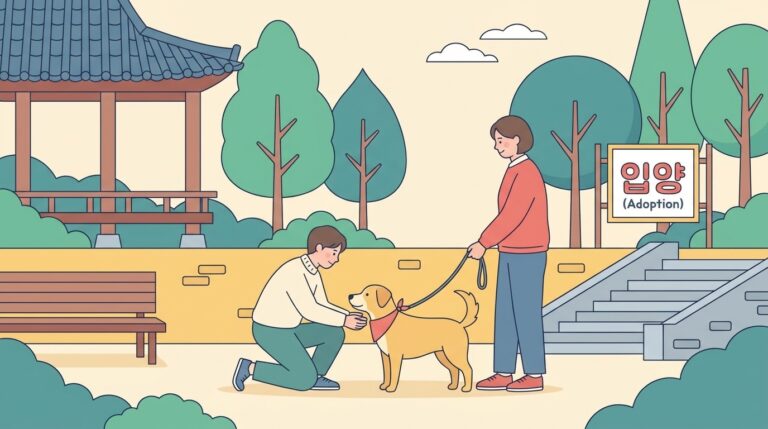
Have you ever walked past a brightly lit pet shop window in Gangnam or Hongdae, filled with tiny puppies, and wondered how the pet culture in South Korea is actually shifting behind the scenes? Recently, a popular Korean celebrity shared a heartwarming story on a variety show about adopting a mixed-breed rescue dog from a local shelter instead of purchasing a purebred puppy from a retail store. The video immediately went viral, igniting an intense public discussion across Korean social media regarding ‘번식장’ (puppy mills), retail pet shop bans, and the ethical responsibility of pet guardianship.
For advanced Korean learners at the C2 level, discussing complex social topics like animal welfare and legislative policy isn’t just about knowing basic nouns like ‘개’ (dog) or ‘고양이’ (cat). It requires a sophisticated grasp of policy vocabulary, nuanced debate markers, and culturally resonant slogans. Many of our C2 learners tell us they struggle to express systemic critiques or policy nuances in Korean without sounding overly academic or unnatural. Today, based on feedback from our advanced learner community, we will guide you through the exact terminology, debate etiquette, and real-world phrasing used in modern Korean discussions about animal rescue and pet shop regulations!
Phase 2: Core C2 Expressions Deep Dive
1. 사지 말고 입양하는 문화가 정착되다
- Pronunciation: [Saji malgo ibyanghaneun munhwaga jeongchakdoeda] (Sounds like: sah-jee mahl-go eeb-yahng-hah-neun moon-hwah-gah jeong-chack-dwae-dah)
- Meaning: Literal: “The culture of adopting rather than buying has taken root.” | Nuance: Expresses a social paradigm shift where adoption becomes the normalized standard over retail purchasing.
- K-Culture Moment: Often seen in animal welfare documentaries, celebrity social media campaigns, and public service announcements outside Seoul shelters.
- Editor’s Insight: The key verb here is ‘정착되다’ (to take root / become established). Combining it with the iconic imperative phrase ‘사지 말고 입양하세요’ elevates your commentary from a simple opinion to a societal observation.
- Situation Spectrum: Casual: ⚠️ | Semi-formal: ✅ | Formal: ✅
- 🤔 Think About It: How does your home country balance commercial pet breeding with animal rescue awareness, and how is that shift reflected in your native language?
2. 번식장 규제와 펫숍 제재를 강화하다
- Pronunciation: [Beonsikjang gyujewha pet-syop jejaereul ganghwahada] (Sounds like: beon-seek-jahng ggyoo-jeh-wah pet-syop jeh-jae-reul gahng-hwah-hah-dah)
- Meaning: Literal: “To strengthen regulations on puppy mills and sanctions against pet shops.” | Nuance: Refers to legal and legislative crackdowns on unlicensed breeding facilities and retail pet sales.
- K-Culture Moment: Frequently heard on Korean news broadcasts (
KBS,JTBC) and civics debates discussing amendments to the Animal Protection Act (동물보호법).- Editor’s Insight: ‘번식장’ specifically carries a negative connotation of commercial, inhumane breeding mills, whereas ‘제재’ implies punitive legal sanctions.
- Situation Spectrum: Casual: 🚫 | Semi-formal: ✅ | Formal: ✅
- 🤔 Think About It: In Korean policy debates, formal terms like ‘제재’ (sanctions) carry heavy legal weight. What terms in your country’s legal system reflect a strict crackdown on illegal breeding?
3. 반려동물 등록제에 자발적으로 동참하다
- Pronunciation: [Ballyeodongmul deongnokjee jajabwolgeoro dongchamhada] (Sounds like: bahl-ryeo-dong-mool deong-nok-jeh-eh jah-bahl-jeock-eu-ro dong-chahm-hah-dah)
- Meaning: Literal: “To voluntarily participate in the mandatory pet registration system.” | Nuance: Demonstrates responsible ownership by registering one’s pet with microchips in compliance with government systems.
- K-Culture Moment: Used by local district offices (구청) during public awareness drives and pet fair workshops in Han River parks.
- Editor’s Insight: Notice the transition from ‘애완동물’ (pet/toy animal) to ‘반려동물’ (companion animal). Using ‘반려동물’ is essential in modern C2 discourse to reflect respect for animal life.
- Situation Spectrum: Casual: ⚠️ | Semi-formal: ✅ | Formal: ✅
- 🤔 Think About It: Language reflects values: how does switching from ‘toy’ (애완) to ‘companion’ (반려) change public attitudes toward pet responsibility?
Phase 3: Textbook Korean vs. Real Native Korean
Situation 1: Expressing preference for adopting rescue pets over buying
- 📖 Textbook Korean: “저는 강아지를 가게에서 사는 것보다 유기견을 입양하는 것이 더 좋다고 생각합니다.”
- 🗣️ Real Native Korean: “요즘은 숍에서 분양받기보다 유기견을 입양하는 추세잖아. 사지 말고 입양하는 게 맞지!”
- 💡 Why the difference? Natives use terms like ‘분양받다’ (to receive an animal/adoption) when discussing pet sales, and frame opinions around societal trends (‘추세’).
Situation 2: Discussing strict pet shop policies and illegal puppy mills
- 📖 Textbook Korean: “불법 번식장에 대한 법적 처벌이 필요합니다.”
- 🗣️ Real Native Korean: “불법 번식장 문제 해결하려면 펫숍 영업 규제부터 엄격하게 때려야 해요.”
- 💡 Why the difference? In informal yet advanced speech, Koreans use vivid verbs like ‘규제를 때리다’ (slap regulations on) to emphasize decisive policy enforcement.
Phase 4: K-Culture Deep Dive & Non-Verbal Etiquette
4-1. Nunchi & Gesture Guide
When discussing serious social issues like pet shop bans in Korea, maintain a serious, empathetic facial expression. Avoid laughing casually when discussing abandoned animals (‘유기동물’). If sharing personal experiences of adopting a pet, nodding slightly and placing a hand over your heart shows genuine emotional sincerity (‘진정성’).
4-2. Cultural Code Analysis: The Shift from ‘애완’ to ‘반려’
In modern South Korea, the media heavily emphasizes the concept of ‘반려가구’ (companion animal households), which now exceed 6 million families. Shows like Animal Farm (동물농장) and YouTube channels hosted by famous trainers (like Kang Hyeong-wook) have reframed pets as family members (‘가족’). Consequently, purchasing animals from display windows in pet shops is increasingly seen as taboo (‘몰상식한 행동’), giving rise to strict regulatory measures and widespread municipal shelter adoption drives.
Phase 5: Real-World Roleplay Scenario
Setting: A neighborhood café in Mapo-gu, Seoul. You are discussing animal welfare trends with Min-jun (민준), a local volunteer at an animal shelter.
- 민준: “요즘 길거리에 펫숍 매장이 많이 줄어든 것 같지 않아요?”
- You: 🎭 (Nodding thoughtfully) “맞아요. 요즘은 펫숍 분양보다 유기동물 입양이 훨씬 대세잖아요.”
- 민준: “네, 불법 번식장 문제도 그렇고 펫숍 규제를 강화해야 한다는 목소리가 높더라고요.”
- You: 🎭 (Sipping coffee, leaning in) “지자체 차원에서도 동물 등록제랑 입양 지원금을 확대하고 있더라고요.”
- 민준: “맞아요! 하지만 여전히 품종견만 찾는 소비 심리가 남아 있어서 걱정이에요.”
- You: 🎭 (Expressing calm determination) “의식 개선이 병행되어야 사지 않고 입양하는 문화가 완전히 정착되겠죠.”
- 민준: “정말 공감해요. 다음 주에 동물보호 봉사 활동 가는데 같이 가실래요?”
- You: 🎭 (Smiling warmly) “좋아요! 저도 유기견 보호소 봉사활동에 꼭 참여해 보고 싶었어요.”
🔀 Interactive Branching Point
How would you respond if someone says they still prefer buying purebred puppies from a pet shop?
- Option A: “펫숍에서 사는 사람은 전부 나쁜 사람이에요!” (Direct confrontation)
- Option B: “품종도 좋지만, 번식장 실태나 유기견 입양 혜택을 고려해 보는 건 어떨까요?” (Persuasive & nuanced)
- Option C: “상관없어요. 개인 마음이죠.” (Indifferent)
Feedback:
* Best Choice (Option B): Excellent! Uses persuasive C2 structures to highlight ethical awareness without alienating the speaker.
* Bad Choice (Option A): Too aggressive; breaks social harmony and lacks diplomatic nuance.
* Risk Choice (Option C): Sounds completely disinterested in a topic you were actively discussing.
Phase 6: 10-Second Emotion Shadowing Drill
Practice reading these sentences aloud with the indicated pause markers (/) and emotional cues:
[🥺 Empathic & Serious]불법 번식장의 실태를 보면 / 펫숍 규제가 / 얼마나 시급한지 알 수 있어요.[😊 Hopeful & Confident]사지 않고 입양하는 문화가 / 우리 사회에 / 완전히 정착되었으면 좋겠어요.[🤔 Analytical & Persuasive]단순히 처벌을 강화하는 것뿐만 아니라 / 성숙한 반려동물 문화 조성이 / 우선되어야 합니다.
Phase 7: K-Culture Mini Dictionary
- 유기견 (Yugigyeon) | Rescued/abandoned dog | Refers specifically to lost or abandoned dogs residing in shelters or temporary foster care.
- 입양 홍보 (Ibyang Hongbo) | Adoption promotion | Public campaigns promoting shelter adoption over retail pet sales.
- 임시 보호 (Imsi Boho) | Temporary fostering | Fostering a shelter animal temporarily at home until a permanent adopter is found.
- 개식용 금지법 (Gaesigyong Geumjibeob) | Dog meat consumption ban law | Recent landmark legislation in Korea signaling a major legislative shift in animal rights.
Phase 8: Traveler’s Survival Kit
Top 3 Survival Phrases for Animal Lovers in Korea
- “유기견 봉사활동 신청은 어디서 하나요?” (Where do I apply for shelter volunteering?)
- “이 카페는 반려동물 동반이 가능한가요?” (Is this café pet-friendly?)
- “사지 말고 입양하세요!” (Don’t buy, adopt!)
Editor’s Travel Note
When traveling in Korea with pets or seeking animal rescue volunteer work, download the official government-supported platform using the National Animal Protection Information System for verified shelter lists and registration checks. Note that public transit requires pets to be inside approved pet carriers.
Phase 9: One Step Deeper (Deep Cultural Essay)
Korea’s rapid transition from an agrarian society to a high-density urban culture drastically altered the role of pets. Once kept primarily as yard guardians (‘시골 개’), pets have now moved into high-rise apartments as cherished life companions (‘반려동물’). This rapid social evolution created a temporary friction point between commercial mass breeding practices and modern legal protections. Today’s strict legislative push against pet shop abuses reflects a broader societal transformation: prioritizing ethical responsibility, life respect, and community welfare over commercial convenience.
💬 Your Turn: Does your country have strict regulations on pet shops and commercial breeding? Share your thoughts and Korean practice sentences in the comments below!
Phase 10: FAQ & Common Mistakes
Q: What is the official distinction between ‘애완동물’ and ‘반려동물’?
A: ‘애완동물’ implies an animal kept for human pleasure/entertainment (toy), whereas ‘반려동물’ signifies a lifelong companion animal. In modern public discourse, always use ‘반려동물’.
Q: How do I talk about adopting a stray animal legally in Korea?
A: You can refer to municipal shelters (‘지자체 보호소’) or private rescues (‘사설 보호소’) and use the phrase ‘유기동물을 입양하다’.
Q: Is pet registration mandatory for foreigners living in Korea?
A: Yes! Foreign residents owning dogs must register their pets under the mandatory system (‘반려동물 등록제’) at designated local veterinary clinics.
🚨 Common Mistakes Warning Board
- ❌ Incorrect: “개 가게에서 강아지를 샀어요.” (Childish/unnatural phrasing)
- ✅ Correct Action: “펫숍에서 분양받았어요” or better yet, “보호소에서 입양했어요.”
- ❌ Incorrect: “유기견을 버렸어요.” (Conflates abandoning with rescuing)
- ✅ Correct Action: “유기견을 구조했어요” (I rescued a stray dog).
Phase 11: Action Mission & Engagement
- Bronze Level: Write one sentence using ‘사지 말고 입양하세요’ in your study notebook.
- Silver Level: Post an Instagram story or comment in Korean sharing your opinion on pet shelter adoption.
- Gold Level: Engage in a conversation with a native Korean speaker discussing local pet regulations or volunteer experiences.
🎮 K-Culture Mission: Watch an episode of a Korean pet show (e.g., 세상에 나쁜 개는 없다) and spot three instances where ‘반려인’ (pet guardian) or ‘입양’ (adoption) is used!
Phase 12: Interactive Quiz Challenge
Test your understanding of advanced Korean pet culture vocabulary:
- Which term is most appropriate in modern public discussions when referring to companion pets?
- A) 애완견
- B) 반려동물
- C) 장난감 개
- Fill in the blank: “불법 ______ 문제를 해결하기 위해 펫숍 규제를 강화하고 있습니다.”
- A) 보호소
- B) 번식장
- C) 봉사단
🔍 Click here to see the Answers & Explanations!
- Answer: B) 반려동물 – ‘반려동물’ respects animals as life companions and is the standard C2 term.
- Answer: B) 번식장 – ‘번식장’ refers to illegal puppy mills subject to legislative regulations.







