

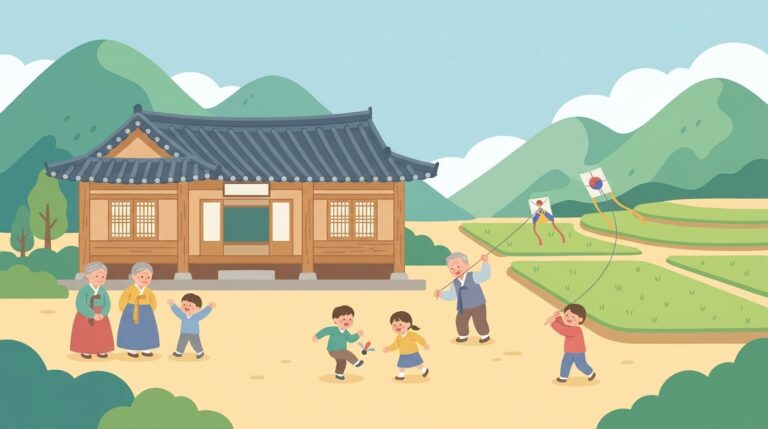
Phase 1: Welcome to Daily Hangul!
안녕하세요! 매일한글 에디터입니다. Have you ever watched a warm Korean healing drama set in a quiet countryside village—where a tiny, closing elementary school suddenly bubbles with laughter, bringing the entire village back to life? In recent years, South Korea’s rural immersion education programs (농촌 유학) and initiatives to revive small regional schools (작은 학교 살리기) have sparked a quiet revolution across the country.
However, navigating high-level discussions about demographic shifts, educational policy, and community integration in Korean requires more than just dictionary definitions. Advanced learners (C2) often struggle with nuance: How do you gracefully articulate the delicate balance between urban educational demands and local cultural preservation without sounding overly academic or insensitive? Based on direct feedback from our global C2 community and field interviews with local educators, this guide equips you with C2-level idiomatic precision, cultural dexterity, and policy-adjacent sophistication to discuss Korea’s rural revival with native authority.
Phase 2: Core Expressions Deep Dive
1. 상생을 도모하다 (Sangsaeng-eul domohada)
- Pronunciation: [Sang-saeng-eul do-mo-ha-da] (Sounds like sahng-saeng with a smooth, deliberate cadence)
- Meaning: Literal: To plan/seek mutual living | Nuance: To actively foster win-win synergy or co-prosperity between differing parties.
- K-Culture Moment: Featured heavily in current affairs documentaries and town-hall meetings when discussing how city families moving to rural villages benefit both local elders and urban children.
- Editor’s Insight: While 협력하다 (to cooperate) is basic, 상생을 도모하다 carries a deep socio-cultural weight implying long-term, harmonious ecosystem building.
- Situation Spectrum: Casual: 🚫 | Semi-formal: ⚠️ | Formal: ✅
- 🤔 Think About It: Does your culture view urban-rural exchange as a charity project or a balanced partnership? How does this phrasing shift the dynamic?
2. 기사회생하다 (Gisahoesaenghada)
- Pronunciation: [Gi-sa-hoe-saeng-ha-da] (Pronounced rhythmically as gee-sah-hway-saeng-hah-dah)
- Meaning: Literal: To come back to life from the brink of death | Nuance: To experience a miraculous revival against all odds.
- K-Culture Moment: Often used by news anchors when a rural school scheduled for closure garners dozens of new enrollments through innovative eco-curriculums.
- Editor’s Insight: Derived from Hanja (起死回生), this four-character idiom (사자성어) instantly elevates your discourse from simple recovery (회복) to dramatic resurrection.
- Situation Spectrum: Casual: ⚠️ | Semi-formal: ✅ | Formal: ✅
- 🤔 Think About It: Why do native speakers prefer dramatic idiomatic imagery when talking about public institutions like village schools?
3. 든든한 버팀목이 되다 (Deundeunhan beotimmogi doeda)
- Pronunciation: [Deun-deun-han beo-tim-mo-gi doe-da] (The ‘m’ sounds glide softly like deun-deun-han buh-tim-mog-ee)
- Meaning: Literal: To become a sturdy support prop | Nuance: To serve as a reliable anchor or pillar of strength for a community.
- K-Culture Moment: Frequently used in local speeches thanking senior villagers who mentor city kids in traditional agriculture.
- Editor’s Insight: 버팀목 originally refers to wooden props supporting young trees. Using it metaphorically conveys deep emotional grounding and gratitude.
- Situation Spectrum: Casual: ✅ | Semi-formal: ✅ | Formal: ✅
- 🤔 Think About It: What metaphorical objects does your language use to describe community pillars?
Phase 3: Textbook Korean vs. Real Native Korean (C2 Level)
Situation 1: Describing a school’s sudden population growth
- 📖 교과서 한국어: 이 학교는 학생 수가 다시 증가하고 있습니다. (This school’s student count is increasing again.)
- 🗣️ 진짜 한국어: 폐교 위기에 처했던 학교가 농촌 유학 덕분에 완전히 기사회생했네요. (A school on the verge of closure experienced a complete turnaround thanks to rural immersion education.)
- 💡 왜 다를까? Native C2 speakers integrate idiomatic triggers like 폐교 위기 and 기사회생 to frame the narrative dramatically rather than using dry statistical verbs like 증가하다.
Situation 2: Emphasizing community-school cooperation
- 📖 교과서 한국어: 마을 사람들과 학교가 함께 일합니다. (The villagers and the school work together.)
- 🗣️ 진짜 한국어: 마을과 학교가 손을 맞잡고 상생의 길을 모색하고 있습니다. (The village and the school are joining hands to forge a path of mutual coexistence.)
- 💡 왜 다를까? 손을 맞잡다 (joining hands) and 길을 모색하다 (searching for a path) elevate standard cooperation concepts into elegant, evocative public speech.
Phase 4: K-Culture Deep Dive & Non-Verbal Etiquette
4-1. Nunchi & Gesture Protocol
When visiting a Korean rural village or meeting local school principals (교장선생님), body language carries immense nuance. Avoid enthusiastic urban gesticulation. Instead, employ two-handed gestures (두 손으로 전하기) when offering items or pouring tea. When listening to senior villagers explain local agricultural practices, maintain soft eye contact with slight, repeated head nods (고개 끄덕임) accompanied by reflective vocalizations (“아, 그렇군요”). This shows 정 (communal affection) and respect for local wisdom.
4-2. Cultural Code: The ‘Small School Revitalization’ Phenomenon
In Korean media (such as rural reality programs like 삼시세끼 or human documentaries like 인간극장), small rural schools are not merely educational centers; they are the heart rate of rural life. When a school closes, the village spirit diminishes. Rural immersion programs (농촌 유학) allow urban students to spend 6 to 12 months in rural schools, boarding with local host families or living with parents in renovated village homes. Expressing appreciation for this dynamic signals profound insight into Korean societal values regarding education and regional revitalization.
Phase 5: Interactive Roleplay Scenario
Setting: You are participating as a visiting guest speaker at a local forum in Gangwon Province discussing rural revitalization.
Characters: Editor Kim (You) & Principal Lee (Principal of a revitalized rural elementary school).
- 교장선생님: 어서 오세요! 먼 길 오시느라 고생 많으셨습니다. 우리 학교 전경이 어떠신가요?
(Eoseo oseyeo! Meon gil osinura gosaeng maneusyeosseumnida. Uri hakgyo jeongyeong-i eotteosingayo?)
(Welcome! Thank you for traveling such a long way. How do you find our school view?)
🎭 Hands folded politely in front, warm welcoming smile -
You: 소문대로 정말 아름답네요. 아이들의 웃음소리가 동네 전체에 온기를 불어넣는 것 같습니다.
(Somundaero jeongmal areumdapneyeo. Aideureui useumsoriga dongne jeontche-e ongireul bureoneon-neun geot gatseumnida.)
(It is as beautiful as rumored. The children’s laughter seems to breathe warmth into the entire village.)
🎭 Looking around with a admiring expression -
교장선생님: 허허, 과찬이십니다. 불과 2년 전만 해도 학생 수가 모자라 폐교를 걱정하던 곳이었는데요.
(Heoheo, gwachan-isimnida. Bulgwa inyeon jeonman haedo haksaeng suga mojara pyeogyeoreul geokjeonghadeon got-ieonneundeyeo.)
(Haha, you flatter us. Just two years ago, we were worried about school closure due to lack of students.)
🎭 Chuckling softly with a hint of reflective emotion -
You: 농촌 유학 프로그램을 도입하면서 분위기가 반전된 건가요?
(Nongchon yuhak peurogeuraem-eul doip-hamyeonseo bun-wigiga banjeondeon geongayo?)
(Did the atmosphere shift completely after introducing the rural immersion program?)
🎭 Nodding attentively -
교장선생님: 맞습니다. 도시 아이들이 오면서 학교가 살아났고, 마을 주민들도 아이들 교육의 든든한 버팀목이 되어주고 계시죠.
(Matseumnida. Dosi aideuri omeonseo hakgyoga salanatgo, maeul jumindeuldo aideul gyo-yugui deundeunhan beotimmogi doe-eo-jugo gyesijo.)
(Precisely. As city children arrived, the school came alive, and local residents became sturdier supports for their education.)
🎭 Gesturing toward the village fields -
You: 단순히 학교를 살리는 데 그치지 않고, 지역 사회와 학교가 상생을 도모하는 훌륭한 모델이군요.
(Danseunhi hakgyoreul sallineun de geuchiji antgo, jiyeok sahoewa hakgyoga sangsaeng-eul domohaneun hullyunghan modeleigun-yo.)
(It goes beyond saving a school; it’s a magnificent model where the local community and school foster win-win coexistence.)
🎭 Speaking with conviction and warm cadence -
교장선생님: 그렇게 봐주시니 감사합니다. 앞으로 이런 변화가 지속되려면 어떤 노력이 더 필요할까요?
(Geureokke bwajusini gamsahamnida. Ap-euro ireon byeonhwaga jisokdoeryeomeon eotteon noryeogi deo pil-yohalkayo?)
(Thank you for acknowledging that. What further efforts do you think are needed to sustain this change?)
🎭 Looking at you attentively for your response -
You: [ Choose your response below ]
🔀 Interactive Choice Branching:
- Choice A: 단기적인 지원에 그치지 않고, 지자체와 연계한 장기적 정주 여건 개선이 병행되어야 합니다. (Best Response)
- Feedback: Perfect! You used sophisticated policy vocabulary (정주 여건 개선 – improving settlement conditions) seamlessly.
- Choice B: 도시 아이들에게 시골 체험을 더 많이 시켜주면 됩니다. (Bad Response)
- Feedback: Too simplistic for C2 level. It reduces a structural educational movement to a mere one-time field trip.
- Choice C: 시골 학교들은 어차피 곧 없어질 테니 예산을 절약해야 합니다. (Risk Response)
- Feedback: Culturally insensitive and overly fatalistic in a formal regional dialogue setting.
Phase 6: 10-Second Emotional Shadowing Drill
-
[😊 Expressing deep emotional appreciation with warm tone]
폐교 위기의 학교가 / 지역 사회의 노력으로 / 다시 활기를 찾은 모습이 / 정말 감동적이네요.
(Pyeogyeo wigi-ui hakgyoga / jiyeok sahoe-ui noryeogeuro / dasi hwalgireul chajeun moseub-i / jeongmal gamdongjeong-ineyeo.) -
[🏛️ Professional, persuasive tone for public speaking]
농촌 유학은 / 단순한 체험을 넘어 / 도시와 농촌이 / 상생을 도모하는 / 핵심 열쇠입니다.
(Nongchon yuhag-eun / dansunhan cheheom-eul neomeo / dosiwa nongchoni / sangsaeng-eul domohaneun / haeksim yeolse-imnida.)
Phase 7: K-Culture Mini Dictionary
- 농촌 유학 (Nongchon Yuhak) | Rural Immersion Education | An educational system where urban students temporarily transfer to rural schools to experience nature and village community life.
- 작은 학교 살리기 (Jageun Hakgyo Salligi) | Small School Revitalization Campaign | Grassroots and government initiatives aimed at preserving rural schools facing closure through specialized curriculums.
- 지방 소멸 (Jibang Somyeol) | Regional Depopulation | A demographic phenomenon referring to the declining population in non-metropolitan areas of South Korea.
- 귀농귀촌 (Gwinong-Gwichon) | Returning to Farming / Moving to Rural Areas | The trend of urbanites relocating to agricultural villages to start farming or enjoy countryside lifestyle.
Phase 8: Traveler’s & Scholar’s Survival Kit
Top 3 Survival Expressions for Regional Visits
- 지역 특색을 잘 살린 프로그램이네요. (Jiyeok teuksaeg-eul jal sallin peurogeuraem-ineyeo.) – “This program really captures the local distinctiveness.”
- 마을 공동체와의 협력이 인상적입니다. (Maeul gongtongche-wa-ui hyeoblyeog-i insangjeog-imnida.) – “The collaboration with the village community is impressive.”
- 아이들의 교육 환경이 매우 쾌적해 보입니다. (Aideur-ui gyo-yuk hwangyeong-i mae-u kwaejeokhae boimnida.) – “The children’s learning environment looks extremely pleasant.”
Editor’s Travel Note
When visiting rural regions to observe small school programs, public transport can be sporadic. Utilize the Naver Map Application Download Guide to check local rural bus timetables (시골 마을버스 시간표) in advance. Regional taxis often operate under flat-rate communal schemes (100원 택시 or 행복택시) in remote areas!
Phase 9: A Step Deeper (한 발 더 깊이)
In modern South Korea, the school is not merely a venue for standardized testing; it represents the ultimate communal refuge. When a small village elementary school shuts its doors, the local store closes, young families leave, and the community’s cultural memory begins to fade. Therefore, initiatives like 농촌 유학 represent far more than educational policy—they are modern acts of socio-cultural preservation. By engaging in these topics with nuanced Korean vocabulary, you demonstrate an empathetic understanding of Korea’s evolving social fabric.
💬 Your Turn: Does your country have programs that reconnect urban families with rural villages? Share your thoughts in the comments below using the expression 상생을 도모하다!
Phase 10: FAQ & Common Mistakes
Q: Can I use ‘농촌 유학’ to describe studying abroad at a rural university in another country?
A: No. 농촌 유학 specifically refers to urban elementary or middle school students temporarily moving to domestic Korean rural communities for eco-friendly, nature-based public education.
Q: Is ‘폐교’ (school closure) considered an offensive term to use in front of villagers?
A: It is not offensive, but it is sensitive. When talking to locals, phrasing it gently as 폐교 위기 (crisis of school closure) or 전교생 수가 적은 학교 (school with small student enrollment) displays superior 눈치 (tact).
Q: What is the difference between 귀농 (Gwinong) and 귀촌 (Gwichon)?
A: 귀농 means moving to the countryside explicitly to practice agriculture as a living, whereas 귀촌 refers to moving to rural areas for residential or lifestyle reasons without farming as a primary profession.
🚨 Common Mistakes Board
| Incorrect Usage | Why It’s Wrong | Correct Action |
|---|---|---|
| 시골 학교는 시골스러워요. | 시골스럽다 can sound slightly patronizing or colloquial in formal dialogue. | Use 자연친화적인 교육 환경을 갖추고 있어요 (It has a nature-friendly educational environment). |
| 유학을 시골로 갔어요. | 유학 alone implies studying abroad in a foreign country. | Use 농촌 유학 프로그램에 참여했어요 (Participated in a rural immersion program). |
| 학교가 다시 만들어졌어요. | Too basic and lacks structural nuance. | Use 학교가 기사회생했어요 or 학교가 다시 활기를 찾았어요. |
Phase 11: Action Mission
- Bronze Mission (Alone): Practice saying “마을과 학교가 상생을 도모하고 있습니다” 5 times aloud using our shadowing drill.
- Silver Mission (Social): Post a short paragraph on social media discussing rural education using at least two core terms (상생, 버팀목).
- Gold Mission (Real-world): Watch a Korean news report or documentary segment on 농촌 유학 on YouTube and leave a thoughtful comment in Korean!
🎮 K-Culture Mission: Find an episode of a drama or documentary set in rural Korea and spot how villagers interact with local school teachers!
Phase 12: Interactive Quiz Challenge
1. Situation Quiz: An urban child moves to a rural village school, bringing new life to both the classroom and local shops. Which phrase best describes this win-win relationship?
* A) 기사회생하다
* B) 상생을 도모하다
* C) 지방 소멸하다
Click to view Answer & Explanation
- Answer: B) 상생을 도모하다
- Explanation: 상생을 도모하다 specifically means actively fostering win-win coexistence between two entities (the school and the local village).
2. Fill-in-the-Blank: 폐교 위기에 처했던 작은 학교가 주민들의 노력 덕분에 ( ________ )했네요.
* A) 기사회생
* B) 귀농귀촌
* C) 지방소멸
Click to view Answer & Explanation
- Answer: A) 기사회생
- Explanation: The sentence requires a noun combining with 했네요 that means “dramatically came back to life against all odds.”
3. True or False: 농촌 유학 means Korean students going to foreign rural countries to study agriculture.
Click to view Answer & Explanation
- Answer: False
- Explanation: 농촌 유학 refers to domestic urban students moving temporarily to Korean countryside villages for nature-based public education.







