

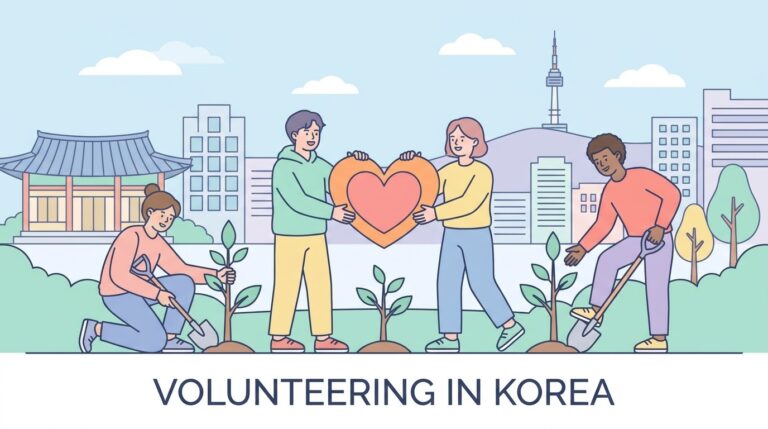
Master High-Level Korean for NGO Work & Charity Campaigns
안녕하세요! 매일한글 에디터입니다. Have you ever watched a Korean drama where the main character leads a heartwarming charity drive, or seen your favorite K-Pop idol’s fandom donate rice wreaths in their star’s name? If you have ever wanted to discuss non-profit organizations, fundraising campaigns, or volunteer work in fluent, sophisticated Korean, you’re in the right place!
At the C1 level, simply saying “도와줘요” (Please help) or “돈을 내요” (I give money) isn’t enough to capture the nuanced, professional tone required in formal advocacy and community engagement. Many advanced learners feel stuck using beginner vocabulary when discussing complex social causes. Based on real learner feedback, this guide will elevate your vocabulary so you can comfortably participate in NGO discussions, articulate campaign goals, and express meaningful civic impact in Korean.
Phase 2: Deep Dive into Core C1 Expressions
1. 선한 영향력을 행사하다 (Seon-han yeong-hyang-ryeok-eul haeng-sa-ha-da)
- Pronunciation: [Sun-han young-hyang-ryeok-eul haeng-sa-ha-da] (Sounds like: Sun-hahn yong-hyang-ryuk-eul hang-sah-hah-dah)
- Meaning: Literally “To exercise good/positive influence.” It means leveraging one’s social status, talents, or voice to bring about beneficial social change.
- K-Culture Moment: Frequently used in entertainment news when Korean celebrities or K-Pop fandoms make massive charitable donations on anniversaries.
- Editor’s Insight: ‘선한’ means good or virtuous, and ‘행사하다’ means to exercise a power or right. Using this phrase instantly makes your Korean sound professional and socially aware.
- Situation Spectrum: Casual: ⚠️ | Semi-formal: ✅ | Formal: ✅
- 🤔 Think About It: Does your native culture emphasize individual charity or collective social movement when talking about positive influence?
2. 취약 계층을 지원하다 (Chwi-yak gye-층-eul ji-won-ha-da)
- Pronunciation: [Chwi-yak gye-cheong-eul ji-won-ha-da] (Sounds like: Chee-yahk gyeh-chung-eul jee-won-hah-dah)
- Meaning: To support vulnerable or underprivileged social groups (e.g., low-income families, elderly living alone).
- K-Culture Moment: Seen on public service announcements across Korean subway stations during winter charity drives for heating assistance.
- Editor’s Insight: ‘취약’ means weak/vulnerable, and ‘계층’ means social stratum. It is the official and respectful term used by Korean NGOs, government bodies, and news media.
- Situation Spectrum: Casual: 🚫 | Semi-formal: ✅ | Formal: ✅
- 🤔 Think About It: How does the choice of terminology reflect respect towards marginalized communities in your country?
3. 후원금을 모금하다 (Hu-won-geum-eul mo-geum-ha-da)
- Pronunciation: [Hu-won-geum-eul mo-geum-ha-da] (Sounds like: Hoo-won-geum-eul moh-geum-hah-dah)
- Meaning: To collect/raise sponsorship funds or donations for a specific cause.
- K-Culture Moment: Used in NGO crowdfunding campaigns on Korean platforms like Naver Happybean.
- Editor’s Insight: While ‘기부하다’ means to donate money, ‘모금하다’ specifically refers to the act of raising or collecting those funds for an organization.
- Situation Spectrum: Casual: ⚠️ | Semi-formal: ✅ | Formal: ✅
- 🤔 Think About It: What is the most common fundraising method used by non-profits in your hometown?
Phase 3: Textbook Korean vs. Real Native Korean
Situation 1: Asking people to join a donation campaign
- 📖 Textbook Korean: “돈을 기부해 주세요.” (Please donate money.)
- 🗣️ Real Native Korean: “따뜻한 마음을 보태 주세요.” (Please add your warm heart to our cause.) / “정기 후원에 동참해 주세요.” (Please participate in our monthly sponsorship.)
- 💡 Why the difference? Directly asking for money can sound overly transaction-focused in Korean. Native speakers use emotional, community-oriented phrases like “adding warmth” or “joining together.”
Situation 2: Describing the impact of volunteer work
- 📖 Textbook Korean: “이 일은 아주 좋은 일입니다.” (This work is a very good thing.)
- 🗣️ Real Native Korean: “사회적 가치를 창출하는 뜻깊은 활동이에요.” (It’s a meaningful activity that creates social value.)
- 💡 Why the difference? At advanced levels, native speakers use conceptual vocabulary like ‘사회적 가치’ (social value) and ‘뜻깊은’ (deeply meaningful) to articulate purpose.
Phase 4: K-Culture Deep Dive & Non-verbal Etiquette
4-1. Nunchi & Gesture Guide
When volunteering or engaging in NGO promotional events in Korea, non-verbal etiquette is crucial:
* Two-Handed Respect (두 손): Always use both hands when accepting flyers, badges, or donation certificates. Handing over campaign brochures with one hand can appear dismissive.
* Respectful Posture: Maintain a slight bow (about 15 to 30 degrees) when thanking donors or community members for participating.
4-2. Cultural Code: The Fan Rice Wreath (쌀화환) & Celebrity Giving
In Korea, charity is deeply connected with modern pop culture. Instead of sending flowers to concerts or drama press conferences, fans order hundreds of kilograms of rice wreaths (쌀화환) in their idol’s name. After the event, the NGO partner distributes this rice to underprivileged families. This unique fusion of fandom culture and civic giving demonstrates how Korean society channels collective energy into tangible social impact.
Phase 5: Real Interactive Roleplay Scenario
Setting: You are visiting the office of a Korean environmental NGO, meeting with Team Leader Min-jun (민준 팀장) to plan a joint urban greening project.
- Turn 1 (Min-jun): “안녕하세요! 이번 지역 사회 녹화 프로젝트에 관심 가져주셔서 감사합니다.” (Hello! Thank you for taking an interest in our local greening project.)
- Turn 2 (You): 🎭 Bowing slightly and presenting your project proposal with both hands. “천만에요. 취약 계층을 위한 환경 개선 사업이라 꼭 동참하고 싶었습니다.” (Not at all. It’s an environmental improvement project for vulnerable groups, so I really wanted to participate.)
- Turn 3 (Min-jun): “감동이네요. 저희가 현재 후원금을 모금하는 중인데, 어떤 방식으로 홍보하면 좋을까요?” (That’s touching. We are currently raising sponsorship funds; what promotion strategy would you suggest?)
- Turn 4 (You): 🎭 Speaking with confidence and enthusiastic hand gestures. “SNS 캠페인을 통해 MZ세대의 선한 영향력을 끌어내는 건 어떨까요?” (How about leveraging an SNS campaign to draw out the positive influence of the MZ generation?)
- Turn 5 (Min-jun): “좋은 아이디어입니다! 그럼 봉사자 모집도 함께 진행해야겠네요.” (Great idea! Then we should also proceed with volunteer recruitment.)
- Turn 6 (You): 🎭 Nodding attentively. “네, 재능 기부를 해줄 카드뉴스 디자이너도 찾아보겠습니다.” (Yes, I will also look for card-news designers who can donate their talents.)
- Turn 7 (Min-jun): “정말 든든합니다! 이번 프로젝트로 사회적 가치를 크게 창출할 수 있겠어요.” (I feel so reassured! We will be able to create great social value through this project.)
- Turn 8 (You): 🎭 Smiling warmly. “저도 이번 연대에 함께하게 되어 영광입니다. 잘 부탁드립니다!” (I am honored to join this solidarity. I look forward to working with you!)
🔀 Interactive Choice Point
How should you respond when Min-jun asks how to engage more corporate donors?
* Option A: “기업들에게 돈을 많이 내라고 이메일을 보내죠.” (Send emails asking companies to pay a lot of money.)
* Option B: “기업의 사회공헌 활동과 연계하여 서로 윈윈하는 후원 프로그램을 제안하면 좋겠습니다.” (Propose a sponsorship program linked to the corporation’s CSR activities so both sides win.)
* Option C: “기업 후원은 힘드니까 개인 기부만 받읍시다.” (Corporate sponsorship is hard, so let’s only accept individual donations.)
Feedback:
* Option A (Bad): Too direct and blunt. Lacks professional C1 nuance.
* Option B (Best): Excellent! Uses sophisticated vocabulary like ‘사회공헌’ (CSR/social contribution) and presents a strategic, professional solution.
* Option C (Risk): Limits the scope of the NGO campaign and avoids problem-solving.
Phase 6: 10-Second Emotion Shadowing Drill
Practice reading these lines aloud with the indicated pause (/) and emotional tone:
[🔥 Passionate & Persuasive]
우리의 작은 실천이 / 지역 사회에 / 선한 영향력을 / 미칠 수 있습니다!
(Our small action / can exert / a positive influence / on the local community!)-
[🥺 Sincere & Heartfelt]
소외된 이웃을 위해 / 따뜻한 마음을 / 조금씩 보태 주시겠어요?
(For our marginalized neighbors / would you add / a little bit of your warm heart?) -
[💼 Professional & Determined]
이번 캠페인은 / 지속 가능한 사회적 가치를 / 창출하는 데 / 목적이 있습니다.
(This campaign / has its purpose in / creating / sustainable social value.)
Phase 7: K-Culture Mini Dictionary
- 재능 기부 (Jae-neung Gi-bu): Talent Donation. Donating skills (e.g., photography, design, translation) rather than money.
- 정기 후원 (Jeong-gi Hu-won): Regular Monthly Sponsorship. Setting up recurring monthly donations to an NGO.
- 사회공헌 (Sa-hoe-gong-heon): Social Contribution / Corporate Social Responsibility (CSR). Initiatives taken by companies or organizations to benefit society.
- 봉사자 (Bong-sa-ja): Volunteer. A person who voluntarily provides services without monetary compensation.
Phase 8: Traveler’s & Volunteer’s Survival Kit
Survival Phrases TOP 3
- “봉사 활동 참여 신청은 어디서 하나요?” (Where do I apply to join volunteer activities?)
- “기부금 영수증 발급이 가능한가요?” (Is it possible to issue a tax-deductible donation receipt?)
- “캠페인 취지에 깊이 공감합니다.” (I deeply sympathize with the objective of this campaign.)
Editor’s Travel & Practical Note
If you are living in or visiting Korea and want to engage in civic causes, explore 네이버 해피빈 웹사이트 방문하기. Naver Happybean is Korea’s largest online donation platform where you can read about various grassroots NGO projects and contribute easily through digital payment systems.
Phase 9: One Step Deeper (Cultural Reflection)
In Korean society, charitable work is deeply rooted in the concept of Jeong (정) and collective responsibility (공동체 의식). Historically, Korean communities relied on systems like Hyang-yak (village agreements) and Dure (farmers’ cooperative labor groups) to support one another during hardship. Today, this tradition manifests through modern NGO campaigns and rapid emergency fundraising responses. Engaging in Korean volunteer work isn’t just about charity; it’s about becoming part of a extended social family.
💬 Your Turn: Has your favorite artist or community ever organized a social campaign? How do people in your country express solidarity with local NGOs? Share your thoughts in the comments below!
Phase 10: FAQ & Common Mistakes
Q: What is the difference between ‘기부’ and ‘후원’?
A: ‘기부’ (Donation) usually refers to a one-time gift of money or goods to a cause. ‘후원’ (Sponsorship/Support) implies ongoing support or partnership over a period of time, such as monthly payments to support a child or an NGO’s operational expenses.
Q: Is ‘봉사’ different from ‘봉사 활동’?
A: ‘봉사’ is the abstract noun for service or dedication, whereas ‘봉사 활동’ specifically refers to the organized action or event of volunteering.
Q: How do I address non-profit staff politely?
A: You can address team members using their job title + ‘님’, such as “팀장님” (Team Leader) or “간사님” (Coordinator/Officer).
🚨 Common Mistakes Warning Board
- Mistake: Using “돈을 주다” in formal NGO presentations.
- Correct Action: Use “후원금을 전달하다” or “기부하다”.
- Mistake: Confusing “봉사자” (Volunteer) with “근로자” (Paid Employee).
- Correct Action: Keep “자원봉사자” or “봉사자” distinct when defining roles.
- Mistake: Saying “불쌍한 사람” (Pitiful people) when discussing aid recipients.
- Correct Action: Use respectful terms like “취약 계층” (Vulnerable groups) or “소외된 이웃” (Marginalized neighbors).
Phase 11: Action Mission
- 🥉 Bronze Level: Read the 3 Core C1 Expressions out loud 3 times using the Shadowing Drill.
- 🥈 Silver Level: Write a 2-sentence comment below stating a social cause you care about using the term ‘선한 영향력’.
- 🥇 Gold Level: Visit a Korean non-profit website (e.g., Happybean or World Vision Korea) and read an campaign introduction using the dictionary terms you learned today!
🎮 K-Culture Mission: Watch a K-Drama scene involving a community event or check a K-Pop idol’s official fan cafe to spot the word ‘후원’ or ‘기부’ in action!
Phase 12: Interactive Quiz Challenge
Question 1 (Vocabulary): What is the correct C1 term for “vulnerable social groups”?
1. 불쌍한 단체
2. 취약 계층
3. 소외된 회사
Click to reveal answer
Answer: 2 (취약 계층)
Explanation: ‘취약 계층’ is the official C1 term for vulnerable or underprivileged social strata.
Question 2 (Fill in the blank): “저희 단체는 이번 달에 모금된 _____을 불우이웃에게 전달했습니다.”
1. 후원금
2. 월급
3. 입장료
Click to reveal answer
Answer: 1 (후원금)
Explanation: ‘후원금’ means donation/sponsorship funds. ‘월급’ means salary and ‘입장료’ means entrance fee.
Question 3 (True/False): In Korea, donating rice wreaths (쌀화환) is a common way for K-Pop fandoms to celebrate their favorite stars while engaging in charity.
Click to reveal answer
Answer: True
Explanation: Fan rice wreaths are a staple of Korean donation and fandom culture!







