

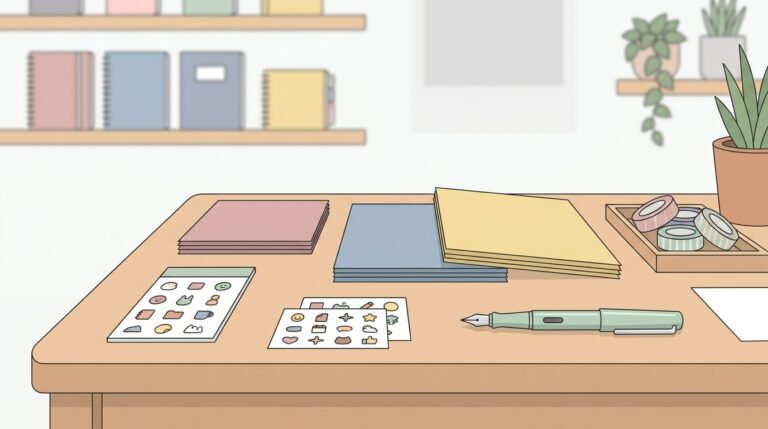
안녕하세요! I’m your editor from Daily Hangul! Writing a handwritten letter to a Korean friend, partner, or favorite K-Pop idol can feel super exciting, but also pretty nerve-wracking. Have you ever picked up a cute stationery card, stared at the blank paper, and wondered: “What if my Korean sounds too robotic or rude?” You are definitely not alone! Many of our learners tell us they know basic textbook grammar, but struggle to express warm, genuine emotions in a letter for special anniversaries. Today, we are going to fix that together! Based on real feedback from Korean learners and authentic local culture, this guide will give you simple, beautiful, and warm phrases you can write with confidence. By the end of this post, you’ll be able to write a sweet handwritten letter that will melt anyone’s heart!
1. 생일 축하해요 (Saeng-il chuk-ha-hae-yo)
- Pronunciation: [saeng-il chuk-ha-hae-yo] (Sounds like seng-eel chook-ha-heh-yo)
- Meaning: Direct: “Birthday congratulate” / Nuance: “Happy Birthday!”
- K-Culture Moment: Written inside birthday cards along with dynamic K-Pop album aesthetic designs or cute anniversary gift boxes.
- Editor’s Insight: This is the perfect middle-ground phrase. It’s polite yet warm! If you want to write to close friends, drop ‘요’ to make it casual: “생일 축하해!”
- Situation Spectrum: Casual ✅ / Semi-formal ✅ / Formal ⚠️
- 🤔 Think About It: In many Western cultures, a simple “HBD” text is common. But in Korea, writing a physical letter on anniversaries shows deep caring (Jeong). Why do you think paper letters hold so much emotional weight in digital Korea?
2. 항상 고마워요 (Hang-sang go-ma-wo-yo)
- Pronunciation: [hang-sang go-ma-wo-yo] (Sounds like hahng-sahng go-mah-woh-yo)
- Meaning: Direct: “Always thank you” / Nuance: “Thank you for everything, always.”
- K-Culture Moment: Frequently seen on handwritten sticky notes attached to small gifts, coffee cups, or 100-day anniversary letters in K-Dramas.
- Editor’s Insight: ‘항상’ (always) adds a deep layer of appreciation. It shifts the tone from a simple thank you to acknowledging past time spent together.
- Situation Spectrum: Casual ✅ / Semi-formal ✅ / Formal ⚠️
- 🤔 Think About It: Saying “thank you” in Korean isn’t just politeness; it’s a way to reinforce relationships. Does your native language have a word that conveys ongoing gratitude like this?
3. 오래오래 함께해요 (O-rae-o-rae ham-kke-hae-yo)
- Pronunciation: [o-rae-o-rae ham-kke-hae-yo] (Sounds like oh-reh-oh-reh hahm-kkeh-heh-yo)
- Meaning: Direct: “For a long, long time let’s be together” / Nuance: “Let’s stay together for a long time!”
- K-Culture Moment: Famous letter closing used by fans writing to K-Pop idols or couples celebrating 100-day/1-year anniversaries.
- Editor’s Insight: Doubling the word ‘오래’ into ‘오래오래’ creates a cute, rhythmic, and heartfelt feeling that sounds very natural in written form.
- Situation Spectrum: Casual ✅ / Semi-formal ✅ / Formal 🚫
- 🤔 Think About It: Repeating words for emphasis (like 오래오래) is very common in emotional Korean. How does repetition change emotion in your native language?
Situation 1: Expressing thanks for friendship
📖 교과서 한국어: 당신은 좋은 친구입니다. (Dang-sin-eun jo-eun chin-gu-im-ni-da. – You are a good friend.)
🗣️ 진짜 한국어: 내 친구가 되어 줘서 고마워요! (Nae chin-gu-ga doe-eo jwo-seo go-ma-wo-yo! – Thank you for being my friend!)
💡 왜 다를까?: Using ‘당신’ (you) in Korean can sound cold or distance-creating. Native speakers focus on the relationship and action instead!
Situation 2: Wishing someone happiness on an anniversary
📖 교과서 한국어: 행복을 기원합니다. (Haeng-bog-eul gi-won-ham-ni-da. – I wish you happiness.)
🗣️ 진짜 한국어: 오늘 하루 세상에서 가장 행복하세요! (O-neul ha-ru se-sang-e-seo ga-jang haeng-bok-ha-se-yo! – Hope you are the happiest person in the world today!)
💡 왜 다를까?: Written Korean letters love vivid, heart-fluttering wishes rather than dry dictionary-like blessings.
4-1. Nunchi & Letter Etiquette
When handing over a handwritten letter (손편지) in Korea, etiquette matters! Always hand the letter over using both hands (or holding your right wrist with your left hand) to show warmth and respect. Don’t seal the envelope with tape if you are handing it in person—it allows the recipient to feel invited to open it whenever they like!
4-2. Korean Stationery Culture
In Korea, writing letters is deeply linked to cute stationery shops like ARTBOX or Kakao Friends Store. On special days like Pepero Day (Nov 11), 100th Day Anniversaries, or Birthdays, Koreans pair handwritten notes with customized stickers and colorful pens. A handwritten letter is considered the ultimate heart-filled gift (정성).
Setting: You are visiting a cozy Korean stationery shop in Hongdae to write an anniversary card for your Korean friend, Minji.
Characters: You (Learner, A2) & Store Clerk (Friendly Local)
- 🎭 (Looking at colorful card racks)
You: 저기요, 생일 카드가 어디에 있어요?
(Jeo-gi-yo, saeng-il ka-deu-ga eo-di-e iss-eo-yo? / Excuse me, where are the birthday cards?) -
🎭 (Points cheerfully to the left display)
Clerk: 이쪽에 있어요! 이 예쁜 편지지가 인기 많아요.
(I-jjok-e iss-eo-yo! I ye-ppeun pyeon-ji-ji-ga in-gi man-a-yo. / Right over here! This pretty stationery paper is very popular.) -
🎭 (Picks up a cute card)
You: 아, 정말 귀여워요! 무슨 말을 쓰면 좋을까요?
(A, jeong-mal gwi-yeo-wo-yo! Mu-seun mal-eul sseu-myeon jo-eul-kka-yo? / Ah, really cute! What message should I write?) -
🎭 (Smiles warmly)
Clerk: “생일 축하해요”나 “항상 고마워요”라고 써 보세요.
(“Saeng-il chuk-ha-hae-yo” na “Hang-sang go-ma-wo-yo” ra-go sseo bo-se-yo. / Try writing “Happy Birthday” or “Thank you always”.) -
🎭 (Nods thoughtfully)
You: 좋은 생각이에요! “오래오래 함께해요”도 괜찮아요?
(Jo-eun saeng-gag-i-e-yo! “O-rae-o-rae ham-kke-hae-yo” do gwaen-chan-a-yo? / Great idea! Is “Let’s stay together for a long time” okay too?) -
🎭 (Claps lightly)
Clerk: 그럼요! 친구가 아주 좋아할 거예요.
(Geu-reom-yo! Chin-gu-ga a-ju jo-a-hal geo-ye-yo. / Of course! Your friend will love it.) -
🎭 (Hands over credit card with both hands)
You: 이 카드랑 스티커 같이 계산해 주세요.
(I ka-deu-rang seu-ti-keo ga-chi gye-san-hae ju-se-yo. / Please ring up this card and sticker together.) -
🎭 (Bows slightly and passes paper bag)
Clerk: 네, 감사합니다! 예쁘게 편지 쓰세요!
(Ne, gam-sa-ham-ni-da! Ye-ppeu-ge pyeon-ji sseu-se-yo! / Yes, thank you! Have fun writing your letter!)
🔀 Interactive Choice Point: What do you write as your final closing line to Minji?
– A: 당신을 사랑합니다. (Dang-sin-eul sa-rang-ham-ni-da.)
– B: 우리 오래오래 좋은 친구로 지내요! (U-ri o-rae-o-rae jo-eun chin-gu-ro ji-nae-yo!)
– C: 안녕히 계세요. (An-nyeong-hi gye-se-yo.)
Feedback:
– Choice A (Risk): ‘당신’ sounds overly poetic/dramatic for casual friends, and might feel awkward!
– Choice B (Best!): Perfect! It means “Let’s stay good friends for a long, long time!” Warm and natural.
– Choice C (Bad): “Goodbye” is meant for leaving a physical place, not closing a sweet letter!
Practice reading these out loud to master the natural emotional flow!
- [😊 Warm and Loving]
생일 축하해요! / 항상 / 고마워요.
(Saeng-il chuk-ha-hae-yo! / Hang-sang / go-ma-wo-yo.) -
[🥺 Sweet and Sincere]
우리 / 오래오래 / 함께해요!
(U-ri / o-rae-o-rae / ham-kke-hae-yo!) -
[🎉 Bright and Enthusiastic]
오늘 하루 / 세상에서 / 가장 행복하세요!
(O-neul ha-ru / se-sang-e-seo / ga-jang haeng-bok-ha-se-yo!)
- 손편지 (Son-pyeon-ji) | Handwritten Letter | A letter written by hand, prized for sincerity over digital texts.
- 편지지 (Pyeon-ji-ji) | Letter Paper / Stationery | Decorative writing paper used for special occasions.
- 정성 (Jeong-seong) | Heartfelt Effort / Sincerity | The care and affection put into doing something for someone.
- 기념일 (Gi-nyeom-il) | Anniversary / Special Day | Milestone days like birthdays, 100-day milestones, or holidays.
- 소중한 내 친구에게 (So-jung-han nae chin-gu-e-ge)
- Romanization: [so-jung-han nae chin-gu-e-ge]
- Pro Tip: Great opening line meaning “To my precious friend”.
- 항상 내 편이 되어 줘서 고마워 (Hang-sang nae pyeon-i doe-eo jwo-seo go-ma-wo)
- Romanization: [hang-sang nae pyeon-i doe-eo jwo-seo go-ma-wo]
- Pro Tip: Means “Thank you for always being on my side.”
- 태어나 줘서 고마워요 (Tae-eo-na jwo-seo go-ma-wo-yo)
- Romanization: [tae-eo-na jwo-seo go-ma-wo-yo]
- Pro Tip: Famous K-Pop / K-Drama line meaning “Thank you for being born.”
Editor’s Travel Note:
Want to buy cute stationery in Korea? Search for offline flagship stores or stationary cafes using the Naver Map App Download. Stores like ARTBOX, Kyobo HOTTRACKS, and Butter are top spots to pick up unique paper cards!
In Korean culture, handwritten letters carry Jeong (정)—a deep emotional bond. While a digital message takes seconds, spending 15 minutes picking stationery, writing Korean characters carefully, and handing over a letter shows high respect. It’s not about perfect spelling; it’s about showing your time and heart.
💬 Your Turn: What phrase from today’s post would you like to write in your next Korean letter? Tell us in the comments below!
Q: Can I use ‘당신’ (Dang-sin) when addressing my friend in a letter?
A: Avoid it! While dictionaries translate ‘당신’ as ‘you’, in real life it can sound distant, aggressive, or overly dramatic. Use your friend’s name + ‘에게’ (e.g., 민지에게 – To Minji) instead!
Q: How do I sign off at the end of a Korean letter?
A: Write [Your Name] (이)가 for friends, or [Your Name] 올림 / 드림 for elders/formal letters. For example: “- 스티븐이 -” (From Steven).
Q: What is the difference between 드림 (Deu-rim) and 올림 (Ol-lim)?
A: Both mean “From / Presented by”. ‘드림’ is semi-formal/polite, while ‘올림’ is very respectful (used for parents, teachers, or bosses).
🚨 Common Mistakes TOP 3:
1. Writing “당신에게” at the top: Incorrect! Use [Name]에게 or [Name]한테 instead.
2. Using formal ‘습니다’ with close friends: Makes the letter feel like a business memo! Use ‘-아/어-요’ or casual speech.
3. Closing with ‘안녕히 계세요’: This means “Goodbye (stay peacefully)”—never use it as a letter sign-off!
- Bronze Mission: Practice writing “생일 축하해요! 항상 고마워요.” on a notebook page today.
- Silver Mission: Take a photo of your handwritten Korean sentence and share it on Instagram with tag
#DailyHangul! - Gold Mission: Write a complete 3-line anniversary note to a real friend or K-Pop artist!
🎮 K-Culture Mission: Watch a K-Drama or listen to a K-Pop ballad and spot the word ‘고마워’ or ‘함께’! Write down the full sentence you hear.
Q1. Situation: You are writing a birthday card to a close friend. Which phrase is the most natural?
A) 당신을 축하합니다.
B) 생일 너무너무 축하해!
C) 안녕히 계세요.
Check Answer
Correct: B!
Explanation: ‘너무너무 축하해’ is warm, emotional, and perfect for close friends!
Q2. Fill in the blank: “Always thank you for being my friend!”
-> 내 친구가 되어 줘서 _______ 고마워요. (Hint: starts with 항)
Check Answer
Correct: 항상 (Hang-sang)
Explanation: ‘항상’ means ‘always’ in Korean.
Q3. True or False: Handing a handwritten letter to someone using two hands shows good manners in Korea.
Check Answer
Correct: True!
Explanation: Using both hands shows sincerity and respect in Korean non-verbal etiquette.







