

Unlock K-Drama Secrets: How to Ask About Korean History Like a Native
안녕하세요! 매일한글 에디터입니다. (Hello! This is your Daily Hangul editor.)
Phase 1: Empathy & K-Drama Spark
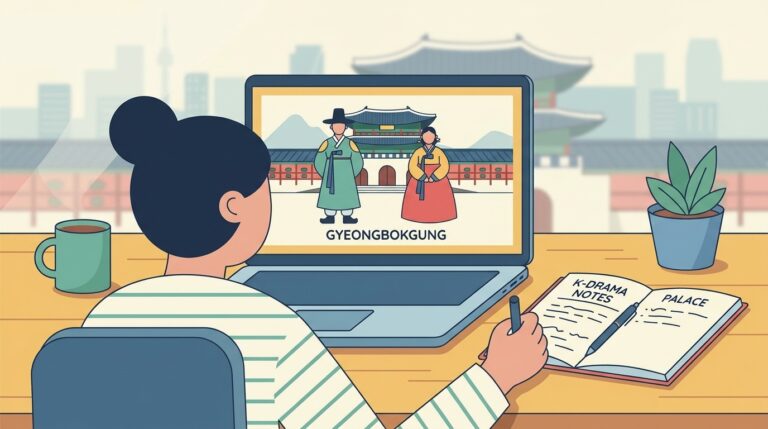
Have you ever stayed up until 2 AM binge-watching a gripping historical K-drama (사극, sageuk) set in the Joseon Dynasty? You see kings in vibrant crimson robes, scholars engaging in deep debates at Gyeongbokgung Palace, and sudden plot twists involving secret royal decrees. You feel totally hooked! But then a question pops up: “Wait, did that king actually exist in real history? Is that palace ritual real, or just made up for the show?”
When you ask your Korean friends about it, you might find yourself stuck saying, “이거 진짜예요?” (Igeo jinjjayeyo? / Is this real?). While that works, it feels a bit basic when you want to dive deeper into rich historical discussions at a B1 level!
Don’t worry—you’re not alone. Hundreds of intermediate learners tell us they love sageuk dramas but lack the refined Korean phrases to ask about historical facts, cultural artifacts, and real-life palace sites. Learning how to express your historical curiosity in natural Korean won’t just boost your vocabulary—it will open doors to fascinating conversations with native speakers, tour guides, and drama fan communities. This guide is crafted directly from real student feedback to turn your viewing curiosity into confident, engaging Korean conversation!
Phase 2: Core Phrase Analysis (핵심 표현 3선)
1. 실제로 이런 일이 있었나요? (Siljero ireon iri isseonnayo?)
- Pronunciation: [Sil-je-ro ee-reon ee-ri eess-eon-na-yo?] (Sounds like “Seel-jeh-roh eeh-reohn eeh-ree eess-uhn-nah-yoh”)
- Meaning: “Did this actually happen in real life?” (Literally: Did a thing like this exist in reality?)
- K-Culture Moment: You just watched a high-stakes palace coup episode in a drama like The Red Sleeve and want to verify if the event was real history.
- Editor’s Insight: 실제로 (in reality) adds a clear touch of historical inquiry. Using -나요? instead of -어요? gives your question a polite, inquisitive, and soft cadence typical of thoughtful adult conversations.
- Situation Spectrum:
- Casual (실제로 이런 일이 있었어?): ✅ (With close friends)
- Semi-formal (실제로 이런 일이 있었나요?): ✅ (Standard/Recommended)
- Formal (실제로 이러한 사건이 존재했습니까?): ⚠️ (Too academic for casual chat)
- 🤔 Think About It: In your culture, how do you distinguish between legendary folklore and factual history when discussing period dramas?
2. 드라마 내용이 역사적 사실과 어떻게 다른가요? (Deurama naeyongi yeoksajeok sasil gwa eotteokke dareungayo?)
- Pronunciation: [Deu-ra-ma nae-yong-i yeok-sa-jeok sa-sil-gwa eot-teoh-ke da-reun-ga-yo?]
- Meaning: “How does the drama plot differ from real historical facts?”
- K-Culture Moment: Discussing creative liberty (퓨전 사극, fusion historical drama) vs. authentic history (정통 사극) over coffee with Korean friends.
- Editor’s Insight: Combining 역사적 사실 (historical fact) with 어떻게 다른가요? shows an advanced B1 structure. It moves you from simple yes/no questions to open-ended cultural discussions.
- Situation Spectrum:
- Casual (드라마 내용이 역사랑 어떻게 달라?): ✅
- Semi-formal (드라마 내용이 역사적 사실과 어떻게 다른가요?): ✅
- Formal (드라마 고증이 실제 사료와 어떻게 차이 납니까?): ⚠️ (Documentary style)
- 🤔 Think About It: Do period shows in your country prioritize dramatic storytelling or strict historical accuracy?
3. 이 문화재는 어디에 가면 직접 볼 수 있어요? (I munhwajaeneun eodie gamyeon jikjeop bol su isseoyo?)
- Pronunciation: [Ee moon-hwa-jae-neun eh-dee-eh gah-myeon jeek-jeopp bohl soo eess-eo-yo?]
- Meaning: “Where can I go to see this cultural artifact/heritage site in person?”
- K-Culture Moment: You saw a breathtaking crown or palace courtyard on screen and want to add it to your Seoul trip itinerary.
- Editor’s Insight: 문화재 means “cultural heritage asset.” Using 직접 (in person/directly) emphasizes your enthusiasm for authentic travel experiences.
- Situation Spectrum:
- Casual (이 문화재 어디 가면 직접 볼 수 있어?): ✅
- Semi-formal (이 문화재는 어디에 가면 직접 볼 수 있어요?): ✅
- Formal (해당 문화재의 실물 전시 장소가 어디입니까?): 🚫 (Too rigid)
- 🤔 Think About It: Why does seeing real historical relics in person create a stronger connection than watching them on a screen?
Phase 3: Textbook Korean vs. Real Native Korean
Situation 1: Asking if a plot point is true
- 📖 Textbook Korean: 이 드라마는 진짜 역사입니까? (I deuramaneun jin jja yeoksaimnikka?)
- 🗣️ Real Native Korean: 이거 실화 바탕이에요, 아니면 픽션이에요? (Igeo silhwa batang-ieyo, animyeon piksyeon-ieyo? / Is this based on a true story, or is it fiction?)
- 💡 Why the difference? Native Koreans rarely say “Is this real history?” in polite conversation. Instead, they use loanwords like 픽션 (fiction) and terms like 실화 바탕 (based on a true story) to talk about dramatized media.
Situation 2: Asking where to visit the palace setting
- 📖 Textbook Korean: 드라마 촬영지인 궁궐의 위치를 알려주십시오. (Deurama chwaryyeongji-in gunggwol-ui wichireul allyeojusipsio.)
- 🗣️ Real Native Korean: 여기 나온 궁궐이 실제 경복궁이에요? 아니면 세트장이에요? (Yeogi na-on gunggwori silje Gyeongbokgung-ieyo? Animyeon seteujang-ieyo? / Is the palace shown here the real Gyeongbokgung, or is it a film set?)
- 💡 Why the difference? Native speakers specify whether a location is an actual historical palace (실제 궁궐) or an outdoor film set (야외 세트장), which helps when planning realistic travel trips.
Phase 4: K-Culture Deep Dive & Mannerisms
4-1. Nunchi (눈치) & Gestures for Historical Discussions
When asking about Korean history or heritage, showing respect for cultural context is key. Avoid pointing directly at photos of historical figures or sacred monuments with a single index finger. Instead, use an open palm when pointing toward a photo, map, or screen depicting royal relics. When asking questions to tour guides or older cultural experts, lean forward slightly with a soft, curious expression to show genuine admiration for Korean heritage.
4-2. Culture Code: Fusion Sageuk vs. Authentic Sageuk
Korean historical dramas are generally divided into two main genres:
1. 정통 사극 (Jeongtong Sageuk – Authentic Historical Drama): Focuses strictly on verified historical records (like the Annals of the Joseon Dynasty). Characters use formal archaic speech (하오체, 하십시오체).
2. 퓨전 사극 (Pyujeon Sageuk – Fusion Historical Drama): Blends historical settings with imaginative plots, romance, fantasy, or modern time travel! When watching fusion dramas, it’s totally normal to ask Korean friends where history ends and fiction begins.
Phase 5: Real Roleplay Scenario
Setting: A cozy Seoul cafe near Anguk Station. You are chatting with your Korean friend, Min-jun (민준), after watching a popular Joseon era drama together on a laptop.
- Turn 1 (Min-jun): (눈을 반짝이며) 이 드라마 진짜 재미있지 않아요? 벌써 밤 10시네요!
(Neuneul banjjagimyeo) I deurama jin jja jaemi-isseutji an-a-yo? Beolsseo bam 10-si-ne-yo!
🎭 Action: (Eyes sparkling with excitement) Isn’t this drama super fun? It’s already 10 PM! -
Turn 2 (You): (고개를 끄덕이며) 맞아요! 그런데 왕이 저렇게 비밀 임무를 직접 한 게 실제로 있었던 일이에요?
Maj-a-yo! Geureonde wangi jeoreokke bimil immureul jikjeop han ge silje-ro isseotdeon irieyo?
🎭 Action: (Nodding eagerly) Right! But did the king actually do secret missions in person like that in real life? -
Turn 3 (Min-jun): (웃음을 터뜨리며) 아, 극중에 나온 이야기요? 사실 저건 픽션에 가까워요.
A, geukjung-e na-on iyagi-yo? Sasil jeogeon piksyeon-e gakka-woyo.
🎭 Action: (Laughing softly) Ah, that part in the story? Honestly, that’s closer to fiction. -
Turn 4 (You): (아쉬운 표정으로) 아, 그래요? 그럼 드라마 내용이 실제 역사랑 많이 다른가요?
A, geuraeyo? Geureom deurama naeyongi silje yeoksarang mani dareungayo?
🎭 Action: (Looking slightly disappointed) Ah, really? Then does the drama plot differ a lot from real history? -
Turn 5 (Min-jun): 배경이나 왕의 이름은 진짜인데, 사건들은 작가님이 재미있게 각색한 거예요.
Baegyeong-ina wang-ui ireumeun jin jja-inde, sageondeureun jakganimi jaemi-itge gakseak-han geoyeyo.
🎭 Action: The background and king’s name are real, but the events were dramatized by the writer. -
Turn 6 (You): (진지하게) 그렇군요! 그럼 드라마에 나온 왕관이랑 옷은 어디 가면 직접 볼 수 있어요?
Geureokgunyo! Geureom deurama-e na-on wang-gwan-irang oseun eodi gamyeon jikjeop bol su isseoyo?
🎭 Action: (Interested) I see! Then where can I go to see the royal crown and robes shown in the drama in person? -
Turn 7 (Min-jun): (손가락으로 방향을 가리키며) 국립고궁박물관에 가면 똑같이 재현된 전시를 볼 수 있어요!
Gungnip Gogung Bangmulgwane gamyeon ttokgachi jaehyun-doen jeonsireul bol su isseoyo!
🎭 Action: (Pointing towards Gyeongbokgung direction) If you go to the National Palace Museum, you can see replicated exhibits just like them! -
Turn 8 (You): (미소를 지으며) 와, 대단해요! 이번 주말에 꼭 같이 가요!
Wa, daedanhaeyo! Ibeon jumare kkok gachi gayo!
🎭 Action: (Smiling broadly) Wow, amazing! Let me know if you can join me this weekend!
🔀 Interactive Branching Choice
Min-jun asks: “역사 드라마 볼 때 어떤 점이 가장 궁금해요?” (What are you most curious about when watching historical dramas?)
- Option A: “왕이 실제로 살았던 궁궐 모습이 궁금해요!” (I’m curious about how the palace where the king lived actually looked!)
- Result (BEST): Perfect! Min-jun offers to guide you through Gyeongbokgung and Changdeokgung Secret Garden this Saturday.
- Option B: “한국 역사는 너무 어려워서 그냥 로맨스만 봐요.” (Korean history is too hard so I only watch romance.)
- Result (BAD): Kills the cultural chat flow and shuts down the topic.
- Option C: “옛날 조선시대 왕족들이 진짜로 한국어를 이렇게 말했는지 궁금해요!” (I wonder if Joseon royalty actually spoke Korean like this!)
- Result (RISK): Interesting question! Leads to a deep linguistic discussion about historical honorifics (하오체), though it might get a bit technical.
Phase 6: 10-Second Emotion Shadowing Drill
Practice these lines with rhythm and authentic emotional tone! (/ indicates brief pauses).
- [😊 Curious & Enthusiastic]
실제로 / 이런 일이 / 있었나요?
(Siljero / ireon iri / isseonnayo?) -
[🤔 Inquisitive & Thoughtful]
드라마 내용이 / 역사적 사실과 / 어떻게 다른가요?
(Deurama naeyongi / yeoksajeok sasilgwa / eotteokke dareungayo?) -
[🤩 Excited & Adventurous]
이 문화재는 / 어디에 가면 / 직접 볼 수 있어요?
(I munhwajaeneun / eodie gamyeon / jikjeop bol su isseoyo?)
Phase 7: K-Culture Mini Dictionary
- 사극 (Sageuk) | Historical Drama | Refers to any Korean film or TV drama set in historical periods (Goryeo, Joseon, etc.).
- 고증 (Gojeung) | Historical Verification/Authenticity | The research process of ensuring props, costumes, and language match actual historical records.
- 문화재 (Munhwajae) | Cultural Heritage/Relic | Tangible or intangible cultural assets protected by national history laws.
- 세트장 (Set-jang) | Filming Set / Location | Dedicated open-air filming sites (like Yongin Daejanggeum Park) open to public tours.
Phase 8: Traveler’s Survival Kit
Top 3 Survival Phrases for Cultural Sites
- 이 설명 한국어로 다시 해주실 수 있나요? (I seolmyeong hangugeoro dasi haejusil su innayo?)
Pro Tip: Use this at museum info desks to practice listening to simplified Korean historical explanations. - 여기 사진 찍어도 돼요? (Yeogi sajin jjigeodo dwaeyo?)
Pro Tip: Essential inside palace museum galleries where flash photography might be restricted. - 무료 해설 투어 시간이 언제예요? (Muryo haeseol tueo sigani eonjeyeyo?)
Pro Tip: Ask this at Seoul palaces to join free guided walking tours.
Editor’s Travel Note
Before visiting royal sites, download official walking guide apps. Check out the Smart Tour Guide ODII app download provided by the Korea Tourism Organization for audio guides across all major Seoul palaces. Most palaces accept standard T-Money transit cards or international credit cards for ticket entry!
Phase 9: One Step Deeper (한 발 더 깊이)
In Korean historical dramas, language is more than just communication—it reflects the rigid social hierarchy of the Joseon era. When kings speak, they use unique self-referential pronouns like 짐 (Jim) or royal commands ending in -하라. Meanwhile, subjects express deep deference using specialized honorifics. Understanding these historical speech levels helps us appreciate why modern Korean places so much emphasis on honorific etiquette (존댓말) and social respect today.
💬 Your Turn: What is your favorite Korean historical drama, and which palace location do you want to visit first? Leave a comment below and let’s chat in Korean!
Phase 10: FAQ & Common Mistakes
Q: Can I use modern conversational Korean when talking to museum staff or tour guides?
A: Yes! Standard polite form (해요체 ending in -요) is perfectly polite and natural for modern tour guides and museum workers.
Q: Is it okay to use drama royalty words like “전하” (Your Majesty) as a joke with Korean friends?
A: With close friends, using archaic drama slangs like 전하 (Jeonha) or 성은이 망극하옵니다 (Seong-euni manggeuk-ha-opnida) ironicaly is a popular internet meme and comedy trope! Just avoid using it in serious or formal situations.
Q: What is the difference between 궁 and 궁궐?
A: Both refer to palaces, but 궁궐 (Gunggwol) specifically refers to the official royal residence and government complex (like Gyeongbokgung), whereas 궁 (Gung) can also include smaller private royal residences.
🚨 Common Mistakes Warning Board
- Mistake: Calling all historic clothes “Hanbok” incorrectly without context.
Correct Action: While all traditional clothes are 한복, specifying 곤룡포 (Gonryongpo – King’s Dragon Robe) shows impressive intermediate knowledge! - Mistake: Assuming every historical drama character existed in real life.
Correct Action: Ask “이 인물은 실존 인물이에요?” (Is this person a real historical figure?) before making assumptions. - Mistake: Using informal speech (반말) when asking elder tour guides questions.
Correct Action: Always end your history inquiries with polite endings like -나요? or -세요?.
Phase 11: Action Mission
- 🥉 Bronze Mission: Practice saying “실제로 이런 일이 있었나요?” aloud 3 times while watching your favorite K-drama today.
- 🥈 Silver Mission: Post a scene screenshot of a historical drama on Instagram or X, and write a caption in Korean using “이 문화재는 어디서 볼 수 있어요?”
- 🥇 Gold Mission: Visit a local Korean museum or Seoul palace and ask a guide one question in Korean about a display!
- 🎮 K-Culture Mission: Watch one episode of a fusion historical drama and write down 2 historical terms you hear (e.g., 전하, 양반).
Phase 12: Interactive Quiz Challenge
Test your knowledge from today’s lesson!
Q1. How do you naturally ask if a drama plot actually happened in history?
1) 이거 완전히 거짓말이에요?
2) 실제로 이런 일이 있었나요?
3) 왜 드라마가 이렇게 길어요?
Q2. True or False: Fusion sageuk (퓨전 사극) dramas always follow 100% strict historical facts.
(True / False)
🔍 Click here to see Answers & Explanations!
- Q1 Answer: 2) 실제로 이런 일이 있었나요?
Explanation: Option 2 is polite, natural, and specifically inquires about real historical events. Option 1 sounds blunt or rude. - Q2 Answer: False
Explanation: Fusion historical dramas mix real historical elements with fiction, modern tropes, and fantasy storyline adaptations!







