

Phase 1: Empathy (Storytelling)
안녕하세요! 매일한글 에디터입니다.
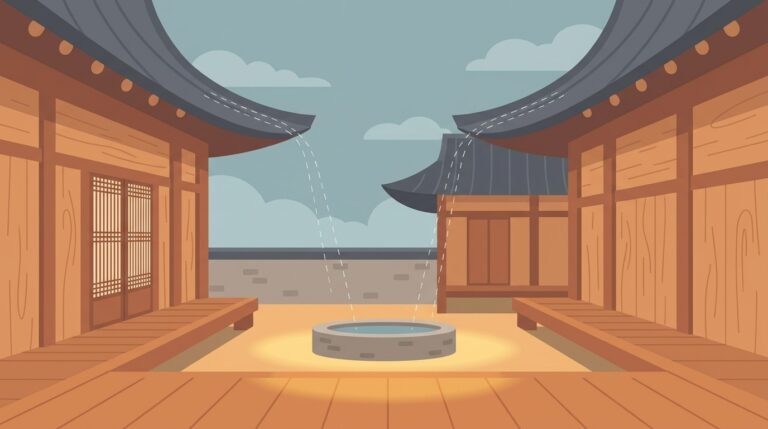
Imagine stepping into a serene Hanok stay in Bukchon or Jeonju. The subtle scent of pine wood fills the air, sunlight filters gently through the hanji paper windows, and the warmth of the ondol (underfloor heating) wraps around you. You want to leave a thoughtful review or talk to your host about how breathtakingly serene the experience was—not just saying “좋았어요” (It was good), but articulating the subtle atmosphere, architectural elegance, and sensory comfort at a sophisticated C1 level.
Many advanced learners hit a wall here: dictionary translations like “The wood perfume is soothing” sound mechanical, while textbook phrases miss the deep aesthetic appreciation inherent in Korean culture. This guide is crafted from real student feedback to help you articulate nuanced sensory reviews and cultural impressions naturally, ensuring your Hanok stay reviews sound like they were written by a cultured local.
Phase 2: Key Expressions
1. 운치 있다 (Un-chi it-da)
- Pronunciation: [oon-chi it-dda] (Sounds like oon-chee with a firm it-dah)
- Meaning: Literal: To have mood/taste | Nuance: Elegant, picturesque, and full of traditional atmospheric charm
- K-Culture Moment: Seen in historical and slice-of-life K-dramas when characters admire rain falling off the eaves (cheoma) of a traditional courtyard while drinking tea.
- Editor’s Insight: This isn’t just “aesthetic” (감성적이다). “운치 있다” implies a deep, timeless connection between nature and human architecture. Perfect for describing rain, snow, or night ambiance at a Hanok.
- Situation Spectrum: Casual: ✅ | Semi-formal: ✅ | Formal: ✅
- 🤔 Think About It: How does your native language describe an aesthetic that combines historical architecture with natural weather elements?
2. 정갈하다 (Jeong-gal-ha-da)
- Pronunciation: [jeong-gal-ha-da] (Focus on the clean, crisp jeong-gal)
- Meaning: Literal: To be neat and tidy | Nuance: Impeccably clean, harmonious, and refined with understated minimalism
- K-Culture Moment: Frequently used in K-food and travel shows when describing traditional Korean breakfast spreads or pristine bedding in a high-end Hanok stay.
- Editor’s Insight: While “깨끗하다” means physically clean, “정갈하다” carries a sense of care, respect, and aesthetic order. Use it for interior decor, bedding, or breakfast presentation.
- Situation Spectrum: Casual: ⚠️ | Semi-formal: ✅ | Formal: ✅
- 🤔 Think About It: In Korean culture, neatness often reflects the host’s heart (정성). How does interior tidiness connect to hospitality in your culture?
3. 고즈넉하다 (Go-jeeu-neok-ha-da)
- Pronunciation: [go-jeeu-neok-ha-da] (Soft go-jeu, smooth neok-ha-da)
- Meaning: Literal: To be quiet and tranquil | Nuance: Serene, peacefully quiet, and steeped in poetic stillness
- K-Culture Moment: Used by travel vloggers when wandering through historic alleys or enjoying early morning tea in a secluded courtyard.
- Editor’s Insight: Don’t confuse this with “조용하다” (silent). “고즈넉하다” describes a peaceful, soul-soothing quietness that feels cozy rather than empty.
- Situation Spectrum: Casual: ⚠️ | Semi-formal: ✅ | Formal: ✅
- 🤔 Think About It: Is quietness viewed as peaceful or lonely in your country’s architectural philosophy?
Phase 3: Textbook vs Real Korean
Situation 1: Expressing how peaceful the Hanok courtyard feels
- 📖 Textbook: 이 한옥은 아주 조용하고 좋습니다. (This Hanok is very quiet and good.)
- 🗣️ Real Native: 마당에 앉아 있으니까 분위기가 정말 고즈넉하고 힐링돼요. (Sitting in the courtyard feels so serene and healing.)
- 💡 Why the difference? C1 speakers blend atmospheric adjectives (고즈넉하다) with modern emotive verbs (힐링되다) to convey both traditional elegance and personal wellness.
Situation 2: Praising the host’s attention to detail
- 📖 Textbook: 방이 깨끗하고 방이 예쁩니다. (The room is clean and pretty.)
- 🗣️ Real Native: 침구류부터 침실 소품까지 정말 정갈하게 관리되어 있네요. (Everything from the bedding to the room props is so refined and impeccably arranged.)
- 💡 Why the difference? Highlighting specific aspects like 침구류 (bedding) paired with 정갈하다 demonstrates refined vocabulary and cultural appreciation.
Phase 4: K-Culture Deep Dive & Non-verbal Manners
4-1. Nunchi & Gestures
When checking in or thanking your Hanok host, slight head tilts and two-handed gestures are paramount. When complimenting the wooden interior or tea setup, gently open both palms toward the object rather than pointing with a single finger. When stepping over the door threshold (문턱), never step directly on it—step over it cleanly. In traditional Korean beliefs, stepping on the threshold brings bad luck and damages the wooden structure.
4-2. Culture Code: Ondol & Aesthetic of Emptiness (비움의 미)
Unlike Western luxury hotels packed with heavy furniture, a true Hanok embraces 비움의 미 (the beauty of emptiness). The floor (온돌) is the heart of living. Raising your appreciation for the warm timber floor underfoot shows an understanding of traditional living culture where space adapts to human presence.
Phase 5: Real-life Roleplay Scenario
Setting: Checking out of a boutique Hanok stay in Bukchon and giving feedback to the host (민우).
- Guest: 안녕하세요 사장님, 체크아웃 도와주시겠어요?
(An-nyeong-ha-se-yo sa-jang-nim, che-keu-a-ut do-wa-ju-si-get-eo-yo?)
(Hello boss, could you help me check out?)
🎭 Action: Handing over the key with both hands while smiling gently. -
Host (민우): 네, 편안히 쉬셨나요? 불편한 점은 없으셨고요?
(Ne, pyeon-an-hi swi-syeot-na-yo? Bul-pyeon-han jeom-eun eop-seu-syeot-go-yo?)
(Yes! Did you rest comfortably? Was there anything uncomfortable?) -
Guest: 전혀요! 비가 살짝 내려서 그런지 서래재의 운치가 한층 더 느껴지더라고요.
(Jeon-hyeo-yo! Bi-ga sal-jjak nae-ryeo-seo geu-reon-ji Seo-rae-jae-ui un-chi-ga han-cheong deo neo-kkeo-ji-deo-ra-go-yo.)
(Not at all! Perhaps because of the light rain, the atmospheric charm of Seoraejae felt even more pronounced.)
🎭 Action: Looking out towards the courtyard with an admiring expression. -
Host (민우): 아, 비 오는 날 한옥 특유의 나무 향을 좋아하시는군요!
(A, bi o-neun nal han-ok teu-kyu-ui na-mu hyang-eul jo-ha-ha-si-neun-gun-yo!)
(Ah, you appreciate the unique wooden scent of Hanok on rainy days!) -
Guest: 네, 아침에 마당을 보며 차를 마시는데 정말 고즈넉해서 힐링됐어요.
(Ne, a-chim-e ma-dang-eul bo-myeo cha-reul ma-si-neun-de jeong-mal go-jeeu-neok-hae-seo hil-ling-dwaet-eo-yo.)
(Yes, drinking tea while looking at the courtyard this morning was so peaceful and healing.) -
Host (민우): 다행입니다. 침구나 소품도 신경 썼는데 괜찮으셨나요?
(Da-haeng-im-ni-da. Chim-gu-na so-pum-do sin-gyeong sseot-neun-de gwaen-chan-heu-syeot-na-yo?)
(I’m glad. I paid special attention to the bedding and props, were they alright?) -
Guest: 그럼요! 공간이 아주 정갈하게 잘 가꿔져 있어서 대접받는 기분이었어요.
(Geu-reom-yo! Gong-gan-i a-ju jeong-gal-ha-ge jal ga-kkwo-jyeo it-eo-seo dae-jeop-bat-neun gi-bun-i-eot-eo-yo.)
(Of course! The space was so neatly and elegantly maintained that I felt truly welcomed and cherished.) -
Host (민우): 정성 어린 말씀 감사합니다! 다음에 꼭 다시 들러주세요.
(Jeong-seong eo-rin mal-sseum gam-sa-ham-ni-da! Da-eum-e kkok da-si deul-leo-ju-se-yo.)
(Thank you for your heartfelt words! Please visit us again next time.)
🔀 Interactive Branching Point
When leaving a written review on the booking platform, how will you conclude your review?
- Option A:
Frequently Asked Questions (FAQ)
Q: What does "운치 있다 (Un-chi it-da)" mean in Korean and how do you pronounce it?
A: In Korean, "운치 있다 (Un-chi it-da)" is pronounced [oon-chi it-dda] and means: Literal: To have mood/taste | Nuance: Elegant, picturesque, and full of traditional atmospheric charm
Q: What does "정갈하다 (Jeong-gal-ha-da)" mean in Korean and how do you pronounce it?
A: In Korean, "정갈하다 (Jeong-gal-ha-da)" is pronounced [jeong-gal-ha-da] and means: Literal: To be neat and tidy | Nuance: Impeccably clean, harmonious, and refined with understated minimalism
Q: What does "고즈넉하다 (Go-jeeu-neok-ha-da)" mean in Korean and how do you pronounce it?
A: In Korean, "고즈넉하다 (Go-jeeu-neok-ha-da)" is pronounced [go-jeeu-neok-ha-da] and means: Literal: To be quiet and tranquil | Nuance: Serene, peacefully quiet, and steeped in poetic stillness






