

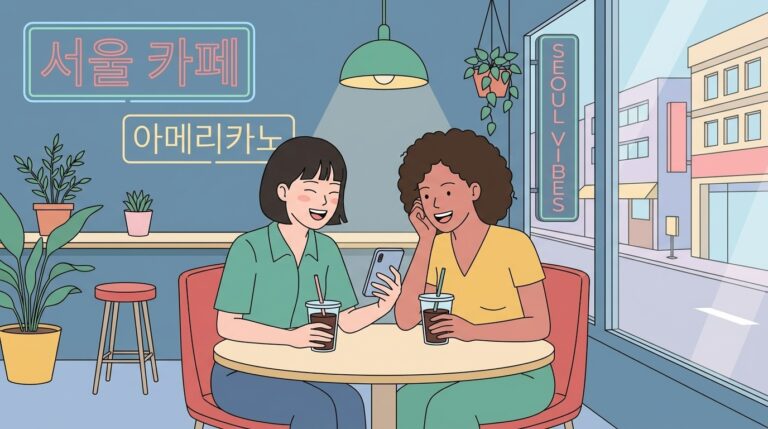
Keeping Up with the K-Gen Z: Decoding Korean Slang & Generation Gaps
Phase 1: Empathy (An Immersive Opening)
안녕하세요! (An-nyeong-ha-se-yo! – Hello!) It’s your favorite Daily Hangul editor and local culture navigator here!
Picture this: You are hanging out with your younger Korean coworkers or watching a trendy K-Drama, and everyone bursts into laughter at a word you’ve never heard. You quickly open your dictionary app, but guess what? Nothing shows up. You’ve just hit the dreaded Korean Generation Gap (세대 차이 – Se-dae Cha-i).
In South Korea, internet culture and street slang evolve at lightning speed. From shortening whole sentences into three-letter blocks to creating entirely new emotional vibes, Korean Gen Z (젠지 – Jen-ji) has developed a linguistic world of their own. Missing out on these doesn’t just make you feel left out; it limits how deeply you can connect with modern Korean society. But don’t worry! Today, we are going to dive into the ultimate Korean slang test, helping you decode these words like a native bestie. Let’s level up your B2 Korean with some serious cultural street-smarts!
Phase 2: Deep Dive into 3 Essential Slang Expressions
Let’s analyze three of the most popular modern slang words that define today’s generational divide.
1. 분좋카 (Bun-Jo-Ka)
- Pronunciation: Boon-joh-kah (Sounds like “boon” + “jo” in joy + “ka” in car)
- Meaning: “A cafe with a great atmosphere.” Short for 분위기 좋은 카페 (Bun-wi-gi joh-eun ka-pe).
- K-Culture Moment: You’ll see this constantly on Instagram (인스타) hashtags when people post aesthetically pleasing cafes in Seongsu-dong or Hongdae.
- Editor’s Insight: Koreans are obsessed with café culture. Saying a place is a “분좋카” means it has perfect lighting, great interior design, and is highly “Instagrammable.”
- Situation Spectrum: Casual ✅ | Semi-formal ⚠️ | Formal 🚫
- 🤔 Think About It: How does your culture describe trendy, aesthetic spots? Is there a single word for it, or do you need a full sentence?
2. 중꺾마 (Jung-Kkeok-Ma)
- Pronunciation: Joong-kkeok-mah (Sounds like “Jung” + “k-keok” as in bucket + “ma”)
- Meaning: “The important thing is an unbroken heart.” Short for 중요한 것은 꺾이지 않는 마음 (Jung-yo-han geos-eun kkeok-i-ji an-neun ma-eum).
- K-Culture Moment: Originated from the 2022 League of Legends World Championship and popularized by BTS’s Jungkook during the World Cup. It’s the ultimate anthem of resilience.
- Editor’s Insight: Use this when a friend is struggling with Korean studies or a job search. It shows deep emotional empathy and solidarity.
- Situation Spectrum: Casual ✅ | Semi-formal ✅ | Formal ⚠️ (Can be used in lighthearted motivational speeches)
- 🤔 Think About It: South Korea’s fast-paced society places high pressure on youth. Why do you think a phrase about “unbroken spirit” became a national sensation?
3. 알잘딱깔센 (Al-Jal-Ttak-Kkal-Sen)
- Pronunciation: Al-jal-ttak-kkal-sen (Sounds like “Al” + “jal” + “t-tak” + “k-kal” + “sen” as in sense)
- Meaning: “Do it well, cleanly, and sensibly on your own without being told.” Short for 알아서, 잘, 딱, 깔끔하고, 센스있게 (Al-aseo, jal, ttak, kkal-kkeum-ha-go, sen-seu-it-ge).
- K-Culture Moment: Coined by a famous Twitch streamer and popularized by K-pop idols like Seventeen and Le Sserafim.
- Editor’s Insight: This is the ultimate compliment in a modern Korean workplace or group project. It describes someone who is highly competent and intuitive.
- Situation Spectrum: Casual ✅ | Semi-formal ⚠️ | Formal 🚫
- 🤔 Think About It: This word compresses five adverbs into one. What does this tell us about the Korean appreciation for efficiency and quick wit (눈치 – Nunchi)?
Phase 3: Textbook Korean vs. Real-Life Korean
Let’s compare how textbooks teach these concepts versus how Gen Z actually talks!
Scenario A: Complaining about a difficult task
- 📖 Textbook Korean: “일이 너무 힘들어서 포기하고 싶어요.” (Il-i neo-mu him-deul-eo-seo po-gi-ha-go sip-eo-yo.) – “The work is so hard, I want to give up.”
- 🗣️ 진짜 Korean: “진짜 기 빨려요. 그래도 중꺾마 아시죠?” (Jin-zza gi ppal-ryeo-yo. Geu-rae-do jung-kkeok-ma a-si-jyo?) – “I’m totally drained. But hey, ‘unbroken heart’ active, right?”
- 💡 Why the Difference? While the textbook expression is grammatically perfect, using “기 빨려요” (energy drained) and “중꺾마” adds a modern, resilient, and playful vibe that builds instant rapport.
Scenario B: Asking a colleague to handle a task independently
- 📖 Textbook Korean: “스스로 알아서 잘 처리해 주세요.” (Seu-seu-ro al-aseo jal cheo-ri-hae ju-se-yo.) – “Please handle it well by yourself.”
- 🗣️ 진짜 Korean: “이번 프로젝트는 알잘딱깔센 부탁드려요!” (I-beon peu-ro-jek-teu-neun al-jal-ttak-kkal-sen bu-tak-deu-ryeo-yo!) – “Please handle this project with total ‘al-jal-ttak-kkal-sen’!”
- 💡 Why the Difference? The textbook version can sound slightly cold or overly demanding. “알잘딱깔센” softens the request with humor while acknowledging the other person’s great skills.
Phase 4: K-Culture Deep Dive & Non-Verbal Manners
4-1. The Body Language of Slang
When using slang with younger Koreans, your body language should match the casual vibe.
* The ‘MZ Gesture’ (손가락 하트 & Gyaru Peace): If you are talking about a “분좋카” (beautiful cafe), flash a mini finger-heart or the inverted peace sign to show you are in on the trend.
* The Eye Roll of Sympathy: When someone talks about feeling “기 빨려” (spirit-drained), nod your head slowly, look down slightly, and let out a soft sigh (“하아…”). Sharing the exhaustion is key to bonding in Korea.
4-2. Cultural Code: The Evolution of 줄임말 (Abbreviations)
Korean abbreviations (줄임말 – Jul-im-mal) are not just lazy speech; they are a creative social game. In a culture dominated by the “Palli-Palli” (빨리빨리 – Hurry, Hurry) lifestyle, condensing long sentences into three or four letters is both functional and culturally satisfying. It creates an “in-group” feeling—if you know the abbreviation, you are part of the family.
Phase 5: Real-Life Roleplay Scenario
Setting: A trendy office in Seoul. You (B2 speaker) are talking to your younger Korean coworker, Minji (민지), who is a complete Gen Z trendsetter.
- Minji: 🎭 [Yawning, holding a coffee] 아, 대리님… 저 오늘 진짜 아침부터 기 빨려요. (Ah, dae-ri-nim… jeo o-neul jin-zza a-chim-bu-teo gi ppal-ryeo-yo.) – “Ah, manager… my energy is seriously drained since this morning.”
- You: 🎭 [Nodding sympathetically] 왜요? 오전 회의 때문에 힘들었어요? (Wae-yo? O-jeon hoe-ui ttae-mun-e him-deul-eoss-eo-yo?) – “Why? Was the morning meeting tough?”
- Minji: 🎭 [Sighs] 네, 부장님이 옛날 방식으로 기획안 다시 쓰래요. 세대 차이 느껴져요. (Ne, bu-jang-nim-i yet-nal bang-sik-eu-ro gi-hoe-kan da-si sseu-rae-yo. Se-dae cha-i neuk-kyeo-jyeo-yo.) – “Yeah, the director wants me to rewrite the proposal in an old-fashioned way. I feel such a generation gap.”
- You: 🎭 [Smiling warmly] 에이, 그래도 민지 씨 능력이면 알잘딱깔센 해결할 수 있잖아요! (Ei, geu-rae-do Minji-ssi neung-ryeok-i-myeon al-jal-ttak-kkal-sen hae-gyeol-hal su it-jan-a-yo!) – “Hey, but with your skills, you can totally handle it ‘al-jal-ttak-kkal-sen’!”
- Minji: 🎭 [Eyes wide open, laughing] 대박! 대리님 방금 ‘알잘딱깔센’이라고 하셨어요? 대박 신기해요! (Dae-bak! Dae-ri-nim bang-geum ‘al-jal-ttak-kkal-sen’-i-ra-go ha-syeoss-eo-yo? Dae-bak sin-gi-hae-yo!) – “OMG! Did you just say ‘al-jal-ttak-kkal-sen’? That is so cool!”
- You: 🎭 [Winking playfully] 당연하죠. 저도 트렌디한 사람이에요. 우리 힘내요, 중꺾마! (Dang-yeon-ha-jyo. Jeo-do teu-ren-di-han sa-ram-i-e-yo. U-ri him-nae-yo, jung-kkeok-ma!) – “Of course. I’m a trendy person too. Let’s cheer up, ‘unbroken heart’!”
- Minji: 🎭 [Clapping hands] 와, 진짜 감동이에요. 오늘 점심에 제가 진짜 분좋카 쏠게요! (Wa, jin-zza gam-dong-i-e-yo. O-neul jeom-sim-e je-ga jin-zza bun-jo-ka ssol-ge-yo!) – “Wow, I’m genuinely touched. I’ll buy you coffee at a really nice aesthetic cafe for lunch!”
- You: 🎭 [High-fiving] 좋아요! 가기 전에 일 얼른 끝내요. (Joh-a-yo! Ga-gi jeon-e il eol-reun kkeut-nae-yo.) – “Sounds great! Let’s finish the work quickly before we go.”
🔀 Interactive Choice Point
How would you respond if Minji asked you to guess a new slang word like “억까” (Eok-kka – unfair criticism)?
* Option A: “그게 무슨 뜻이에요? 재미없어요.” (What does that mean? It’s not fun.) -> [Bad ❌] Ruins the mood and sounds defensive.
* Option B: “억까…? 혹시 억지로 까기(criticize)인가요?” (Eok-kka? Is it by any chance ‘억지로 까기’?) -> [Best 🏆] Shows great deduction skills and keeps the playful conversation going!
* Option C: “그런 말 쓰면 한국어 실력이 안 늘어요.” (Using words like that won’t improve your Korean.) -> [Risk ⚠️] Sounds like an overly strict school teacher; instant vibe killer.
Phase 6: 10-Second Emotion Shadowing Drill
Practice saying these with the exact emotional intonation of a native speaker!
- [😊 Encouraging and energetic]
- “우리 팀은 / 알잘딱깔센이니까 / 걱정 없어요!”
- U-ri tim-eun / al-jal-ttak-kkal-sen-i-ni-kka / geok-jeong eops-eo-yo!
- (Our team does everything perfectly on our own, so no worries!)
- [🥺 Sympathetic and comforting]
- “힘들어도 / 중꺾마 / 잊지 마세요.”
- Him-deul-eo-do / jung-kkeok-ma / it-ji ma-se-yo.
- (Even if it’s hard, don’t forget: ‘unbroken heart’.)
Phase 7: K-Culture Mini Dictionary
- 갓생 (Gat-saeng) | Exemplary Life
- A combination of the English word “God” and the Korean word “Life” (인생). It refers to living a highly productive, healthy, and exemplary life.
- 소확행 (So-hwak-haeng) | Small but Certain Happiness
- Finding joy in tiny, everyday things, like a warm cup of coffee on a rainy day.
- 억텐 (Eok-ten) | Forced Tension/Excitation
- Short for 억지 텐션. It refers to fake enthusiasm or pretending to be excited when you’re actually tired.
- 갑분싸 (Gap-bun-ssa) | Sudden Cold Atmosphere
- Short for 갑자기 분위기 싸해짐. Used when someone makes an awkward joke and the room goes dead silent.
Phase 8: Survivor Kit for Travelers
- Survival Phrase 1: “여기 혹시 분좋카인가요?” (Is this place by any chance a ‘bun-jo-ka’?)
- Pro Tip: Ask younger locals this to find hidden, aesthetic gems.
- Survival Phrase 2: “요즘 제일 유행하는 신조어가 뭐예요?” (What is the most popular slang these days?)
- Pro Tip: Great icebreaker when meeting Korean university students.
- Survival Phrase 3: “중꺾마로 버티고 있어요!” (I’m holding on with an ‘unbroken heart’!)
- Pro Tip: Use this when a taxi driver asks you if learning Korean is too difficult.
🗺️ Editor’s Travel Note:
To find the absolute best “분좋카” in Seoul, download the Naver Map App instead of Google Maps. Search for “성수동 분위기 좋은 카페” (Seongsu-dong cafes with great atmosphere) to see local reviews and gorgeous photos! (Note: Operating hours and popular menus are subject to change seasonally).
Phase 9: One Step Deeper (Thinking Point)
The rapid rise of slang and abbreviations reflects South Korea’s transition from a highly formal, hierarchical society to a more lateral, youth-driven digital culture. While older generations value traditional respect terms, younger generations use slang to bypass stiff social barriers and build instant emotional closeness.
💬 Your Turn: Does your native language have similar shortenings that older generations struggle to understand? Share your favorite slang word in the comments below!
Phase 10: FAQ & Common Mistakes
Q: Can I use these slang words with my boss at a company dinner?
A: Generally, no. While some cool bosses might appreciate “알잘딱깔센” as a joke, it is highly recommended to stick to standard honorifics (존댓말) in formal or professional business environments to avoid looking unprofessional.
Q: Are these slang words understood by older Koreans in their 50s and 60s?
A: Most likely not. Words like “분좋카” or “중꺾마” will often result in a puzzled look. Use them primarily with peers, younger friends, or coworkers in their 20s and 30s.
Q: Is it weird for a foreigner to use Korean slang?
A: Not at all! In fact, younger Koreans absolutely love it. It shows that you are not just studying from a dusty old textbook, but actually engaging with their living, breathing culture.
🚨 Common Mistakes Warning Board
- Using slang in written emails: Never write “중꺾마” or “알잘딱깔센” in official emails. Correct Action: Use standard professional phrases like “끝까지 최선을 다하겠습니다” (I will do my best until the end).
- Overusing slang: Sprinkling slang in every sentence sounds unnatural and forced. Correct Action: Use them sparingly—once or twice during a casual conversation is perfect.
- Mispronouncing double consonants: Pronouncing “중꺾마” as “중걱마” changes the meaning. Make sure to put emphasis on the double consonant “꺾” (k-keok).
Phase 11: Action Missions
- 🥉 Bronze Mission: Write one sentence in the comments using 분좋카.
- 🥈 Silver Mission: Send a message to your Korean language partner saying “중꺾마!” to encourage them in their day.
- 🥇 Gold Mission: Go watch a recent Korean variety show (like Running Man or Earth Arcade) and write down at least one new slang word you hear in the subtitles!
Phase 12: Interactive Quiz Challenge
Test your slang mastery before you go!
1. What is the meaning of “분좋카”?
a) A very expensive brand of coffee
b) A cafe with a beautiful and aesthetic atmosphere
c) A fast-food restaurant
2. Fill in the blank: “Even if it’s hard, let’s keep an unbroken heart! (______!)”
3. True or False: It is perfectly polite to say “알잘딱깔센” to your grandmother.
🔍 Click here to reveal the answers & explanations!
- Answer: b | “분좋카” is short for 분위기 좋은 카페 (A cafe with a great atmosphere).
- Answer: 중꺾마 (Jung-Kkeok-Ma) | This is the ultimate phrase for mental strength and resilience.
- Answer: False | Slang should never be used with elders or in highly formal settings, as it can be perceived as disrespectful.







