

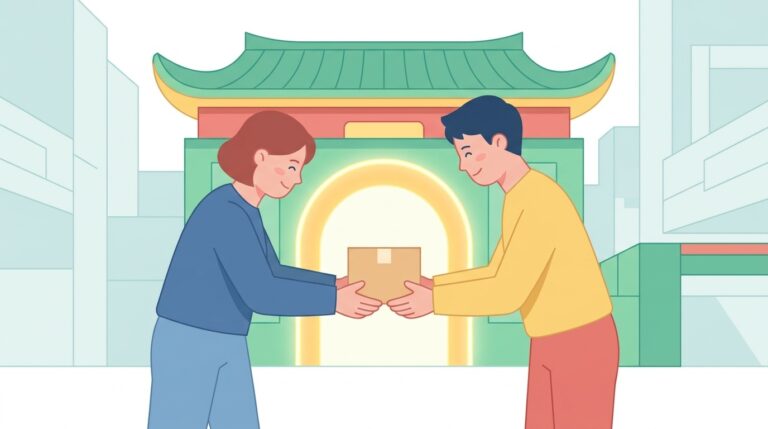
Master Second-hand Trades in Korea: Setting the Perfect Meet-up Time and Place
Phase 1: Empathy (Your Gateway to Korean Second-hand Culture)
안녕하세요! (Annyeonghaseyo!) It’s your K-Culture Navigator and favorite Korean study buddy from Daily Hangul!
Have you ever scrolled through Karrot Market (당근마켓 – Danggeun Market), eyes sparkling at a perfect, gently used K-Pop album or a vintage jacket, only to freeze when it’s time to message the seller?
You want to meet up safely, politely, and efficiently, but your brain starts looping: “Is this too blunt?”, “What if they think I’m rude?”, “How do Koreans usually agree on a spot?”
In Korea’s bustling Danggeun culture, second-hand trading (중고 거래 – junggo georae) isn’t just about exchanging goods; it’s a social dance of politeness, efficiency, and mutual respect. Today, we are cracking the code on how to negotiate the perfect trade location and time like a true local. No more awkward pauses, no more Google Translate anxiety—just smooth, confident, and polite interactions! Let’s dive in! 🚀
Phase 2: Deep Dive into 3 Essential Expressions
Here are the absolute must-know expressions to set up your direct trade (직거래 – jikgeorae) smoothly.
1. 혹시 어디서 만나는 게 편하세요? (Hoksi eodiseo mannaneun ge pyeonhaseyo?)
- Pronunciation: Hok-shee eo-dee-seo man-na-neun ge pyuhn-ha-seh-yo? (Sounds like: “Hawk-she” + “uh-dee-suh” + “man-nah-noon-geh” + “pyun-ha-say-yo?”)
- Meaning: “By any chance, where is most convenient for you to meet?”
- K-Culture Moment: In K-Dramas, you’ll often see characters buying a bulky item (like an electric fan or a giant teddy bear) and politely asking the seller where to meet. This phrase is the golden key of second-hand politeness.
- Editor’s Insight: Starting with 혹시 (hoksi – by any chance) instantly softens the question. By asking what is convenient for them first, you show excellent manners (매너 – maeneo).
- Situation Spectrum: Casual ⚠️ | Semi-formal ✅ | Formal ✅
- 🤔 Think About It: In your culture, does the buyer or the seller usually propose the meeting spot first? Why do you think Korean culture prioritizes the other person’s convenience?
2. OO역 O번 출구 앞은 어떠세요? (OO-yeok O-beon chulgu apeun eotteoseyo?)
- Pronunciation: [Station Name]-yeok [Number]-beon chool-goo ah-peun uh-ttuh-seh-yo? (e.g., Sinchon-yeok sam-beon chulgu apeun uh-ttuh-seh-yo?)
- Meaning: “How about in front of Exit [Number] of [Station] Station?”
- K-Culture Moment: Subway exits are the ultimate landmarks in Korea. It’s highly detailed, well-lit, and CCTV-monitored.
- Editor’s Insight: Never just say “Let’s meet at Hongdae.” Hongdae is massive! Naming a specific subway exit (출구 – chulgu) is the gold standard of Korean trading. It saves everyone from wandering around in the cold or heat.
- Situation Spectrum: Casual ⚠️ | Semi-formal ✅ | Formal ✅
- 🤔 Think About It: Why are public transport hubs preferred over coffee shops for trades in Korea?
3. 몇 시쯤 가능하세요? (Myeot sijeum ganeunghaseyo?)
- Pronunciation: Myut shee-jjeum gah-neung-hah-seh-yo? (Sounds like: “Myut” + “she-jjeum” + “gah-nung-ha-say-yo”)
- Meaning: “Around what time are you available?”
- K-Culture Moment: Used constantly in business, casual appointments, and especially second-hand trading.
- Editor’s Insight: The suffix ~쯤 (jjeum) means “around” or “approximately.” Adding this gives both parties a bit of flexibility, which is highly appreciated in busy Korean daily life.
- Situation Spectrum: Casual ⚠️ | Semi-formal ✅ | Formal ✅
- 🤔 Think About It: How does adding “around” make a request sound more polite than asking for an exact minute?
Phase 3: Textbook Korean vs. Real-Life Korean
Let’s compare what textbooks teach with how Koreans actually text on trading apps.
Situation A: Proposing a time
- 📖 Textbook Korean: “몇 시에 만날 수 있습니까?” (Myeot sie mannal su isseumnika? – At what time can we meet?)
- 💡 Why it’s stiff: This sounds like a military interrogation or a formal interview.
- 🗣️ Real-Life Korean: “혹시 평일 저녁이나 주말도 괜찮으세요?” (Hoksi pyeongil jeonyeogina jumaldo gwenchaneuseyo? – By any chance, are weekday evenings or weekends okay with you?)
- 💡 Why it’s better: It offers broad, polite options instead of demanding a specific time right away.
Situation B: Confirming the location
- 📖 Textbook Korean: “우리는 역 앞에서 만납니다.” (Urineun yeok apeseo mannamnida. – We meet in front of the station.)
- 💡 Why it’s stiff: Too robotic and lacks detail.
- 🗣️ Real-Life Korean: “퇴근하고 가느라 7시 반쯤 도착할 것 같은데, 개찰구 앞도 괜찮을까요?” (Toegun-hago ganeura ilgop-si ban-jjeum dochak-hal geot gateunde, gaechalgu apdo gwenchan-eulkkayo? – I’m heading over after work so I think I’ll arrive around 7:30. Is in front of the ticket barrier okay?)
- 💡 Why it’s better: It explains why (after work), gives a realistic time, and suggests a hyper-specific spot (ticket barrier – 개찰구) so they don’t even have to tap out of the station! Super considerate!
Phase 4: K-Culture Deep Dive & Non-verbal Etiquette
4-1. Nunchi (눈치) & Non-verbal Manners
- The “Danggeun” Wave: When you arrive at the exit, you don’t want to stare creepily at everyone holding a paper bag. Look for someone holding the item, or look at your phone. A polite, slight bow (목인사 – mok-insa) from a distance with a warm smile is the perfect way to establish contact.
- The Shopping Bag Etiquette: Always place the item in a clean shopping bag (preferably paper). Handing over a loose, dusty item is considered bad manners in Korea.
4-2. Cultural Code: The
Frequently Asked Questions (FAQ)
Q: What does "혹시 어디서 만나는 게 편하세요? (Hoksi eodiseo mannaneun ge pyeonhaseyo?)" mean in Korean and how do you pronounce it?
A: In Korean, "혹시 어디서 만나는 게 편하세요? (Hoksi eodiseo mannaneun ge pyeonhaseyo?)" is pronounced [Hok-shee eo-dee-seo man-na-neun ge pyuhn-ha-seh-yo? (Sounds like: "Hawk-she" + "uh-dee-suh" + "man-nah-noon-geh" + "pyun-ha-say-yo?"] and means: "By any chance, where is most convenient for you to meet?"
Q: What does "OO역 O번 출구 앞은 어떠세요? (OO-yeok O-beon chulgu apeun eotteoseyo?)" mean in Korean and how do you pronounce it?
A: In Korean, "OO역 O번 출구 앞은 어떠세요? (OO-yeok O-beon chulgu apeun eotteoseyo?)" is pronounced [Station Name] and means: "How about in front of Exit [Number] of [Station] Station?"
Q: What does "몇 시쯤 가능하세요? (Myeot sijeum ganeunghaseyo?)" mean in Korean and how do you pronounce it?
A: In Korean, "몇 시쯤 가능하세요? (Myeot sijeum ganeunghaseyo?)" is pronounced [Myut shee-jjeum gah-neung-hah-seh-yo? (Sounds like: "Myut" + "she-jjeum" + "gah-nung-ha-say-yo"] and means: "Around what time are you available?"







