

Deep Flavors, Deep Words: Mastering the Language of Korean Fermentation (Kimchi & Jang)
Phase 1: Empathy (An Editor’s Warm Welcome)
안녕하세요! (Annyeonghaseyo!) Welcome back to Daily Hangul! I’m your editor and cultural navigator.
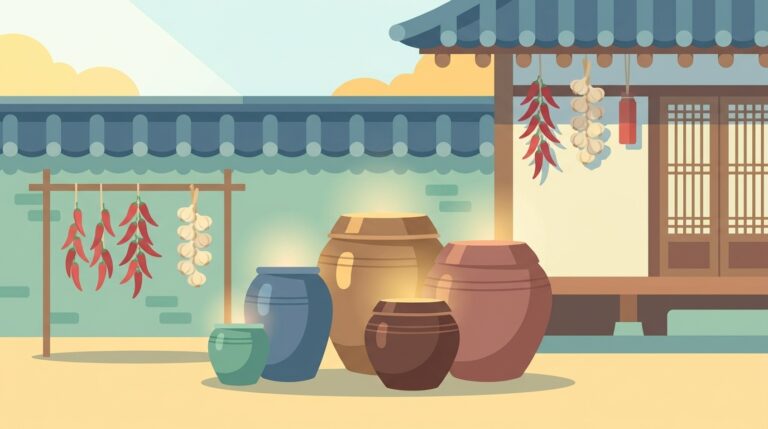
Imagine this: You’re invited to a traditional Korean dinner. Your host proudly opens a clay jar (onggi) and offers you a glistening piece of dark, aged kimchi or a spoonful of rich, aromatic doenjang (fermented soybean paste). You taste it. It’s a complex explosion of savory, acidic, and deeply comforting flavors. You want to express your appreciation, but simply saying “맛있어요” (Masisseoyo / “It’s delicious”) feels like a massive understatement. It doesn’t capture the years of fermentation, the crisp autumn wind that cooled the cabbage, or the master’s touch that balanced the salt and spice.
At the C1 level, your goal is to transition from a mere spectator to an active participant in Korean cultural dialogue. The vocabulary of fermentation (balhyo) in Korea is deeply poetic, communal, and sensory. Today, we’re going to unlock the expressive vocabulary you need to discuss Korea’s sacred Kimchi and Jang (sauces) culture like a true connoisseur. Let’s dive in!
Phase 2: Deep Dive into 3 Essential Fermentation Expressions
Let’s look at three advanced expressions that will immediately elevate your conversational depth.
1. 깊은 맛이 나다 (Gipeun masi nada)
- Pronunciation: Gee-peun mah-shee nah-dah (Rhymes with “deep-in marshy nah-dah”)
- Meaning: Literally “a deep taste comes out.” It refers to a rich, complex, layered flavor that can only be achieved through time, patience, and fermentation.
- K-Culture Moment: You will hear this constantly on food documentaries or high-end dining K-Dramas like Let’s Eat (식샤를 합시다) or Jewel in the Palace (대장금) when a food critic tastes a soup base made from decades-old soy sauce (ssi-ganjang).
- Editor’s Insight: This isn’t just about saltiness or sweetness. Gipeun mat implies that the ingredients have completely harmonized over time. If a soup or kimchi has gipeun mat, you are praising the cook’s patience.
- Situation Spectrum: Casual (✅) / Semi-formal (✅) / Formal (✅)
- 🤔 Think About It: Is there a single word in English that captures “deep flavor achieved only through slow time”? How does this reflect the Korean appreciation for patience (gidarim)?
2. 손맛이 들어가다 (Sonmasi deureogada)
- Pronunciation: Sohn-mah-shee deu-reo-gah-dah (Think of “soul-marshy” with a soft ‘d’)
- Meaning: Literally “the taste of the hand has entered.” It refers to the unique, intuitive culinary touch of an individual—usually a grandmother or mother.
- K-Culture Moment: In family-centered K-dramas, when adult children return home, they eagerly eat their mother’s geotjeori (fresh kimchi) and sigh, “역시 엄마 손맛이야” (Yeoksi eomma sonmasiya / “As expected, it’s Mom’s hand-taste”).
- Editor’s Insight: Korean traditional cooking rarely relies on exact measuring spoons. It relies on daegung (approximation) and the physical warmth and energy of the hands kneading the kimchi cabbage. Saying a dish has sonmat is the highest compliment to the chef’s personal touch.
- Situation Spectrum: Casual (✅) / Semi-formal (✅) / Formal (⚠️ – slightly too personal for highly formal corporate dining, but perfect for social settings)
- 🤔 Think About It: In western baking, precise chemistry is key. In Korean fermentation, intuitive sonmat is key. Which approach resonates more with you?
3. (푹) 익다 / 삭다 (Puk ikda / sakda)
- Pronunciation: Pook eek-dah / Sahk-dah
- Meaning: Ikda means to ripen or ferment. Sakda means to ferment to the point of breaking down, becoming deeply sour and soft (well-aged).
- K-Culture Moment: When making Kimchi-jjigae (stew), Koreans will specifically look for mukeunji (kimchi that has been fermented for over a year). They will say, “김치가 푹 익어야 제맛이 나지!” (Kimchiga puk igeoya jemasi naji! / “The kimchi has to be fully ripened to get the true flavor!”).
- Editor’s Insight: Do not confuse ikda (to ripen/ferment) with shida (to turn sour, which can sometimes imply spoilage). Puk ikda implies optimal, delicious, mature fermentation.
- Situation Spectrum: Casual (✅) / Semi-formal (✅) / Formal (✅)
- 🤔 Think About It: How does the linguistic distinction between “spoiled/sour” (shida) and “fully fermented/matured” (ikda) change our relationship with aged food?
Phase 3: Textbook Korean vs. Real Korean
Let’s compare how a textbook might teach you to describe aged food versus how native Koreans actually say it.
Scenario A: Describing aged Kimchi
- 📖 Textbook: “이 김치는 아주 오래되었습니다.” (I kimchi-neun aju orae-doeeosseumnida. – “This kimchi is very old.”)
- 🗣️ Real Korean: “이 김치 진짜 제대로 묵었네요!” (I kimchi jinjja jedaero mugeonneyo! – “This kimchi is truly, properly aged/matured!”)
- 💡 Why the difference? Saying food is “old” (oraedoeda) can sound unappetizing, like it’s expired. Muktda (묵다) specifically refers to the beautiful process of beneficial aging, like fine wine.
Scenario B: Commending the flavor of a fermented soup
- 📖 Textbook: “찌개가 짭짤하고 맛있습니다.” (Jjigae-ga jjapjjal-hago masisseumnida. – “The stew is salty and tasty.”)
- 🗣️ Real Korean: “국물 맛이 아주 깊고 구수해요.” (Gungmul masi aju gipgo gusuhaeyo. – “The broth flavor is incredibly deep and savory-earthy.”)
- 💡 Why the difference? Gusu-hada (구수하다) is a uniquely Korean flavor profile. It describes the comforting, earthy, toasted flavor of fermented soybeans, roasted barley, or scorched rice (nurungji). It goes far beyond “salty” or “savory.”
Phase 4: K-Culture Deep Dive & Non-Verbal Manners
4-1. The Body Language of Fermentation: Hand-Feeding and Humility
When visiting a Korean home or a traditional artisan workshop (jongga), tasting fermented food directly from the jar is a sacred ritual.
* The Gesture of Care: If an elder tears a piece of freshly made Kimchi by hand and offers it to you directly, do not flinch! This is a gesture of deep affection (jeong). Accept it gratefully with your mouth open, placing one hand politely under your chin to catch any stray drips.
* Double-Handed Respect: When an artisan ladles doenjang or gochujang onto a tasting spoon for you, hold your tasting small dish with both hands as they pour.
4-2. Cultural Code: Gimjang (김장)
Gimjang is the annual collective ritual of making massive quantities of Kimchi for the winter. It was inscribed on the UNESCO Representative List of the Intangible Cultural Heritage of Humanity. It is not just about food security; it is a neighborhood-wide bonding event. The ultimate culinary treat of Gimjang day is wrapping freshly salted cabbage around warm boiled pork (bossam) and eating it on the spot with the neighbors.
Phase 5: Real-Life Roleplay Scenario
The Setting
You are visiting a Jongga (head family household with centuries of heritage) in Andong. You are speaking with Grandmother Lee (이 할머니), the 13th generation matriarch and keeper of the family’s secret 200-year-old ssi-ganjang (seed soy sauce).
The Conversation
- 이 할머니: “먼 길 오느라 고생했어요. 우리 집안 씨간장으로 만든 장아찌예요. 한번 맛봐요.”
(Meon gil oneura gosaenghaess-eoyo. Uri jiban ssi-ganjang-euro mandeun jang-ajji-yeyo. Hanbeon mat-bwayo.)
“You worked hard traveling such a long way. This is pickled vegetables made with our family’s seed soy sauce. Give it a taste.”
🎭 (Offers a piece of dark, glistening pickled turnip on a wooden spoon) -
You: “우와, 대를 이어온 씨간장이군요! 영광입니다.”
(Uwa, dae-reul ieon-on ssi-ganjang-igunyo! Yeong-gwang-imnida.)
“Wow, the seed soy sauce passed down through generations! It’s an honor.”
🎭 (Receives the spoon with both hands and takes a bite, chewing slowly) -
You: “…세상에, 할머니! 짠맛 뒤에 단맛이 은은하게 도네요. 정말 깊은 맛이 나요!”
(…Sesang-e, halmeoni! Jjanmat dwie danmasi eun-eun-hage doneyo. Jeongmal gipeun masi nayo!)
“…Oh my goodness, Grandmother! There’s a subtle sweetness that lingers after the saltiness. A truly deep flavor comes through!”
🎭 (Eyes widening in genuine surprise) -
이 할머니: “허허, 잘 아네! 억지로 낸 단맛이 아니라 세월이 가면서 장 속에 있는 콩이 스스로 만들어낸 단맛이지.”
(Heoheo, jal ane! Eokjiro naen danmasi anira sewori gamyeonseo jang soge inneun kong-i seuseuro mandeun danmasiji.)
“Haha, you know your stuff! It’s not artificial sweetness; it’s the sweetness the soybeans inside the jar made themselves as time went by.”
🎭 (Laughs warmly, patted your shoulder) -
You: “역시 기계로는 절대 흉내 낼 수 없는 손맛과 세월의 힘이네요.”
(Yeoksi gigyeroneun jeoldae hyungnae nael su eomneun sonmat-gwa sewol-ui him-ineyo.)
“As expected, it’s the power of time and your personal touch that machines could never replicate.” -
이 할머니: “이 장독들이 다 내 자식들이나 다름없어. 매일 닦고, 숨 쉬게 해줘야 하거든.”
(I jangdok-deuri da na jasik-deurina dareumeopseo. Maeil dakko, sum swige haejweoya hageodeun.)
“These clay jars are no different from my own children. I have to wipe them and let them breathe every single day.”
🎭 (Caressing the smooth surface of an onggi jar) -
You: “할머니의 정성이 고스란히 담겨 있어서 장맛이 이렇게 구수하고 부드러운 거군요.”
(Halmeoni-ui jeongseong-i goseurani damgyeo isseoseo jang-masi ireoke gusu-hago budeureoun geogunyo.)
“Because your devotion is fully embedded in them, the sauce’s flavor is so beautifully earthy and smooth.”
🎭 (Looking at the rows of jars with respect) -
이 할머니: “오늘 저녁에는 이 장으로 찌개를 끓여줄 테니 많이 먹고 가요.”
(Oneul jeonyeok-eneun i jang-euro jjigae-reul kkeuryeojul teni mani meokgo gayo.)
“I will boil a stew using this paste for dinner tonight, so make sure to eat a lot before you go.”
🎭 (Smiling brightly)
🔀 Interactive Choice Point
After dinner, Grandmother Lee offers you some deeply fermented, sour kimchi (mukeunji). How do you react?
- Choice A: “이 김치는 너무 셔서 먹기 힘드네요.” (I kimchi-neun neomu syeoseo meokgi himdeuneyo. / “This kimchi is too sour, it’s hard to eat.”)
- Choice B: “와, 김치가 제대로 삭았네요! 찌개나 볶음밥으로 먹어도 정말 맛있겠어요.” (Wa, kimchi-ga jedaero saganneunyo! Jjigae-na bokkeumbap-euro meogyeodo jeongmal masisseogess-eoyo. / “Wow, this kimchi is perfectly fermented and aged! It would be amazing in stew or fried rice.”)
- Choice C: “이 김치 오래된 것 같은데 상한 건 아니죠?” (I kimchi orae-doen geot gateunde sanghan geon anijo? / “This kimchi seems old, but it hasn’t gone bad, right?”)
Feedback
- Best Choice: B — This shows a high level of cultural understanding (C1). You used the verb sakda (to ferment deeply) and recognized the culinary value of mukeunji in cooked dishes.
- Risk Choice: A — While honest, it might sound a bit culturally insensitive to an artisan who spent years fermenting it.
- Bad Choice: C — Major faux pas! Confusing traditional fermentation (발효) with spoilage (부패) will deeply hurt the pride of a Korean host.
Phase 6: 10-Second Emotional Shadowing Drill
Practice saying these emotional phrases aloud. Pay attention to the pauses (/) and the mood guidance.
[😊 Expressing deep awe and appreciation]
“와… / 국물 맛이 / 진짜 깊고 구수해요!”
(Wa… / gungmul masi / jinjja gipgo gusuhaeyo!)
“Wow… / the broth flavor / is truly deep and earthy!”-
[🥹 Filled with warmth and nostalgia]
“음! / 역시 엄마의 / 손맛은 / 따라갈 수가 없네요.”
(Eum! / yeoksi eomma-ui / sonmas-eun / ttaragal suga eomneyo.)
“Mmm! / As expected, Mom’s / hand-touch / can never be matched.”
Phase 7: K-Culture Mini-Dictionary
- 옹기 (Onggi) | Onggi | Traditional, breathable earthenware jars used for fermenting sauces and kimchi.
- 씨간장 (Ssi-ganjang) | Seed Soy Sauce | Aged soy sauce kept for decades or centuries, acting as the mother starter for new batches.
- 묵은지 (Mukeunji) | Aged Kimchi | Kimchi that has been fermented at a low temperature for at least six months to a year, characterized by its deep, sour profile.
- 구수하다 (Gusuhada) | Earthy-savory | A comforting sensory word for roasted, nutty, and fermented flavors like toasted grains or doenjang.
Phase 8: Survivor Kit for Travelers
Survival Expressions TOP 3
- “덜 맵게 해주실 수 있나요?” (Deol maepge haejusil su innayo?)
- Can you make it less spicy? (Great for foreigners exploring fresh kimchi dishes).
- “이건 얼마나 익은 김치예요?” (Igeon eolmana igeun kimchi-yeyo?)
- How aged/fermented is this kimchi?
- “장류는 직접 담그신 건가요?” (Jang-ryuneun jikjeop damgeusin geongayo?)
- Do you make these fermented sauces yourself? (Ask this at traditional restaurants to delight the owners!).
💡 Editor’s Travel Note:
To find authentic regional kimchi and jang artisans, download the Naver Map App and search for words like “종가음식” (Jongga food) or “한정식” (traditional Korean full-course meal). Note that artisanal fermentation workshops in rural areas may have limited English support, so keeping these survival phrases handy is essential!
Phase 9: “Going One Step Deeper” (Reflective Thought)
In western cultures, food safety often centers around sterilization, refrigeration, and absolute freshness. However, Korean Jang culture teaches us that some things only reach their peak value through controlled decay and patience. The salt keeps the bad bacteria out, while time allows the good bacteria to transform the simple soybean into a complex umbrella of umami.
This reflects the Korean philosophy of 공존 (Gongjon / Coexistence) and 기다림 (Gidarim / Waiting).
💬 Your Turn: How does your home culture view aged or fermented foods? Do you have a family recipe that requires “patience” rather than a microwave? Let us know in the comments below!
Phase 10: FAQ & Common Mistakes
Q: Is there a difference between ‘익다’ and ‘삭다’?
A: Yes! 익다 (Ikda) is the general term for food ripening or fermenting to a pleasant, edible state (like fresh fruit or moderately aged kimchi). 삭다 (Sakda) is used when the ingredients have broken down significantly, resulting in a much stronger, pungent, and deeply sour flavor profile (like well-aged fish sauce or heavy mukeunji).
Q: Can I use ‘쉰 김치’ (sour kimchi) and ‘묵은지’ (mukeunji) interchangeably?
A: Not quite. Mukeunji is slowly fermented at low temperatures over a long period to maintain a crisp texture despite being very sour. Swin kimchi (쉰 김치) simply means kimchi that has turned sour (often rapidly at room temperature) and can sometimes border on going bad.
Q: Is ‘손맛’ (sonmat) considered hygienic in modern Korea?
A: Absolutely. While modern commercial factories use gloves and machines for safety standards, sonmat in home cooking and high-end artisanal contexts represents love, experience, and the metaphorical “flavor of care” rather than literal bare-handed dirt.
🚨 Common Mistakes Alert
- Mistake 1: Calling aged kimchi “상한 김치” (sanghan kimchi / spoiled kimchi).
- Correct Action: Use “푹 익은 김치” (puk igeun kimchi) or “묵은지” (mukeunji).
- Mistake 2: Describing Doenjang as just “짜요” (jjayo / salty).
- Correct Action: Appreciate the complexity by saying “구수해요” (gusuhaeyo / deeply savory and earthy).
Phase 11: Action Mission & Engagement
- 🥉 Bronze Mission: Try a bite of kimchi today and describe the taste to yourself using “깊은 맛이 나요” or “새콤해요” (it’s tangy).
- 🥈 Silver Mission: Post a picture of your favorite Korean stew or fermented dish on social media, tag
@DailyHangul, and write: “역시 국물 맛이 구수하네요!” - 🥇 Gold Mission: Next time you go to a Korean restaurant, ask the owner: “이 김치는 직접 담그신 거예요? 손맛이 정말 좋으시네요!” (Did you make this kimchi yourself? Your culinary touch is amazing!).
Phase 12: Interactive Quiz Challenge
Test your knowledge! Click on the toggle buttons below to check your answers.
Q1. Which word describes the unique, earthy, and warm flavor profile of toasted grains or fermented soybean paste?
- A) 시다 (Sida)
- B) 구수하다 (Gusuhada)
- C) 달콤하다 (Dalkomhada)
Reveal Answer & Explanation
Answer: B) 구수하다 (Gusuhada)
Explanation: Gusuhada is the perfect word to describe the comforting, deep aroma of Korean traditional fermented stews like doenjang-jjigae or roasted tea.
Q2. True or False: ‘Mukeunji’ (묵은지) is just rotten kimchi that needs to be thrown away.
- A) True
- B) False
Reveal Answer & Explanation
Answer: B) False
Explanation: Mukeunji is premium, slowly aged kimchi that is highly prized in Korean cuisine for making rich, deep-flavored stews and braised dishes.
Until next time, keep fermenting your Korean skills! 다음에 또 만나요! (See you next time!)







