

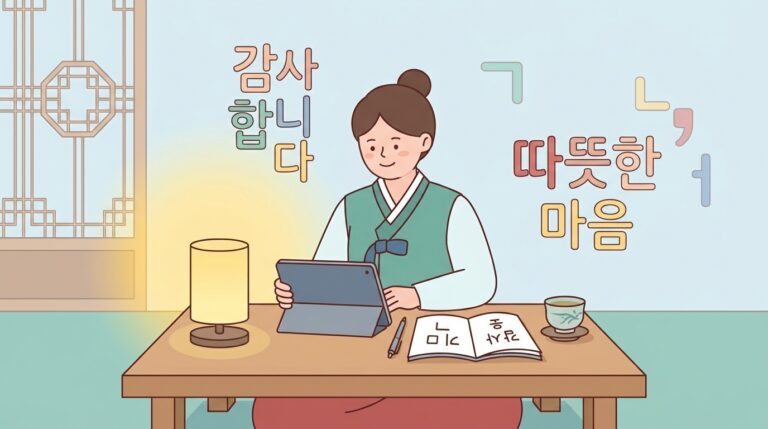
Handling Customer Reviews Like a K-Brand Pro: The Ultimate Guide for Mid-Intermediate Learners
Phase 1: Empathy (Welcome, My Friend!)
안녕하세요! Welcome back to another edition of Daily Hangul, your premium ticket to mastering natural, heartfelt Korean. I’m your Senior Editor and local cultural navigator, and I’m absolutely thrilled to guide you through today’s lesson.
Imagine this: You are managing a trendy Hanok café in Insadong or running a sleek K-beauty online store. A notification pings. It’s a detailed review from a customer. Some parts are glowing with praise, while others offer constructive feedback about a slight delay. Your fingers hover over the keyboard. “Should I just say ‘감사합니다’ (Thank you)? No, that sounds too robotic. Should I apologize? But how do I sound genuinely apologetic without sounding like a corporate AI?”
If you’ve ever felt stuck between being too stiff and being too casual when replying to customers, you are not alone! In Korea’s highly competitive service industry, responding to reviews is an art form known as 리뷰 관리 (ribyu gwanri – review management). Today, we’re unlocking the exact phrases, cultural nuances, and hidden linguistic codes that will make your Korean customer service sound incredibly warm, professional, and deeply respectful. Let’s dive in!
Phase 2: Deep Dive into 3 Essential Expressions
In Korean customer service, the goal is always to build a relationship—정 (Jeong)—even through a screen. Here are the top three expressions you need to master at the B2 level.
1. 소중한 후기 남겨주셔서 진심으로 감사드립니다 (한글)
- Pronunciation: Sojunghan hugi namgyeojusyeoseo jinsimeuro gamsadeurimnida (Sounds like: “So-joong-han hoo-gi nam-gyeo-joo-shyeo-seo jin-sim-eu-ro gam-sa-deu-rim-ni-da”)
- Meaning: Thank you very much for leaving your precious review.
- K-Culture Moment: You will see this at the very beginning of almost every reply on platforms like Naver Maps, Baemin (Baedal Minjeok), or Olive Young. It is the ultimate polite opener.
- Editor’s Insight: The word 소중한 (sojunghan) means “precious/valuable.” By calling a customer’s review “precious,” you show that you don’t take their time for granted. It instantly lowers their guard.
- Situation Spectrum: Casual: 🚫 | Semi-formal: ⚠️ | Formal: ✅
- 🤔 Think About It: In your culture, do businesses thank customers for negative feedback? In Korea, even critical reviews are greeted with gratitude because they are seen as a chance to grow.
2. 너그러운 양해 부탁드립니다 (한글)
- Pronunciation: Neogeureoun yanghae butakdeurimnida (Sounds like: “Neo-geu-reo-oon yang-hae boo-tak-deu-rim-ni-da”)
- Meaning: We kindly ask for your generous understanding/forbearance.
- K-Culture Moment: Often used in K-Dramas when a luxury hotel manager has to explain a sudden facility repair to a VIP guest.
- Editor’s Insight: 양해 (yanghae) is a beautiful word that means “understanding” or “excusing a situation.” Paired with 너그러운 (neogeureoun – generous/broad-minded), it gently asks the customer to look past a flaw with a warm heart.
- Situation Spectrum: Casual: 🚫 | Semi-formal: ⚠️ | Formal: ✅
- 🤔 Think About It: How does asking for “generous understanding” sound different from a simple “I’m sorry”? It shifts the dynamic from a cold transaction to a human-to-human plea for empathy.
3. 더욱 발전하는 [브랜드명]이 되겠습니다 (한글)
- Pronunciation: Deouk baljeonhaneun [Brand Name]i doegessimnida (Sounds like: “Deo-ook bal-jeon-ha-neun … i doe-get-sim-ni-da”)
- Meaning: We will become a [Brand Name] that develops and improves even more.
- K-Culture Moment: The classic closing statement used by K-pop entertainment agencies during official announcements or premium online shopping malls.
- Editor’s Insight: Instead of just saying “We will try harder,” using 발전하는 (baljeonhaneun – developing/improving) shows concrete, forward-moving commitment. It leaves the customer with a highly professional and positive final impression.
- Situation Spectrum: Casual: 🚫 | Semi-formal: ✅ | Formal: ✅
- 🤔 Think About It: Why is showing a commitment to growth so vital in Korean business culture? It reflects the societal value of constant improvement (Gaeseon / Baljeon).
Phase 3: Textbook Korean vs. Real-Life Korean
Let’s compare standard textbook phrases with what premium Korean service professionals actually write online to sound warm yet professional.
Situation 1: Apologizing for a delivery delay
- 📖 Textbook Korean: 배송이 늦어서 죄송합니다. (Baesongi neujeoseo joesonghamnida.) – “Sorry that the delivery is late.”
- 🗣️ Real-Life Korean: 많이 기다리셨을 텐데, 배송에 불편을 드려 고개 숙여 사과드립니다. (Mani gidarisyeosseul tende, baesonge bulpyeoneul deuryeo gogae sugye sagwadeurimnida.) – “You must have waited so long; we bow our heads in apology for the inconvenience caused by the delivery delay.”
- 💡 Why is it different? The real-life version uses 고개 숙여 사과드립니다 (bowing our heads in apology), which paints a vivid, respectful physical gesture of humility that deeply resonates with Korean consumers.
Situation 2: Replying to a positive review about taste/quality
- 📖 Textbook Korean: 맛있게 드셔 주셔서 감사합니다. (Masitge deusyeo jusyeoseo gamsadeurimnida.) – “Thank you for eating deliciously.”
- 🗣️ Real-Life Korean: 저희 음식이 고객님의 입맛에 맞으셨다니 이보다 더 기쁠 수가 없습니다! (Jeohui eumsigi gogaengnimi immase majeosyeoddani iboda deo gippeul suga opseumnida!) – “We couldn’t be happier to hear that our food perfectly suited your palate!”
- 💡 Why is it different? The textbook phrase is polite but dry. The real-life version uses a passionate idiom 이보다 더 기쁠 수가 없습니다 (couldn’t be happier) to share genuine joy with the customer.
Phase 4: K-Culture Deep Dive & Non-Verbal Manners
4-1. The Art of “E-Nunchi” (이러닝 눈치)
In face-to-face service, bowing and maintaining soft eye contact are key. But in digital customer service, you need E-Nunchi (digital tact). In Korea, this is expressed through the perfect balance of honorifics (존댓말) and emotional punctuation. Using only full stops (.) can make you look cold, while too many exclamation marks (!!!) or tildes (~~) can look unprofessional. A premium response uses polite sentence endings like -옵니다/-드립니다 and wraps up with a warm, caring tone.
4-2. The “Baemin Review” Culture (배민 리뷰 문화)
If you order food in Korea via Baedal Minjeok (Baemin), you will see a fascinating phenomenon. Customers leave detailed reviews with photos, and owners respond with long, handwritten-style letters. Sometimes, owners even offer a 리뷰 이벤트 (Review Event)—providing a free side dish (서비스) in exchange for an honest, warm review. This shows how deeply reviews are tied to community bonding and trust in modern Korean commerce.
Phase 5: Real-Life Roleplay Scenario
Meet Ji-won, a loyal but disappointed customer, and Min-ho, the professional manager of a boutique K-beauty store called Seoul Glow (서울 글로우). Ji-won received a skin toner with a slightly damaged outer box.
- Characters:
- 지 원 (Ji-won): High-standard customer who appreciates packaging.
- 민 호 (Min-ho): Warm, empathetic, and professional manager.
💬 The 8-Turn Dialogue
- 지 원: 디자인도 예쁘고 다 좋은데, 배송 상자가 찌그러져서 와서 조금 아쉬웠어요.
(Dijaindo yeppeugo da jounde, baesong sangjaga jjigeureojyeoseo waseo jogeum aswiwosseoyo.)
“The design is pretty and everything is good, but I was a bit disappointed because the shipping box arrived dented.” -
민 호: 🎭 (Gravely bowing) 아, 고객님! 우선 저희 제품을 믿고 구매해 주셨는데 불편을 드려 정말 죄송합니다.
(Ah, gogaengnim! Useon jeohui jepumeul mitgo gumae hae jusyeonneunde bulpyeoneul deuryeo jeongmal joesonghamnida.)
“Ah, valued customer! First of all, thank you for trusting and purchasing our product, and we are truly sorry for causing you inconvenience.” -
지 원: 선물용으로 산 거라 상자 상태가 중요했거든요. 제품 자체는 정말 마음에 들어요.
(Seonmulyonguro san geora sangja sangtaega jungyohaetgeodeunyo. Jepum jacheneun jeongmal maeume deureoyo.)
“I bought it as a gift, so the condition of the box was important to me. I do really like the product itself.” -
민 호: 🎭 (Nodding with empathy) 아… 선물용이셨군요! 가장 완벽해야 할 순간에 속상하셨을 마음을 생각하니 저희도 너무나 안타깝습니다.
(Ah… seonmulyongisyeotgunyo! Gajang wanbyeokhaeya hal sungane soksanghasyeosseul maeumeul saenggakhani jeohuido neomuna antakkapseumnida.)
“Ah… it was for a gift! Thinking about how upset you must have been at a moment that should have been perfect, we feel terribly sorry as well.” -
지 원: 네, 그래도 제품력이 좋아서 다음에도 또 구매하고 싶긴 해요. 다음엔 포장에 신경 써주세요.
(Ne, geuraedo jepumryeogi joaseo daeumedo tto gumaehago sipgin haeyo. Daemen pojanje singyeong syeojuseoyo.)
“Yes, but since the product quality is good, I do want to buy again next time. Please pay extra attention to packaging next time.” -
민 호: 🎭 (With absolute sincerity) 소중한 피드백 감사드립니다. 다음 주문 시에는 포장에 각별히 신경 쓸 수 있도록 전담 부서에 즉시 전달하겠습니다.
(Sojunghan pideubaek gamsadeurimnida. Daeum jumun sieneun pojanje gakbyeolhi singyeong sseul su isdotorok jeondam buseoe jeuksi jeondalhagessumnida.)
“Thank you for your valuable feedback. I will immediately convey this to our dedicated department so that we pay extra special attention to packaging for your next order.” -
지 원: 피드백이 빨라서 믿음이 가네요. 답변 감사합니다.
(Pideubaegi ppallaseo mideumi ganeyo. Dapbyeon gamsahamnida.)
“Since your feedback is so fast, I feel I can trust you. Thank you for the response.” -
민 호: 🎭 (Smiling warmly) 저희를 믿어주셔서 감사합니다. 늘 발전하는 서울 글로우가 되겠습니다. 따뜻한 하루 보내세요!
(Jeohuireul mideojusyeoseo gamsahamnida. Neul baljeonhaneun Seoul Glow-ga doegessumnida. Tattuthan haru bonaeseyo!)
“Thank you for trusting us. We will become a ‘Seoul Glow’ that is always improving. Have a warm and beautiful day!”
🔀 Interactive Choice Points
If you were Min-ho, how would you respond to Ji-won’s initial complaint? Choose your path!
- Option A: “택배사 문제라서 저희 책임은 아니지만, 다음엔 조심할게요.” (It’s the courier’s fault, so not our responsibility, but we’ll be careful next time.)
- 🚨 Feedback (Bad): Never blame the delivery partner directly to a customer. It looks unprofessional and breaks trust instantly.
- Option B: “불편을 드려 죄송합니다. 포장 과정을 개선하고 다음 구매 시 더 꼼꼼히 확인하겠습니다.” (Sorry for the inconvenience. We will improve our packaging process and check more thoroughly for your next purchase.)
- 🏆 Feedback (Best – 100%): Perfect! It acknowledges the issue, promises systemic improvement, and retains the customer politely.
- Option C: “죄송합니다. 새 상자만 따로 택배로 보내드릴까요?” (Sorry. Shall we just mail you a new empty box separately?)
- ⚠️ Feedback (Risk): Generous, but mailing just a cardboard box might feel awkward to the customer unless requested. Offer official exchanges instead!
Phase 6: 10-Second Emotion Shadowing Drill
In Korean customer service, tone inflection is everything. Practice saying these sentences aloud. Feel the pauses (/) and adopt the emotional mindset!
- [🥺 Deeply apologetic and humble]
- 많이 기다리셨을 텐데, / 배송에 불편을 드려 / 고개 숙여 사과드립니다.
- Mani gidarisyeosseul tende, / baesonge bulpyeoneul deuryeo / gogae sugye sagwadeurimnida.
- [😊 Expressing bright, genuine gratitude]
- 저희 음식이 / 고객님의 입맛에 맞으셨다니 / 이보다 더 기쁠 수가 없습니다!
- Jeohui eumsigi / gogaengnimi immase majeosyeoddani / iboda deo gippeul suga opseumnida!
- [🤝 Professional, reassuring, and confident]
- 믿고 이용해 주신 만큼, / 늘 발전하는 / 저희 브랜드가 되겠습니다.
- Mitgo iyonghae jusin mankum, / neul baljeonhaneun / jeohui beuraenduga doegessumnida.
Phase 7: K-Culture Mini-Dictionary
- 후기 (Hugi) | Review / Feedback
- Literally means “after-story.” It refers to any written customer review, blog review, or testimony after using a product or service.
- 입맛에 맞다 (Immase matda) | To suit one’s palate
- A highly popular idiom. Instead of just saying “Did you like the food?”, ask “입맛에 맞으셨나요?” (Did it suit your palate?) to sound incredibly natural.
- 피드백 (Pideubaek) | Feedback
- Widely used in modern Korean business. Pronounced “pee-deu-baek,” it is used interchangeably with ‘의견’ (opinion/feedback).
- 너그럽다 (Neogeureopda) | Broad-minded / Generous
- A beautiful adjective used to describe someone’s gentle, understanding nature. Used primarily in customer care and formal letters.
Phase 8: The Traveler’s Survival Kit
Are you traveling to Korea or setting up business relations there? Keep these quick phrases handy!
Survival Phrases TOP 3
- 혹시 리뷰 이벤트 진행하나요? (Hoksi ribyu ibenteu jinhaenghanayo?)
- Pro Tip: “Are you by any chance doing a review event?” Use this at trendy restaurants or on delivery apps to get free treats (서비스)!
- 요청사항 반영해 주셔서 감사합니다! (Yocheongsahang banyeonghae jusyeoseo gamsahamnida!)
- Pro Tip: “Thank you for reflecting my special requests!” (Perfect for when a hotel gives you a quiet room as requested).
- 포장 신경 써주셔서 감사합니다. (Pojang singyeong sseojusyeoseo gamsahamnida.)
- Pro Tip: “Thank you for paying attention to the packaging.” Perfect for when your online shopping items arrive beautifully packed.
Editor’s Travel Note
When ordering delivery in Korea, downloading the Baedal Minjeok App is a must. Disclaimer: App interfaces and payment rules can change frequently based on national security or local credit card regulations; always verify the latest payment options before ordering.
Phase 9: “Going One Step Deeper” (Reflections on Korean Service Culture)
In Korea, customer service is heavily influenced by the concept of 정성 (Jeongseong – devotion/sincerity). Unlike Western customer service, which often focuses on objective, logical troubleshooting, Korean customer service heavily emphasizes emotional alignment. When a mistake happens, a Korean customer wants to feel that you are genuinely upset on their behalf before you offer a practical solution. It’s not just about “fixing the box”; it’s about repairing the “emotion” of the customer.
💬 Your Turn: Have you ever noticed this emotional depth in K-dramas or Korean shopping experiences? Share your stories in the comments below!
Phase 10: FAQ & Common Mistakes
Q: Can I use “미안합니다” (mianhamnida) when replying to a customer review?
A: It is highly recommended to avoid “미안합니다.” While polite, it sounds too informal for professional business replies. Instead, always use 죄송합니다 (joesonghamnida) or 사과드립니다 (sagwadeurimnida) to show proper respect.
Q: Is it okay to use emojis like 😊 or 🙏 in customer replies?
A: Yes, absolutely! Modern Korean online business is highly visual. Emojis like 🙏 (humble gratitude), 😊 (friendly smile), or 💛 (warm heart) are widely used, but keep them limited to 1 or 2 per paragraph to maintain a professional balance.
Q: What does “고객님” (Gogaengnim) actually mean?
A: It translates to “valuable customer/guest.” The “-님” suffix is the ultimate honorific. Never address a customer by just their name or “you” (당신); always use 고객님.
🚨 The 3 Common Mistakes Wall
- Mistake: Writing “너의 리뷰 고마워” (Neoui ribyu gomawo – Thanks for your review).
- Correct Action: This is informal language (반말). Always write: 소중한 후기 남겨주셔서 감사드립니다.
- Mistake: Offering automated, robotic corporate answers.
- Correct Action: Tailor at least one line to reference the customer’s specific mention (e.g., “We are so glad the Lavender scent suited you!”).
- Mistake: Being overly defensive about delays.
- Correct Action: Start by apologizing with “너그러운 양해 부탁드립니다” before detailing the logistics issue.
Phase 11: Action Mission
- Bronze Mission: Write down today’s key expression: “소중한 후기 남겨주셔서 감사드립니다” on your notepad three times.
- Silver Mission: Post a picture of your favorite Korean product or food on Instagram, tag
@DailyHangul, and write a 1-sentence mock review using today’s vocabulary! - Gold Mission: If you run a business or have a Korean colleague, use the phrase “너거운 양해 부탁드립니다” in your next polite request email!
🎮 K-Culture Mission: Watch a business-themed K-drama (like Start-Up or Business Proposal). Spot the exact moment the characters use “양해” or “고객님” and note the tone of their voice!
Phase 12: Interactive Quiz Challenge
Test your skills and lock in your new knowledge!
1. Situation-Based Choice
Which phrase is best suited to open a response to a highly critical review about a product malfunction?
* A) 맛이 아주 좋습니다! (The taste is very good!)
* B) 불편을 드려 대단히 죄송하며, 보내주신 소중한 피드백을 바탕으로 즉시 개선하겠습니다. (We are extremely sorry for the inconvenience, and we will immediately improve based on your valuable feedback.)
* C) 그냥 환불해 드릴게요. (I’ll just refund you.)
Show Answer
Correct Answer: B
It shows deep respect, acknowledges the inconvenience, and offers a concrete path to improvement without being dismissive.
2. Fill in the Blanks
“너그러운 ________ 부탁드립니다.”
* A) 기쁨 (gippeum – joy)
* B) 양해 (yanghae – understanding/forbearance)
* C) 후기 (hugi – review)
Show Answer
Correct Answer: B
The complete phrase is “너그러운 양해 부탁드립니다” (We kindly ask for your generous understanding).
3. True or False
In premium Korean service, using the word “미안합니다” is preferred over “죄송합니다”. (True/False)
Show Answer
Correct Answer: False
“죄송합니다” is much more polite, formal, and professional, making it the perfect choice for customer reviews.
Have questions? Drop a comment below! We read and reply to every single ‘소중한 후기’ from our learners! See you in the next lesson!







