

Beyond Faith: Deciphering the Cozy, Community-Driven World of Korean Churches & Cathedrals
Phase 1: Empathy (The Warm Welcome)
안녕하세요! (Annyeonghaseyo!) Welcome back to Daily Hangul, your cozy corner for mastering not just the Korean language, but the vibrant lifestyle that goes with it. I’m your host and editor, and today we are diving into a side of Korea that many expats and travelers notice immediately but find a bit mysterious: the incredible social power of Korean churches (교회 – Gyohwe) and Catholic cathedrals (성당 – Seongdang).
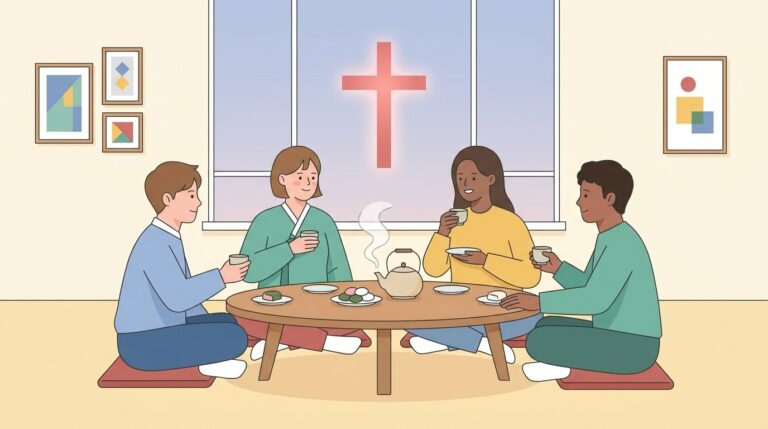
Have you ever walked through a Korean neighborhood at night and noticed dozens of glowing red neon crosses gracing the skyline? Or maybe a Korean friend invited you to a “church youth group retreat” (수련회 – Suryeonhoe) that felt more like a cozy indie music festival mixed with a massive food feast?
In Korea, religious spaces—especially Christian and Catholic ones—are far more than places of worship; they are the ultimate socio-cultural hubs. For decades, they have functioned as tight-knit community centers, networking hotspots, and second families. If you are an intermediate (B2) learner, understanding how to navigate these community dynamics—and the unique vocabulary that powers them—will unlock a whole new level of cultural integration. Let’s explore how to speak, connect, and blend into these heartwarming circles like a true local!
Phase 2: Core Expressions Deep Dive
Here are three essential terms you will hear constantly when stepping into any Korean faith-based community. Let’s break them down.
1. 교제 (Gyo-je)
- Pronunciation: Gyo-je (Sounds like “gyo” as in yo-yo with a ‘g’, and “je” as in jetty)
- Meaning: Fellowship / Socializing (Direct translation: “Intercourse” or “Association”, but used purely for warm, communal bonding in religious settings)
- K-Culture Moment: In K-Dramas like Reply 1988 or Hospital Playlist, you often see characters staying behind after a service to share a meal, laugh, and catch up. This post-worship social hour is the quintessential gyoje time.
- Editor’s Insight: While in secular contexts 교제 can sometimes refer to romantic dating (e.g., 교제 중이다 – dating), in church/cathedral settings, it refers strictly to spiritual and social fellowship. It’s the warm, safe space where members share their weekly struggles over sliced fruit and warm barley tea.
- Situation Spectrum: Casual (✅) / Semi-formal (✅) / Formal (✅)
- 🤔 Think About It: In many Western cultures, socializing after service is casual and optional. In Korea, 교제 is often considered an essential, almost sacred extension of the service itself. Why do you think collective bonding is valued just as highly as individual worship in Korea?
2. 봉사 (Bong-sa)
- Pronunciation: Bong-sa (Sounds like “bong” as in gong, and “sa” as in salsa)
- Meaning: Voluntary Service / Volunteering
- K-Culture Moment: Think of scene-stealers in slice-of-life dramas preparing hundreds of servings of gukbap (hot soup rice) for the elderly or teaching free English classes to underprivileged neighborhood kids under the church banner.
- Editor’s Insight: 봉사 is the ultimate social currency in these communities. By actively participating in 봉사, you show that you are not just a passive observer but a committed member who cares about the collective well-being. It is the fastest way to gain respect and build deep trust with older church members (the famous Ahjummas and Ahjussis).
- Situation Spectrum: Casual (✅) / Semi-formal (✅) / Formal (✅)
- 🤔 Think About It: How does volunteering in your home culture differ from the deeply integrated, weekly communal 봉사 seen in Korean organizations?
3. 나눔 (Na-num)
- Pronunciation: Na-num (Sounds like “nah” as in banana, and “num” rhyming with room but with a shorter ‘u’ sound)
- Meaning: Sharing (specifically sharing thoughts, life updates, and spiritual reflections in small groups)
- K-Culture Moment: Picture a small circle of 5-6 people sitting on floor mats, sipping instant coffee, while one member vulnerably shares about their stressful job hunt, and the others listen with deep, empathetic nods.
- Editor’s Insight: 나눔 is not about lecturing; it’s about vulnerable, horizontal communication. When Koreans do 나눔, they drop their competitive, everyday armor and share their real feelings. If you can do a basic 나눔 in Korean, you are officially in the inner circle.
- Situation Spectrum: Casual (✅) / Semi-formal (✅) / Formal (⚠️ – Too intimate for strict corporate environments)
- 🤔 Think About It: Western sharing circles often focus on individual self-actualization, whereas Korean 나눔 emphasizes mutual empathy (정 – Jeon) and bearing each other’s burdens.
Phase 3: Textbook Korean vs. Real-Life Korean
Let’s look at how to transition from stiff, dictionary-translated phrases to the warm, natural language used in real Korean religious communities.
Situation 1: Asking if someone wants to hang out after the service
- 📖 Textbook Korean: “예배가 끝난 후에 우리 같이 사교 활동을 할까요?”
(Yebe-ga kkeut-nan hu-e u-ri gat-i sa-gyo hwal-dong-eul hal-kka-yo?)
“Shall we engage in social activities together after the worship service?” (Sounds like an academic sociology paper!) - 🗣️ Real-Life Korean: “오늘 예배 끝나고 교제 시간에 같이 차 한잔해요!”
(O-neul ye-be kkeut-na-go gyo-je si-gan-e gat-i cha han-jan-he-yo!)
“Let’s grab a cup of tea together during the fellowship time after the service today!” - 💡 Why the difference? Secular terms like “사교 활동” (socializing) sound cold and clinical. 교제 시간 (fellowship time) is the dedicated, culturally understood term for post-worship bonding.
Situation 2: Expressing that you felt touched by someone’s life story during a small group
- 📖 Textbook Korean: “당신의 이야기는 나를 감동시켰습니다.”
(Dang-sin-ui i-ya-gi-neun na-reul gam-dong-sik-hyeot-seum-ni-da.)
“Your story moved me.” (Using “당신” can sound unnaturally distant or even confrontational in speech!) - 🗣️ Real-Life Korean: “오늘 나눔 들으면서 정말 은혜 많이 받았어요.”
(O-neul na-num deu-reul-myeon-seo jeong-mal eun-hye man-i ba-dat-seo-yo.)
“I received so much grace (was deeply touched/comforted) while listening to your sharing today.” - 💡 Why the difference? “은혜를 받다” (to receive grace/blessing) is the ultimate, heartfelt compliment in Korean Christian/Catholic circles to express that someone’s words or actions deeply comforted and inspired your soul.
Phase 4: K-Culture Deep Dive & Non-Verbal Manners
4-1. The Art of the Warm Nod & Serving Others
When attending a community gathering (모임 – Moim) in a Korean church or cathedral, non-verbal cues speak volumes:
* The Two-Handed Pass: Whether you are pouring hot corn tea (옥수수차) or passing a plate of rice cakes (떡), always use both hands. This shows deep respect for the community.
* The Active Listener’s Nod: During 나눔 (sharing), avoid sitting back with folded arms. Lean forward slightly, nod frequently, and make soft comforting sounds like “아… 그렇군요” (Ah… I see) or “맞아요” (That’s true). This shows you are actively carrying their emotional weight with them.
4-2. The “Rice Cake and Rice Soup” Diplomacy
Food is the glue of Korean faith communities. After Sunday services, most establishments serve free lunch, usually featuring simple, soul-warming dishes like gukbap (국밥), guksu (국수 – noodles), or freshly steamed tteok (떡).
In Korean culture, eating together is called 식구 (Sik-gu), which literally translates to “eating mouth” or “family members who share food.” By sitting down and eating whatever is served without being picky, you are telling the community, “I am ready to be part of your family.”
Phase 5: Practical Roleplay Scenario
The Setting
You are at the post-service cafeteria of “Suri Han-ma-eum Cathedral” (수리 한마음 성당). You are sitting with Min-woo, a friendly local youth group leader who is helping you feel welcome.
Characters
- Min-woo (민우): Enthusiastic, warm-hearted, loves recruiting volunteers.
- You (우주 – Wooju / Intermediate Learner): Eager to practice Korean and join the community.
민우: (밝게 웃으며) 우주 씨, 오늘 미사 끝나고 국수 맛있게 드셨어요?
      (Min-woo: [Brightly smiling] Wooju, did you enjoy the noodles after the mass today?)

우주: (손을 모으며) 네, 정말 맛있었어요! 이 국수를 교인들이 직접 만드신 거예요?
      (You: [Clasping hands] Yes, it was delicious! Did the church members make these noodles themselves?)

민우: 맞아요! 매주 저희 청년회에서 번갈아가며 봉사를 하거든요. 다음 주에 우주 씨도 같이 해보실래요?
      (Min-woo: Exactly! Our youth group takes turns doing volunteer service every week. Would you like to join us next week?)

우주: (눈을 반짝이며) 와, 저도 봉사에 참여하고 싶어요. 제가 잘할 수 있을까요?
      (You: [Eyes sparkling] Oh, I'd love to volunteer too. Do you think I can do it well?)

민우: 그럼요! 그냥 재료 준비만 도와주셔도 큰 힘이 돼요. 끝나고 우리 청년회 교제 시간도 있거든요.
      (Min-woo: Of course! Just helping with ingredient prep is a huge help. Plus, we have our youth group fellowship time afterward.)

우주: 교제 시간에는 주로 어떤 활동을 해요?
      (You: What kind of activities do we usually do during fellowship time?)

민우: 시시콜콜한 일상 얘기도 하고, 한 주 동안 힘들었던 일들을 가볍게 나눔 해요. 전혀 부담 안 가지셔도 돼요!
      (Min-woo: We chat about casual daily life and do a light sharing of any struggles we had during the week. Absolutely no pressure!)

우주: (안심하며) 좋네요. 저도 따뜻한 나눔을 같이 나누고 싶어요. 불러주셔서 감사합니다!
      (You: [Relieved] That sounds lovely. I'd love to share in that warm environment. Thank you for inviting me!)
🔀 Interactive Choice Point
Min-woo asks if you want to share a brief prayer request or personal struggle during the upcoming small group sharing (나눔). What is your response?
- Option A: “아직 한국어가 서툴러서 부끄러워요. 다음 기회에 할게요.” (I’m shy because my Korean is still poor. I’ll do it next time.)
- Option B: “좋아요! 서툴지만 제 일상 얘기를 조금 나누고 싶어요.” (Great! Although it’s clunky, I’d like to share a bit about my daily life.)
- Option C: “종교적인 이야기는 조금 부담스러운데 다른 얘기 하면 안 될까요?” (Religious talk is a bit burdensome, can we talk about something else?)
💡 Feedback & Consequences
- Best Choice: Option B! (Fellowship in Korea is all about sincerity, not perfect grammar. Sharing even a simple story like “I missed my family this week” will instantly make everyone want to hug you and invite you to dinner.)
- Bad Choice: Option A. (Understandable, but you might miss out on a prime bonding opportunity. Even a two-sentence sharing is highly appreciated!)
- Risk Choice: Option C. (While honest, saying it directly like this can feel a bit blunt in a communal setting. Instead, you can simply share everyday worries like your job, studies, or adjustment to Korea without making it overly theological.)
Phase 6: 10-Second Emotion Shadowing Drill
Practice expressing genuine warmth and community spirit with these emotional rhythm lines. Pay attention to the pauses (/) and tone cues!
- [😊 Expressing warm gratitude]
“오늘 / 나눔 들으면서 / 정말 / 은혜 많이 받았어요!”
(O-neul / na-num deu-reul-myeon-seo / jeong-mal / eun-hye man-i ba-dat-seo-yo!)
“Listening to your sharing today / really / warmed my heart so much!” -
[🥺 Shy but enthusiastic volunteer]
“저도 / 서툴지만 / 작은 봉사라도 / 꼭 / 참여하고 싶어요.”
(Jeo-do / seo-tul-ji-man / ja-geun bong-sa-ra-do / kkok / cham-yeo-ha-go sip-eo-yo.)
“Even though / I’m not perfect / even a small volunteer task / I definitely / want to join.”
Phase 7: K-Culture Mini-Dictionary
- 청년회 (Cheong-nyeon-hoe) | Youth Group / Young Adults Association
- Typically for unmarried adults aged 20 to late 30s. It functions as a massive social networking group where people find lifelong friends, career mentors, and sometimes spouses.
- 수련회 (Su-ryeon-hoe) | Church Retreat
- A multi-day getaway filled with seminars, team games, barbecue parties, and emotional group prayer sessions. It is the ultimate bonding experience.
- 성가대 (Seong-ga-dae) | Choir
- The church/cathedral choir. Joining the choir is highly recommended if you love singing and want to make fast friends!
- 주보 (Ju-bo) | Weekly Bulletin
- The printed weekly program sheet. Reading this is an excellent, low-stress way to practice reading formal Korean and keep track of community events.
Phase 8: Survivor’s Kit for Travelers & Expats
Survival Phrases TOP 3
- “화장실이 어디에 있어요?” (Hwa-jang-sil-i eo-di-e is-seo-yo?)
- “Where is the restroom?” (Crucial for large, labyrinth-like church complexes!)
- “오늘 식사 교제 장소는 어디인가요?” (O-neul sik-sa gyo-je jang-so-neun eo-di-in-ga-yo?)
- “Where is the dining fellowship area today?” (Your golden ticket to free lunch.)
- “처음 왔는데, 어디로 가야 하나요?” (Cheo-eum wat-neun-de, eo-di-ro ga-ya ha-na-yo?)
- “It’s my first time here, where should I go?” (Guarantees a friendly volunteer will guide you.)
📌 Editor’s Travel Note: To locate beautiful historical churches and cathedrals like the famous Myeongdong Cathedral, navigate your way using Naver Map App rather than Google Maps, as Google Maps does not update real-time walking or transit paths accurately in South Korea.
Phase 9:
Frequently Asked Questions (FAQ)
Q: What does "교제 (Gyo-je)" mean in Korean and how do you pronounce it?
A: In Korean, "교제 (Gyo-je)" is pronounced [Gyo-je (Sounds like "gyo" as in yo-yo with a 'g', and "je" as in jetty] and means: Fellowship / Socializing (Direct translation: "Intercourse" or "Association", but used purely for warm, communal bonding in religious settings)
Q: What does "봉사 (Bong-sa)" mean in Korean and how do you pronounce it?
A: In Korean, "봉사 (Bong-sa)" is pronounced [Bong-sa (Sounds like "bong" as in gong, and "sa" as in salsa] and means: Voluntary Service / Volunteering
Q: What does "나눔 (Na-num)" mean in Korean and how do you pronounce it?
A: In Korean, "나눔 (Na-num)" is pronounced [Na-num (Sounds like "nah" as in banana, and "num" rhyming with room but with a shorter 'u' sound] and means: Sharing (specifically sharing thoughts, life updates, and spiritual reflections in small groups)







