

Master the Korean Library Study Room: How to Get Your Seat Like a Local (도서관 열람실 좌석 발권)
Phase 1: Empathy (Welcome, My Friend!)
안녕하세요! Welcome back to Daily Hangul, your trusty cultural navigator.
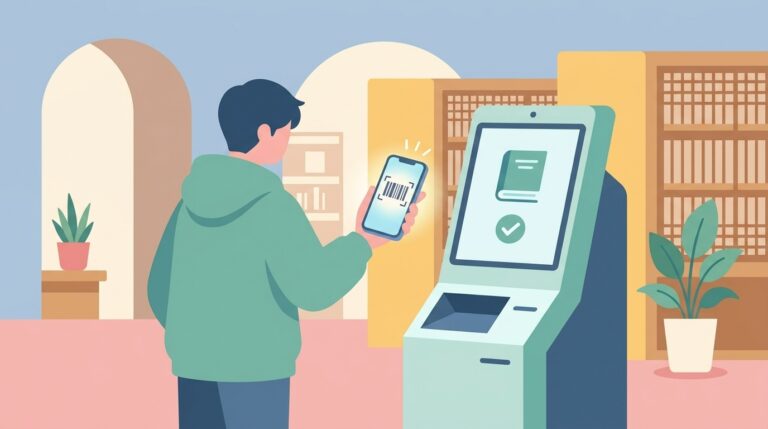
Picture this: You are in Seoul, it’s a beautiful afternoon, and you want to focus on your studies or read a book. You decide to visit a local Korean public library (공공도서관). You walk in, excited by the modern architecture and the quiet, productive vibe. But as you head toward the study rooms (열람실), you realize there are no open seats. Instead, everyone is crowded around a touch-screen kiosk (무인 발권기), tapping away and printing tiny paper slips.
You stand there feeling a bit lost. “Do I need a membership card? How do I select a seat? What if the machine talks to me in fast Korean?”
Don’t worry! This is a classic “pain point” for many expats and travelers in Korea. Booking a study seat is a seamless process once you know the exact phrases and the cultural flow. Today, we are going to master library seat ticketing step-by-step so you can walk into any Korean library with absolute confidence! Let’s dive in! 📚✨
Phase 2: Deep Dive into 3 Key Expressions
1. 좌석을 발권하고 싶어요 (Hangeul)
- Pronunciation: Jwaseog-eul balgwonhaego sipeoyo (Sounds like: jwa-seok-eul bal-gwon-ha-go shi-peo-yo)
- Meaning: I would like to issue/reserve a seat.
- K-Culture Moment: You will say this to the library information desk officer if the self-service kiosk is confusing, or when you are asking a friend how to use the machine.
- Editor’s Insight: 발권 (bal-gwon) literally means “issuing a ticket.” In Korea, study room seats are treated like movie theater tickets; you must get a slip with your seat number and barcode.
- Situation Spectrum:
- Casual: 좌석 발권할래 (⚠️ Only with close friends)
- Semi-formal: 좌석 발권하고 싶어요 (✅ Best for daily library interactions)
- Formal: 좌석을 발권하고자 합니다 (🚫 Too stiff for a simple request)
- 🤔 Think About It: In your country, do you have to reserve a specific seat at the library, or do you just sit wherever you want?
2. 이용증을 바코드에 대 주세요 (Hangeul)
- Pronunciation: Iyongjeung-eul bakodeu-e dae juseyo (Sounds like: ee-yong-jeung-eul bah-co-deu-eh dae joo-seh-yo)
- Meaning: Please place your library card on the barcode reader.
- K-Culture Moment: This is the automated voice prompt you will hear from the kiosk machine. It might also appear as text on the screen.
- Editor’s Insight: 대다 (dae-da) means “to touch” or “to place near/against.” You don’t need to swipe your card hard; just hold the barcode under the red laser light.
- Situation Spectrum:
- Casual: 이용증 바코드에 대 (🚫 Too rude)
- Semi-formal: 이용증을 바코드에 대 주세요 (✅ Standard machine/staff instruction)
- Formal: 이용증을 바코드에 접촉해 주시기 바랍니다 (🚫 Used in formal signs)
- 🤔 Think About It: How does your native language express the physical action of scanning or tapping a card?
3. 좌석 연장해야 해요 (Hangeul)
- Pronunciation: Jwaseok yeonjang-haeya haeyo (Sounds like: jwa-seok yeon-jang-hae-ya hae-yo)
- Meaning: I need to extend my seat reservation.
- K-Culture Moment: In Korean libraries, seats are usually issued for 3 to 5 hours. To keep sitting there, you must perform a “seat extension” (연장) at the kiosk before your time runs out.
- Editor’s Insight: If you miss the extension window (usually 30 minutes before expiration), your seat is automatically returned, and someone else can take it. Keep an eye on the clock!
- Situation Spectrum:
- Casual: 나 자리 연장해야 돼 (✅ With friends)
- Semi-formal: 좌석 연장해야 해요 (✅ To library staff)
- Formal: 좌석을 연장하고자 합니다 (⚠️ Too formal)
- 🤔 Think About It: Why do you think Korean public spaces implement strict time limits on study spaces?
Phase 3: Textbook Korean vs. Real-Life Korean
Let’s look at how textbooks teach library booking versus how real Koreans actually talk!
Situation 1: Asking if a seat is taken
- 📖 Textbook Korean: “이 자리에 사람이 있습니까?” (I jari-e sarami isseumnikka? – Is there a person in this seat?)
- 🗣️ Real-Life Korean: “여기 자리 비어 있나요?” (Yeogi jari bieo innayo? – Is this seat empty?)
- 💡 Why is it different? The textbook version is grammatically correct but feels overly formal and a bit unnatural in a quiet library environment. Asking if a seat is “empty” (비어 있다) is much softer and friendlier.
Situation 2: Asking someone when they will leave
- 📖 Textbook Korean: “귀하는 몇 시에 퇴실하십니까?” (Gwiha-neun myeot sie toesil-hasimnikka? – What time do you check out?)
- 🗣️ Real-Life Korean: “혹시 언제쯤 일어나세요?” (Hoksi eonje-jjeum ireonaseyo? – By any chance, around when are you leaving/standing up?)
- 💡 Why is it different? Direct questions about checking out (퇴실) sound like an interrogation. Using the verb 일어나다 (to stand up/leave) with the polite particle 혹시 (by any chance) is much more polite and less demanding.
Phase 4: K-Culture Deep Dive & Non-verbal Manners
4-1. Nunchi (눈치) & Library Manners
Korean libraries are quiet sanctuaries. When you enter the reading room (열람실), your Nunchi (tact/situational awareness) must be on high alert.
* No Zipper Sounds: Zipping your backpack or pencil case slowly is highly appreciated. Quick, loud zips can get you annoyed side-glances (눈치 주기).
* The Keyboard/Mouse Rule: Many study rooms have separate zones. If you are in a “General Reading Room” (일반열람실), laptops are strictly restricted to silent typing. If you need to type, look for the “Laptop Reading Room” (노트북실).
4-2. The “Seat-Return” Culture (반납)
In Korea, leaving without returning your seat at the kiosk is considered highly impolite. It leaves the seat locked and unusable for others. When you are finished, always go to the kiosk, scan your card, and press 반납 (bannap – return).
Phase 5: Practical Roleplay Scenario
Meet Minji (민지), a friendly library volunteer helping visitors at the Mapo District Library (마포평생학습관). You are trying to find a seat to study Korean.
- Character: Minji (Helpful, polite, speaks clear Korean)
- Setting: Beside the touch-screen seat-booking kiosk.
- Minji: 안녕하세요! 도움이 필요하신가요?
(An-nyeong-ha-se-yo! Do-um-i pil-yo-ha-sin-ga-yo?)
🎭 [Smiling warmly, pointing at the screen]
“Hello! Do you need some help?” -
You: 네, 혹시 열람실 좌석을 어떻게 발권해요?
(Ne, hok-si yeol-lam-sil jwa-seog-eul eo-tteo-ke bal-gwon-hae-yo?)
🎭 [Scratching your head, pointing at the kiosk]
“Yes, by any chance, how do I issue a seat for the study room?” -
Minji: 먼저 도서관 이용증이 있으신가요?
(Meon-jeo do-seo-gwan i-yong-jeung-i is-seu-sin-ga-yo?)
🎭 [Mimicking scanning a card]
“First, do you have a library membership card?” -
You: 네, 제 모바일 이용증 여기 있어요.
(Ne, je mo-ba-il i-yong-jeung yeo-gi is-seo-yo?)
🎭 [Showing your smartphone screen with a barcode]
“Yes, I have my mobile membership card right here.” -
Minji: 좋아요! 그럼 여기 화면에서 ‘좌석 발권’을 누르고 바코드를 스캔해 주세요.
(Jo-a-yo! Geu-reom yeo-gi hwa-myeon-e-seo ‘jwa-seok bal-gwon’-eul nu-reu-go ba-ko-deu-reul seu-kaen-hae ju-se-yo.)
🎭 [Tapping the screen gently with a finger]
“Great! Then press ‘Seat Issuance’ on this screen and scan your barcode.” -
You: 아, 스캔했어요! 이제 좌석을 선택하면 되나요?
(A, seu-kaen-haes-seo-yo! I-je jwa-seog-eul seon-tae-kha-myeon doe-na-yo?)
🎭 [Looking at the seating chart popup]
“Ah, I scanned it! Now do I just select a seat?” -
Minji: 맞아요. 초록색 자리가 비어 있는 자리예요. 원하는 자리를 선택하세요.
(Ma-ja-yo. Cho-rok-saek ja-ri-ga bi-eo in-neun ja-ri-ya-yo. Won-ha-neun ja-ri-reul seon-tae-kha-se-yo.)
🎭 [Pointing to the green dots on the monitor]
“Correct. The green seats are the empty ones. Select the seat you want.” -
You: 45번 자리를 선택할게요. 영수증이 나왔네요! 감사합니다!
(Sa-sip-o-beon ja-ri-reul seon-tae-khal-ge-yo. Yeong-su-jeung-i na-wat-ne-yo! Gam-sa-ham-ni-da!)
🎭 [Taking the printed paper slip with a big smile]
“I’ll choose seat number 45. Ah, the receipt came out! Thank you!”
🔀 Interactive Choice Point
You printed your receipt, but you notice your phone battery is at 10%. You need to study for 4 hours and want a seat with an outlet (콘센트). What do you say to Minji?
- Option A: “이 자리에 충전기 있어요?” (I jari-e chungjeongi isseoyo? – Is there a charger in this seat?)
- Option B: “혹시 콘센트가 있는 자리는 어떻게 확인하나요?” (Hoksi konsenteu-ga inneun jari-neun eotteoke hwaginhanayo? – By any chance, how do I check which seats have power outlets?)
- Option C: “콘센트 자리 주세요.” (Konsenteu jari juseyo. – Give me an outlet seat.)
Feedback on your choice:
- Option A (Risk): While understandable, “충전기” means the actual physical charger cable. The library doesn’t supply chargers, just the wall sockets. Minji might get confused!
- Option B (Best): Perfect! It’s polite, accurate, and uses the correct Korean-English word 콘센트 (consent – power outlet/socket).
- Option C (Bad): Too direct and blunt. In Korea, demanding things directly without “혹시” or “~주세요” can sound slightly aggressive.
Phase 6: 10-Second Emotion Shadowing Drill
To sound like a natural Korean speaker, practice these phrases with emotional inflections. The / indicates a slight pause to catch your breath.
- [😊 Joyful & Relieved]
*
Frequently Asked Questions (FAQ)
Q: What does "좌석을 발권하고 싶어요 (Hangeul)" mean in Korean and how do you pronounce it?
A: In Korean, "좌석을 발권하고 싶어요 (Hangeul)" is pronounced [Jwaseog-eul balgwonhaego sipeoyo (Sounds like: jwa-seok-eul bal-gwon-ha-go shi-peo-yo] and means: I would like to issue/reserve a seat.
Q: What does "이용증을 바코드에 대 주세요 (Hangeul)" mean in Korean and how do you pronounce it?
A: In Korean, "이용증을 바코드에 대 주세요 (Hangeul)" is pronounced [Iyongjeung-eul bakodeu-e dae juseyo (Sounds like: ee-yong-jeung-eul bah-co-deu-eh dae joo-seh-yo] and means: Please place your library card on the barcode reader.
Q: What does "좌석 연장해야 해요 (Hangeul)" mean in Korean and how do you pronounce it?
A: In Korean, "좌석 연장해야 해요 (Hangeul)" is pronounced [Jwaseok yeonjang-haeya haeyo (Sounds like: jwa-seok yeon-jang-hae-ya hae-yo] and means: I need to extend my seat reservation.







