

Masterclass: Decoding the ‘Scarcity Strategy’ of K-Luxury with C2-Level Korean Sophistication
- Target Level: C2 (Proficient)
- Focus: Advanced Marketing & Branding (마케팅 및 브랜딩)
- Topic: Luxury Brand Scarcity Strategy (럭셔리 브랜드의 희소성 전략 분석)
Phase 1: Empathy (공감 – Connecting over the Allure of the ‘Unattainable’)
안녕하세요! It’s your K-Culture Navigator and senior editor from Daily Hangul (매일한글)!
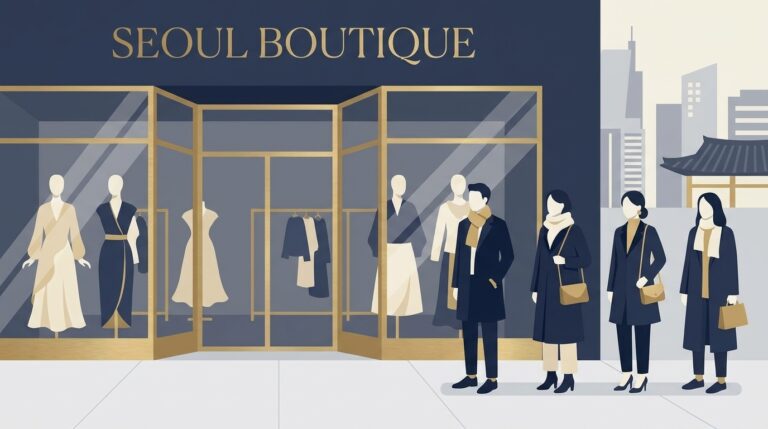
Imagine walking down the glitzy streets of Cheongdam-dong (청담동) or stepping into the sleek, architectural masterpieces of Hyundai Seoul. You see a queue stretching around the block, not for a free giveaway, but for the privilege of entering a luxury boutique. In the high-stakes world of Korean marketing and branding, we call this the ultimate play of 희소성 마케팅 (scarcity marketing).
If you are an advanced (C2) learner navigating high-level corporate negotiations, luxury branding pitches, or deep-dive cultural analyses, relying on textbook terms like “비싸다” (expensive) or “인기 있다” (popular) simply won’t cut it. You need the linguistic precision of a seasoned Seoul brand strategist to articulate why consumers willingly subject themselves to the “open run” (오픈런) phenomenon. Today, we’re diving deep into the nuanced, high-caliber vocabulary that drives Korea’s luxury marketing landscape. Let’s elevate your Korean to the boardroom level!
Phase 2: Core Expressions Deep-Dive (핵심 표현 3선 심층 분석)
1. 희소가치를 극대화하다 (Hui-so-ga-chi-reul geuk-dae-hwa-hada)
- Pronunciation: Hee-so-gah-chee-reul geuk-deh-wah-hah-dah (Rhymes with “see-saw gotchi”)
- Meaning: To maximize scarcity value (inherent rarity and prestige).
- K-Culture Moment: Often heard in business documentaries dissecting why limited-edition K-beauty collabs or K-pop vinyl records sell out in seconds.
- Editor’s Insight: ‘희소성’ (scarcity) refers to the state of being scarce, while ‘희소가치’ is the value generated by that scarcity. Pair it with the sophisticated verb ‘극대화하다’ (to maximize) to sound like a senior brand consultant.
- Situation Spectrum: Casual (🚫) | Semi-formal (⚠️) | Formal (✅)
- 🤔 Think About It: How does your native culture view artificial scarcity? Is it seen as exclusive prestige, or do consumers feel manipulated? In Korea, it often triggers a societal wave of ‘FOMO’ (yielding to the trend).
2. 소장 욕구를 자극하다 (So-jang yok-gu-reul ja-geuk-hada)
- Pronunciation: So-jahng yok-goo-reul jah-geuk-hah-dah (Think “so-jang” as in ‘soldier’ + “yoke-goo”)
- Meaning: To stimulate the desire for possession/ownership.
- K-Culture Moment: Frequently used by high-end lifestyle magazines (like Vogue Korea) to describe why a newly dropped luxury handbag is a “must-have” collectible.
- Editor’s Insight: While ‘구매 욕구’ (desire to buy) is common, ‘소장 욕구’ specifically targets the desire to keep and cherish something as a collector’s item. It’s the psychological trigger of luxury.
- Situation Spectrum: Casual (⚠️) | Semi-formal (✅) | Formal (✅)
- 🤔 Think About It: Why do we buy things we don’t need? The word ‘소장’ (possession/collection) elevates the act of buying to an art form.
3. 과시적 소비 성향을 겨냥하다 (Gwa-si-jeok so-bi seong-hyang-eul gyeo-nyang-hada)
- Pronunciation: Gwah-shee-jeok so-bee sung-hyahng-eul gyuh-nyahng-hah-dah
- Meaning: To target conspicuous consumption tendencies.
- K-Culture Moment: Used by cultural critics in serious editorial pieces analyzing Korea’s high per-capita spending on luxury goods (Veblen effect).
- Editor’s Insight: This is a premium academic phrase. ‘과시적 소비’ translates directly to Thorstein Veblen’s “conspicuous consumption.” ‘겨냥하다’ (to aim at/target) is sharper and more strategic than ‘대상으로 하다’ (to target).
- Situation Spectrum: Casual (🚫) | Semi-formal (⚠️) | Formal (✅)
- 🤔 Think About It: Is “showing off” (과시) inherently negative, or has luxury branding successfully rebranded it as self-investment (나를 위한 투자)?
Phase 3: Textbook vs. Real-World Korean (교과서 한국어 vs 진짜 한국어)
Situation 1: Explaining why a product is hard to get
- 📖 Textbook: 이 가방은 수량이 적어서 사기 어렵습니다. (This bag is hard to buy because the quantity is small.)
- 🗣️ Real-World (C2): 본 에디션은 인위적 공급 제한을 통해 대기 수요를 유지하는 전략을 취하고 있습니다. (This edition adopts a strategy of maintaining backlogged demand through artificial supply constraints.)
- 💡 Why the difference? Textbook Korean focus on basic physical lack. High-level branding Korean utilizes abstract concepts like ‘인위적 공급 제한’ (artificial supply limits) and ‘대기 수요’ (backlogged/waiting demand) to explain the market mechanism.
Situation 2: Describing consumer obsession
- 📖 Textbook: 사람들이 이 브랜드를 아주 좋아합니다. (People like this brand very much.)
- 🗣️ Real-World (C2): 브랜드에 대한 팬덤 현상이 오픈런과 리셀 테크로 발현되고 있습니다. (The fandom surrounding the brand is manifesting as ‘open runs’ and ‘resell-tech’.)
- 💡 Why the difference? C2-level Korean incorporates contemporary socio-economic neologisms like ‘리셀 테크’ (reselling items for investment profit) to show a pulse on current Korean market realities.
Phase 4: K-Culture Deep-Dive & Non-verbal Etiquette
4-1. The Art of
Frequently Asked Questions (FAQ)
Q: What does "희소가치를 극대화하다 (Hui-so-ga-chi-reul geuk-dae-hwa-hada)" mean in Korean and how do you pronounce it?
A: In Korean, "희소가치를 극대화하다 (Hui-so-ga-chi-reul geuk-dae-hwa-hada)" is pronounced [Hee-so-gah-chee-reul geuk-deh-wah-hah-dah (Rhymes with "see-saw gotchi"] and means: To maximize scarcity value (inherent rarity and prestige).
Q: What does "소장 욕구를 자극하다 (So-jang yok-gu-reul ja-geuk-hada)" mean in Korean and how do you pronounce it?
A: In Korean, "소장 욕구를 자극하다 (So-jang yok-gu-reul ja-geuk-hada)" is pronounced [So-jahng yok-goo-reul jah-geuk-hah-dah (Think "so-jang" as in 'soldier' + "yoke-goo"] and means: To stimulate the desire for possession/ownership.
Q: What does "과시적 소비 성향을 겨냥하다 (Gwa-si-jeok so-bi seong-hyang-eul gyeo-nyang-hada)" mean in Korean and how do you pronounce it?
A: In Korean, "과시적 소비 성향을 겨냥하다 (Gwa-si-jeok so-bi seong-hyang-eul gyeo-nyang-hada)" is pronounced [Gwah-shee-jeok so-bee sung-hyahng-eul gyuh-nyahng-hah-dah] and means: To target conspicuous consumption tendencies.







