

Unlocking Korea’s Fortune-Telling Culture: Beyond K-Dramas to Your First ‘Saju’ Experience
Phase 1: Empathy (스토리 몰입형 오프닝)
안녕하세요! (An-nyeong-ha-se-yo!) It’s your Daily Hangul editor and your personal cultural navigator!
Picture this: You are watching a hit K-Drama like The Glory or exhuma (파묘), and you see characters visiting a mysterious shaman wrapped in colorful fabrics, or perhaps a chic, modern rooftop tarot cafe in Hongdae. You might wonder, “Do young Koreans really believe in shamanism? Is it okay for an expat to get their fortune read?”
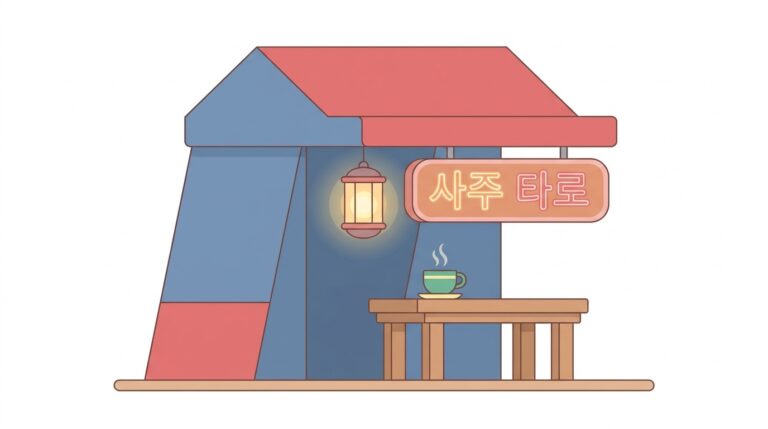
Many of our intermediate learners tell us they feel intimidated to step into a traditional tent with a sign reading 사주 (Saju) or 타로 (Tarot). They worry about the complex spiritual vocabulary and the fear of accidentally disrespecting local customs.
Don’t worry! Today, we are breaking down the fascinating world of Korean fortune-telling. By the end of this guide, you’ll not only understand the deep-rooted cultural psychology behind these practices but also possess the exact linguistic tools to confidently walk into a Korean fortune-telling booth and ask about your future love, career, or luck!
Frequently Asked Questions (FAQ)
Q: What does "타로" mean in Korean and how do you pronounce it?
A: In Korean, "타로" is pronounced [Tarot] and means: . They worry about the complex spiritual vocabulary and the fear of accidentally disrespecting local customs.







