

Handling Noisy Fridges in Korea: How to Get Quick Appliance Repair Services Like a Local!
Phase 1: Empathy (스토리 몰입형 오프닝)
안녕하세요! Welcome back to another edition of Daily Hangul, your cozy Korean corner where we make learning Korean feel like chatting with a close friend over coffee. I’m your Lead Editor, and today we’re tackling a scenario that is practically a rite of passage for anyone living in South Korea: dealing with a noisy home appliance and calling AS (After-Sales/Repair service)!
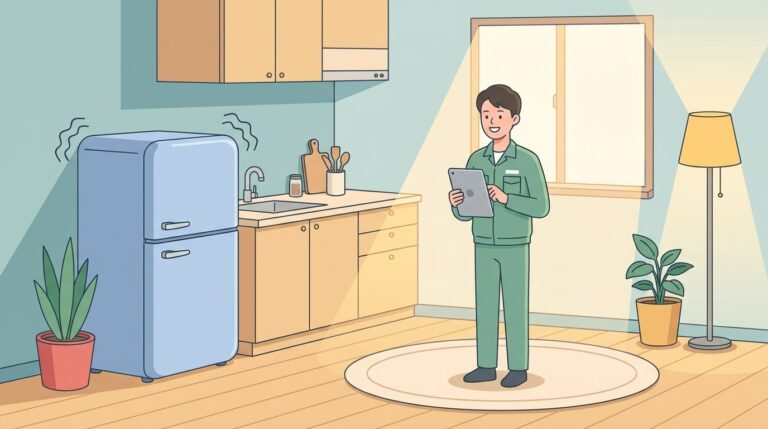
Imagine this: You’ve just moved into your dream studio apartment (원룸 – wonrum) in Seoul. You’ve decorated it perfectly, bought some delicious kimchi-jjigae ingredients to stock up your fridge, and finally sat down to watch your favorite K-Drama. But suddenly, a loud, aggressive rattling sound cuts through your peaceful evening. “WUUUUURRRRNG-GGGRRRR…” It’s the refrigerator. It sounds like a rocket launching in your kitchen!
You want to call the repair service, but the fear of explaining technical noises in Korean freezes you. What if I sound silly? What if I don’t know the words for ‘buzzing’ or ‘rattling’? Don’t worry! This is a very common pain point for many of our intermediate (B1) learners. Today, we’ll teach you exactly how to describe these annoying noises like a native, make an AS appointment smoothly, and handle the technician with perfect Korean manners.
Phase 2: Core Expressions (핵심 표현 3선 심층 분석)
1. 냉장고에서 소리가 너무 심하게 나요 (Naeng-jang-go-eseo so-ri-ga neo-mu sim-ha-gae na-yo)
- Pronunciation: Naeng-jang-go (refrigerator) + eseo (from) + so-ri-ga (sound) + neo-mu (too much) + sim-ha-gae (severely/loudly) + na-yo (comes out). Think of “sim-ha-gae” sounding like “seem-hah-geh”.
- Meaning: “My refrigerator is making a really bad/loud noise.” (Literal: Sounds are coming out too severely from the refrigerator.)
- K-Culture Moment: You will hear this phrase in slice-of-life K-Dramas where a character is talking to their landlord (집주인 – jip-ju-in) about apartment maintenance issues.
- Editor’s Insight: While “시끄러워요” (si-kkeu-reo-wo-yo / it’s noisy) is okay, using “소리가 심하게 나요” is much more polite and objective when describing a technical problem to a customer service agent.
- Situation Spectrum:
- Casual: 냉장고 소리 장난 아니야. (🚫 Not recommended for AS calls)
- Semi-formal: 냉장고에서 소리가 너무 심하게 나요. (✅ Perfect for CS agents)
- Formal: 냉장고 소음이 심각한 수준입니다. (⚠️ A bit too dramatic/stiff)
- 🤔 Think About It: In Korean, rather than saying “My fridge is making a noise,” we say “sound is coming out from the fridge” (소리가 나다). How does your native language structure this physical phenomenon?
2. 웅~ 하는 소리가 계속 들려요 (Ung~ ha-neun so-ri-ga gye-sok deul-ryeo-yo)
- Pronunciation: Ung (humm/buzz) + ha-neun (making) + so-ri-ga (sound) + gye-sok (continuously) + deul-ryeo-yo (is heard). Ung sounds like “oong” (rhymes with “room”).
- Meaning: “I keep hearing a low buzzing/humming sound.”
- K-Culture Moment: This mimics the classic low-frequency vibration of older Korean appliances.
- Editor’s Insight: Onomatopoeia (의성어 – ui-seong-eo) is extremely powerful in Korea. Instead of trying to find complex mechanical terms, simply mimicking the sound (like ung~, dal-grak-dal-grak for rattling, or piss-shik for hissing) helps the technician diagnose the issue instantly!
- Situation Spectrum:
- Casual: 자꾸 웅웅거려. (⚠️ Friend-only)
- Semi-formal: 웅~ 하는 소리가 계속 들려요. (✅ Highly recommended)
- Formal: 지속적인 기계음이 발생합니다. (🚫 Sounds like a technical report)
- 🤔 Think About It: Koreans love using sensory words. How do you describe a refrigerator’s hum in your own language?
3. 출장 서비스를 신청하고 싶어요 (Chul-jang seo-bi-seu-reul sin-cheong-ha-go sip-eo-yo)
- Pronunciation: Chul-jang (on-site visit) + seo-bi-seu-reul (service) + sin-cheong-ha-go sip-eo-yo (want to apply/request). Chul-jang sounds like “chool-jahng”.
- Meaning: “I would like to request an on-site repair service.”
- K-Culture Moment: In Korea’s fast-paced service culture (palli-palli), brands like Samsung and LG are famous for their incredibly fast chul-jang services, sometimes arriving within the same day!
- Editor’s Insight: In English, we say “home repair service,” but in Korean, the word 출장 (business trip/out-of-office task) is used because the technician is making a “trip” to your house.
- Situation Spectrum:
- Casual: 와서 좀 고쳐줘. (🚫 Extremely rude)
- Semi-formal: 출장 서비스 신청하고 싶어요. (✅ Excellent and standard)
- Formal: 기사님 방문 점검을 요청합니다. (⚠️ Very formal, used in written forms)
- 🤔 Think About It: Korea prioritizes speed and convenience. The concept of “service” (서비스) here has evolved into a highly-systematized, hyper-polite industry.
Phase 3: Textbook vs. Real-Life Korean
Let’s compare stiff, textbook Korean with what real Seoulites actually say.
Situation 1: Calling the service center
- 📖 Textbook: “제 냉장고가 고장 났습니다.” (Je naeng-jang-go-ga go-jang nat-seup-ni-da. – My refrigerator is broken.)
- 🗣️ Real-Life: “냉장고 소리가 심한데, AS 예약 좀 하려고요.” (Naeng-jang-go so-ri-ga sim-han-de, AS ye-yak jom ha-ryeo-go-yo. – The fridge is making a loud noise, so I’d like to book an AS appointment.)
- 💡 Why the difference? Saying “It’s broken” (고장 났다) is too broad and sounds a bit alarmist. Real Koreans gently state the specific symptom (so-ri-ga sim-han-de) and state their purpose directly using “~하려고요” (I intend to…). Also, Koreans always say “AS” (after-sales service) instead of “repair service” (수리 서비스).
Situation 2: Explaining a rattling sound to the technician
- 📖 Textbook: “냉장고 내부에서 부품 부딪히는 소리가 납니다.” (Naeng-jang-go nae-bu-eseo bu-pum bu-dit-hi-neun so-ri-ga nap-ni-da. – There is a sound of parts colliding inside the refrigerator.)
- 🗣️ Real-Life: “냉장고에서 덜덜덜 하는 소리가 나요.” (Naeng-jang-go-eseo deol-deol-deol ha-neun so-ri-ga na-yo. – The fridge is making a ‘deol-deol-deol’ (rattling) sound.)
- 💡 Why the difference? Nobody talks like a mechanical manual! Using the natural Korean sound effect “덜덜덜” (deol-deol-deol / shivering or rattling) is 100 times more natural and immediately conveys the exact physical state of the shaking machine.
Phase 4: K-Culture Deep Dive & Non-Verbal Manners
4-1. Nunchi & Gestures: Hosting the Technician
When the AS technician (기사님 – Gi-sa-nim) arrives at your apartment, practicing good Nunchi (눈치 – situational wit) makes the interaction seamless:
1. Greeting with a Bow: Open the door with a warm smile and a slight 15-degree bow, saying “안녕하세요!” (An-nyeong-ha-se-yo).
2. The Shoe Etiquette: Korean technicians usually bring their own shoe covers (덧신 – deot-sin) to wear inside your house. If they don’t, politely point towards where they can step, or offer indoor slippers.
3. Offering a Drink: This is the ultimate Korean hospitality culture! While the gisa-nim is working on your fridge, it is highly polite to offer a small canned drink, a cup of coffee, or a glass of water. Just say: “시원한 물 한 잔 드릴까요?” (Si-won-han mul han jan deul-il-kka-yo? – Would you like a glass of cold water?). This simple gesture builds instant rapport!
4-2. The Korean “AS” Culture
In Korea, “AS” (After-Sales) is not just a department; it’s a massive point of pride for tech giants like Samsung and LG. It’s incredibly digitized. When you book a service, you’ll receive real-time KakaoTalk notifications with the technician’s photo, name, and exact arrival time. It’s safe, transparent, and ultra-fast!
Phase 5: Real-Life Roleplay Scenario
Meet Min-ji (a helpful customer service agent) and Alex (a B1-level foreigner living in Seoul whose fridge is acting up).
- [Scene: Over the phone with the Electronics AS Call Center]
- 민지 (CS Agent): 📞 네, 고객님! 무엇을 도와드릴까요?
(Ne, go-gaek-nim! Mu-eot-eul do-wa-deul-il-kka-yo?)
(🎭 Greeting professionally) “Yes, valued customer! How may I help you?” -
알렉스 (Alex): 안녕하세요. 제가 쓰는 냉장고에서 소리가 너무 심하게 나서요.
(An-nyeong-ha-se-yo. Je-ga sseu-neun naeng-jang-go-eseo so-ri-ga neo-mu sim-ha-gae na-seo-yo.)
(🎭 Expressing concern) “Hello. The refrigerator I’m using is making a really loud noise.” -
민지 (CS Agent): 아, 소음 때문에 불편하시겠어요. 혹시 어떤 종류의 소리인가요?
(Ah, so-eum ttae-mun-e bul-pyeon-ha-si-get-eo-yo. Hok-si eo-tteon jong-ryu-ui so-ri-in-ga-yo?)
(🎭 Showing empathy) “Ah, the noise must be very inconvenient for you. What kind of sound is it, by any chance?” -
알렉스 (Alex): 웅~ 하는 진동 소리가 계속 들리고, 가끔 덜덜덜 소리도 나요.
(Ung~ ha-neun jin-dong so-ri-ga gye-sok deul-ri-go, ga-kkeum deol-deol-deol so-ri-do na-yo.)
(🎭 Mimicking the noises) “I keep hearing a low buzzing vibration sound, and sometimes it rattles, too.” -
민지 (CS Agent): 알겠습니다. 기사님 방문 점검이 필요할 것 같네요. 언제 시간이 괜찮으세요?
(Al-get-seup-ni-da. Gi-sa-nim bang-mun jeom-geom-i pil-yo-hal geot gat-nae-yo. Eon-je si-gan-i gwaen-chan-eu-se-yo?)
(🎭 Checking schedule) “Understood. I think we need a technician to visit and check it. When would you be free?” -
알렉스 (Alex): 토요일 오전 일찍 출장 서비스를 신청하고 싶어요.
(To-yo-il o-jeon il-jjik chul-jang seo-bi-seu-reul sin-cheong-ha-go sip-eo-yo.)
(🎭 Making a clear request) “I’d like to request an on-site service early Saturday morning.” -
민지 (CS Agent): 네, 토요일 오전 9시 반으로 예약해 드리겠습니다. 기사님 방문 전에 연락드릴게요.
(Ne, to-yo-il o-jeon a-hop-si ban-eu-ro ye-yak-hae deu-ri-get-seup-ni-da. Gi-sa-nim bang-mun jeon-e yeon-rak-deul-il-gae-yo.)
(🎭 Confirming details) “Great, I will book the appointment for Saturday at 9:30 AM. The technician will call you before visiting.” -
알렉스 (Alex): 감사합니다! 토요일에 뵐게요.
(Gam-sa-ham-ni-da! To-yo-il-e boel-gae-yo.)
(🎭 Ending warmly) “Thank you! See you on Saturday.”
🔀 Interactive Choice Point
If the technician calls you on Saturday morning saying he is running 10 minutes late, how should you respond?
- A) “왜 늦어요? 빨리 오세요!” (Wae neu-jeo-yo? Ppal-ri o-se-yo!)
- 🔴 Bad: “Why are you late? Come fast!” This sounds extremely demanding and aggressive in Korean culture.
- B) “네, 괜찮습니다. 조심히 오세요!” (Ne, gwaen-chan-seup-ni-da. Jo-sim-hi o-se-yo!)
- 🟢 Best: “Yes, that’s fine. Please come safely!” This shows great manners (nunchi and bae-ryeo) and will instantly make the technician want to do a super meticulous job for you.
- C) “아무 때나 상관없어요.” (A-mu ttae-na sang-gwan-eops-eo-yo.)
- 🟡 Risk: “It doesn’t matter anytime.” It’s okay, but can sound a bit indifferent or cold depending on your tone.
Phase 6: 10-Second Shadowing Drill
Let’s practice speaking with real-life emotional nuance! Pause/breathe at the / marks.
- [🥺 Stressed & Troubled]
냉장고에서 / 웅~ 하는 소리가 / 계속 들려요.
(Naeng-jang-go-eseo / ung~ ha-neun so-ri-ga / gye-sok deul-ryeo-yo.) -
[😊 Polite & Clear]
토요일 오전에 / 출장 서비스를 / 신청하고 싶어요.
(To-yo-il o-jeon-e / chul-jang seo-bi-seu-reul / sin-cheong-ha-go sip-eo-yo.)
Phase 7: K-Culture Mini Dictionary
- AS 기사님 (AS Gi-sa-nim) | Repair Technician
- Usage: Use this term with “님” (-nim) to show respect. “기사님, 여기로 오세요” (Technician, please come this way).
- 소음 (So-eum) | Noise / Unwanted sound
- Usage: Used in official complaints or technical descriptions. “층간소음” (cheung-gan-so-eum) is noise between apartment floors.
- 출장비 (Chul-jang-bi) | On-site visit fee
- Usage: The base fee charged just for the technician visiting your house (usually around 15,000 to 25,000 KRW).
- 무상 수리 (Mu-sang Su-ri) | Free warranty repair
- Usage: Repair that is free of charge because your appliance is still within its warranty period.
Phase 8: Survivor Kit for Travelers & Expats
Survival Phrases TOP 3
- 냉장고가 안 시원해요. (Naeng-jang-go-ga an si-won-hae-yo.)
- Pro Tip: “The fridge is not cold.” Essential if your food is starting to spoil!
- 소리가 나다 안 나다 해요. (So-ri-ga na-da an na-da hae-yo.)
- Pro Tip: “The noise comes and goes.” Use this if the rattle isn’t constant.
- 수리비는 얼마인가요? (Su-ri-bi-neun eol-ma-in-ga-yo?)
- Pro Tip: “How much is the repair cost?” Always check this before they begin fixing parts!
📌 Editor’s Travel Note: If your apartment came with the fridge, contact your landlord (집주인 – jip-ju-in) first before booking the AS! Under Korean rental customs, landlords are usually responsible for repairing major built-in appliances unless the tenant caused the damage. To look up official customer centers, search on the Naver Map App using keywords like “삼성전자 서비스센터” (Samsung Service Center) or “LG전자 서비스센터” (LG Service Center).
Phase 9: “A Step Deeper” (한 발 더 깊이)
In Korean culture, when you invite a service worker, delivery driver, or repair technician into your home, they are treated as temporary guests. This stems from Korea’s deep-rooted community mindset (정 – Jeong). Showing small kindnesses, like offering a warm can of sweetened coffee (McCoffee!) in winter or a cold sports drink in summer, is a beautiful way to connect beyond language barriers. It turns a cold business transaction into a warm, human interaction.
💬 Your Turn: Have you ever had to get something repaired in Korea or another foreign country? What was your experience like? Let us know in the comments below!
Phase 10: FAQ & Common Mistakes
Q: Can I book an AS appointment online if I am not confident speaking Korean over the phone?
A: Yes, absolutely! Both Samsung and LG have highly optimized websites and mobile apps where you can book an appointment silently by selecting symptoms from a menu. However, the technician will still call you right before they arrive, so keeping these phrases handy is highly recommended!
Q: What is the difference between AS (에이エス) and 수리 (수리)?
A: “AS” (After-Sales) refers to the overall brand customer service and warranty system. “수리” (Su-ri) means the literal act of repairing or fixing a physical object.
Q: Do I have to pay the technician in cash?
A: No. All mobile technicians carry portable card terminals. You can easily pay with any domestic or major international credit card.
🚨 Common Mistakes Alert!
- Saying “냉장고가 죽었어요” (My fridge is dead): In English, we say machines are “dead.” In Korean, say “고장 났어요” (go-jang nat-eo-yo / broken) or “안 켜져요” (an kyeo-jyeo-yo / won’t turn on). Saying it’s “dead” (jugeot-eo-yo) sounds funny and overly literal.
- Calling the technician “아저씨” (Ajussi): While common in dramas, calling a professional repairman “Ajussi” (middle-aged man) can sometimes feel slightly informal or patronizing. Always call them “기사님” (Gi-sa-nim).
Phase 11: Action Mission
- 🥉 Bronze: Read the 10-Second Shadowing sentences out loud 3 times mimicking a stressed voice.
- 🥈 Silver: Leave a comment below using the Korean sound effect for a noisy sound you hate the most!
- 🥇 Gold: Next time a service worker visits your place, bow politely and offer them a small beverage using: “음료수 드세요!” (Eum-ryo-su deu-se-yo! – Please have a drink!).
Phase 12: Interactive Quiz Challenge
Test your knowledge with these quick challenges!
1. Fill in the blank:
“냉장고에서 소리가 너무 나요.” (My fridge is making a severe/loud noise.)
* A) 시끄럽게
* B) 심하게
🔍 View Answer & Explanation
Answer: B) 심하게
Explanation: While “시끄럽게” (noisily) works grammatically, “심하게 나요” (comes out severely) is the standard native expression used when reporting appliance issues to AS centers.
2. True or False?
In Korea, it is polite to address a repair technician as “아저씨” (Ajussi).
* A) True
* B) False
🔍 View Answer & Explanation
Answer: B) False
Explanation: You should always address them as “기사님” (Gi-sa-nim) to show professional respect.







