

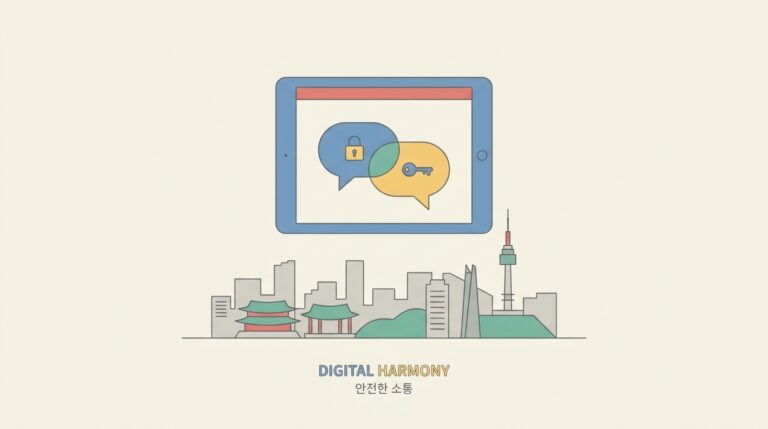
Behind the Screen: Discussing the Revival of the Real-Name Internet System in Korea
Phase 1: Empathy (스토리 몰입형 오프닝)
안녕하세요! Daily Hangul Editor here, your trusty cultural companion.
Imagine this: You are watching a live stream of your favorite K-Pop idol. Suddenly, a barrage of malicious, anonymous comments floods the chat. Your heart sinks. In Korea, this isn’t just an occasional nuisance; it is a profound social issue that has sparked decades of national debate. Historically, Korea introduced the Real-Name Internet System (인터넷 실명제) in 2007, only for the Constitutional Court to rule it unconstitutional in 2012 due to freedom of speech concerns.
However, in the wake of relentless cyberbullying (악플) affecting K-celebrities, public discourse is once again shifting. Today, we are diving deep into C2-level high-discourse Korean. By mastering these terms, you will be able to engage in sophisticated debates on digital ethics, freedom of expression, and social responsibility in Korean.
Phase 2: Core Expressions (핵심 표현 3선 심층 분석)
1. 여론을 호도하다 (yeo-ron-eul ho-do-ha-da)
- Pronunciation: Yuh-ron-eul ho-do-ha-da (Sounds like “yuh-ron” + “who-do-ha-da”)
- Meaning: To mislead public opinion / To distort public consensus
- K-Culture Moment: Often heard on serious current affairs debate shows like 100-Minute Debate (100분 토론) when discussing how anonymous bots or organized hate campaigns skew public perception of celebrities.
- Editor’s Insight: ‘호도(糊塗)하다’ literally means “to plaster over with paste”—meaning to temporarily cover up a mistake or truth to deceive others. It is a highly formal, editorial verb.
- Situation Spectrum: Casual 🚫 | Semi-formal ⚠️ | Formal ✅
- 🤔 Think About It: How does your native language describe the manipulation of public digital spaces? Is it viewed as a political issue, or a social one?
2. 순기능과 역기능 (sun-gi-neung-gwa yeok-gi-neung)
- Pronunciation: Sun-gi-neung-gwa yuk-gi-neung
- Meaning: Positive/intended function vs. Negative/unintended side-effect
- K-Culture Moment: Used by cultural critics analyzing the impact of social media platforms: “SNS의 순기능도 많지만, 악플 확산이라는 역기능 또한 무시할 수 없다.” (While social media has many positive functions, its negative side-effect of spreading malicious comments cannot be ignored.)
- Editor’s Insight: This pair is essential for balance. Any C2 debate essay or speech must weigh these two concepts against each other.
- Situation Spectrum: Casual ⚠️ | Semi-formal ✅ | Formal ✅
- 🤔 Think About It: Why do you think the ‘역기능’ of anonymity often overshadows its ‘순기능’ in Korean online portals?
3. 표현의 자유를 침해하다 (pyo-hyeon-ui ja-yu-reul chim-hae-ha-da)
- Pronunciation: Pyo-hyeon-ui ja-yu-reul chim-hae-ha-da
- Meaning: To infringe upon freedom of expression
- K-Culture Moment: This is the primary constitutional argument against the real-name system, frequently raised by civil liberty activists and legal experts during press conferences.
- Editor’s Insight: ‘침해하다’ (to encroach/infringe) is much stronger than ‘방해하다’ (to interrupt/bother). It implies a violation of a fundamental right.
- Situation Spectrum: Casual 🚫 | Semi-formal ⚠️ | Formal ✅
- 🤔 Think About It: Where should the line be drawn between protecting individuals from harm and preserving absolute freedom of speech?
Phase 3: Textbook vs. Real Korean (교과서 한국어 vs 진짜 한국어)
Situation 1: Expressing that anonymous comments are bad
- 📖 Textbook: 익명 댓글은 나쁩니다. (Ik-myeong댓글은 na-peub-ni-da. – “Anonymous comments are bad.”)
- 🗣️ Real Korean: 익명성 뒤에 숨어 배설하듯 쏟아내는 악플은 인격 살인이나 다름없습니다. (Ik-myeong-seong dwi-e su-meo bae-seol-ha-deut ssod-a-nae-neun ak-peul-eun in-gyeok sal-in-i-na da-reum-eobs-seub-ni-da. – “Malicious comments poured out like waste while hiding behind anonymity are no different from character assassination.”)
- 💡 Why the Difference? C2 discourse requires evocative, metaphoric language. Comparing toxic comments to “bodily waste” (배설) and calling it “character assassination” (인격 살인) reflects the gravity of the issue in Korea.
Situation 2: Proposing a moderate solution
- 📖 Textbook: 실명제를 다시 생각해야 합니다. (Sil-myeong-je-reul da-si saeng-gak-hae-ya ham-ni-da. – “We must think about the real-name system again.”)
- 🗣️ Real Korean: 표현의 자유와 개인의 인격권 보호 사이에서 사회적 합의를 도출해내야 합니다. (Pyo-hyeon-ui ja-yu-wa gae-in-ui in-gyeok-gwon bo-ho sa-i-e-seo sa-hoe-jeok hap-ui-reul do-chul-hae-nae-ya ham-ni-da. – “We must derive a social consensus between freedom of speech and the protection of individual personal rights.”)
- 💡 Why the Difference? The real-name system is highly controversial. Using balanced academic phrases like ‘사회적 합의를 도출하다’ (derive a social consensus) shows logical precision.
Phase 4: K-Culture Deep Dive & Non-Verbal Manners
4-1. Non-Verbal Debate Etiquette in Korea
When debating sensitive topics in Korean, maintaining a calm, objective voice tone (차분하고 객관적인 어조) is crucial. Pointing fingers is considered highly aggressive. Instead, hold your hands loosely together in your lap or use open-palm gestures. Nod slowly while listening to show you respect their point (경청) before countering with “물론 말씀하신 취지는 이해합니다만…” (Of course, I understand your intent, but…).
4-2. Cultural Context: The Portal Battleground
In Korea, major web portals like Naver and Daum have actually disabled comments on sports and entertainment news sections entirely to protect public figures. This structural change shifted the battleground to private social media (Instagram, YouTube), sparking current debates on how to regulate global platforms that bypass Korean jurisdiction.
Phase 5: Real-Life Roleplay Scenario
Setting: A panel discussion on a fictional Korean current affairs show, “Issue Focus” (이슈 포커스).
Characters:
* 민우 (Min-woo): A tech-policy researcher advocating for freedom of expression.
* 지수 (Ji-soo): A human rights lawyer advocating for strict internet regulations to protect victims.
- 민우: 🎭 (진중한 표정으로 마이크를 조정하며) 인터넷 실명제 재도입은 빈대 잡으려고 초가삼간 태우는 격이 될 수 있습니다. 이는 표현의 자유를 심각하게 침해할 소지가 큽니다.
- 지수: 🎭 (단호하지만 차분한 목소리로) 하지만 익명성이라는 가면 뒤에 숨어 타인의 삶을 송두리째 파괴하는 악성 댓글의 역기능을 이대로 방치할 수는 없습니다.
- 민우: 🎭 (고개를 끄덕이며) 지수 변호사님의 우려에는 십분 공감합니다. 다만, 실명제는 해외 플랫폼과의 역차별 문제도 낳을 수 있습니다.
- 지수: 🎭 (자료를 가리키며) 그렇기에 단순 제재를 넘어, 플랫폼의 자체 필터링 책임을 묻고 징벌적 손해배상 제도를 도입하는 등 법적 장치를 촘촘히 해야 합니다.
🔀 Interactive Choice Points
Your Turn! How would you interject as the Moderator?
- A. “시간이 없으니 이쯤에서 정리하고 다음 주제로 넘어가겠습니다.” (We have no time, so let’s wrap up and move on.)
- B. “양측 모두 일리가 있습니다. 결국 표현의 자유와 피해자 보호라는 두 가치가 충돌하는 양상인데요, 절충안은 없을까요?” (Both sides have merit. It seems the values of free speech and victim protection are clashing; is there a middle ground?)
- C. “실명제 찬성하는 사람들은 다 생각이 없는 거 아닌가요?” (Aren’t those who support the real-name system completely thoughtless?)
📢 Feedback on Your Choice:
- Choosing A (Risk): Too abrupt! A C2 moderator should synthesize arguments, not cut off high-level discussions flatly.
- Choosing B (Best): Excellent! You used advanced vocabulary (일리가 있다, 충돌하는 양상, 절충안) to maintain neutrality and guide the debate elegantly.
- Choosing C (Bad): Disastrous. This breaks all professional debate etiquette and violates the collaborative spirit of intellectual Korean discussion.
Phase 6: 10-Second Emotion Shadowing Drill
Practice delivery using phrasing, pauses (/), and emotional tones.
[😔 Grave and Urgent]- 익명의 그늘에 가려진 / 인격 살인은 / 이제 단순한 개인의 문제를 넘어섰습니다.
- Ik-myeong-ui geu-neul-e ga-ryeo-jin / in-gyeok sal-in-eun / i-je dan-sun-han gae-in-ui mun-jae-reul neo-meo-seot-seub-ni-da.
- “Character assassination masked by anonymity has now surpassed being just a personal issue.”
[🤝 Balanced and Analytical]- 규제책의 도입은 / 순기능뿐만 아니라 / 발생할 수 있는 부작용까지 / 면밀히 검토한 뒤 결정해야 합니다.
- Gyu-jae-chaek-ui do-ip-eun / sun-gi-neung-ppun-man a-ni-ra / bal-saeng-hal su in-neun bu-ja-yong-kka-ji / myeon-mil-hi geom-to-han dwi gyeol-jeong-hae-ya ham-ni-da.
- “The introduction of regulatory policies must be decided only after minutely reviewing not only their positive functions but also potential side effects.”
Phase 7: K-Culture Mini Dictionary
- 악플 (Ak-peul): Malicious comment (Compound of 惡/악 ‘evil’ + reply/댓글 ‘peul’). Used in daily conversations to describe cyberbullying.
- 마녀사냥 (Ma-nyeo-sa-nyang): Witch hunt. The act of public shaming or scapegoating an individual based on unverified online rumors.
- 선플 (Seon-peul): Positive/encouraging comment. The opposite of ‘악플’, often promoted in civic campaigns to clean up online culture.
- 공론화 (Gong-ron-hwa): Bringing an issue to public discourse/attention. Making a private or niche problem a national debate.
Phase 8: Survivor Kit for Travelers
Survival Phrases
- 이거 명예훼손으로 신고할 수 있나요? (I-geo myeong-ye-hwe-son-eu-ro sin-go-hal su in-na-yo?)
- Pro Tip: “Can I report this for defamation?” Essential if you or a friend encounter severe digital harassment in Korea.
- 사이버 수사대에 문의해 보세요. (Sa-i-beo su-sa-dae-e mun-ui-hae bo-se-yo.)
- Pro Tip: “Try contacting the Cyber Terror Response Center.”
- 댓글 창이 닫혔더라고요. (Daet-geul chang-i dat-hyeot-deo-ra-go-yo.)
- Pro Tip: “I noticed the comment section was closed.”
📌 Editor’s Note: If you are staying in Korea and need legal help regarding cyber defamation, you can access the Korean National Police Agency Cyber Bureau online reporting system.
Phase 9: Go Deeper – “한 발 더 깊이”
Korea’s collectivistic cultural roots often manifest online as rapid, unified actions—both positive (such as massive online charity drives) and negative (instantaneous public trials). The high-speed internet infrastructure coupled with this cultural dynamic makes online discourse incredibly intense. In Korea, words have heavy social consequences; thus, the struggle between protecting individual dignity from online mobs and ensuring constitutional freedom of speech remains one of the most passionate battles in modern society.
💬 Your Turn: What are the regulations on online comments in your home country? Leave a comment below using ‘순기능’ or ‘역기능’ to share your thoughts!
Phase 10: FAQ & Common Mistakes
Q: Why can’t Korea simply enforce the real-name system legally?
A: The Korean Constitutional Court ruled it unconstitutional because it violates freedom of speech, limits domestic platform competitiveness compared to global giants like YouTube, and creates massive risks of personal data leaks.
Q: What is the difference between ‘악플러’ and ‘안티’?
A: ‘안티’ (Anti-fan) represents a person who openly dislikes a celebrity, while ‘악플러’ (Malicious commenter) actively commits illegal defamation or harassment online.
Q: Is cyberbullying legally punishable in Korea?
A: Yes. Under the Information and Communications Network Act, cyber defamation can carry heavier penalties than standard oral defamation due to the speed at which information spreads.
🚨 Common Mistakes Alert!
- Incorrect: 악플을 만들다 (To make malicious comments)
- Correct: 악플을 달다 (To attach/leave malicious comments) or 악플을 작성하다 (To write malicious comments).
Phase 11: Action Mission & Participation
- Bronze: Write a single sentence in the comments discussing anonymity using 익명성 (anonymity).
- Silver: Watch a short clip of a Korean debate show (e.g., JTBC 썰전 or MBC 100분 토론) and write down 2 words you recognize.
- Gold: Draft a short paragraph (3-4 sentences) presenting your view on whether social media platforms should enforce real-name verification.
Phase 12: Interactive Quiz Challenge
Test your advanced Korean skills below!
1. Context Quiz
Which word best fits the blank?
인터넷 실명제의 ________은 악플 예방이지만, 창작과 비판의 위축이라는 ________도 존재한다.
🔍 View Answer
Answer: 순기능 (Positive function) / 역기능 (Negative function)
Explanation: The sentence means: “The positive function of the internet real-name system is preventing malicious comments, but the negative function of shrinking creativity and criticism also exists.”
2. True or False
True or False: Korea currently has a mandatory legal real-name system enforced on all major news portals.
🔍 View Answer
Answer: False
Explanation: It was declared unconstitutional in 2012. Instead, portals have voluntarily implemented measures like AI filters and closing comment sections.







