

Talk Like a Local This Seollal: Your Ultimate A2 Guide to Korean New Year
Phase 1: Empathy (Welcome to the Seollal Family!)
안녕하세요! (An-nyeong-ha-se-yo!) I’m your senior editor and local culture navigator at Daily Hangul.
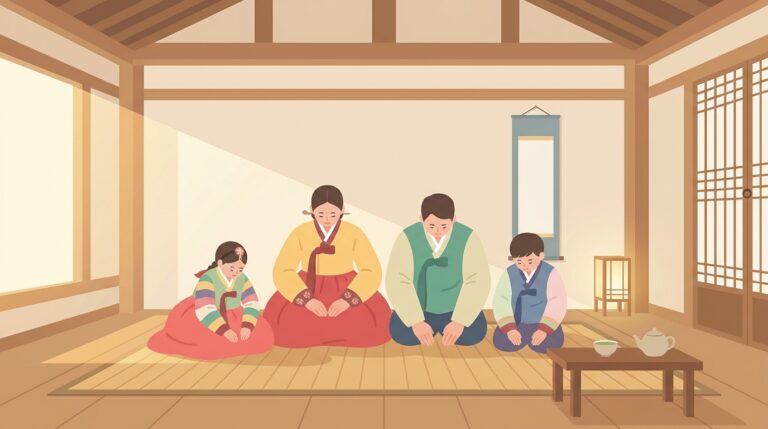
Imagine this: You are watching your favorite K-Drama, and suddenly, the characters are all dressed in beautiful Hanbok (traditional Korean clothing), bowing deeply to their elders, and eating bowls of steaming, delicious-looking soup with sliced rice cakes. Yes, that is Seollal (설날)—Korean Lunar New Year!
Many of our beginner students tell us: “I want to wish my Korean friends a Happy New Year, but saying just ‘Happy New Year’ in English feels too distant. I’m afraid of using the wrong level of politeness or sounding like a robot!”
Don’t worry! Today, we are going to learn how to talk about Seollal naturally. By the end of this guide, you’ll be able to send warm holiday greetings and chat about Seollal foods like a real Korean friend. Let’s dive in!
Phase 2: Deep-Dive into 3 Essential Expressions
1. 새해 복 많이 받으세요! (Sae-hae bok man-i bat-eu-se-yo!)
- Pronunciation: “Sae-hae bok mahni bah-deu-seh-yo!” (Sounds like say-hay + bok + mah-nee + bah-deu-seh-yo)
- Meaning: “Please receive a lot of good fortune in the New Year!” (The ultimate Korean “Happy New Year!”)
- K-Culture Moment: You will see K-Pop idols bowing to the camera and saying this to their fans in special holiday videos!
- Editor’s Insight: The word 복 (bok) means luck, blessing, or fortune. In Korea, we don’t just wish people a “happy” time; we wish them a basket full of blessings and good fortune.
- Situation Spectrum: Casual (⚠️ – only to close friends as 새해 복 많이 받아), Semi-formal (✅), Formal (✅)
- 🤔 Think About It: In your culture, do you wish people “happiness” or “fortune/blessings” for the New Year? How does this reflect the difference in our values?
2. 떡국 먹었어요? (Tteok-guk meog-eot-eo-yo?)
- Pronunciation: “Ddeok-gook meo-gweot-eo-yo?” (Sounds like duck-gook + meo-geot-eo-yo)
- Meaning: “Did you eat rice cake soup?”
- K-Culture Moment: In family K-Dramas, grandmothers always ask this to make sure everyone has officially grown one year older.
- Editor’s Insight: In Korea, eating 떡국 (tteokguk) symbolizes getting one year older and starting fresh. Asking someone if they ate tteokguk is a warm, caring way to ask if they are enjoying their Seollal!
- Situation Spectrum: Casual (✅ – 떡국 먹었어?), Semi-formal (✅), Formal (⚠️ – 떡국 드셨습니까? is better for business)
- 🤔 Think About It: Why do you think Koreans associate eating a specific soup with aging?
3. 이번 설날에 뭐 해요? (I-beon Seol-nal-e mwo hae-yo?)
- Pronunciation: “Ee-beon Seol-lal-eh mwo hae-yo?”
- Meaning: “What are you doing this Seollal?”
- K-Culture Moment: Coworkers chatting near the coffee machine right before the holiday starts.
- Editor’s Insight: This is the perfect small-talk starter! It shows you care about their holiday plans without being too intrusive.
- Situation Spectrum: Casual (✅ – 이번 설날에 뭐 해?), Semi-formal (✅), Formal (⚠️ – 이번 설날에 무엇을 하십니까?)
- 🤔 Think About It: How do you usually ask your friends about their holiday plans in your native language?
Phase 3: Textbook Korean vs. Real-Life Korean
Let’s see how school textbook Korean compares to how native Koreans actually talk during Seollal!
Situation 1: Greeting your close Korean friend on KakaoTalk
- 📖 Textbook Korean: 즐거운 설날을 보내십시오. (Jeul-geo-un Seol-nal-eul bo-nae-sip-si-o.) – “Have a pleasant Lunar New Year.”
- 🗣️ Real-Life Korean: 설날 잘 보내! 맛있는 거 많이 먹고~ (Seol-nal jal bo-nae! Mas-it-neun geo man-i meok-go~) – “Have a great Seollal! Eat lots of yummy food~”
- 💡 Why the difference? The textbook version is too stiff and formal for friends. Real Koreans use cute, warm expressions like “eat yummy food” to show affection.
Situation 2: Asking if someone is going to their hometown
- 📖 Textbook Korean: 고향에 가십니까? (Go-hyang-e ga-sip-ni-ka?) – “Are you going to your hometown?”
- 🗣️ Real-Life Korean: 이번에 시골 내려가요? (I-beon-e si-gol nae-ryeo-ga-yo?) – “Are you going down to the countryside this time?”
- 💡 Why the difference? Even if their hometown is a big city, Koreans culturally refer to visiting family outside of Seoul as “going down to the countryside” (시골 내려가다).
Phase 4: K-Culture Deep-Dive & Non-Verbal Manners
4-1. The Art of Sebae (세배) & Bowing Etiquette
During Seollal, Koreans perform a formal bow called 세배 (sebae) to their elders.
* The Gesture: Place your hands together in front of your stomach (left hand on top for men, right hand on top for women). Slowly bend your knees, bow deeply until your head almost touches your hands on the floor, and hold it for a second before slowly standing up.
* The Reward: After bowing and saying “새해 복 많이 받으세요,” the elders will give you 세뱃돈 (sebae-tdon)—New Year’s pocket money inside an envelope!
4-2. The Food: White Slices of Luck
The rice cakes in 떡국 (tteokguk) are cut into thin, round coin shapes. They represent wealth and prosperity for the upcoming year. Eating a bowl of this hot soup means you have successfully turned one year older!
Phase 5: Real-Life Roleplay Scenario
Meet Ji-a (지아), your friendly Korean coworker. You meet her at the office pantry on the day before the Seollal holiday begins.
- Ji-a: 이번 설날에 계획 있어요? (I-beon Seol-nal-e gye-hoeg is-seo-yo?) (Do you have plans for this Seollal?)
- You: 🎭 [Smiling warmly] 아직 특별한 계획은 없어요. 지아 씨는요? (A-jik teuk-byeol-han gye-hoeg-eun eob-seo-yo. Ji-a ssi-neun-yo?) (I don’t have special plans yet. How about you, Ji-a?)
- Ji-a: 저는 가족들 만나러 고향에 내려가요. (Jeo-neun ga-jok-deul man-na-reo go-hyang-e nae-ryeo-ga-yo.) (I’m going down to my hometown to meet my family.)
- You: 🎭 [Nodding with empathy] 아, 정말요? 차가 많이 막히겠어요. (Ah, jeong-mal-yo? Cha-ga man-i mak-hi-ges-seo-yo.) (Oh, really? The traffic must be very heavy.)
- Ji-a: 맞아요, 그래도 오랜만에 가족들 봐서 좋아요! (Maj-a-yo, geu-rae-do o-ran-man-e ga-jok-deul bwa-seo jo-a-yo!) (True, but I’m happy to see my family after a long time!)
- You: 🎭 [Wishing her well] 잘 다녀오세요! 맛있는 떡국도 많이 드시고요. (Jal da-nyeo-o-se-yo! Mas-it-neun tteok-guk-do man-i deu-si-go-yo.) (Have a safe trip! Eat lots of delicious tteokguk too.)
- Ji-a: 고마워요! 우리 새해 복 많이 받아요! (Go-ma-wo-yo! U-ri sae-hae bok man-i bat-a-yo!) (Thank you! Let’s receive lots of New Year’s blessings!)
- You: 🎭 [Laughing together] 네! 새해 복 많이 받으세요! (Ne! Sae-hae bok man-i bat-eu-se-yo!) (Yes! Happy New Year!)
🔀 Interactive Choice Point!
Ji-a asks: “설날에 떡국 먹어봤어요?” (Have you tried tteokguk before?) How do you answer?
- Option A: “아니요, 안 먹어봤어요. 하지만 먹어보고 싶어요!” (No, I haven’t. But I want to try it!)
- Option B: “그게 뭐예요? 맛없을 것 같아요.” (What is that? It sounds tasteless.)
- Option C: “네! 작년에 먹어봤는데 진짜 맛있었어요!” (Yes! I tried it last year and it was delicious!)
💡 Feedback on your choices:
- Option A (Best Choice): High engagement! Showing interest in Korean culture makes locals super happy. Ji-a might even invite you to try some!
- Option B (Bad/Risk): Oops! Saying Korean traditional food looks “tasteless” can sound rude to locals.
- Option C (Best Choice): Excellent! Sharing your positive past experience builds instant connection.
Phase 6: 10-Second Emotion Shadowing Drill
Practice speaking with the right rhythm and emotion! The / represents a short pause.
- [😊 Expressing warm excitement]
- 새해 복 / 많이 받으세요! (Sae-hae bok / man-i bat-eu-se-yo!)
- [🥺 Worried but friendly tone]
- 차가 / 많이 / 막히겠어요. (Cha-ga / man-i / mak-hi-ges-seo-yo.)
- [😋 Hungry and happy tone]
- 떡국 / 진짜 / 맛있겠다! (Tteok-guk / jin-ja / mas-it-get-da!)
Phase 7: K-Culture Mini Dictionary
- 고향 (Go-hyang) | Hometown | During Seollal, millions of Koreans travel back to their go-hyang, causing massive traffic jams called “Seollal migration.”
- 세배 (Se-bae) | New Year’s Bow | The traditional deep bow performed to parents and grandparents to show respect.
- 세뱃돈 (Se-bae-tdon) | New Year’s Money | The cash given to children and young adults after they perform sebae.
- 연휴 (Yeon-hyu) | Consecutive Holidays | Seollal usually spans 3 days, making it one of the longest yeon-hyu in Korea.
Phase 8: Traveler’s Survival Kit
Survival Expressions TOP 3
- 설날 연휴에 쉬나요? (Seol-nal yeon-hyu-e swi-na-yo?) | “Are you closed during the Seollal holiday?” (Crucial for checking if cafes or restaurants are open!)
- ktx 표 있어요? (KTX pyo is-seo-yo?) | “Are there KTX train tickets left?” (Tickets sell out months in advance!)
- 감기 조심하세요! (Gam-gi jo-sim-ha-se-yo!) | “Watch out for colds!” (Seollal is in the cold winter month of January/February, so this greeting is very popular.)
Editor’s Travel Note:
During Seollal, Seoul can feel like a ghost town because everyone travels to the countryside. Many local shops close! Use the Kakao Map or Naver Map apps to check updated holiday business hours before you go out. (Note: Business schedules are subject to change during national holidays.)
Phase 9: “Going Deeper” (Reflections on Korean Collectivism)
Seollal is more than just a day off. It represents the Korean concept of 우리 (Uri – We/Us). While Western holidays often focus on individual relaxation or partying with friends, Seollal is deeply rooted in family connection. Gathering together to make food, share updates, and honor ancestors shows how strongly Korean society values collectivism and filial piety.
💬 Your Turn: Do you have a holiday in your country where the whole nation travels to meet family? What traditional food do you eat? Tell us in the comments below!
Phase 10: FAQ & Common Mistakes
Q: Can I say “Happy New Year” on January 1st AND on Lunar New Year in Korea?
A: Yes! Koreans use 새해 복 많이 받으세요 for both Solar New Year (Jan 1st) and Lunar New Year (Seollal). You can comfortably use it twice!
Q: Is it rude to ask for “Sebaetdon” (money) if I bow?
A: If you are an adult, yes! Sebaetdon is usually given by elders to children, students, or unmarried young adults. Asking for it directly can be awkward, but if they offer it, accept it gratefully with both hands!
Q: What is the most common mistake foreigners make during Seollal?
A: Forgetting to use both hands when giving or receiving holiday gifts and envelopes! Doing things with one hand can look very dismissive in Korea.
🚨 Common Mistakes Alert!
- Mistake 1: Bowing to your friends. (Correction: Sebae is only for elders/ancestors. Just say the greeting to friends!)
- Mistake 2: Saying “맛없다” (tasteless) to traditional holiday food you don’t like. (Correction: Say “제가 아직 초딩입맛이라서요” – “It’s because I have a picky child-like taste” to make them laugh instead!)
Phase 11: Action Mission
- Bronze Mission: Write “새해 복 많이 받으세요! 🧧” in a message to one Korean friend or on your social media.
- Silver Mission: Record a 5-second voice note saying “설날 잘 보내세요!” with a big smile.
- Gold Mission: Find a local Korean supermarket, buy some sliced rice cakes (떡국떡), and try making a warm bowl of tteokguk at home!
Phase 12: Interactive Quiz Challenge
1. What does the round shape of the rice cake in Tteokguk represent?
- A) The Sun
- B) Old Coins (Wealth)
- C) Earth
🔍 Click here for the Answer!
Correct Answer: B) Old Coins (Wealth)
Explanation: The sliced rice cakes resemble old Korean coins, representing prosperity and wealth for the new year.
2. Fill in the blank: “이번 설날에 ____ 해요?” (What are you doing this Seollal?)
- A) 누구 (nu-gu)
- B) 왜 (wae)
- C) 뭐 (mwo)
🔍 Click here for the Answer!
Correct Answer: C) 뭐 (mwo – what)
Explanation: “뭐 해요?” means “What are you doing?”. “누구” means who, and “왜” means why.







