

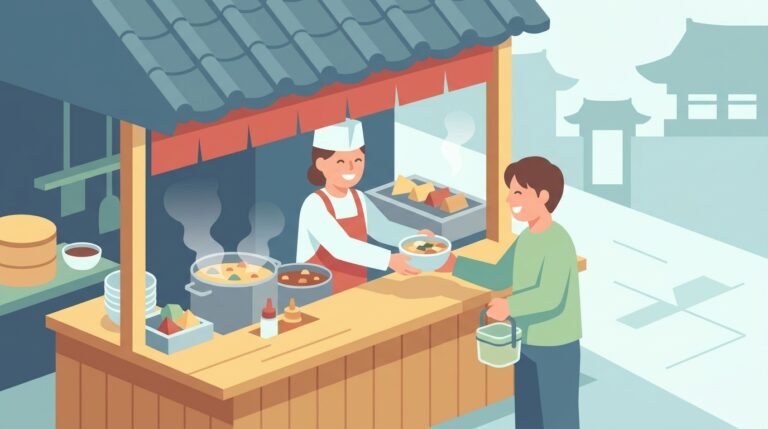
NAVIGATING KOREA’S DELIVERY APP DEBATE: C1 KOREAN GUIDE
Phase 1: Empathy (스토리 몰입형 오프닝)
안녕하세요! Daily Hangul Editor here, your ultimate K-Culture Navigator!
Imagine this: It’s 11 PM in Seoul. You’re craving that crispy, golden Chimeg (치맥 – chicken and beer). You open your favorite delivery app, but instead of the usual excitement, you notice something different. The delivery fee has spiked, and your favorite local chicken joint has posted a notice: “Due to rising platform commission fees, we encourage customers to order directly via phone.”
Suddenly, you are caught in the middle of Korea’s most heated modern debate: The Delivery App Fee Controversy (배달 앱 수수료 논란).
As a C1-level learner, you’re past the basics of ordering food. Now, it’s time to understand the socio-cultural conversations happening around dinner tables and on Korean news feeds. Today, we’re diving deep into the nuanced vocabulary and cultural ‘Nunchi’ (눈치) needed to navigate this delicate topic like a true local.
Phase 2: Core Expressions Deep Dive (핵심 표현 3선 심층 분석)
1. 배달 앱 수수료가 너무 선을 넘었어요 (baedal aep susuryoga neomu seoneul neomeosseoyo)
- Pronunciation: baedal aep soo-soo-ryo-ga neo-moo seon-eul neo-meot-eo-yo (Sounds like “seon-eul” -> crossing the line)
- Meaning: The delivery app commission fees have crossed the line (gone too far).
- K-Culture Moment: You’ll hear this on trendy YouTube talk shows or read it in the comment sections of news articles discussing platform monopolies.
- Editor’s Insight: 선(line)을 넘다 is a highly idiomatic expression in Korean. While it can be used casually when a friend makes an inappropriate joke, using it here highlights the moral indignation small business owners and consumers feel toward massive tech platforms.
- Situation Spectrum: Casual: ✅ | Semi-formal: ✅ | Formal: ⚠️
- 🤔 Think About It: How does your home country view the rise of food delivery monopolies? Is “crossing the line” a concept you use for corporate greed too?
2. 배달팁이 아까워서 포장 주문 하려고요 (baedaltibi akkawoseo pojang jumun haryeogoyo)
- Pronunciation: baedal-tip-ee ah-kka-wo-seo po-jang joo-moon ha-ryeo-go-yo
- Meaning: Since the delivery tip feels like a waste, I’m going to do a pickup order.
- K-Culture Moment: A common phrase spoken between roommates or couples on a Friday night, debating whether to put on pants and walk 5 minutes to save 4,000 KRW.
- Editor’s Insight: 아깝다 (to feel like a waste/unearned) is a powerful Korean emotion. It implies that the value received does not match the cost. 포장 (pojang) is the go-to word for takeout/pickup.
- Situation Spectrum: Casual: ✅ | Semi-formal: ✅ | Formal: 🚫
- 🤔 Think About It: In Korea, “delivery tips” (배달팁) are relatively new—historically, delivery was free! Why do you think this transition caused such cultural friction?
3. 상생 협력이 필요한 시점입니다 (sangsaeng hyeopryeogi piryohan sijeomimnida)
- Pronunciation: sang-saeng hyeop-ryeok-ee pee-ryo-han she-jeom-im-nee-da
- Meaning: It is a time when win-win cooperation is desperately needed.
- K-Culture Moment: Used by news anchors, policy makers, or restaurant association representatives during TV debates regarding platform regulations.
- Editor’s Insight: 상생 (sangsaeng – co-existence/mutual prosperity) is a crucial Korean corporate social responsibility keyword. It reflects the Confucian value of community harmony over raw capitalistic competition.
- Situation Spectrum: Casual: 🚫 | Semi-formal: ⚠️ | Formal: ✅
- 🤔 Think About It: How does the linguistic weight of “상생” (living together) differ from Western terms like “compromise” or “fair play”?
Phase 3: Textbook vs. Real-Life Korean (교과서 한국어 vs 진짜 한국어)
Situation 1: Deciding to pick up food to save money.
- 📖 Textbook Korean: “배달료가 비싸서 직접 매장에 가서 가져오겠습니다.” (Because the delivery fee is expensive, I will go to the store and bring it back myself.)
- 🗣️ Real-Life Korean: “배달비 실화냐? 그냥 배달팁 아끼게 포장해 올게.” (Is this delivery fee for real? I’ll just go pick it up to save on the delivery tip.)
- 💡 Why the difference? 실화냐? (Is this for real?) is a highly popular colloquialism used to express disbelief, perfect for reacting to shockingly high delivery fees.
Situation 2: Expressing sympathy for local restaurant owners.
- 📖 Textbook Korean: “소상공인들이 배달 앱 수수료 때문에 힘들어합니다.” (Small business owners are having a hard time because of delivery app commissions.)
- 🗣️ Real-Life Korean: “수수료 폭탄 때문에 자영업자들 다 죽게 생겼어요.” (Small business owners are practically dying because of the commission fee bomb.)
- 💡 Why the difference? ~폭탄 (bomb) is appended to nouns (e.g., 세금 폭탄 – tax bomb) to emphasize an overwhelming burden. ~해 죽겠다 or ~게 생겼다 expresses extreme urgency or difficulty.
Phase 4: K-Culture Deep Dive & Non-verbal Etiquette
4-1. Nunchi & Gestures
When discussing delivery fees with a restaurant owner or taxi driver (a classic Korean setting for political chats!), keep your body language humble. Avoid pointing fingers when discussing platforms. Instead, use a deep sigh (한숨) and a slight shake of the head to show empathy. This shows you understand the Jeong (정 – deep social connection) and struggle of working-class Koreans.
4-2. The Evolution of ‘K-Delivery’
Historically, Korean delivery was legendary for its speed and zero-cost structure. Deliverers would bring real ceramic plates and return later to collect them from your doorstep. The transition to gig-economy apps (배달의민족, 쿠팡이츠) brought convenience but stripped away the personal relationship between neighborhood joints and customers. Discussing this shift showcases a deep, empathetic understanding of Korean modern history.
Phase 5: Real-Life Roleplay Scenario
Characters:
- 민우 (Min-woo): Your local fried chicken shop owner, tired of platform fees.
- 유진 (You – C1 Learner): A loyal customer trying to order dinner politely.
-
[Turn 1] 민우: “아이고, 어서 오세요! 오늘도 배달 안 시키시고 직접 찾아오셨네요?”
- Translation: “Ah, welcome! You came in person again today instead of ordering delivery?”
-
Action: (Wipes sweat from his forehead with a friendly smile)
-
[Turn 2] 유진: “네, 사장님! 요새 배달 앱 수수료 논란 보니까 남는 게 없으실 것 같아서요.”
- Translation: “Yes, boss! Seeing the delivery app fee controversy lately, I figured you wouldn’t have much margin left.”
-
Action: (Gives a warm, sympathetic nod)
-
[Turn 3] 민우: “말도 마세요. 배달 앱들이 수수료를 올려버리니까 팔아도 손해예요.”
- Translation: “Don’t even get me started. Because the delivery apps raised their commission, we make a loss even when we sell.”
-
Action: (Sighs deeply, waving his hand dismissively)
-
[Turn 4] 유진: “맞아요. 진짜 배달 플랫폼들이 상생 협력은 안 하고 선을 넘은 것 같아요.”
- Translation: “Exactly. I really think the delivery platforms crossed the line instead of pursuing win-win cooperation.”
-
Action: (Folds arms, showing serious concern)
-
[Turn 5] 민우: “그래도 이렇게 유진 씨처럼 포장해 주시는 단골 덕분에 버팁니다.”
- Translation: “Still, we hang in there thanks to regulars like you, Yujin, who pick up their orders.”
-
Action: (Pats Yujin on the shoulder gratefully)
-
[Turn 6] 유진: “저야말로 사장님 치킨이 제일 맛있어서 그래요. 힘내세요!”
- Translation: “Well, it’s because your chicken is the absolute best! Hang in there!”
-
Action: (Offers a bright, encouraging smile)
-
[Turn 7] 민우: “고마워요! 여기 서비스로 콜라 큰 거 하나 넣었습니다!”
- Translation: “Thank you! I slipped in a large cola on the house!”
-
Action: (Winks and hands over the heavy paper bag)
-
[Turn 8] 유진: “우와, 사장님 감동이에요! 자주 올게요!”
- Translation: “Wow, boss, I’m so touched! I’ll come by often!”
- Action: (Bows politely with both hands receiving the bag)
🔀 Interactive Choice
How would you respond if Min-woo asked if you prefer using the new “discount coupons” on the app?
- A) “쿠폰 써도 결국 사장님들한테 부담이 가잖아요. 그래서 그냥 포장해요.”
- B) “저는 쿠폰 주는 배달 앱이 무조건 좋더라고요. 어쩔 수 없죠.”
- C) “요새는 배달 앱 탈퇴하고 전화로만 주문하고 있어요.”
Feedback:
- Best (A): Extremely empathetic. Shows you understand that app discounts are often subsidized by the business owners themselves. Min-woo will absolutely love you!
- Risk (B): Honest but a bit cold. It might make the local business owner feel a bit distant or sad about the reality.
- Bad (C): A bit unrealistic and inconvenient for you, though highly supportive. Min-woo might feel burdened by your extreme sacrifice!
Phase 6: 10-Second Emotion Shadowing Drill
Practice saying these with natural pacing and emotion. Pay attention to the pauses (/).
[🥺 Worried & Empathetic]- “요즘 / 자영업자분들 / 수수료 폭탄 때문에 / 진짜 힘들겠어요.”
- Yo-jeom / ja-yeong-eop-ja-bun-deul / soo-soo-ryo pok-tan ttae-moon-e / jin-jja him-deul-get-eo-yo.
[😤 Indignant & Determined]- “배달 앱 수수료가 / 너무 선을 넘어서 / 이제 무조건 / 포장 주문하려고요!”
- Bae-dal aep soo-soo-ryo-ga / neo-moo seon-eul neo-meo-seo / ee-je moo-jo-geon / po-jang joo-moon-ha-ryeo-go-yo!
Phase 7: K-Culture Mini Dictionary
- 소상공인 (Sosang-gongin) | Small Business Owner / Micro-enterprise
- Essential for reading economic news. Refers to local, independent shops.
- 배달 플랫폼 (Baedal Peullaetpom) | Delivery Platform
- The collective term for apps like Baemin, Yogiyo, and Coupang Eats.
- 상생 (Sangsaeng) | Win-win / Mutual Coexistence
- The buzzword for ethical business in Korea. Often used in policies targeting corporate giants.
- 단골손님 (Dangol-sonnim) | Regular Customer
- A cherished relationship in Korean culture, often leading to freebies (서비스).
Phase 8: Survivor Kit for Travelers
Survival Phrases TOP 3
- “포장 주문 하면 할인되나요?” (Pojang jumun hamyeon harindeynayo?)
- Pro Tip: Many shops offer a 1,000 to 2,000 KRW discount if you pick up your order!
- “전화로 직접 주문해도 돼요?” (Jeonhwaro jikjeop jumunhaedo dwoeyo?)
- Pro Tip: Great for supporting local shops directly and avoiding platform commissions.
- “영수증은 버려주세요.” (Yeongsujeungeun beoryeojuseyo.)
- Pro Tip: Say this to save paper once you’ve paid for your takeout.
Editor’s Travel Note
When navigating Korean cities, skip international maps and use Naver Map or KakaoMap. These apps show you whether a restaurant offers “Pojang” (takeout) directly, often with exclusive local discounts not listed on delivery apps.
Phase 9: “A Step Deeper” (한 발 더 깊이)
Korean culture values community survival (우리 – “We” culture) over individual profit. The current outrage against delivery apps stems from a collective feeling that these platforms are disrupting the delicate economic ecosystem of neighborhood communities. By choosing to walk and pick up your food, you aren’t just saving money; you are participating in a silent, powerful movement of solidarity with local business owners.
💬 Your Turn: Have you ever noticed similar corporate controversies in your country? Let’s talk in the comments below!
Phase 10: FAQ & Avoiding Mistakes
Q: Is it always better to do ‘포장’ (pickup) over ‘배달’ (delivery)?
A: Not always, but for small neighborhood restaurants, it makes a significant difference in their profit margins. Plus, it’s a great excuse to practice your Korean conversational skills in person!
Q: Why do some menu items cost more on delivery apps than in the physical store?
A: To offset the high platform commission fees, some restaurant owners raise the prices of individual items on the app. Ordering directly or picking up avoids this hidden markup.
Q: Do delivery riders make a lot of money in Korea?
A: It fluctuates wildly. While some make a good living during peak hours, rising platform cuts and safety risks make it a highly debated gig-economy issue.
🚨 Common Mistakes Alert!
- Mistake 1: Demanding a







