

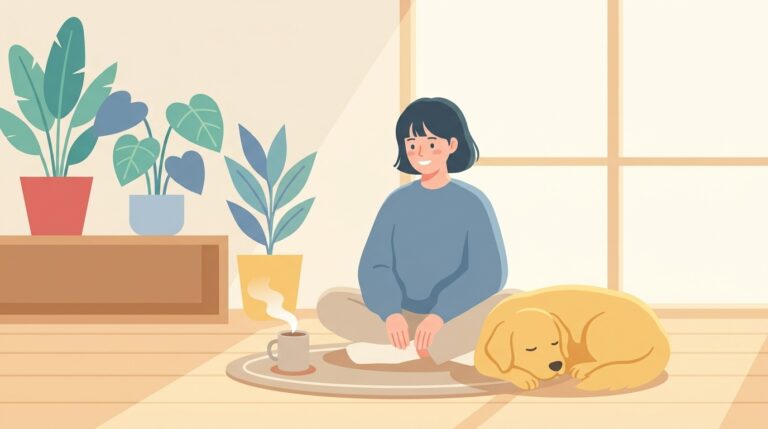
The Healing Paws: Navigating Animal-Assisted Therapy in Korea (C1 Level)
Phase 1: Empathy (Journey into K-Pet Therapy)
안녕하세요! (Annyeonghaseyo! – Hello!) This is your Daily Hangul Chief Editor and native culture navigator.
Have you ever felt completely drained after a long, hectic week in Seoul, only to find yourself instantly comforted by the warm, silent gaze of a dog or a cat? You are not alone. In Korea’s fast-paced society, a beautiful cultural shift is taking place. Beyond the bustling pet cafes of Hongdae, Koreans are embracing 동물 매개 치료 (Dongmul Maegae Chiryo – Animal-Assisted Therapy) as a profound way to heal emotional wounds, combat loneliness, and find peace.
Historically, pets in Korea were often viewed simply as guards or outdoor animals. Today, they are cherished as family members—often referred to lovingly as 반려동물 (Banryeodongmul – companion animals/life partners). For advanced C1 learners, discussing mental health and therapeutic dynamics in Korean requires a delicate grasp of empathy, soft endings, and specific emotional vocabulary. Many learners struggle with expressing subtle psychological relief without sounding overly clinical. This guide is built from real-world discussions with advanced learners who wanted to talk about healing, mental wellness, and animal bonds naturally.
Phase 2: Deep Dive into 3 Key Therapeutic Expressions
To speak like a true native when discussing emotional healing and animal therapy, you need to move beyond basic words like “좋아요” (It’s good). Let’s master three sophisticated C1-level expressions.
1. 마음을 어루만지다 (Maeumeul eorumanjida)
- Pronunciation: Mah-eum-eul eo-ru-man-ji-da (Sounds like “eo-ru-man” as in a gentle, rhythmic caress, followed by “ji-da”)
- Meaning: To soothe/caress one’s heart or soul.
- K-Culture Moment: You will hear this beautiful, poetic phrase in healing K-Dramas like Daily Dose of Sunshine (정신병동에도 아침이 와요) or during emotional segments of animal rescue shows like Animal Farm (동물농장).
- Editor’s Insight: Literally, 어루만지다 means to stroke or pet gently. When paired with 마음 (heart/mind), it signifies deep emotional consolation that doesn’t necessarily require words. A therapy dog’s touch literally and figuratively “caresses” your wounded heart.
- Situation Spectrum: Casual (⚠️ – too poetic for casual chatter, unless joking playfully) | Semi-formal (✅ – perfect for sharing feelings) | Formal (✅)
- 🤔 Think About It: In your culture, do you describe emotional healing with tactile verbs (like “touching” or “caressing”)? How does this reflect the physical connection between humans and animals?
2. 정서적 교감을 나누다 (Jeongseojeok gyogameul nanuda)
- Pronunciation: Jeong-seo-jeok gyo-gam-eul na-nu-da (Think of “gyogam” as mutual, unspoken resonance, rhyming with “calm”)
- Meaning: To share deep emotional resonance/communion.
- K-Culture Moment: Used frequently in Korean documentaries discussing the psychological benefits of therapy pets, or by veterinarians explaining the profound bond between service dogs and their handlers.
- Editor’s Insight: While 소통 (sotong) is general communication, 교감 (gyogam) represents a mutual sharing of feelings, often non-verbal. It suggests that both the human and the animal are actively feeling and understanding each other’s emotional states.
- Situation Spectrum: Casual (⚠️ – slightly academic) | Semi-formal (✅ – highly sophisticated) | Formal (✅)
- 🤔 Think About It: How does the word “교감” differ from simply “talking” to a pet in your native language?
3. 반려견 덕분에 위안을 얻다 (Banryeogyeon deokbune wianeul eotda)
- Pronunciation: Ban-ryeo-gyeon deok-bu-ne wi-an-eul eot-da (Make sure to emphasize “deokbune” to show gratitude, sounding like “duck-boo-neh”)
- Meaning: To find comfort/solace thanks to one’s companion dog.
- K-Culture Moment: Often shared on Korean lifestyle vlogs or podcasts when guests talk about overcoming depression, burnout (번아웃), or anxiety through their pets.
- Editor’s Insight: Using “덕분에” (thanks to) instead of “때문에” (because of) injects a sense of deep gratitude. 위안 (solace/comfort) is a much deeper, more elegant word than 위로 (comfort/consolation).
- Situation Spectrum: Casual (✅) | Semi-formal (✅) | Formal (✅)
- 🤔 Think About It: Why does Korean grammar separate “thanks to” (덕분에) and “because of” (때문에) so strictly when expressing emotional outcomes?
Phase 3: Textbook Korean vs. Real Native Korean
Let’s look at how to transition from sterile, textbook sentences to natural, emotionally resonant native phrasing.
Situation 1: Explaining how a therapy dog makes you feel
- 📖 Textbook: 강아지를 만지면 기분이 좋아지고 스트레스가 풀려요. (If you touch a dog, your mood gets better and stress is released.)
- 🗣️ Real Native: 아이들을 쓰다듬고 있으면 복잡했던 머릿속이 비워지면서 마음이 차분해져요. (When I’m stroking these little ones, my cluttered mind empties out and my heart becomes calm.)
- 💡 Why the difference? Natives rarely call therapy animals just “강아지” (puppies) in emotional contexts; they often call them “아이들” (children/kids/little ones) to show affection. Using “머릿속이 비워지다” (mind emptying out) is a much more vivid way to describe stress relief than “스트레스가 풀리다.”
Situation 2: Describing a deep emotional bond
- 📖 Textbook: 동물과 치료하는 것은 정신 건강에 큰 도움이 됩니다. (Therapy with animals is of great help to mental health.)
- 🗣️ Real Native: 말 못 하는 동물이라도 서로 눈을 맞추다 보면 묘한 치유의 힘이 느껴져요. (Even though they are speechless animals, when we lock eyes, you can feel this strange, subtle healing power.)
- 💡 Why the difference? C1 speakers use nuanced adjectives like “묘한” (subtle/mysterious) and focus on natural actions like “눈을 맞추다” (to make eye contact) rather than dry clinical terms like “정신 건강” (mental health) in conversation.
Phase 4: K-Culture Deep Dive & Non-Verbal Manners
4-1. The Korean Art of Eye Contact and Petting (눈맞춤과 조심스러운 손길)
When interacting with therapy animals or pet owners in Korea, non-verbal cues carry immense weight. Koreans highly value 조심성 (caution/consideration).
* The “Low-Posture” Approach: When meeting a therapy dog, it is polite to lower your body level (스쿼트 자세), avoid staring directly into their eyes immediately (which can be seen as aggression), and offer the back of your hand (손등) for them to sniff.
* Tone of Voice: Koreans use a very soft, high-pitched “baby talk” register with animals, often saying “어구어구” (eogu-eogu – “oh dear, look at you”) or “오구오구” (ogu-ogu). Keeping your voice low and gentle shows respect for the animal’s therapeutic space.
4-2. The “Pet-Therapy” Wave in K-Media
In Korea, “Pet-Therapy” is a massive entertainment sub-genre. Shows like Dogs Are Incredible (개는 훌륭하다) and various YouTube channels featuring therapeutic animal interactions highlight how animals rescue humans from isolation. Many Koreans living in one-person households (1인 가구) vicariously experience animal therapy through “Lansun Butlering” (랜선집사 – online/LAN-cable pet butlering), finding comfort just by watching animals on screen.
Phase 5: Real-Life Roleplay Scenario
Setting: A peaceful animal-assisted therapy center (동물 매개 치료 센터) in Seoul.
Characters:
* 민우 (Min-woo): The empathetic therapy facilitator.
* Sarah (You): An expat seeking emotional solace after experiencing severe burnout.
- 민우: 어서 오세요, 세라 씨. 오늘 날씨가 많이 춥죠? 따뜻한 차 한잔하시면서 긴장 푸세요.
(Welcome, Sarah. It’s quite cold today, isn’t it? Have a cup of warm tea and relax.) -
Sarah:
🎭 (쑥스럽게 웃으며)감사합니다. 사실 이런 치료 센터는 처음이라 조금 긴장되네요. 요즘 번아웃이 심해서요.
(Thank you. Actually, it’s my first time at a therapy center like this, so I’m a bit nervous. I’ve had severe burnout lately.) -
민우:
🎭 (따뜻한 미소를 지으며)다들 처음엔 어색해하세요. 걱정 마세요. 저기 누워 있는 리트리버 ‘마음이’가 오늘 세라 씨의 든든한 치료사예요.
(Everyone feels awkward at first. Don’t worry. That retriever lying over there, ‘Maeumi’ [Heart], is your reliable therapist today.) -
Sarah:
🎭 (마음이에게 천천히 다가가 손등을 내밀며)안녕, 마음아? 우와, 제 손을 핥아주네요. 눈빛이 정말 깊어요.
(Hello, Maeum-ah? Wow, he’s licking my hand. His gaze is really deep.) -
민우: 마음이가 세라 씨의 따뜻한 에너지를 느꼈나 봐요. 가만히 곁에 앉아서 쓰다듬어 보세요.
(It seems Maeumi felt your warm energy. Sit quietly by his side and try stroking him.) -
Sarah:
🎭 (마음이의 머리를 쓰다듬으며 눈물을 살짝 글썽인다)신기하네요… 그냥 곁에 앉아 있을 뿐인데, 복잡했던 머릿속이 싹 비워지면서 마음을 어루만져 주는 느낌이 들어요.
(It’s amazing… Just sitting by his side, my cluttered mind completely empties out, and I feel like my heart is being gently caressed.) -
민우: 맞아요. 동물들은 아무런 조건 없이 우리의 슬픔을 받아주죠. 그 정서적 교감이야말로 가장 강력한 치유예요.
(Exactly. Animals accept our sadness without any conditions. That emotional communion is the most powerful healing.) -
Sarah: 맞아요. 말로 설명할 수 없는 위안을 얻고 가는 것 같아요. 오길 정말 잘했네요.
(Indeed. I feel like I’m receiving a solace that cannot be described with words. I’m so glad I came.)
🔀 Interactive Choice Points
At this point, Min-woo asks you: “세라 씨, 혹시 마음이랑 정원에서 가벼운 산책을 해보시겠어요?” (Sarah, would you like to take a light walk in the garden with Maeumi?)
- Choice A: “네, 가보고 싶어요! 마음이랑 더 친해질 수 있는 기회인 것 같아요.”
👉 Feedback (Best): Perfect! This shows enthusiasm and uses natural phrasing. It opens up further physical and emotional bonding. - Choice B: “피곤해서 싫어요. 그냥 여기 누워 있을게요.”
*👉 Feedback (Bad): While honest, “싫어요” (I don’t want to) sounds overly blunt and slightly rude in a therapeutic environment. Instead, try: “오늘은 조금 지쳐서, 그냥 가만히 교감하는 데 집중하고 싶어요.” - Choice C: “마음이가 귀찮아하지 않을까요? 제가 폐를 끼칠까 봐 걱정돼요.”
👉 Feedback (Risk): Very polite, reflecting typical Korean consideration (남에게 폐 끼치지 않기). However, therapists will reassure you that the dogs are trained to enjoy these interactions.
Phase 6: 10-Second Emotional Shadowing Drill
Practice saying this high-frequency, emotionally expressive sentence. Focus on the pauses (/) and the emotional markers.
[🥺 Softly, with a sigh of relief and profound gratitude]말 못 하는 / 동물이라도 / 가만히 눈을 맞추다 보면 / 말로 표현할 수 없는 / 깊은 위안을 얻게 돼요.
Mal mot haneun / dongmul-irado / gamani nuneul matchuda bomyeon / mallo pyohyeonhal su eomneun / gipeun wianeul eotge doeyo.
(Even though they can’t speak, / when you quietly lock eyes / with an animal, / you end up receiving / a deep solace that cannot be expressed in words.)
Phase 7: K-Culture Mini-Dictionary
- 반려동물 (Banryeodongmul) | Companion Animals
Replaced the older term “애완동물” (toy/pet animals) to emphasize that animals are lifetime partners, reflecting a massive shift in social consciousness. - 치유 (Chiyu) | Healing/Cure
A more holistic, psychological word than “치료” (medical treatment). Used often for mental and emotional recovery. - 힐링 (Healing) | Healing
A Konglish word widely used in Korea to describe any activity that brings peace, stress relief, and mental happiness (e.g., 힐링 카페, 힐링 여행). - 교감 (Gyogam) | Emotional Communion
Unspoken, deep mutual understanding. Commonly used to describe bonds between humans and nature/animals.
Phase 8: The Traveler’s Survival Kit
Survival Expressions for Animal Centers & Cafes
- 혹시 아이가 스트레스 받을까요? (Hoksi aiga seuteureseu badeulkkayo?)
- Pro Tip: “Could the little one be stressed?” Asking this shows deep empathy and consideration for the animal, making a stellar impression on Korean staff.
- 만져봐도 괜찮을까요? (Manjeobwado gwaenchaneulkkayo?)
- Pro Tip: “Is it okay to pet them?” Always ask before touching any therapeutic or companion animal in Korea.
- 아이가 참 순하네요. (Aiga cham sunhaneyo.)
- Pro Tip: “The little one is so gentle.” A highly polite compliment to pay to a pet owner or handler.
🗺️ Editor’s Travel Note
If you are looking to experience animal healing in Korea, you can search for local companion animal experiences using the Naver Map App. Use keywords like ‘동물매개치료’ (Animal-Assisted Therapy) or ‘치유농장’ (Healing Farms). Please note: Always check operational hours and reservation policies beforehand as therapy programs often require strict pre-booking to protect the animals’ health.
Phase 9: “One Step Deeper” (Cultural Reflection)
In Korea, the explosive growth of the pet care and pet therapy industry is intimately linked to the rise of 1인 가구 (single-person households) and the intense pressure of urban competitive life. For many Koreans, the traditional societal safety nets—such as large families or tight-knit local communities—have weakened. In their place, animals have stepped in to fill the emotional void, offering unconditional acceptance in a society that often demands perfection. Discussing animal therapy in Korea is not just about pets; it is a gateway to understanding the collective yearning for vulnerability, warmth, and non-judgmental spaces in modern society.
💬 Your Turn: Do you think animals have a unique power to heal our minds that humans do not possess? Leave a comment below in Korean about your own experiences with animal-assisted healing!
Phase 10: FAQ & Common Mistakes
Q: Can I use “애완동물” instead of “반려동물”?
A: While “애완동물” (Ae-wan-dong-mul) is still understood, it carries the nuance of animals being “toys” or “possessions” (pet/toy). In modern Korea, 반려동물 (Ban-ryeo-dong-mul) is the preferred, politically correct, and culturally sensitive term that acknowledges animals as family members.
Q: What is the difference between “치료” (Chiryo) and “치유” (Chiyu)?
A: 치료 refers to clinical, medical treatment (e.g., curing a disease or fixing a broken bone). 치유 refers to emotional, psychological, or spiritual healing and recovery. Animal-assisted therapy utilizes both, but the mental relief is always called 치유.
Q: How do I refer to someone’s pet politely?
A: Instead of calling them “개” (dog) or “고양이” (cat), refer to them as “아이” (child/kid) or by their name. For example, “아이 나이가 어떻게 돼요?” (How old is the little one?).
🚨 Common Mistakes Alert!
- Mistake 1: Calling someone’s pet “그것” (it).
- Correct Action: Treat them like a person. Use “이 아이” (this kid) or “얘” (this friend).
- Mistake 2: Saying “강아지를 치료해요” to mean petting them to feel better.
- Correct Action: This sounds like you are medically treating the dog. Say “강아지 덕분에 치유받아요” (I receive healing thanks to the dog).
- Mistake 3: Forgetting honorifics for pet owners.
- Correct Action: Even if you are extremely friendly with the dog, always maintain polite 존댓말 (honorifics) with the owner or handler.
Phase 11: Action Mission
- Bronze Medal 🥉: Write down a short 3-sentence diary entry in Korean describing your favorite animal and how it makes you feel using the word 위안을 얻다.
- Silver Medal 🥈: Share a photo of your pet or a cute animal on social media, tag us, and write: “이 사진을 보니 마음이 어루만져지는 기분이에요!” (Looking at this photo makes me feel like my heart is being caressed!)
- Gold Medal 🥇: Next time you visit an animal cafe or meet a pet owner in Korea, ask them: “혹시 아이를 조심스럽게 만져봐도 될까요?”
-
🎮 K-Culture Mission: Watch an episode of a Korean animal program (like 동물농장 on YouTube) and spot at least one of our key terms in the comment section!
Phase 12: Interactive Quiz Challenge
Q1. Which term is the most culturally respectful way to refer to a companion animal in Korea today?
1) 애완동물
2) 반려동물
3) 집짐승
Reveal Answer & Explanation
Correct Answer: 2) 반려동물
Explanation: ‘반려동물’ (Companion Animal) reflects the modern view of pets as lifelong partners and family members, unlike the older, more transactional term ‘애완동물’.
Q2. Fill in the blank: “동물들과 교감하다 보면 말로 표현할 수 없는 깊은 ( )을/를 얻게 된다.”
1) 위안
2) 스트레스
3) 공부
Reveal Answer & Explanation
Correct Answer: 1) 위안 (Solace/Comfort)
Explanation: The sentence translates to: ‘When communing with animals, you receive a deep solace that cannot be expressed in words.’
Q3. [True or False] In Korea, calling someone’s dog “아이” (child) is considered disrespectful because it equates animals with humans.
Reveal Answer & Explanation
Correct Answer: False
Explanation: Quite the opposite! Referring to pets as ‘아이’ (child/little one) is a highly affectionate and polite way to acknowledge the owner’s deep bond with their pet.







