

Hello, Daily Hangul Friends! 👋
I’m your Daily Hangul Chief Editor and your 10-year local culture navigator. If you’ve ever ordered something online in Korea but panicked when the delivery driver called, or if you didn’t know how to ask to leave your box at the security office, you are in the right place!
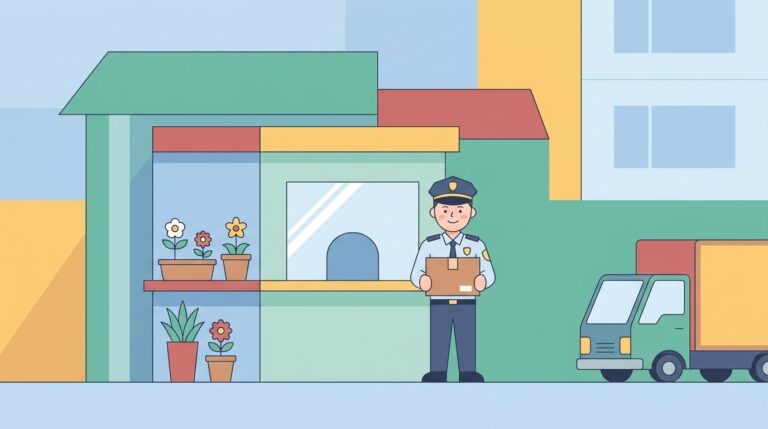
Today, we’re going to master one simple magic phrase: “경비실에 맡겨주세요” (Please leave it at the security office). After reading this 5-minute guide, you’ll be receiving your K-beauty, K-pop merch, and delicious snacks like a true Seoulite! Let’s dive in! 📦
Phase 2: Top 3 Core Expressions Deep Dive 🔍
1. 경비실에 맡겨주세요 (Gyeong-bi-sil-e mat-gyeo-ju-se-yo)
- Pronunciation: Gyeong-bee-sheel-eh maht-gyuh-joo-seh-yo (Sounds like “Gyoung-bee-sheal” + “eh” + “maht-gyeo” + “joo-say-yo”)
- Meaning: Please leave it at the security office.
- K-Culture Moment: In K-Dramas, you often see apartments with a friendly Gyeongbi-ajeossi (security guard) who keeps an eye on the neighborhood and safely holds packages.
- Editor’s Insight: “맡기다” (mat-gi-da) means “to entrust” or “to leave in care of.” By using “주세요” (ju-se-yo), you make it extremely polite and natural.
- Situation Spectrum: Casual ⚠️ / Semi-formal ✅ / Formal ✅
- 🤔 Think About It: In many Western countries, packages are left at the front door. Why do you think Koreans utilize the security office (Gyeongbisil) so often? Let’s talk about the communal trust in Korean apartment cultures!
2. 문 앞에 놓아주세요 (Mun ap-e noh-a-ju-se-yo)
- Pronunciation: Moon ahp-eh noh-ah-joo-seh-yo
- Meaning: Please leave it in front of the door.
- K-Culture Moment: The ultimate convenience of Korean modern life! Most couriers prefer this because it’s fast and super safe in Korea.
- Editor’s Insight: “문 앞” (mun ap) means “front of the door.” If you live in an officetel or studio with high security, this is your go-to phrase.
- Situation Spectrum: Casual ⚠️ / Semi-formal ✅ / Formal ✅
3. 택배함에 넣어주세요 (Taek-bae-ham-e neo-eo-ju-se-yo)
- Pronunciation: Tek-beh-hahm-eh nuh-uh-joo-seh-yo
- Meaning: Please put it in the delivery locker.
- K-Culture Moment: Many Korean apartment complexes now have smart, electronic parcel lockers (Taekbaeham) to prevent loss and protect privacy.
- Editor’s Insight: “택배” (taek-bae) is delivery, and “함” (ham) means box/locker.
- Situation Spectrum: Casual ⚠️ / Semi-formal ✅ / Formal ✅
Phase 3: Textbook Korean vs. Real-Life Korean 🗣️
Situation 1: Giving delivery instructions
- 📖 Textbook Korean: “소포를 경비실에 보관해 주십시오.” (So-po-reul gyeong-bi-sil-e bo-gwan-hae ju-sip-si-o. / Please store the parcel in the security room.)
- 🗣️ Real-Life Korean: “경비실에 맡겨주세요~” (Gyeong-bi-sil-e mat-gyeo-ju-se-yo. / Please leave it at the security office.)
- 💡 Why the difference? The textbook version is overly formal, robotic, and sounds like a legal contract! Real Koreans use “맡겨주세요” which sounds much warmer and is standard in daily texting.
Situation 2: Where to leave the package
- 📖 Textbook Korean: “현관문 앞에 두십시오.” (Hyeon-gwan-mun ap-e du-sip-si-o. / Place it in front of the entrance door.)
- 🗣️ Real-Life Korean: “문 앞에 놔주세요!” (Mun ap-e nwa-ju-se-yo! / Leave it by the door!)
- 💡 Why the difference? “놔주세요” is a shortened, natural spoken form of “놓아주세요.” It flows off the tongue much faster, perfect for busy delivery riders!
Phase 4: K-Culture Deep Dive & Non-Verbal Manners 🤝
4-1. The Magic of “Nunchi” (눈치) & Bowing
When you meet a delivery driver or your apartment’s security guard (Gyeongbi-ajeossi), a slight head bow (about 15 degrees) with a soft “감사합니다!” (Gam-sa-ham-ni-da!) makes a huge difference. Showing gratitude to those who keep your packages safe is a highly respected social manner in Korea.
4-2. The Korean “Taekbae” (택배) Culture
Korea has the fastest delivery system in the world (often called Rocket Delivery or Dawn Delivery). Because of this speed, delivery workers are extremely busy. Writing a polite text message with “~주세요” or leaving a kind note on your door with a small drink is a warm, local culture secret that will make you instant friends with your local courier!
Phase 5: Real-Life Roleplay Scenario 🎭
Here is a realistic phone call/text message scenario with a Korean delivery courier, Mr. Kim.
- Background: You ordered a sweet K-Pop album, but you are currently at work or at a cafe. Suddenly, the delivery courier calls you!
- Courier NPC: 김택배 (Mr. Kim – busy but polite delivery courier)
Dialogue:
- 김택배 (Mr. Kim): 여보세요? 택배입니다. 지금 집에 계세요?
(Yeo-bo-se-yo? Taek-bae-im-ni-da. Ji-geum jib-e gye-se-yo? / Hello? Delivery. Are you home now?) - You (🎭 Confused but polite): 아, 지금 집에 없어요.
(Ah, ji-geum jib-e eop-seo-yo. / Ah, I’m not home right now.) - 김택배 (Mr. Kim): 아, 그래요? 그럼 물건을 어디에 둘까요?
(Ah, geu-rae-yo? Geu-reom mul-geon-eul eo-di-e dul-kka-yo? / Ah, really? Then where should I leave the item?) - You (🎭 Pointing your finger in mind to the security office): 경비실에 맡겨주세요.
(Gyeong-bi-sil-e mat-gyeo-ju-se-yo. / Please leave it at the security office.) - 김택배 (Mr. Kim): 네, 경비실에 맡겨두겠습니다.
(Ne, gyeong-bi-sil-e mat-gyeo-du-get-seom-ni-da. / Yes, I will leave it at the security office.) - You (🎭 Smiling gratefully): 네, 정말 감사합니다!
(Ne, jeong-mal gam-sa-ham-ni-da! / Yes, thank you so much!) - 김택배 (Mr. Kim): 네, 좋은 하루 보내세요.
(Ne, jo-eun ha-ru bo-nae-se-yo. / Yes, have a nice day.) - You (🎭 Bowing slightly over the phone): 감사합니다. 수고하세요!
(Gam-sa-ham-ni-da. Su-go-ha-se-yo! / Thank you. Keep up the great work!)
🔀 Interactive Choice Point
What if you don’t have a security office? What should you say instead?
* A) “문 앞에 놔주세요.” (Mun ap-e nwa-ju-se-yo.)
* B) “가져가세요.” (Ga-jyeo-ga-se-yo.)
* C) “그냥 버려주세요.” (Geu-nyang beo-ryeo-ju-se-yo.)
Feedback:
- A is BEST! “Leave it at the door.” Safe, common, and highly recommended in Korea.
- B is BAD! This means “Take it away/Take it back.” The courier will be very confused.
- C is RISK! This means “Just throw it away.” Your precious package will end up in the trash!
Phase 6: 10-Second Emotion Shadowing Drill 🗣️
Let’s practice the rhythm of Korean speech. Use the slash / to pause, and match the emotional guide!
- [😊 Politely & Gently]
경비실에 / 맡겨주세요~
(Gyeong-bi-sil-e / mat-gyeo-ju-se-yo~) - [🏃 Quick & Energetic – for a busy delivery call]
문 앞에 / 놔주세요!
(Mun ap-e / nwa-ju-se-yo!) - [💖 Super Grateful & Friendly]
감사합니다! / 수고하세요!
(Gam-sa-ham-ni-da! / Su-go-ha-se-yo!)
Phase 7: K-Culture Mini-Dictionary 📖
- 택배 (Taek-bae): Delivery / Parcel. Korea’s lifeblood service.
- 경비실 (Gyeong-bi-sil): Security office. Found at almost all apartment complex entrances.
- 수고하세요 (Su-go-ha-se-yo): “Keep up the hard work” or “Thank you for your effort.” A polite greeting to workers.
- 운송장 번호 (Un-song-jang beon-ho): Tracking number. Essential for locating your lost packages.
Phase 8: Survival Kit for Travelers 🎒
- Top 3 Survival Expressions:
- 배송 조회해 주세요. (Bae-song jo-hoe-hae ju-se-yo. / Please track my delivery.)
- 택배 어디에 있어요? (Taek-bae eo-di-e is-seo-yo? / Where is my package?)
- 택배 왔어요! (Taek-bae wat-seo-yo! / Delivery is here! – Shouted when hearing a knock.)
📝 Editor’s Travel Note
When ordering items to your Airbnb or accommodation, make sure to download the Naver Map App to write down your exact Korean address. Always include your room number (호수 – ho-su) and any gate entry codes so your courier doesn’t get lost! (Note: Delivery systems and local regulations may change depending on the region).
Phase 9:
Frequently Asked Questions (FAQ)
Q: What does "경비실에 맡겨주세요 (Gyeong-bi-sil-e mat-gyeo-ju-se-yo)" mean in Korean and how do you pronounce it?
A: In Korean, "경비실에 맡겨주세요 (Gyeong-bi-sil-e mat-gyeo-ju-se-yo)" is pronounced [Gyeong-bee-sheel-eh maht-gyuh-joo-seh-yo (Sounds like "Gyoung-bee-sheal" + "eh" + "maht-gyeo" + "joo-say-yo"] and means: Please leave it at the security office.
Q: What does "문 앞에 놓아주세요 (Mun ap-e noh-a-ju-se-yo)" mean in Korean and how do you pronounce it?
A: In Korean, "문 앞에 놓아주세요 (Mun ap-e noh-a-ju-se-yo)" is pronounced [Moon ahp-eh noh-ah-joo-seh-yo] and means: Please leave it in front of the door.
Q: What does "택배함에 넣어주세요 (Taek-bae-ham-e neo-eo-ju-se-yo)" mean in Korean and how do you pronounce it?
A: In Korean, "택배함에 넣어주세요 (Taek-bae-ham-e neo-eo-ju-se-yo)" is pronounced [Tek-beh-hahm-eh nuh-uh-joo-seh-yo] and means: Please put it in the delivery locker.







