

C2 Advanced Korean: Navigating the Silver Mobility Debate (고령 운전자 면허 반납)
Phase 1: Empathy (공감) — The Intersection of Safety and Independence
안녕하세요! Welcome back to Daily Hangul, your trusted home for authentic Korean culture and language. I’m your editor and cultural navigator.
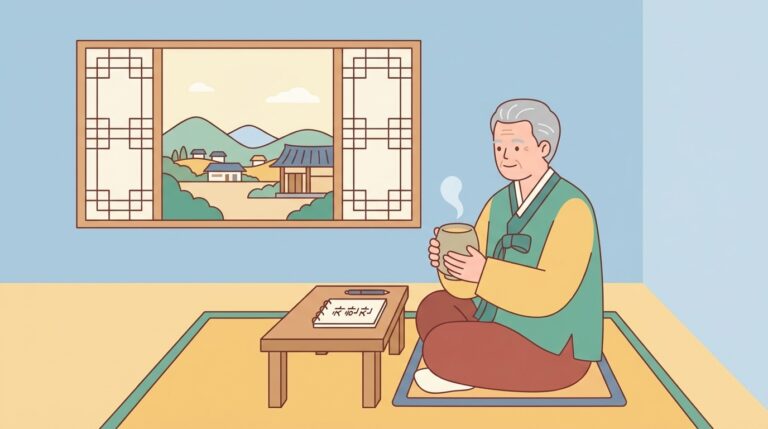
Imagine this scene from a poignant K-Drama: an elderly father, who has spent decades driving a taxi to support his family, sits quietly at the kitchen table. His daughter gently pushes a form across the table—an application to voluntarily surrender his driver’s license (운전면허 자진반납). The father looks out the window at his dusty keys. To him, surrendering his license isn’t just about giving up a car; it is the loss of his remaining independence (이동권 – the right to mobility) in a rapidly aging society (고령화 사회).
If you are aiming for a C2 (Mastery) level in Korean, discussing complex social issues like South Korea’s demographic shift, the rising age of drivers, and the government’s license surrender initiative is a fantastic way to showcase your depth. Today, we’re diving deep into the nuanced vocabulary and socio-cultural subtexts of the “Silver Mobility” debate. This guide is crafted based on real discussions from advanced learners who wanted to talk about policy, human rights, and elderly welfare without sounding like a dry textbook.
Phase 2: Key Expressions In-Depth (핵심 표현 3선 심층 분석)
1. 면허를 반납하다 (myeonhae-reul bannap-hada)
- Pronunciation: Myeon-heo-reul ban-nap-ha-da (Sounds like “myun-huh-rul bahn-nahp-hah-dah”)
- Meaning: To surrender/return one’s driver’s license.
- K-Culture Moment: You will frequently hear this on KBS or SBS evening news segments discussing local municipal incentives (like 100,000 KRW prepaid transportation cards) offered to seniors who bannap their licenses.
- Editor’s Insight: Ban-nap (반납) implies returning something borrowed or holding a duty to return. In this context, it emphasizes the civic duty aspect of giving up driving privileges for public safety.
- Situation Spectrum: Casual (⚠️) / Semi-formal (✅) / Formal (✅)
- 🤔 Think About It: How does your home country balance public safety with the freedom of elderly drivers? In Korea, the communal duty of bannap often clashes with individual convenience.
2. 이동권을 보장하다 (idong-gwon-eul bojang-hada)
- Pronunciation: Ee-dong-gwon-eul bo-jang-ha-da (Sounds like “ee-dong-gwon-ul bo-jahng-hah-dah”)
- Meaning: To guarantee the right to mobility (freedom of movement).
- K-Culture Moment: This is a crucial keyword in editorial columns and modern political debates where social activists argue that taking away licenses without providing adequate rural public transport is a violation of basic welfare.
- Editor’s Insight: Idong-gwon (이동권) is a modern human rights term. Using this word elevates your Korean from conversational to highly intellectual and policy-oriented.
- Situation Spectrum: Casual (🚫) / Semi-formal (⚠️) / Formal (✅)
- 🤔 Think About It: Is mobility viewed as a fundamental constitutional right or a personal responsibility in your culture?
3. 고령화 사회의 그늘 (goryeong-hwa sahoe-ui geuneul)
- Pronunciation: Go-ryeong-hwa sah-hoe-ui geu-neul (Sounds like “go-ryung-hwah sah-hoe-wee geu-neul”)
- Meaning: The shadow (dark side) of an aging society.
- K-Culture Moment: Used in investigative documentaries (like SBS Special or PD Notebook) addressing the loneliness, poverty, and isolation of the elderly in rapidly urbanizing Korean environments.
- Editor’s Insight: Geuneul (그늘) literally means shade or shadow. Metaphorically, it refers to the systemic issues that are often overlooked in the rush toward economic efficiency.
- Situation Spectrum: Casual (⚠️) / Semi-formal (✅) / Formal (✅)
- 🤔 Think About It: Why does urbanization make the “shadow” of aging feel darker for those left in rural Korean provinces (jibang)?
Phase 3: Textbook vs. Real-Life Korean (교과서 한국어 vs 진짜 한국어)
Situation 1: Expressing concerns about an elderly family member’s driving
- 📖 Textbook Style: “할아버지께서 연세가 많으시니 운전을 중단하셔야 합니다.” (Because grandfather is old, he must stop driving.) – Too rigid, overly clinical.
- 🗣️ Real-Life Native Style: “할아버지도 이제 운전대 놓으실 때가 되셨는데, 막상 말씀드리기가 조심스럽네요.” (It’s about time grandfather laid down the steering wheel, but honestly, I’m hesitant to bring it up.)
- 💡 Why the Difference? Real Korean values euphemisms like “운전대를 놓다” (to lay down the steering wheel) to avoid sounding disrespectful or blunt (keon-keon-hi) toward elders.
Situation 2: Debating public policy regarding license surrender
- 📖 Textbook Style: “정부는 면허 반납 제도를 홍보해야 합니다.” (The government must promote the license surrender policy.) – A bit simplistic for C2.
- 🗣️ Real-Life Native Style: “단순한 반납 권고를 넘어, 실질적인 이동 수단 대책이 선행되어야 실효성이 있죠.” (Beyond mere recommendations to surrender, practical transportation alternatives must be prioritized to make it actually effective.)
- 💡 Why the Difference? Advanced Korean discourse heavily utilizes Hanja-derived abstract nouns like seon-haeng (precede/be prioritized) and sil-hyo-seong (effectiveness).
Phase 4: K-Culture Deep Dive & Non-Verbal Manners
4-1. The Body Language of Respectful Persuasion
In Korea, bringing up driving cessation with an older relative requires extreme non-verbal tact. You should never point or use aggressive hand gestures. When discussing sensitive matters with elders, sit slightly angled (not confrontational head-on), maintain soft eye contact, and use both hands when offering tea or documents to show deep respect and filial piety (효도).
4-2. The Rural-Urban Divide in South Korea
In K-Dramas set in rural areas (like Our Blues or Hometown Cha-Cha-Cha), you see that public buses run only a few times a day. For an elderly farmer in a remote village (maeul), losing their car means complete isolation from hospitals and markets. This contrasts sharply with Seoul’s ultra-modern subway system where seniors over 65 ride for free (무임승차).
Phase 5: Interactive Roleplay Scenario
The Setup
You are an active member of a local civic forum in Gyeongsang province. You are debating with Mr. Kim (김 선생님), a proud 76-year-old local resident who actively opposes forced or heavily pressured driver’s license surrenders.
Characters
- 김 선생님 (Mr. Kim): A stubborn but warm-hearted retired teacher who drives a 15-year-old sedan.
- You (C2 Speaker): A respectful, policy-minded citizen advocating for balanced elderly welfare.
Dialogue (8 Turns)
- 김 선생님: 🎭 (차를 한 모금 마시며 한숨을 쉰다) 아니, 서울 사람들이야 지하철 잘 되어 있으니 면허 반납해도 상관없겠지. 근데 우리 같은 시골 사람들은 어쩌라는 건가?
(Mr. Kim: (Sips tea and sighs) Well, people in Seoul have great subways, so they don’t care about surrendering their licenses. But what about country folks like us?) -
You: 🎭 (공감하듯 고개를 끄덕이며) 김 선생님 말씀이 백번 맞습니다. 도심과 지방의 교통 인프라 격차를 간과한 채 반납만 강요하는 건 어불성설이지요.
(You: (Nodding in agreement) You are absolutely right, Mr. Kim. Forcing surrender while ignoring the traffic infrastructure gap between urban and rural areas is simply absurd.) -
김 선생님: 🎭 (목소리를 높이며) 그렇지! 내가 운전을 못 하면 당장 보건소는 어떻게 가고, 마트는 어떻게 가나? 내 이동권은 누가 책임져 주냔 말일세.
(Mr. Kim: (Raising voice) Exactly! If I can’t drive, how do I go to the health clinic, or the market right now? Who takes responsibility for my right to mobility?) -
You: 🎭 (차분하고 진중한 목소리로) 바로 그 점 때문에 저도 단순한 반납 독려가 아니라, 지자체 차원의 바우처 택시나 수요응답형 버스 도입이 선행되어야 한다고 목소리를 높이고 있습니다.
(You: (In a calm and sincere tone) That is precisely why I am raising my voice to say that, rather than just encouraging surrender, voucher taxis or demand-responsive buses must be introduced first at the local level.) -
김 선생님: 🎭 (의외라는 듯 쳐다보며) 오호… 바우처 택시? 그게 구체적으로 어떤 식으로 운영되는 건가?
(Mr. Kim: (Looking surprised) Oh… voucher taxis? How does that operate concretely?) -
You: 🎭 (미소를 지으며 자세히 설명하듯) 면허를 반납하신 어르신들께 매달 일정 금액의 택시 이용권을 제공하여, 원하시는 시간에 언제든 이동하실 수 있도록 돕는 제도입니다. 안전과 편리함을 동시에 잡는 것이죠.
(You: (Smiling, explaining in detail) It’s a system where seniors who surrender their licenses are provided with monthly taxi vouchers so they can travel whenever they want. It secures both safety and convenience.) -
김 선생님: 🎭 (생각에 잠긴 듯 턱을 괴며) 흐음, 듣고 보니 무조건 차를 뺏기만 하는 건 아니구만. 그런 실질적인 대안이 있다면 나도 진지하게 고민해 볼 용의가 있네.
(Mr. Kim: (Resting chin on hand, lost in thought) Hmm, hearing that, it’s not just about unconditionally taking away our cars. If there are such practical alternatives, I am willing to seriously consider it.) -
You: 🎭 (두 손으로 따뜻한 차를 권하며) 네, 선생님 같은 분들의 소중한 의견이 반영되어야 더 안전하고 따뜻한 공동체가 될 수 있습니다. 같이 더 나은 방안을 찾아보시지요.
(You: (Offering warm tea with both hands) Yes, only when the precious opinions of people like you are reflected can we become a safer and warmer community. Let’s look for better solutions together.)
🔀 Interactive Choice
How would you respond to Mr. Kim if he suddenly says: “그래도 내 차를 직접 운전하는 손맛과 자유는 포기 못 하겠네!” (Still, I can’t give up the hands-on feel and freedom of driving my own car!)
- [A] Best Action: “그 자유로움이 얼마나 소중한지 감히 헤아릴 수 없습니다. 다만, 안전한 대안이 완비될 때까지 조금씩 운전 횟수를 줄여가시는 건 어떨까요?” (Empathetic, respects autonomy, suggests gradual transition.)
- [B] Bad Action: “사고 나면 남들에게 큰 피해를 주시니까 개인의 자유는 참으셔야죠.” (Too blunt, accusatory, likely to shut down dialogue.)
- [C] Risk Action: “요즘은 자율주행 차량이 잘 나오니까 차를 새 모델로 바꾸시는 건 어때요?” (Unrealistic, financially tone-deaf to elderly realities.)
Phase 6: 10-Second Emotion Shadowing Drill
Practice speaking this sentence with nuance. Pay attention to the pauses (/) and the emotional cue.
- Sentence: “단순히 면허를 / 뺏는 것에 그치지 말고, / 어르신들의 이동권을 / 실질적으로 보장해야 합니다.”
- Pronunciation: Dansunhi myeonhae-reul / bpaet-neun geose guchiji malgo, / eoreushindeul-ui idong-gwon-eul / siljiljeog-euro bojang-haeya hamnida.
- Emotion Guide:
[🥺 Sincere and pleading, yet intellectually firm] - Translation: Do not stop at simply confiscating licenses; we must practically guarantee the mobility rights of our elders.
Phase 7: K-Culture Mini-Dictionary
- 초고령화 사회 (Cho-goryeong-hwa Sahoe): Super-aged society. Formally defined as a society where 20% or more of the population is 65 or older. South Korea is on the verge of entering this phase rapidly.
- 이동권 (Idong-gwon): Mobility rights. A term heavily used in social justice, urban planning, and welfare debates regarding disabled and elderly demographics.
- 실효성 (Sil-hyo-seong): Practical effectiveness. Often used in policy debates when discussing whether a government incentive actually motivates the target audience to change their behavior.
- 자진반납 (Jajin-bannap): Voluntary surrender. Actively surrendering a license or permit before it is legally revoked.
Phase 8: Traveler’s Survival Kit
Survival Expressions for Navigating Local Commutes
- “이 버스 시골 마을까지 가나요?” (Does this bus go to the rural village?)
- Pronunciation: Ee beoseu sigol maeul-kkaji ganayo?
- Pro Tip: Useful when traveling outside of Seoul to see beautiful traditional areas.
- “어르신, 먼저 앉으세요.” (Please take a seat first, elder.)
- Pronunciation: Eoreushin, meonjeo anjeuseyo.
- Pro Tip: Use this on subways or buses to display peak cultural awareness and respect.
- “여기 교통약자 배려석이 어디인가요?” (Where is the priority seating for the transport-vulnerable here?)
- Pronunciation: Yeogi gyotong-yakja baeryeoseog-i eodi-ingayo?
Editor’s Travel Note
When traveling to rural South Korea (like Namhae, Hadong, or remote parts of Jeju), standard navigation apps like Google Maps will not work well. Make sure to download and use KakaoMap (카카오맵) or Naver Map (네이버 지도) to check the real-time schedules of local rural buses, which might run infrequently.
Note: Local bus schedules in deep rural areas are subject to change depending on local council decisions.
Phase 9: “One Step Deeper” — Cultural Reflection
In Korea, the concept of 효 (Hyo – Filial Piety) runs incredibly deep. Often, adult children feel immense guilt (죄책감) when asking their aging parents to give up driving because they feel they are stripping away their parents’ vitality and joy. This creates a unique collective psychological tension where safety policies collide with deep family values. How does your society handle this transition from being a provider/driver to being cared for by the community?
💬 Your Turn: Let us know in the comments below! Have you ever had to talk to a family member about giving up driving? How would you handle this debate in Korea?
Phase 10: FAQ & Avoiding Misunderstandings
Q: Do seniors in Korea lose their license automatically at a certain age?
A: No. Currently, the system is strictly voluntary (자진반납). However, drivers aged 75 and older must undergo cognitive tests and safety education every three years to renew their licenses.
Q: What benefits do elderly people get for surrendering their licenses?
A: Most local governments provide a one-time prepaid transportation card (usually loaded with 100,000 KRW to 300,000 KRW) or local market gift vouchers.
Q: Is public transport in rural Korea really that inconvenient?
A: Yes, compared to urban hubs. Some mountain villages only see a public bus twice a day, which is why the debate over idong-gwon (mobility rights) is so heated.
🚨 Common Mistakes Alert (흔한 실수 경고판)
- Calling elderly strangers ‘할머니/할아버지’ in policy discussions:
- Mistake: “할머니들은 운전을 그만두어야 합니다.”
- Correct Action: Use the professional term 어르신 (eoreushin – respected elder) or 고령 운전자 (goryeong unjeonja – elderly driver) in debates to remain highly polite and respectful.
- Confusing ‘반납’ (bannap) with ‘반대’ (bandae):
- Mistake: “면허를 반대했습니다.”
- Correct Action: Say “면허를 반납했습니다” (surrendered the license). Bandae means opposition.
- Using too informal verb endings (반말) when addressing elderly drivers in roleplay:
- Mistake: “운전 그만해.”
- Correct Action: Always use highly respectful honorifics like “운전을 재고해 주시기 바랍니다” (Please reconsider driving).
Phase 11: Action Mission & K-Culture Challenge
- Bronze Mission (Solo): Record yourself reading the Phase 6 Shadowing Drill sentence three times, focusing on natural pauses after
/. - Silver Mission (Social): Share a short paragraph in Korean on social media discussing your thoughts on rural mobility rights, using the hashtag
#DailyHangul. - Gold Mission (Real Life): If you watch a K-Drama or news clip about aging in Korea, try to identify if they use the word 고령화 or 대책.
Phase 12: Interactive Quiz Challenge
1. Which term refers to “the right to mobility” in Korean?
- A) 생존권 (Saengjon-gwon)
- B) 이동권 (Idong-gwon)
- C) 참정권 (Chamjeong-gwon)
👉 Click to reveal Answer & Explanation
Correct Answer: B) 이동권 (Idong-gwon)
* Explanation: 이동 (idong) means movement/transfer, and 권 (gwon) means right. Therefore, 이동권 is the right to mobility. (A means right to survival, C means political voting rights).
2. True or False: In Korea, drivers aged 75+ are legally forced to surrender their licenses immediately.
👉 Click to reveal Answer & Explanation
Correct Answer: False
* Explanation: The license surrender program is entirely voluntary (자진반납), though they must pass regular cognitive tests to keep driving.







