

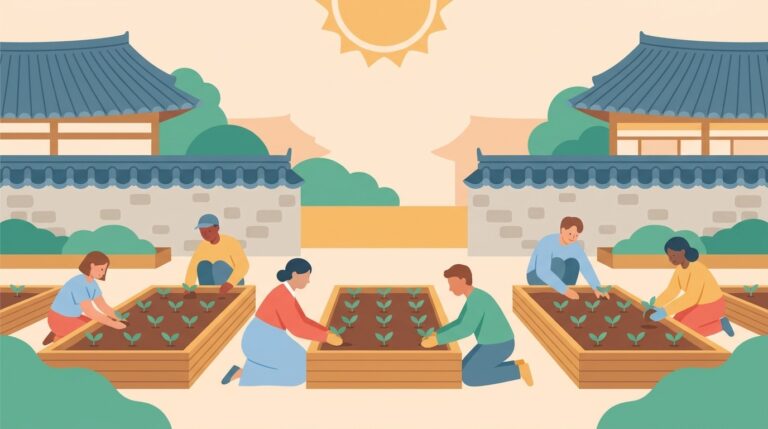
Expressing Your Heart: How to Write a Captivating Korean Volunteer Motivation Letter
Phase 1: Empathy (스토리 몰입형 오프닝)
안녕하세요! (Annyeonghaseyo!) Your native Korean best friend and lead editor at Daily Hangul is here.
Imagine this: You are filling out an application for a prestigious international volunteering program in Seoul, or perhaps preparing for an interview with a Korean NGO. You have a burning passion to help, but when you look at the screen, you freeze. How do you say “I want to volunteer to make a difference” without sounding like a robotic translation tool?
In Korean culture, expressing your motivation for volunteering requires a delicate balance of genuine passion, humility (겸손 – Gyeom-son), and a sense of community. Writing “저는 남을 돕고 싶습니다” (I want to help others) is grammatically correct, but it lacks the emotional depth and cultural nuance that moves a Korean reviewer’s heart. This guide is built on real-world feedback from successful international applicants. By the end of this post, you will be able to articulate your motivations with the poise, respect, and sincerity of a true B2-level speaker. Let’s dive in!
Phase 2: Core Expressions (핵심 표현 3선 심층 분석)
1. 선한 영향력을 나누고 싶어서 지원하게 되었습니다.
- Pronunciation: Seon-han yeong-hyang-ryeok-eul na-nu-go sip-eo-seo ji-won-ha-ge doe-eot-seum-ni-da. (Sounds like: Sun-han young-hyang-ryuk-ul nah-noo-go sip-uh-suh jee-won-hah-geh doh-eut-sum-nee-dah)
- Meaning: I applied because I want to share a positive influence.
- K-Culture Moment: You will hear K-pop stars and K-drama actors use the term 선한 영향력 (positive influence) constantly in interviews when they donate to charities. It is the ultimate modern Korean buzzword for social good.
- Editor’s Insight: Instead of using the direct word for ‘charity’ or ‘help’, focusing on sharing “positive influence” shows that you view volunteering as an uplifting, modern, and social act of solidarity.
- Situation Spectrum: Casual: 🚫 | Semi-formal: ⚠️ | Formal: ✅
- 🤔 Think About It: In your culture, is it common to use the phrase “positive influence” when applying for volunteer work? Why do you think Koreans prefer “sharing influence” over “doing good deeds”?
2. 서로 배우며 함께 성장하는 계기가 되기를 바랍니다.
- Pronunciation: Seo-ro bae-u-myeo ham-kke seong-jang-ha-neun gye-gi-ga doe-gi-reul ba-ram-ni-da. (Sounds like: Suh-roh beh-oo-myuh hahm-kkeh sung-jahng-hah-nun gyeh-gee-gah doh-gee-rul bah-rahm-nee-dah)
- Meaning: I hope this serves as an opportunity to learn from each other and grow together.
- K-Culture Moment: In Korean educational and governmental organizations, mutual growth (상생 – Sang-saeng) is highly valued.
- Editor’s Insight: B2-level speakers must avoid sounding patronizing. Saying you want to “teach” or “rescue” can feel arrogant. This expression positions you as an equal partner who values mutual exchange.
- Situation Spectrum: Casual: 🚫 | Semi-formal: ⚠️ | Formal: ✅
- 🤔 Think About It: Why is the concept of “growing together” more appealing to a Korean recruiter than simply stating “I want to teach them”?
3. 작은 힘이나마 보탬이 되고 싶습니다.
- Pronunciation: Ja-geun him-i-na-ma bo-taem-i doe-go sip-seum-ni-da. (Sounds like: Jah-gun heem-ee-nah-mah boh-tem-ee doh-goh sip-sum-nee-dah)
- Meaning: Although it is only a small effort, I want to be of help.
- K-Culture Moment: This is the quintessential Korean phrase of humility. You will hear it in historical dramas when loyal subjects offer help, as well as in modern daily business settings.
- Editor’s Insight: Even if you have extensive experience, starting with “작은 힘이나마” (though it is a small power) shows beautiful Korean humility. It warms the listener’s heart instantly.
- Situation Spectrum: Casual: ⚠️ | Semi-formal: ✅ | Formal: ✅
- 🤔 Think About It: How does lowering your own contribution initially (“small power”) actually increase your credibility in a collective society like Korea?
Phase 3: Textbook Korean vs. Real Korean (교과서 한국어 vs 진짜 한국어)
Situation 1: Explaining why you want to help
- 📖 Textbook: 저는 사람들을 도와주고 싶습니다. (Jeo-neun sa-ram-deul-eul do-wa-ju-go sip-seum-ni-da.) – “I want to help people.”
- 🗣️ Real Korean: 도움이 필요한 곳에 작은 손길을 보태고 싶습니다. (Do-um-i pil-yo-han got-e ja-geun son-gil-eul bo-tae-go sip-seum-ni-da.) – “I want to lend a small helping hand where help is needed.”
- 💡 Why it’s different: The textbook version is grammatically correct but sounds child-like. The real version uses “작은 손길” (a small hand/touch) and “보태다” (to add/contribute), which sounds elegant and deeply empathetic.
Situation 2: Expressing interest in cultural exchange
- 📖 Textbook: 한국 문화를 사람들에게 가르쳐 주겠습니다. (Han-guk mun-hwa-reul sa-ram-deul-e-ge ga-reu-chyeo ju-get-seum-ni-da.) – “I will teach Korean culture to people.”
- 🗣️ Real Korean: 문화적 교류를 통해 현지 주민들과 깊이 소통하고 싶습니다. (Mun-hwa-jeok gyo-ryu-reul tong-hae hyeon-ji ju-min-deul-gwa gip-i so-tong-ha-go sip-seum-ni-da.) – “I want to communicate deeply with local residents through cultural exchange.”
- 💡 Why it’s different: “가르치다” (to teach) can sound one-sided. “소통하다” (to communicate/connect) and “교류” (exchange) demonstrate a collaborative mindset highly respected in international volunteering.
Phase 4: K-Culture Deep Dive & Non-verbal Manners (비언어적 매너)
4-1. The Art of the Humility Bow (겸손의 미덕)
When explaining your motivation in an interview, eye contact is crucial, but keeping it too intense can feel aggressive in Korea. When saying “작은 힘이나마 보탬이 되고 싶습니다,” slightly lower your gaze or nod your head gently to emphasize your humility. If handing over a written application or portfolio, always hold it with both hands (두 손으로 주기).
4-2. The Power of Jeong (정 – 情) in Volunteering
In the West, volunteering is often viewed through the lens of civil duty or personal development. In Korea, volunteering is deeply tied to 정 (Jeong)—the invisible bond of affection and community connection. When writing your motivation, emphasizing that you want to build warm human relationships (따뜻한 정을 나누다) will make your application stand out significantly.
Phase 5: Real-Life Roleplay Scenario (실전 롤플레이)
Setting: An interview room at “Onnuri Volunteer Group” (온누리 봉사단), a prominent Korean international NGO.
Characters:
* 민수 (Minsu): The warm yet thorough NGO Interviewer.
* 마이클 (Michael): A passionate B2-level international applicant.
- 민수: 마이클 씨, 이번 해외 봉사 활동에 지원하게 된 특별한 동기가 있나요?
(Minsu: Michael, do you have a specific motivation for applying to this overseas volunteer activity?) -
마이클: 🎭 (He leans forward slightly with a sincere smile) 네, 저는 늘 사회에 선한 영향력을 나누고 싶다는 생각을 해왔습니다.
(Michael: Yes, I have always thought about wanting to share a positive influence with society.) -
민수: 아, 선한 영향력이요. 구체적으로 어떤 봉사를 하고 싶으신가요?
(Minsu: Ah, positive influence. Specifically, what kind of volunteering do you want to do?) -
마이클: 🎭 (Gesticulating gently) 교육 봉사를 통해 아이들과 만나고 싶습니다. 제 작은 힘이나마 보탬이 되고 싶습니다.
(Michael: I want to meet children through educational volunteering. Although it is a small effort, I want to be of help.) -
민수: 겸손하시네요. 하지만 현지 상황이 쉽지만은 않을 텐데, 괜찮으시겠어요?
(Minsu: You are humble. But the local situation might not be easy, will you be okay?) -
마이클: 네, 힘든 상황 속에서도 서로 배우며 함께 성장하는 계기가 될 것이라 믿습니다.
(Michael: Yes, I believe that even in difficult situations, it will be an opportunity to learn from each other and grow together.) -
민수: 좋습니다. 마이클 씨의 진정성이 느껴지네요. 결과는 다음 주에 알려드리겠습니다.
(Minsu: Great. I can feel your sincerity, Michael. We will let you know the results next week.) -
마이클: 🎭 (Standing up and bowing respectfully at a 30-degree angle) 감사합니다! 귀중한 시간 내어 주셔서 감사합니다.
(Michael: Thank you! Thank you for your valuable time.)
🔀 Choose Your Next Move!
Q: The interviewer asks: “봉사 활동을 하면서 갈등이 생기면 어떻게 해결하시겠습니까?” (How will you resolve conflicts during volunteering?)
- Option A: “제 의견이 맞다는 것을 끝까지 설득하겠습니다.” (I will convince them until the end that my opinion is right.)
- Option B: “상대방의 입장을 먼저 경청하고, 서로 타협점을 찾겠습니다.” (I will listen to the other party’s position first and find a compromise together.)
- Option C: “갈등이 생기면 그냥 피하겠습니다.” (If conflict arises, I will just avoid it.)
🧐 Analysis of Your Choice:
- Option A (Bad): 🚫 This shows high ego and low adaptability—a major red flag for Korean NGOs that value group harmony (화합).
- Option B (Best): ✅ Perfect! “경청” (active listening) and “타협점” (compromise) show outstanding emotional intelligence and B2 vocabulary usage.
- Option C (Risk): ⚠️ Avoiding conflicts suggests lack of responsibility, which is highly discouraged in demanding overseas environments.
Phase 6: 10-Second Shadowing Drill (10초 감정 섀도잉)
To sound native, you must practice where to pause and how to carry emotion. Let’s try!
- Sentence: “작은 힘이나마 / 도움이 필요한 곳에 / 보탬이 되고 싶습니다.”
- Rhythm Guide: Pause slightly at the
/marks. - Emotion Landmark:
[🥺 Humble, soft, yet determined tone] - Audio Map: Start soft on “작은 힘이나마” (lower your tone), elevate slightly on “도움이 필요한 곳에”, and end with a sincere, warm tone on “보탬이 되고 싶습니다.”
Phase 7: K-Culture Mini Dictionary (K-Culture 미니 사전)
- 선한 영향력 (Seon-han Yeong-hyang-ryeok) | Positive Influence
- Usage: Used to describe public figures or citizens who inspire others to do good through their actions.
- 상부상조 (Sang-bu-sang-jo) | Mutual Help / Solidarity
- Usage: A traditional Korean idiom meaning “helping one another.” Great for formal essays.
- 봉사 정신 (Bong-sa Jeong-sin) | Volunteer Spirit
- Usage: The psychological drive to serve others without expecting anything in return.
- 보람을 느끼다 (Bo-ram-eul Neuk-ki-da) | To feel rewarded / worthwhile
- Usage: Expressing the deep emotional satisfaction after doing a good deed.
Phase 8: Traveler’s Survival Kit (여행자를 위한 생존 키트)
Survival Phrases for Volunteers:
- “제가 도울 일이 있을까요?” (Je-ga do-ul il-i is-seul-kka-yo?) – “Is there anything I can help with?”
- “어디서 시작하면 되나요?” (Eo-di-seo si-jak-ha-myeon doe-na-yo?) – “Where should I start?”
- “오늘 정말 보람찬 하루였어요.” (O-neul jeong-mal bo-ram-chan ha-ru-yeot-seo-yo.) – “Today was a truly rewarding day.”
💡 Editor’s Travel Note: If you want to volunteer while in Korea, check out the 1365 자원봉사포털 (1365 Volunteer Portal) or search for local global centers using the Naver Map App. Note: Local volunteer opportunities and schedules are subject to change, so please check their official websites prior to visiting.
Phase 9: One Step Deeper (한 발 더 깊이)
Historically, Korea’s communal spirit is rooted in traditional systems like 품앗이 (Pumasi)—a system of exchanging labor during harvest seasons. This means that helping others wasn’t viewed as a one-way street of “the rich helping the poor,” but rather a reciprocal cycle of community survival. When you apply to volunteer in Korea, bringing this mindset of “reciprocal community care” instead of “saviorism” will show that you truly understand the Korean soul.
💬 Your Turn: Have you ever volunteered? What is your personal motivation? Share your thoughts in Korean in the comments below! We will correct your grammar!
Phase 10: FAQ & Common Mistakes (FAQ 및 오해 방지)
Q: Can I use informal Banmal (반말) when talking to children during volunteering?
A: While children are younger, it is highly recommended to use polite Jonhaetmal (존댓말) initially to show respect to the local community. It shows professional boundaries and high-quality manners.







