

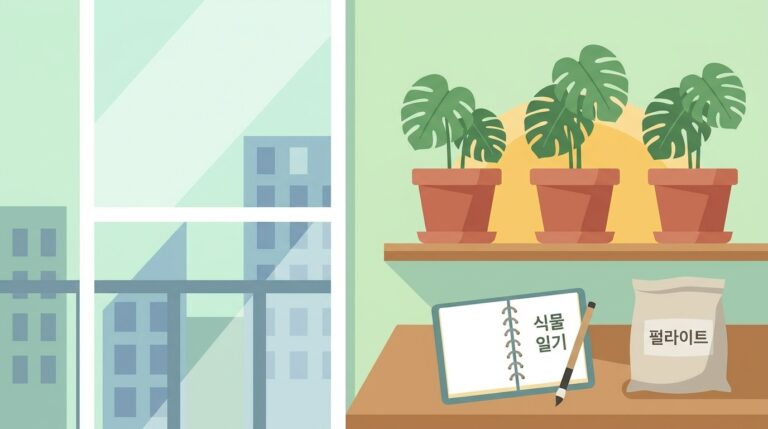
Master the Art of Korean ‘Bungal-i’ (분갈이): The C2 Guide to Perfect Soil Mixes, Pot Sizes, and the Soul of a ‘Sik-jipsa’
Phase 1: Empathy – A Love Letter to Your Green Companions
안녕하세요! Daily Hangul‘s Senior Editor and your trusted local culture guide here. Have you noticed how the concrete jungle of Seoul has quietly transformed into a lush, green sanctuary? Walk into any trendsetting cafe in Seongsu-dong or a cozy studio in Hongdae, and you will find them: thriving, leafy roommates. In Korea, we don’t just ‘grow plants’ as a casual hobby; we welcome 반려 식물 (banryeo singmul—companion plants) into our lives with the same devotion we show to beloved pets.
But as any experienced plant parent knows, there comes a critical turning point in every plant’s life: 분갈이 (bungal-i—repotting). This isn’t merely moving a plant from one plastic container to another. It is a delicate, ritualistic dance of balancing soil composition (흙 배합) and selecting the perfect pot size (화분 크기). If you get it wrong, your precious green companion might suffer from the dreaded 과습 (gwasuep—root rot/overwatering) or go into deep transplant shock.
If you have ever stared at bags of masato (decomposed granite) and perlite at a Korean flower market, feeling overwhelmed by the linguistic and horticultural nuances, you are in the right place. Based on real-world experiences of foreign expats navigating the bustling alleys of the Yangjae Flower Market, this guide is designed to elevate your Korean to a C2 mastery level while ensuring your botanical babies thrive.
Phase 2: Deep Dive – Three Critical Expressions for the Discerning Plant Butler
Let’s dissect the advanced vocabulary that elevates you from a mere hobbyist to a true 식집사 (sik-jipsa—plant butler).
1. 흙을 배합하다 (heulgeul baehap-hada)
- Pronunciation: Heulg-eul bae-hap-ha-da (Think of “Hulk” with a soft ‘g’ at the end, followed by “buy-hop-ha-da”).
- Meaning: To formulate/blend soil mixtures.
- K-Culture Moment: On popular Korean lifestyle YouTube channels like Ondo or suedu, you will often hear creators whispering, “오늘은 제 나름의 황금 비율로 흙을 배합해 볼게요” (Today, I will blend the soil using my own golden ratio).
- Editor’s Insight: While the verb 섞다 (seokda) means to simply mix things together, 배합하다 (baehap-hada) carries a highly precise, almost scientific nuance. It implies intentionally combining elements to achieve an optimal chemical or physical equilibrium—specifically, balancing aeration (통기성), water retention (보습성), and drainage (배수성).
- Situation Spectrum: Casual (✅) | Semi-formal (✅) | Formal (✅)
- 🤔 Think About It: In Western gardening, soil is often purchased pre-mixed. In Korea, custom blending (흙 배합) at home is highly popularized as a mindful, therapeutic process. How does this ritualistic approach change your relationship with nature?
2. 몸살을 앓다 (momsal-eul alta)
- Pronunciation: Mom-sal-eul al-tah (Sounds like “mom” + “sal” as in salsa, and “al-tah” with a soft aspirated ‘h’).
- Meaning: To suffer from transplant shock (literally: to suffer from severe body aches due to extreme fatigue/flu).
- K-Culture Moment: In K-dramas, characters who overwork themselves often wake up with a “몸살” (momsal). When applied to botanical contexts, a florist might warn you: “분갈이 후에 식물이 몸살을 앓을 수 있으니 그늘에 두세요” (The plant might suffer from transplant shock after repotting, so keep it in the shade).
- Editor’s Insight: This is a beautiful linguistic anthropomorphism. By attributing human physical suffering (몸살) to a plant adjusting to its new soil, Korean culture emphasizes the shared life force between humans and nature.
- Situation Spectrum: Casual (✅) | Semi-formal (✅) | Formal (⚠️ – use ‘몸살을 겪다’ in highly formal botanical journals)
3. 화분을 갈아주다 / 키워주다 (hwabun-eul garajuda / kiwojuda)
- Pronunciation: Hwa-bun-eul ga-ra-ju-da / ki-wo-ju-da.
- Meaning: To repot / To size up a pot.
- K-Culture Moment: Often used metaphorically in Korean career-related essays or self-help podcasts. When a person needs a bigger environment to realize their potential, they say they need to “화분을 키워야 한다” (size up their pot).
- Editor’s Insight: While 분갈이하다 is the formal noun-verb combo, native speakers colloquially use 화분을 갈아주다 (to change the pot for the plant) to evoke a sense of nurturing care. It frames the action as a favor done for the plant.
- Situation Spectrum: Casual (✅) | Semi-formal (✅) | Formal (🚫)
Phase 3: Textbook Korean vs. Real-World Native Nuances
When you interact with veteran plant shop owners (이모님 or 사장님) in Seoul, textbook phrases can sound sterile or overly clinical. Let’s look at how to bridge that gap.
Scenario 1: Discussing Pot Size Upgrades
- 📖 Textbook: “이 식물에 적합한 화분 크기는 무엇입니까?” (What is the appropriate pot size for this plant?)
- 🗣️ Real-World: “얘 지금 집이 너무 좁아 보이는데, 혹시 한 치수만 키워주면 될까요?” (This little guy’s home looks a bit cramped; should I size it up just by one notch?)
- 💡 Why the difference? To a true Korean sik-jipsa, a plant is referred to affectionately as ‘얘’ (this kid/this guy), and the pot is its ‘집’ (home). Asking to “size up the home by one notch” (한 치수 키우다) sounds incredibly warm and displays an advanced, natural grasp of the culture.
Scenario 2: Perfecting the Soil Mix to Prevent Root Rot
- 📖 Textbook: “배수성을 높이기 위해 모래를 혼합하십시오.” (Mix sand to increase drainage.)
- 🗣️ Real-World: “과습 안 오게 배수성 좋은 펄라이트나 마사토를 좀 넉넉히 섞어줘야겠어요.” (I should mix in a generous amount of drainage-friendly perlite or decomposed granite so it doesn’t get waterlogged.)
- 💡 Why the difference? Textbooks rarely prepare you for the cultural weight of the word 과습 (root rot from overwatering). In Korean plant communities, gwasuep is treated like public enemy number one. Using expressions like ‘넉넉히’ (generously/plentifully) rather than precise metric measurements showcases fluid conversational mastery.
Phase 4: K-Culture Deep Dive & Non-verbal Etiquette
4-1. Nunchi & Physical Etiquette in Korean Plant Shops
When entering a traditional plant greenhouse in places like Kkae-kka-rot (깨끗한 화원) or the outskirts of Seoul, your 눈치 (nunchi—tact/situational awareness) is your best tool.
1. Do not touch the foliage of fragile plants (like sensitive ferns or young sprouts) without asking. Instead, lightly gesture toward the pot and ask about its root state.
2. Respecting the soil hierarchy: When buying soil components, never rip open bags to feel the texture. Ask the owner: “혹시 이 흙 질감을 볼 수 있을까요?” (Is it possible to see the texture of this soil?)
4-2. The Cultural Phenomenon of the ‘Sik-jipsa’ (식집사)
In Western cultures, someone skilled with plants has a “green thumb.” In Korea, they are a 식집사 (Plant Butler). The suffix 집사 (jipsa—butler) was originally popularized by cat owners who jokingly referred to themselves as servants to their feline masters. The extension of this term to plants reflects a deep sociocultural shift: young Koreans, faced with high-density urban living and solo households, view plants not as passive decor, but as sentient companions requiring dedicated service and emotional reciprocity.
Phase 5: Real-Life Roleplay Scenario
Setting the Scene
You are at a high-end, curation-based botanical studio in Seongsu-dong called Nok-saek-gwang-geon (녹색광장). You are consulting with Ji-min (지민), a passionate plant designer with an eagle eye for plant health, about your struggling Monstera.
지민: 어머, 어서 오세요! 와, 데려오신 몬스테라가 심상치 않네요. 잎끝이 노랗게 타들어 가는 게... 혹시 최근에 분갈이하셨나요?

학습자: [걱정스러운 표정으로 화분을 보여주며] 네, 맞아요. 한 달 전쯤에 직접 했는데, 그때부터 애가 기운이 없더라고요. 제 생각엔 흙 배합에 문제가 있었던 것 같아요.

지민: [흙을 손가락으로 살짝 만져보며] 아... 손가락으로 찔러보니 속흙이 아주 축축하네요. 배수층을 어떻게 잡아주셨어요?

학습자: [머쓱해하며] 그냥 일반 배양토로만 채웠거든요. 마사토나 펄라이트 비율을 어떻게 해야 할지 몰라서 그냥 다 부었어요.

지민: [부드럽게 웃으며] 아하, 그러셨구나! 몬스테라는 배수성이 생명인데, 일반 배양토만 쓰면 과습이 오기 아주 쉬워요. 화분 크기도 식물 크기에 비해 너무 큰 걸 쓰셨네요!

학습자: [깜짝 놀라며] 아, 화분이 너무 크면 흙이 머금는 물의 양이 많아져서 뿌리가 썩는군요? 제가 과습을 자초했네요.

지민: 정확해요! 식물에 비해 화분이 너무 크면, 남는 흙이 마르지 않아 뿌리가 계속 젖어있게 돼요. 그럼 얘 집을 한 치수 줄이고, 흙 배합을 다시 해볼까요?

학습자: [안도하며 안경을 고쳐 쓰고] 네, 제발 도와주세요. 배양토와 배수재 비율을 어떻게 가져가는 게 좋을까요? 이번엔 제대로 배워가고 싶어요.
🔀 Interactive Decision Point
How should you respond to Ji-min’s offer to guide you through the custom mix?
- Option A: “배양토 50에 펄라이트 50으로 아주 팍팍 섞어주세요. 무조건 물이 쫙쫙 빠지게요!”
- Option B: “선생님만의 황금 비율을 알려주시면 제가 그대로 배합해 볼게요. 이번엔 얘한테 몸살 안 앓게 해주고 싶어요.”
- Option C: “귀찮은데 그냥 사장님이 알아서 섞어서 완성해 주세요. 얼마인가요?”
🧐 Expert Feedback on Your Choice:
- Option A (Risk): While highly enthusiastic, a 50:50 mix might dry out too fast for a indoor tropical plant like a Monstera, depriving it of essential nutrients. It shows initiative but lacks clinical precision.
- Option B (Best – Outstanding C2 Play): Excellent! Using “황금 비율” (golden ratio) and personifying the plant’s recovery with “몸살 안 앓게 해주고 싶어요” demonstrates profound linguistic naturalness and deep cultural empathy.
- Option C (Bad): Extremely transactional and slightly cold. It bypasses the entire philosophy of being a loving sik-jipsa and can break the friendly rapport with the local artisan.
Phase 6: 10-Second Emotion Shadowing Drill
To master C2 level fluency, your emotional delivery must match your vocabulary. Practice these sentences, paying close attention to the breath pauses (/) and emotional cues.
[🥺 Deeply concerned and nurturing tone]
“얘 지금 / 화분이 너무 꽉 차서 / 숨을 못 쉬는 것 같은데, / 얼른 갈아줘야겠어요.”
(It feels like this little guy’s pot is so full that he can’t breathe; I need to repot him right away.)-
[😎 Confident, expert-like tone]
“일반 배양토에 / 마사토를 삼십 퍼센트 정도만 / 섞어서 배합해 주시면 / 과습 걱정은 / 전혀 안 하셔도 돼요!”
(If you blend general potting soil with about 30 percent decomposed granite, you won’t have to worry about overwatering at all!)
Phase 7: K-Culture Mini-Dictionary
- 식집사 (Sik-jipsa) [Noun]: Lit. “Plant butler.” A modern socio-cultural term for dedicated urban indoor gardeners who treat their plants with maternal/paternal care.
- 과습 (Gwasuep) [Noun]: Lit. “Excessive moisture.” The state of overwatering that leads to root rot; the ultimate fear of every Korean gardener.
- 마사토 (Masato) [Noun]: Decomposed granite soil. Crucial in Korean gardening for creating heavy drainage layers at the bottom of the pot.
- 분갈이 몸살 (Bungal-i Momsal) [Noun]: The physiological stress and drooping of a plant immediately following a change of environment/potting soil.
Phase 8: The Green Traveler’s Survival Kit
Top 3 Survival Expressions at the Flower Market
- “이거 배수성 좋게 하려면 뭐 섞어야 해요?” (What should I mix with this to ensure good drainage?)
- “초보자가 키우기에 과습 안 오는 순한 식물 추천해 주세요.” (Please recommend a forgiving, hardy plant that doesn’t easily get root rot for a beginner.)
- “토분으로 하면 흙이 더 잘 마르나요?” (Does clay/terracotta pots make the soil dry faster?)
📝 Editor’s Travel Note
If you want to experience the peak of Korean plant culture, hop on the Seoul Subway Line 3 to Yangjae Citizen’s Forest Station and visit the Yangjae Flower Market (양재꽃시장). It is a sprawling oasis of scents and colors. To navigate this massive complex like a pro, download the Naver Map App to pinpoint the specific wholesale greenhouses (자재매장) where you can buy custom soil mixes and artisanal terracotta pots at wholesale prices.
Phase 9:
Frequently Asked Questions (FAQ)
Q: What does "흙을 배합하다 (heulgeul baehap-hada)" mean in Korean and how do you pronounce it?
A: In Korean, "흙을 배합하다 (heulgeul baehap-hada)" is pronounced [Heulg-eul bae-hap-ha-da (Think of "Hulk" with a soft 'g' at the end, followed by "buy-hop-ha-da"] and means: To formulate/blend soil mixtures.
Q: What does "몸살을 앓다 (momsal-eul alta)" mean in Korean and how do you pronounce it?
A: In Korean, "몸살을 앓다 (momsal-eul alta)" is pronounced [Mom-sal-eul al-tah (Sounds like "mom" + "sal" as in salsa, and "al-tah" with a soft aspirated 'h'] and means: To suffer from transplant shock (literally: to suffer from severe body aches due to extreme fatigue/flu).
Q: What does "화분을 갈아주다 / 키워주다 (hwabun-eul garajuda / kiwojuda)" mean in Korean and how do you pronounce it?
A: In Korean, "화분을 갈아주다 / 키워주다 (hwabun-eul garajuda / kiwojuda)" is pronounced [Hwa-bun-eul ga-ra-ju-da / ki-wo-ju-da.] and means: To repot / To size up a pot.







