

Under the Starry Korean Sky: Master the Poetic Art of ‘Star-spacing’ (별멍) Like a Local
Phase 1: Empathy (An Invitation to the Korean Night Sky)
안녕하세요! Welcome back to Daily Hangul (매일한글). I’m your chief editor and local culture navigator.
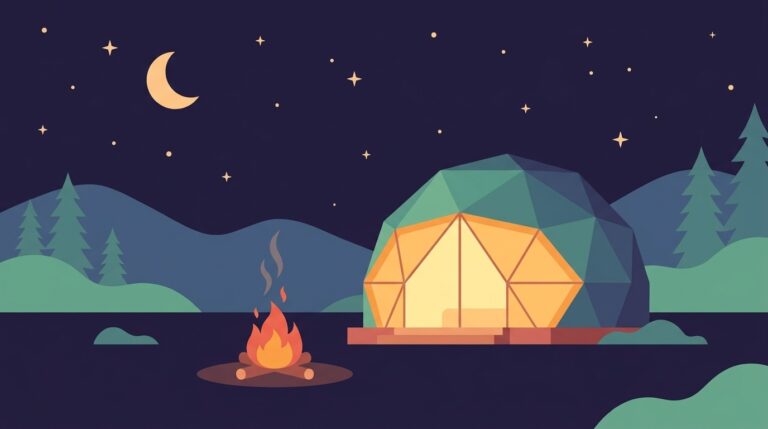
Imagine this: You’re nestled in a luxurious, warm dome tent on the rolling hills of Anbandegi (안반데기) in Gangneung—the closest village to the sky in Korea. The crisp mountain air brushes against your cheeks, the scent of burning oak firewood fills the air, and as you look up, the sky is not just dark; it is a canvas of shimmering silver dust.
Many advanced Korean learners tell me, “I know how to say ‘The weather is nice’ (날씨가 좋아요) or ‘There are many stars’ (별이 많아요), but when I’m sharing these magical, romantic moments with my Korean friends, my language feels so… flat. I want to capture the cozy, poetic mood of luxury glamping!”
If you’ve felt that frustration, you are in the right place. Today, we are moving past dry, textbook descriptions and diving deep into the soul-stirring, highly atmospheric Korean vocabulary used around the campfire. This guide is curated from real cultural experiences and feedback from learners just like you, designed to elevate your Korean to a sophisticated, emotionally resonant level. Let’s get cozy!
Phase 2: Core Expressions Deep Dive
1. 별이 쏟아지다 (Byeor-i ssod-a-ji-da)
- Pronunciation: Byuhl-ee ssod-ah-jee-dah (Imagine a bucket of sparkling glitter suddenly pouring down from the ceiling).
- Meaning: Direct translation: “Stars are pouring down.” Actual nuance: A sky so incredibly dense with stars that they feel like a physical waterfall of light.
- K-Culture Moment: This expression is a staple in healing K-Dramas (think of the serene, emotional country-side scenes in Crash Landing on You or Forest). When characters escape the suffocating neon lights of Seoul to find comfort in nature, they invariably look up and whisper this phrase.
- Editor’s Insight: While English speakers say “a starry sky” or “the stars are bright,” Koreans use the active verb 쏟아지다 (to pour/spill). It paints a dynamic, almost overwhelming picture of natural beauty that envelops you.
- Situation Spectrum:
- Casual: ✅ “와, 여기 별이 쏟아진다!” (Wow, the stars are pouring down here!)
- Semi-formal: ✅ “하늘을 보니 별이 쏟아질 것 같네요.” (Looking at the sky, it feels like the stars are about to pour down.)
- Formal: ✅ “은하수가 흐르는 밤하늘에 별이 쏟아지는 장관을 볼 수 있습니다.” (You can witness the spectacular sight of stars pouring down in the Milky Way-flowing night sky.)
- 🤔 Think About It: Why does Korean culture favor dynamic, verb-centric sensory descriptions for quiet, natural landscapes compared to more static English adjectives? How does this change your perception of nature?
2. 별멍을 때리다 (Byeol-meong-eul ttae-ri-da)
- Pronunciation: Byuhl-mung-eul ttae-ree-dah (Say “mung” like the sound of a soft bell, and “ttae-ri-da” quickly).
- Meaning: Direct translation: “To hit star-blankness.” Actual nuance: To space out or zone out while staring blankly at the stars, letting all your daily stress melt away.
- K-Culture Moment: You’ll see this constantly on Korean camping variety shows like I Live Alone (나 혼자 산다) or Camping Vibes (감성캠핑). The cast members sit on lawn chairs, wrap themselves in blankets, and go completely silent.
- Editor’s Insight: This is the ultimate trendy compound slang. It joins 별 (star) with 멍(하니 있다) (to space out blankly) and the colloquial verb 때리다 (to hit/strike, used here to mean “actively doing a passive action”). It’s a cousin to 불멍 (campfire-gazing) and 물멍 (ocean/river-gazing).
- Situation Spectrum:
- Casual: ✅ “우리 머리도 식힐 겸 별멍이나 때릴까?” (Shall we do some star-spacing to clear our heads?)
- Semi-formal: ⚠️ “캠핑 의자에 앉아 별멍을 때리는 시간이 제일 좋아요.” (Sitting in a camping chair and star-spacing is my favorite time – slightly casual, but acceptable with close colleagues.)
- Formal: 🚫 (Avoid using “때리다” in formal presentations; use “별을 보며 사색에 잠기다” instead).
- 🤔 Think About It: In one of the most fast-paced, digital-heavy societies in the world, why do you think Koreans have developed such specific, trendy vocabulary for “actively doing nothing” in nature?
3. 운치(가) 있다 (Un-chi-ga it-da)
- Pronunciation: Oon-chee-gah eet-dah (Think of a classy, elegant atmosphere).
- Meaning: Direct translation: “To have elegant taste/mood.” Actual nuance: To have a distinct, poetic, and classic aesthetic atmosphere (especially related to nature, weather, or rustic places).
- K-Culture Moment: When characters in a romance drama drink hot chocolate outside a glamping tent while a light mist or drizzle starts to fall, someone will inevitably sigh, “참 운치 있네.”
- Editor’s Insight: C1-level speakers must master 운치. It goes beyond the basic 분위기 좋다 (good atmosphere). 운치 is reserved for quiet, poetic, and often traditional or natural charm—like rain hitting a tent canvas or fog rolling over a mountain valley.
- Situation Spectrum:
- Casual: ✅ “밤안개가 끼니까 진짜 운치 있다.” (With the night fog rolling in, it’s incredibly atmospheric.)
- Semi-formal: ✅ “빗소리를 들으며 글램핑을 하니 참 운치가 있네요.” (Glamping while listening to the sound of rain is highly atmospheric.)
- Formal: ✅ “이곳은 자연과 어우러져 한층 더 깊은 운치를 자아냅니다.” (This place harmonizes with nature, creating an even deeper, poetic atmosphere.)
- 🤔 Think About It: Is there a single word in your language that captures this specific blend of melancholy, natural beauty, and cozy luxury? Or do you need a whole sentence to explain it?
Phase 3: Textbook Korean vs. Real Native Korean
To sound like a true C1-level speaker, you need to transition from sterile, grammatically correct textbook phrases to living, breathing conversational expressions.
Situation 1: Expressing admiration for the night sky
- 📖 Textbook: “밤하늘에 별이 많아서 아주 아름답습니다.” (The night sky has many stars, so it is very beautiful.)
- 🗣️ Real Native: “와… 오늘 밤하늘 미쳤다. 진짜 별이 쏟아질 것 같아!” (Whoa… tonight’s sky is insane. The stars literally feel like they’re going to pour down!)
- 💡 Why the difference? While the textbook sentence is grammatically flawless, it lacks emotional vulnerability. Native speakers use emotional qualifiers like “미쳤다” (insane/crazy – used positively here) and the active metaphor “쏟아질 것 같다” to share their awe.
Situation 2: Suggesting sitting quietly around the fire/stars
- 📖 Textbook: “조용히 불과 별을 바라보며 생각에 잠깁시다.” (Let us quietly look at the fire and stars and get lost in thought.)
- 🗣️ Real Native: “우리 복잡한 생각은 다 접어두고, 불멍이랑 별멍이나 원 없이 때리자.” (Let’s fold up all our complicated thoughts and just do campfire-spacing and star-spacing to our heart’s content.)
- 💡 Why the difference? “생각에 잠기다” sounds like a literary novel. In a real glamping context, the goal is decompression. The phrase “생각을 접어두다” (to fold away thoughts) and “원 없이” (without limits/to one’s heart’s content) capture the genuine healing spirit of Korean camping.
Phase 4: K-Culture Deep Dive & Non-Verbal Manners
4-1. Stargazing Etiquette: The Silent Connection
- The Power of ‘Nunchi’ (눈치) during ‘Manner Time’ (매너 타임): In Korean glamping culture, most sites enforce a strict “Manner Time” (usually starting at 10:00 PM). This isn’t just a rule; it’s a test of Nunchi (social sensing). Speaking in a low, gentle whisper (소곤소곤) while looking at the stars shows immense respect for your neighbors.
- The Firewood Gaze: When enjoying Bul-meong (campfire-gazing) or Byeol-meong, keep your physical gestures slow and minimal. Rest your chin on your hands (턱을 괴다) or wrap both hands around a warm mug of hot cocoa or mulled wine (often called 뱅쇼 / Vin Chaud in Korean glamping sites). Avoid grand gestures; let the quiet of the night dictate your movement.
4-2. The Cultural Phenomenon: Chasing the Milky Way (은하수 사냥)
In Korea, luxury camping isn’t just about roughing it; it’s a highly curated aesthetic experience. Young Koreans participate in what they playfully call 은하수 사냥 (Milky Way hunting). They track the moon phases, pack high-end camera gear, and head to high-altitude campsites like Anbandegi or Hwaaksan Ssamji Park (화악산 쌈지공원). The goal? To capture the perfect “photo of a lifetime” (인생샷) with the cosmic river flowing right above their luxury dome tent. This blend of pristine nature and high-tech lifestyle defines modern Korean K-Travel.
Phase 5: Real-Life Roleplay Scenario
The Setup
- Location: A premium, minimalist glamping site in Yeongyang (영양), North Gyeongsang Province—famous for having the darkest skies and lowest light pollution in Korea.
- Characters:
- Jun (준): Your thoughtful Korean camping buddy who loves brewing drip coffee over an open flame.
- Sophie (소피): An advanced Korean learner who wants to experience authentic healing in nature.
준: (장작을 조심스럽게 화로대에 넣으며) 소피, 이제 불도 좀 안정됐고 날씨도 엄청 맑아졌어. 하늘 좀 봐.
Sophie: (Adjusting wood carefully in the fire pit) Sophie, the fire has settled down and the sky has cleared up completely. Look up.

소피: (고개를 들고 하늘을 바라보며 놀란 표정으로) 와... 세상에! 준, 저거 다 별이야? 진짜 별이 쏟아진다는 말이 이래서 나온 거구나!
Sophie: (Lifting her head, looking at the sky with a shocked expression) Wow... oh my god! Jun, are those all stars? Now I see why people say 'the stars are pouring down'!

준: (따뜻한 뱅쇼가 담긴 컵을 건네며 미소 짓는다) 그치? 영양이 진짜 우리나라에서 밤하늘이 제일 맑은 곳 중 하나거든. 운치 대박이지?
Jun: (Smiling as he hands over a cup of warm mulled wine) Right? Yeongyang is truly one of the places with the clearest night skies in our country. The atmosphere is incredible, isn't it?

소피: (따뜻한 컵을 두 손으로 감싸 쥐며) 응, 정말 장관이다. 가만히 보고만 있어도 가슴이 벅차올라. 은하수가 흐르는 게 눈으로 보여.
Sophie: (Wrapping both hands around the warm cup) Yes, it's truly a grand spectacle. Just looking at it silently makes my heart swell. I can actually see the Milky Way flowing.

준: (캠핑 의자에 깊숙이 몸을 기대며) 맞아. 우리 서울에서 맨날 바쁘게 사느라 이런 여유가 없었잖아. 오늘만큼은 아무 생각 말고 별멍이나 실컷 때리자.
Jun: (Leaning deep back into his camping chair) Exactly. We've been so busy living in Seoul every day that we didn't have this kind of leisure. For today, let's not think about anything and just star-space to our heart's content.

소피: (미소를 지으며 눈을 감았다가 뜨며) 좋은 생각이야. 내 머릿속 복잡한 고민들이 다 저 은하수 너머로 날아가는 것 같아.
Sophie: (Smiling, closing and opening her eyes) Great idea. It feels like all the complicated worries in my head are flying away far beyond that Milky Way.

준: (목소리를 낮추며 소곤소곤) 자, 이제 매너 타임이니까 목소리 조금만 낮추고... 제대로 '별멍' 시작해 볼까?
Jun: (Lowering his voice to a whisper) Okay, it's 'Manner Time' now, so let's lower our voices a bit... and start our 'star-spacing' properly, shall we?

소피: (고개를 끄덕이며 속삭인다) 응. 불빛도 끄고, 이 우주에 우리 둘만 남은 기분을 즐겨보자.
Sophie: (Nodding and whispering) Yes. Let's turn off the lights and enjoy the feeling of being the only two people left in this universe.
🔀 Interactive Choice Points
How would you respond to Jun’s whisper: “자, 이제 매너 타임이니까 목소리 조금만 낮추고… 제대로 ‘별멍’ 시작해 볼까?”
- Option A: “그래, 얼른 불도 다 끄자. 어둠 속에서 보니까 별들이 훨씬 선명하게 보여.”
- Option B: “매너 타임 귀찮은데 그냥 노래 작게 틀면 안 돼? 캠핑엔 음악이 빠질 수 없잖아.”
- Option C: “네, 조용히 하겠습니다. 밤하늘의 조화로운 미를 명상하며 침묵을 지킵시다.”
🧐 Expert Feedback
- If you chose Option A (Best Choice): 🌟 Perfect! You showed great respect for camping etiquette (매너 타임) while using natural, sensory language (어둠 속에서, 선명하게 보여). Turning off artificial lights is exactly what experienced stargazers do to let their eyes adjust to the cosmos.
- If you chose Option B (Cultural Risk): ⚠️ Careful! Even if played softly, playing music out loud during “Manner Time” is considered highly discourteous in Korean campgrounds. Your Korean friends might feel extremely uncomfortable (민망하다) because of this breach of etiquette.
- If you chose Option C (Too Formal/Unnatural): 🚫 Grammatically correct, but… it sounds incredibly stiff and academic for a cozy glamping trip with a close friend. Saying “조용히 하겠습니다” (I will be quiet) sounds like you are being disciplined by a teacher, and “조화로운 미를 명상하며” sounds like a philosophical treatise, not a friendly chat!
Phase 6: 10-Second Emotion Shadowing Drill
Practice reading these lines aloud with the correct emotional pauses (/) and intonation to sound like a native!
- [😊 Full of childlike wonder and awe]
“와… / 오늘 밤하늘 진짜 대박이다… / 별들이 당장이라도 / 쏟아질 것 같아!”
(Wah… / o-neul bam-ha-neul jin-jja dae-bak-i-da… / byeol-deul-i dang-jang-i-ra-do / ssod-a-ji-geot gat-ah!) -
[🥺 Cozy, relaxed, letting go of heavy worries]
“머리 아픈 생각은 / 다 접어두고, / 우리 그냥 / 원 없이 / 별멍이나 때리자.”
(Meo-ri a-peun saeng-gak-eun / da jeob-eo-du-go, / u-ri geu-nyang / won eop-si / byeol-meong-i-na ttae-ri-ja.)
Phase 7: K-Culture Mini Dictionary
- 별멍 (Byeol-meong) | Star-spacing out
- Usage: The act of staring into a starry sky to clear your mind. Used as a noun or combined with “하다” or “때리다”.
- 매너 타임 (Maeneotaim) | Manner Time
- Usage: The designated quiet hours at Korean campgrounds (usually 10 PM to 7 AM) where loud talking, bright lights, and music are restricted.
- 안반데기 (Anbandegi) | Anbandegi Village
- Usage: A high-altitude village in Gangneung known for sprawling highland cabbage patches and being the premier spot for stargazing and viewing the Milky Way.
- 불멍 (Bul-meong) | Fire-spacing out
- Usage: Spacing out while watching a campfire crackle. The quintessential Korean camping activity.
Phase 8: Traveler’s Survival Kit
Survival Phrases TOP 3
- “여기 매너 타임이 몇 시부터예요?”
- (Yeo-gi mae-neo-ta-im-i myeot-si-bu-teo-yeo-yo?)
- Pro Tip: Use this when checking into your glamping site to show you are an experienced and respectful camper.
- “혹시 오로라 가루 있나요?”
- (Hok-si o-ro-ra ga-ru in-na-yo?)
- Pro Tip: “Aurora powder” refers to magic flame colorant packets that turn your campfire into magical blues and greens. You can buy these at glamping convenience stores!
- “등유 난로 사용법 좀 가르쳐 주세요.”
- (Deung-yu nal-ro sa-yong-beop jom ga-reu-chyeo ju-se-yo?)
- Pro Tip: In autumn and winter, glamping tents use kerosene heaters (등유 난로). Always ask the host for safety instructions to prevent carbon monoxide poisoning.
Editor’s Travel Note
Before heading deep into the mountains, make sure to download the Naver Map App (네이버 지도 앱) for accurate navigation, as international GPS apps often fail in remote valleys. Also, check the real-time cloud coverage using the Korea Meteorological Administration Weather Portal (기상청 날씨누리) to make sure your “Milky Way hunt” isn’t blocked by thick cloud cover! (Note: Always check updated local operating hours as mountain roads can be closed in extreme weather).
Phase 9:
Frequently Asked Questions (FAQ)
Q: What does "별이 쏟아지다 (Byeor-i ssod-a-ji-da)" mean in Korean and how do you pronounce it?
A: In Korean, "별이 쏟아지다 (Byeor-i ssod-a-ji-da)" is pronounced [Byuhl-ee ssod-ah-jee-dah (Imagine a bucket of sparkling glitter suddenly pouring down from the ceiling] and means: Direct translation: "Stars are pouring down." Actual nuance: A sky so incredibly dense with stars that they feel like a physical waterfall of light.
Q: What does "별멍을 때리다 (Byeol-meong-eul ttae-ri-da)" mean in Korean and how do you pronounce it?
A: In Korean, "별멍을 때리다 (Byeol-meong-eul ttae-ri-da)" is pronounced [Byuhl-mung-eul ttae-ree-dah (Say "mung" like the sound of a soft bell, and "ttae-ri-da" quickly] and means: Direct translation: "To hit star-blankness." Actual nuance: To space out or zone out while staring blankly at the stars, letting all your daily stress melt away.
Q: What does "운치(가) 있다 (Un-chi-ga it-da)" mean in Korean and how do you pronounce it?
A: In Korean, "운치(가) 있다 (Un-chi-ga it-da)" is pronounced [Oon-chee-gah eet-dah (Think of a classy, elegant atmosphere] and means: Direct translation: "To have elegant taste/mood." Actual nuance: To have a distinct, poetic, and classic aesthetic atmosphere (especially related to nature, weather, or rustic places).






