

Master the Digital Trade-In: How to Use Mintit (민팃) and Talk Like a Native Techie in Korea
Phase 1: Empathy (스토리 몰입형 오프닝)
안녕하세요! Welcome back to another premium guide from Daily Hangul! I’m your resident K-Culture Navigator.
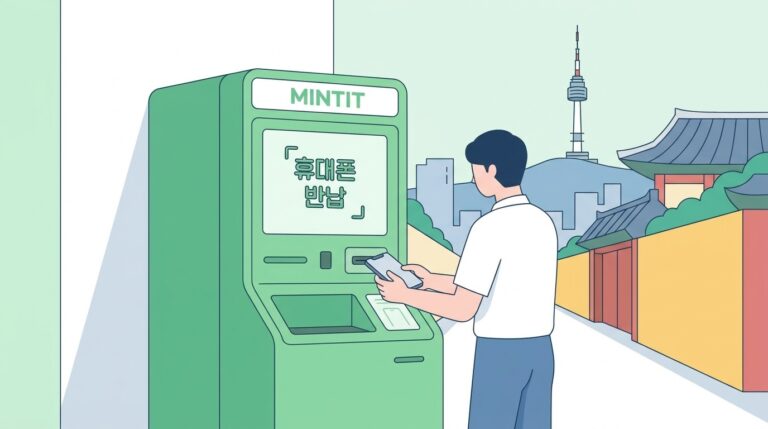
Let’s set the scene: You’ve just upgraded to the sleekest new smartphone in Seoul, and your old phone is gathering dust in a drawer. You’ve heard your Korean friends talk about a magical green ATM called Mintit (민팃) found in supermarkets and phone shops, where you feed in your old phone, it gets scanned by AI, and cash is instantly deposited into your bank account. It sounds incredibly futuristic and eco-friendly—but the moment you stand in front of that glowing screen, anxiety kicks in. What if you misinterpret the grading system? What if you don’t know the exact vocabulary to negotiate or ask for a trade-in bonus?
For advanced (C2) learners, the challenge isn’t just surviving the transaction; it’s articulating the subtle nuances of device conditions, understanding the societal drive behind Korea’s hyper-efficient resource recycling (자원 재활용), and speaking with the effortless sophistication of a native. Don’t worry! Today, we will decode the ultimate digital trade-in experience so you can handle your tech like a true Seoulite.
Phase 2: Deep Dive into 3 Essential Expressions
1. 보상 판매를 받다 (bosang panmaereul batda)
- Pronunciation: Bo-sang pan-mae-reul bat-da (Sounds like “bo-sahng pahn-mae-reul baht-dah”)
- Meaning: To receive a trade-in discount / trade-in compensation.
- K-Culture Moment: You will hear this constantly in tech review YouTube channels (like UnderKG or ITSub잇섭) when they discuss whether trading in an older Galaxy device for the newest model is financially viable.
- Editor’s Insight: 보상 (bosang) means compensation, and 판매 (panmae) means sales. Together, it represents a highly structured trade-in system where your old device’s value directly offsets the price of your new one.
- Situation Spectrum: Casual: ✅ | Semi-formal: ✅ | Formal: ✅
- 🤔 Think About It: In many Western countries, “trade-in” is a loose term. In Korea, 보상 판매 emphasizes a mutual compensation contract. How does your culture view the value of used goods?
2. 기기 상태가 A급이다 (gigi sangtaega e-geub-ida)
- Pronunciation: Gi-gi sang-tae-ga A-geub-i-da (Sounds like “ghee-ghee sahng-tae-gah A-geup-ee-dah”)
- Meaning: The device is in mint condition (Grade A).
- K-Culture Moment: On secondhand marketplaces like Karrot Market (당근마켓), listings boasting “S급” (Super/Special Grade) or “A급” are snapped up within seconds.
- Editor’s Insight: Koreans love grading systems. A-급 (Grade A) means minimal scratches, while S-급 (Grade S) means absolutely pristine, practically unopened.
- Situation Spectrum: Casual: ✅ | Semi-formal: ✅ | Formal: ⚠️
- 🤔 Think About It: Why do you think Korean consumers are exceptionally meticulous about the physical preservation of their tech, often keeping screen protectors and cases on from day one?
3. 자원 순환에 동참하다 (jawon sunhwane dongchamhada)
- Pronunciation: Ja-won sun-hwan-e dong-cham-ha-da (Sounds like “jah-won soon-hwan-eh dong-chahm-hah-dah”)
- Meaning: To participate in resource recycling/circulation.
- K-Culture Moment: This is the green marketing slogan used by ESG-conscious Korean tech conglomerates and public campaigns urging citizens to recycle rare earth metals from old electronics.
- Editor’s Insight: At a C2 level, using 자원 순환 (resource circulation) instead of the basic 재활용 (recycling) shows a profound command of advanced ecological vocabulary.
- Situation Spectrum: Casual: ⚠️ | Semi-formal: ✅ | Formal: ✅
- 🤔 Think About It: How is the concept of “circular economy” framed in your native language compared to the Korean focus on “circulation (순환)”?
Phase 3: Textbook Korean vs. Real-World Korean
Situation 1: Asking if a trade-in is possible
- 📖 Textbook: “이 오래된 스마트폰을 여기서 교환할 수 있습니까?” (Is it possible to exchange this old smartphone here?)
- 🗣️ Real-World: “혹시 이 기종도 민팃 특별보상 대상에 들어가나요?” (Does this model happen to qualify for the Mintit special trade-in promotion?)
- 💡 Why the difference? Textbooks teach literal translation. In reality, you want to ask about specific promotions like “특별보상” (special compensation) which give you extra money on top of the phone’s market value.
Situation 2: Describing a minor scratch
- 📖 Textbook: “화면에 작은 상처가 있습니다.” (There is a small wound on the screen.)
- 🗣️ Real-World: “액정에 생활 기스 외에는 칼흠집 같은 큰 하자는 전혀 없어요.” (Other than typical daily wear-and-tear light scratches on the screen, there are absolutely no major defects like deep gouges.)
- 💡 Why the difference? “생활 기스” (daily life scratches) is the essential idiomatic phrase for minor, acceptable cosmetic wear on secondhand items.
Phase 4: K-Culture Deep Dive & Non-Verbal Manners
4-1. The Art of the Polite Handover
When presenting your old phone to a staff member at a retail store (or even when placing it inside the Mintit machine’s automated drawer), always hold the device with both hands. Presenting or passing objects with one hand can be perceived as dismissive in Korean business culture. Keep your gaze soft and nod slightly to acknowledge their assessment.
4-2. ESG and the “Mintit” Phenomenon
In Korea, recycling is not just a chore—it is a hyper-efficient, highly gamified civic duty. Mintit revolutionized this by turning the tedious process of selling a phone into a contactless, 3-minute AI-driven experience. This reflects Korea’s fast-paced “Palli-Palli” (빨리빨리) culture combined with a deep commitment to eco-friendly tech initiatives.
Phase 5: Real-World Roleplay Scenario
Setting: A bustling Samsung Store in Gangnam. You are trying to trade in your old Galaxy phone via the Mintit machine, but you need assistance from the store consultant, Min-ho.
- Min-ho (민호): “고객님, 새로 개통하신 단말기 외에 기존에 쓰시던 폰은 혹시 반납하시겠어요?”
- You (나): “네, 민팃으로 보상 판매 받으려고 가져왔는데, 기기 진단 전에 액정을 깨끗이 닦아야 하나요?”
- Min-ho (민호): “(Smiling) 아, 네! 액정에 지문이나 먼지가 많으면 AI가 잔상이나 흠집으로 오인해서 등급이 낮게 나올 수 있어요. 여기 극세사 천으로 한번 닦아드릴게요.”
- You (나): “감사합니다. 혹시 제 기존 기종이 이번 특별보상 캠페인 적용 대상인지 확인해 주실 수 있나요?”
- Min-ho (민호): “그럼요! 마침 사용하시던 모델이 이번에 만 원 추가 보상 대상에 포함되네요.”
- You (나): “다행이네요! 안 그래도 자원 순환도 할 겸 서랍에 묵혀두느니 빨리 처분하는 게 이득이다 싶었어요.”
- Min-ho (민호): “(Nods warmly) 아주 현명한 생각이십니다. 기기를 수거함에 넣으시면 카카오톡으로 즉시 계좌 입력 알림이 발송될 겁니다.”
- You (나): “네, 친절하게 안내해 주셔서 감사합니다. 바로 진행해 볼게요!”
🔀 Interactive Choice Points
Your old phone is diagnosed as Grade B due to a minor screen burn-in (잔상). What do you do?
* Choice A: Accept the grade gracefully and say: “B등급 판정 나왔네요. 잔상이 좀 있긴 했으니 이 가격에 진행할게요.” (Best: Shows realistic understanding of device grading.)
* Choice B: Disagree aggressively: “이거 완전 새것 같은데 왜 B등급인가요? 기계가 고장 난 것 같아요.” (Bad: Sounds confrontational and fails to understand AI diagnostics.)
* Choice C: Ask for alternative options: “혹시 매장 직원분이 육안으로 다시 검수해 주시는 방법도 있나요?” (Risk: Mintit is strictly automated; asking this reveals a lack of understanding of the contactless system.)
Phase 6: 10-Second Emotional Shadowing Drill
Practice matching the cadence, pauses, and tone of a natural Korean speaker.
- Sentence: “아무리 / 오래된 폰이라도 / 그냥 버리는 것보다 / 민팃으로 보상 판매 받는 게 / 자원 순환에도 좋고 / 일석이조잖아요!”
- Pronunciation Guide: A-mu-ri / o-rae-doen-pon-i-ra-do / geu-nyang beo-ri-neun geot-bo-da / min-tit-eu-ro bo-sang pan-mae bat-neun ge / ja-won sun-hwan-e-do jo-go / il-seok-i-jo-ja-nah-yo!
- Emotional Cue:
[😊 Brightly and proudly]“No matter how old the phone is, trading it in via Mintit rather than just throwing it away is good for resource circulation and kills two birds with one stone!”
Phase 7: K-Culture Mini-Dictionary
- 잔상 (jansang) | Screen Burn-in
- Crucial tech term. OLED screens often suffer from burn-in, which drastically lowers the resale value during AI diagnostic tests.
- 초기화 (chogihwa) | Factory Reset
- Essential step before trading in. You must wipe your data to secure your privacy.
- 일석이조 (ilseokijo) | Killing Two Birds with One Stone
- A classic four-character idiom (사자성어) highly appreciated when used in discussions about smart shopping and recycling.
- 소형 가전 (sohyeong gajeon) | Small Home Appliances
- The broader category that smartphones fall under when discussing waste management and recycling regulations.
Phase 8: Traveler’s Survival Kit
Top 3 Survival Phrases
- “민팃 기계 위치가 어디에 있나요?” (Where is the Mintit machine located?)
- “기기 초기화는 어떻게 하나요?” (How do I factory reset my device?)
- “보상금 입금은 언제 되나요?” (When will the trade-in compensation be deposited?)
Editor’s Travel Note
Before heading out, download the Naver Map App (네이버 지도) and search for “민팃” to find the nearest kiosk. Most kiosks are conveniently located inside E-mart, Lotte Mart, or major telecom shops. Disclaimer: Trade-in values fluctuation is standard and depends on real-time market rates.
Phase 9: “Going Deeper” (한 발 더 깊이)
In Korea, technology is deeply integrated into daily civics. The rapid adoption of platforms like Mintit highlights a societal consensus: convenience must coexist with collective responsibility. By participating in these systems, foreigners are welcomed not just as tourists, but as active contributors to Korea’s highly organized communal lifestyle.
💬 Your Turn: Have you ever traded in your old phone in your home country? How does the process compare to Korea’s automated Mintit system? Let us know in the comments below!
Phase 10: FAQ & Common Mistakes
Q: Can foreigners with tourist visas use Mintit?
A: Yes, but you must have a Korean phone number capable of receiving SMS verification, and a domestic bank account to receive the payout.
Q: What if I didn’t perform a factory reset before putting it in the machine?
A: Mintit’s safe system automatically deletes all personal data upon collection, but for your absolute peace of mind, we highly recommend performing a manual factory reset (기초 초기화) beforehand.
Q: Does Mintit accept completely broken or dead phones?
A: Yes! Even if the phone doesn’t power on, it can be recycled for a nominal scrap value (usually around 1,000 to 5,000 KRW), contributing directly to resource recycling.
🚨 Common Mistakes Alert!
- Mistake 1: Leaving stickers or heavy screen protectors on the phone. (AI will flag these as scratches, lowering your grade!)
- Mistake 2: Forgetting to log out of your iCloud or Google Account. (The trade-in will be rejected.)
- Mistake 3: Not verifying your identity within the 24-hour window via the KakaoTalk link sent to your phone.
Phase 11: Action Missions
- Bronze: Go to your phone settings and practice switching the language to Korean to find the “초기화” (Reset) menu.
- Silver: Take a photo of a Mintit machine if you spot one in Korea and share it on Instagram tagging
#DailyHangul! - Gold: Perform a mock diagnostic run at a Mintit machine using the Korean interface without switching to English!
Phase 12: Interactive Quiz Challenge
Q1. Which term refers to ‘daily wear-and-tear scratches’ in Korean secondhand markets? (Click to reveal)
Answer: 생활 기스 (saenghwal giseu)
Explanation: While ‘흠집’ means scratch, ‘생활 기스’ is the specific colloquial expression used to describe minor, expected daily wear.
Q2. True or False: You should leave your screen protector on when inserting the phone into the Mintit machine. (Click to reveal)
Answer: False
Explanation: You must remove all accessories, including screen protectors and cases, so the AI can accurately inspect the glass surface.







