

Master Your Body Composition: The Ultimate Guide to Deciphering InBody (인바디) in Korean
Phase 1: Empathy (스토리 몰입형 오프닝)
안녕하세요! (Annyeonghaseyo! – Hello!) Your friendly neighborhood Korean language navigator and editor here at Daily Hangul.
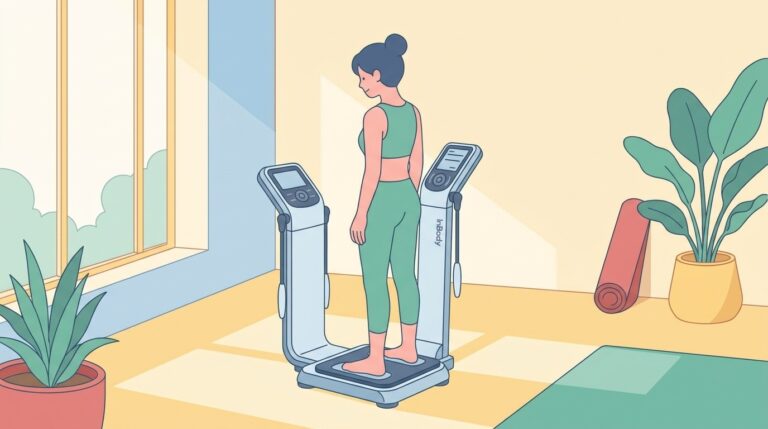
Imagine this: You’ve been consistently smashing your home training (홈트 – homteu) routines. You’ve skipped the late-night fried chicken, conquered countless squat challenges, and you finally decide to step onto an InBody (인바디) scale at a local community center or a neighborhood gym in Seoul to check your progress.
But as the machine prints out the paper, you are met with a dizzying matrix of Korean terms: 골격근량 (golgyeokgeunryang), 체지방률 (chejibangnyul), and the dreaded 내장지방 (naejangjibang). You wanted to celebrate your hard-earned muscle gain, but instead, you feel like you’re trying to decode an ancient scroll.
Don’t worry! This is a classic “pain point” shared by many of our premium learners. Today, we are going to dive deep into the advanced, native vocabulary used in Korean fitness culture. This C1-level guide will transform how you discuss body composition, moving you past basic “weight loss” talk into the realm of a true fitness aficionado. Let’s make your next fitness breakthrough linguistically effortless!
Phase 2: Key Expressions Deep Dive (핵심 표현 3선 심층 분석)
1. 골격근량을 늘리다 (Gol-gyeok-geun-ryang-eul neul-ri-da)
- Pronunciation: [Gol-gyeok-geun-ryang-eul neul-ri-da] (Think of “goal-gyuck” + “geun” as in the German günstig + “ryang-eul neul-ree-dah”)
- Meaning: To increase skeletal muscle mass
- K-Culture Moment: In Korean fitness YouTube channels (like physical gallery or Gym Jong Kook), you will constantly hear trainers yelling, “골격근량은 올리고, 체지방만 빼야 합니다!” (We must raise skeletal muscle mass and only drop body fat!)
- Editor’s Insight: While ‘근육’ (geunyuk) is the general word for muscle, ‘골격근’ (golgyeokgeun) specifically refers to skeletal muscle—the kind you can build through weight lifting. Using this term shows a highly sophisticated grasp of fitness Korean.
- Situation Spectrum: Casual (⚠️ – slightly formal for casual banter, but used among fitness enthusiasts) | Semi-formal (✅) | Formal (✅)
- 🤔 Think About It: Why does Korean culture place such a high emphasis on the scientific ratio of muscle to fat rather than just the number on the scale? How does this compare to your home country’s fitness goals?
2. 눈바디가 더 중요하다 (Nun-ba-di-ga deo jung-yo-ha-da)
- Pronunciation: [Noon-bah-dee-gah duh joong-yo-hah-dah] (“Noon” like the eye + “body” with a Korean accent + “gah duh joong-yo-hah-dah”)
- Meaning: “Eye-body” (visual progress) is more important than the scale.
- K-Culture Moment: On Instagram, Korean fitness influencers post side-by-side photos with the hashtag
#눈바디(#Nunbadi) to show that even if their weight remained the same, their body shape changed drastically. - Editor’s Insight: This is a modern, highly popular portmanteau of 눈 (nun – eye) and 바디 (badi – body). It represents a healthy shift in Korean society from toxic scale-watching to focusing on physical composition and shape.
- Situation Spectrum: Casual (✅) | Semi-formal (✅) | Formal (🚫)
- 🤔 Think About It: How does the creation of words like “눈바디” reflect changes in societal standards of beauty and health in Korea?
3. 체성분 분석표를 보다 (Che-seong-bun bun-seok-pyo-reul bo-da)
- Pronunciation: [Cheh-sung-boon boon-suk-pyoh-reul boh-dah]
- Meaning: To read/analyze a body composition analysis sheet
- K-Culture Moment: When joining a gym in Korea, the trainer will almost always guide you to the InBody machine and say, “먼저 체성분 분석표부터 같이 볼까요?” (Shall we look at your body composition analysis sheet first?)
- Editor’s Insight: ‘체성분’ (cheseongbun) literally translates to “body components.” This is the official, clinical term used on all medical and fitness printouts.
- Situation Spectrum: Casual (⚠️) | Semi-formal (✅) | Formal (✅)
- 🤔 Think About It: Notice how Korean uses Sino-Korean words (체/體 for body, 성분/成分 for component) for scientific precision, similar to Latin roots in English.
Phase 3: Textbook Korean vs. Real-Life Korean
Let’s look at how textbooks teach fitness versus how Koreans actually talk about their body composition.
Situation 1: Discussing weight loss
- 📖 Textbook: “체중을 줄이고 싶습니다.” (Chejungeul jurigo sipsimnida.) – “I want to reduce my body weight.”
- 🗣️ Real-Life: “체지방은 걷어내고 데피니션을 살리고 싶어요.” (Chejibangeun geodonego depinisyeoneul salligo sipeoyo.) – “I want to strip away the body fat and bring out my muscle definition.”
- 💡 Why the difference? The textbook phrase is dry and clinical. Real fitness enthusiasts use words like “걷어내다” (to scoop/strip away) and “데피니션” (definition) to describe their body composition goals dynamically.
Situation 2: Talking about muscle growth
- 📖 Textbook: “근육이 많이 생겼습니다.” (Geunyugi mani saenggyeotseumnida.) – “A lot of muscle has appeared.”
- 🗣️ Real-Life: “근손실 올까 봐 조마조마해요.” (Geunson-sil olkka bwa jomajomahaeyo.) – “I’m anxious that I might experience muscle loss (catabolism).”
- 💡 Why the difference? ‘근손실’ (geunson-sil / muscle loss) is one of the biggest meme words in modern Korean internet culture. Anyone who exercises even a little bit jokingly worries about “근손실” if they skip a workout or miss a protein shake.
Phase 4: K-Culture Deep Dive & Non-Verbal Manners
4-1. Gym Etiquette & Non-Verbal Manners (눈치 – Nunchi)
When stepping onto an InBody machine in Korea, there is a certain ritual:
1. Bare Feet: You must take off your socks. Standing on the metallic electrodes with socks on blocks the electrical current. Ensure your feet are clean!
2. The “T-Pose” Arm Angle: Do not let your arms touch your torso. Keep them wide enough so there is clear space, holding the electrodes at a 45-degree angle.
3. Silence: Do not speak during the test. Speaking can alter the subtle biological resistance measurements, and it’s considered polite to remain absolutely still.
4-2. The “O-U-D” Shape Culture
In Korea, trainers often categorize your InBody graph shape based on the alignment of three bars: Weight (체중), Skeletal Muscle Mass (골격근량), and Body Fat Mass (체지방량).
* C-Shape (Weak): Muscle mass is lower than weight and fat. (Standard beginner)
* I-Shape (Balanced): All three bars align evenly.
* D-Shape (Strong/Athletic): Muscle mass sticks out further than weight and fat. This is the ultimate “fitness goal” in Korea!
Phase 5: Interactive Roleplay Scenario
Setting: A trendy fitness studio in Gangnam, Seoul. You are discussing your home training results with your personal trainer, Min-woo.
NPC Character: 민우 (Min-woo) – A friendly, high-energy trainer who loves protein shakes and uses lots of modern fitness slang.
민우: (인바디 분석표를 보며 눈을 크게 뜨고) 와! 홈트만 하셨다고요? 골격근량이 장난이 아닌데요?
      [Wa! Homteuman hasyeotdagoyo? Golgyeokgeunryangi jangnani anindeyo?]
      (Wow! You said you only did home training? Your skeletal muscle mass is no joke!)

You: (쑥스러워하며) 진짜요? 집에서 맨몸 운동이랑 덤벨 운동 위주로 꾸준히 했거든요.
     [Jinjayo? Jibeseo maenmom undong-irang deombel undong wiju-ro kkujunhi haetgeodeunyo.]
     (Really? I consistently focused on bodyweight exercises and dumbbell workouts at home.)

민우: 체지방률도 많이 떨어졌어요. 완전 ‘D자형’ 명품 그래프네요!
      [Chejibangnyuldo mani tteoreojyeosseoyo. Wanjeon 'D-jahyeong' myeongpum geurafeuneyo!]
      (Your body fat percentage dropped a lot too. It's a perfect 'D-shape' masterpiece graph!)

You: 다행이네요. 요즘 식단도 나름 신경 쓰고 근손실 안 나게 단백질 잘 챙겨 먹었어요.
     [Dahaeng-ineyo. Yojeum sikdando nareum singyeong sseugo geunson-sil an nage danbaekjil jal chaenggyeo meogeosseoyo.]
     (That's a relief. I've been paying attention to my diet lately and eating protein carefully to prevent muscle loss.)

민우: 맞아요, 영양 공급이 진짜 중요하죠. 근데 요즘 몸무게 변화가 없어서 답답하진 않으셨어요?
      [Majayo, yeongyang gonggubi jinjja jung-yohajyo. Geunde yojeum mommuge byeonhwaga eopseoseo dapdaphajin aneusyeosseoyo?]
      (Exactly, nutrition is so important. By the way, weren't you frustrated that your weight hasn't changed lately?)

You: 조금 그랬는데, 눈바디가 달라지는 게 보여서 계속할 수 있었어요.
     [Jogeum geuraenneunde, nunbadiga dallajineun ge boyeoseo gyesokhal su isseoseoyo.]
     (A little bit, but I could keep going because I could see my 'nunbadi' (visual body) changing.)

민우: 역시 배우신 분! 몸무게는 숫자에 불과합니다. 눈바디가 진짜죠.
      [Yeoksi baeusin bun! Mommuge-neun sutja-e bulgwahamnida. Nunbadiga jinjajo.]
      (As expected, you know your stuff! Weight is just a number. Visual body is the real deal.)

You: 네, 앞으로도 홈트랑 식단 병행하면서 건강하게 유지하려고요!
     [Ne, ap-eurodo homteurang sikdan byeonghaenghamyeonseo geonganghage yujiharyeogoyo!]
     (Yes, I plan to keep up the home training and diet together to maintain my health!)
🔀 Choose Your Response:
Min-woo asks: “다음 달에는 데피니션을 더 키우고 싶으세요, 아니면 벌크업을 하고 싶으세요?” (Do you want to focus on definition next month, or do you want to bulk up?)
- A. “저는 데피니션을 좀 더 살려서 탄탄한 몸을 만들고 싶어요.”
- Feedback: Best! Perfect C1 phrasing. Shows you understand “데피니션을 살리다” (bring out definition) to mean getting lean and toned.
- B. “뚱뚱하게 되고 싶어요.”
- Feedback: Bad. This translates to “I want to become fat.” If you want to build size, use the term “벌크업” (bulk up) instead.
- C. “몸무게를 엄청 늘릴래요.”
- Feedback: Risk. This means “I want to increase my body weight immensely.” Without specifying muscle, the trainer might think you just want to gain weight indiscriminately.
Phase 6: 10-Second Emotion Shadowing Drill
To speak like a native, you need the right rhythm, pauses (/), and emotional delivery. Practice these out loud!
- [😊 Proud and satisfied]
“체지방은 / 쏙 빠지고 / 골격근량만 / 늘었더라고요!”
(Chejibangeun / ssok ppajigo / golgyeokgeunryangman / neureotdeoragoyo!)
*”The body fat / slipped right off / and only my skeletal muscle mass / increased!” -
[🥺 Worried but cute]
“오늘 운동 안 가면 / 진짜 / 근손실 올 것 같아요…”
(Oneul undong an gamyeon / jinjja / geunson-sil ol geot gatayo…)
*”If I don’t work out today / seriously / I feel like I’ll lose muscle…”
Phase 7: K-Culture Mini Dictionary
- 벌크업 (Beol-keu-eop) | Bulk Up
- Usage: Eating and training heavy to increase muscle size. Used widely in both gyms and casual health talk.
- 린매스업 (Lin-maes-eup) | Lean Mass Up
- Usage: Gaining muscle while keeping body fat low. Considered the “holy grail” of home training.
- 체지방률 (Che-ji-bang-nyul) | Body Fat Percentage
- Usage: The ratio of fat to overall weight. Highly discussed in Korea rather than just absolute body fat weight.
- 득근 (Deuk-geun) | Gain Muscle (Slang)
- Usage: A combination of 득 (得 – to obtain) and 근 (筋 – muscle). Used as a parting cheer: “오늘도 득근하세요!” (Happy gains today!)
Phase 8: Traveler’s Survival Kit
Survival Gym Phrases TOP 3
- “인바디 측정기 어디에 있나요?”
- Pronunciation: Inbody cheukjeonggi eodie innayo?
- Pro Tip: Use this at local fitness centers or public health centers (보건소) to ask where the InBody machine is.
- “인바디 종이 프린트할 수 있어요?”
- Pronunciation: Inbody jong-i peurinteu-hal su isseoyo?
- Pro Tip: Ask this to get a physical printed copy of your results.
- “양말 벗고 올라가야 하죠?”
- Pronunciation: Yangmal beotgo ollagaya hajyo?
- Pro Tip: Ask this politely to double-check if you should remove your socks before stepping on the scale.
💡 Editor’s Travel Note:
If you are visiting Seoul, you don’t need a gym membership to use an InBody machine! You can visit local district public health offices called 보건소 (Bogeonso). Many offer free or very cheap InBody analyses for visitors and residents. Make sure to download the Naver Map App to find the nearest 보건소 in your district.
Phase 9:
Frequently Asked Questions (FAQ)
Q: What does "골격근량을 늘리다 (Gol-gyeok-geun-ryang-eul neul-ri-da)" mean in Korean and how do you pronounce it?
A: In Korean, "골격근량을 늘리다 (Gol-gyeok-geun-ryang-eul neul-ri-da)" is pronounced [Gol-gyeok-geun-ryang-eul neul-ri-da] and means: To increase skeletal muscle mass
Q: What does "눈바디가 더 중요하다 (Nun-ba-di-ga deo jung-yo-ha-da)" mean in Korean and how do you pronounce it?
A: In Korean, "눈바디가 더 중요하다 (Nun-ba-di-ga deo jung-yo-ha-da)" is pronounced [Noon-bah-dee-gah duh joong-yo-hah-dah] and means: "Eye-body" (visual progress) is more important than the scale.
Q: What does "체성분 분석표를 보다 (Che-seong-bun bun-seok-pyo-reul bo-da)" mean in Korean and how do you pronounce it?
A: In Korean, "체성분 분석표를 보다 (Che-seong-bun bun-seok-pyo-reul bo-da)" is pronounced [Cheh-sung-boon boon-suk-pyoh-reul boh-dah] and means: To read/analyze a body composition analysis sheet







