

C2 Korean Masterclass: Decoding the ‘Fun-sumer’ Craze & Bold Brand Collaborations
Phase 1: Empathy (스토리 몰입형 오프닝)
안녕하세요! Daily Hangul‘s Chief Editor and your trusty K-Culture Navigator here.
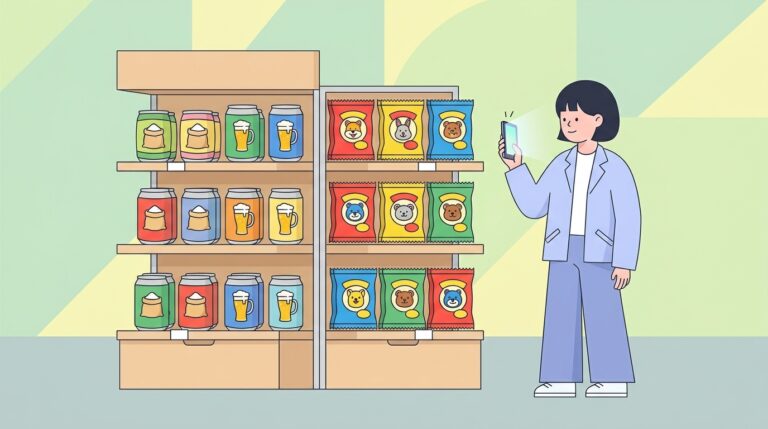
Picture this: You walk into a Korean convenience store (Pyeon-ui-jeom), and in the craft beer section, you spot a can featuring the retro mascot of a famous flour brand, Gompyo (곰표). Next to it is a pack of jelly shaped like a green scouring pad (Susaemi), and a shoe polish-themed tin filled with dark chocolate. Welcome to the wild, hyper-creative world of the Korean Fun-sumer (펀슈머)!
For advanced learners (C2) aiming to master the nuances of consumer behavior and corporate strategy in Korea, understanding how brands utilize bizarre collaborations (I-saek Collabo, 이색 콜라보) is crucial. In professional meetings or sharp social conversations, talking about consumer psychology requires a lexicon that goes beyond standard textbook phrases. You need the precise, high-level vocabulary that Korean marketers and trendsetters use to describe why millions of Gen Z consumers will buy a product simply “for the laughs” (Jaemi-ro).
If you have ever felt your Korean vocabulary was too dry or academic when discussing modern business trends, this guide is designed specifically for you. Based on real-world cases and corporate case studies, we will help you speak like a true Seoul-based brand strategist.
Phase 2: Core Expressions (핵심 표현 3선 심층 분석)
Let’s dissect three high-level phrases essential for discussing “Fun-sumer” marketing at a C2 level.
1. 펀슈머의 소장 욕구를 자극하다 (peon-syu-meo-ui so-jang yok-gu-reul ja-geuk-ha-da)
- Pronunciation: peon-syu-meo-ui so-jang yok-gu-reul ja-geuk-ha-da (Sounds like “pun-consumer-we so-jang yoke-goo-reul jah-geuk-hah-da”)
- Meaning: To stimulate a fun-sumer’s desire to collect/possess.
- K-Culture Moment: This is the exact phrase used in economic journals and corporate marketing pitches when describing why limited-edition collaborations, like the Chupa Chups x Spao pajama line, sell out in seconds.
- Editor’s Insight: Sojang (소장) means “to possess/keep in one’s collection” with a sense of pride. It is a much deeper word than simply Gumaeyok (구매욕 – desire to buy). It implies that the consumer doesn’t just want to use the product; they want to keep it as a trophy.
- Situation Spectrum: Casual (⚠️) / Semi-formal (✅) / Formal (✅)
- 🤔 Think About It: In Korean consumer culture, owning a “limited edition” item is deeply tied to digital self-expression on Instagram (In-sa-tem, 인싸템). How does this differ from the vintage-collecting culture in your home country?
2. 가잼비가 소비의 척도가 되다 (ga-jaem-bi-ga so-bi-ui cheok-do-ga doe-da)
- Pronunciation: ga-jaem-bi-ga so-bi-ui cheok-do-ga doe-da (Sounds like “gah-jam-bee-gah so-bee-we chuk-doh-gah doe-da”)
- Meaning: Price-to-fun ratio (Gazambi) becomes the yardstick of consumption.
- K-Culture Moment: Marketing directors on economic talk shows use this when discussing how utility has taken a backseat to sheer emotional entertainment.
- Editor’s Insight: Gazambi (가잼비) is a portmanteau of Ga (Price/Cost), Jaemi (Fun), and Bi (Ratio). It’s a playful spin-off of the traditional term Gaseongbi (가성비 – cost-effectiveness/value-for-money). Saying it is the cheokdo (yardstick/criterion) of consumption shows you possess a highly sophisticated vocabulary.
- Situation Spectrum: Casual (✅) / Semi-formal (✅) / Formal (✅)
- 🤔 Think About It: Why do you think Korean consumers value “fun-to-cost ratio” over sheer utility in a saturated market?
3. 브랜드 정체성의 경계를 허물다 (beu-raen-deu jeong-che-seong-ui gyeong-gye-reul heo-mul-da)
- Pronunciation: beu-raen-deu jeong-che-seong-ui gyeong-gye-reul heo-mul-da (Sounds like “brand-jung-che-sung-we gyung-gye-reul huh-mool-da”)
- Meaning: To break down/demolish the boundaries of brand identity.
- K-Culture Moment: Often heard during design forums or high-level strategic reviews when a legacy food brand partners with a fashion line to appeal to the younger generation.
- Editor’s Insight: Heomulda (허물다) means to tear down a physical wall. Using it metaphorically with brand identity (브랜드 정체성) sounds incredibly poetic and professional, highlighting a disruptive marketing shift.
- Situation Spectrum: Casual (🚫) / Semi-formal (✅) / Formal (✅)
- 🤔 Think About It: Is there a heritage brand in your country that successfully “demolished its boundaries” to attract Gen Z, or would that be seen as damaging to their reputation?
Phase 3: Textbook vs. Real World (교과서 한국어 vs 진짜 한국어)
Situation 1: Describing a strange but highly successful product collaboration
- 📖 Textbook Korean: 이 두 회사의 협업 제품은 독특해서 많은 사람들에게 인기가 있습니다. (The collaborative product of these two companies is unique, so it is popular among many people.)
- 🗣️ Real-world Korean (C2): 이번 이색 콜라보는 B급 감성을 제대로 저격해서 품절 대란을 일으켰더라고요. (This bizarre collaboration hit the nail on the head with its quirky “Class-B” humor, sparking a massive sell-out frenzy.)
- 💡 Why the difference? Textbooks teach dry, descriptive words. Real-world marketing discussions utilize cultural concepts like B-geup gamseong (B-grade/quirky aesthetic) and Pumjeol daeran (sell-out crisis/frenzy) to capture the exact social phenomenon.
Situation 2: Expressing why consumers buy things they don’t necessarily need
- 📖 Textbook Korean: 소비자들이 재미있는 제품을 사고 싶어 합니다. (Consumers want to buy interesting products.)
- 🗣️ Real-world Korean (C2): 실용성보다는 덕질하듯 소장 가치에 초점을 맞추는 소비층이 늘어났어요. (The consumer base focusing on collectible value—almost like fan-girling/boying—rather than practical utility has grown.)
- 💡 Why the difference? Deokjil (덕질 – acting like an obsessive fan/otaku) has moved into mainstream business terminology in Korea to describe hyper-loyal, enthusiast consumer behavior.
Phase 4: K-Culture Deep-Dive & Non-Verbal Manners
4-1. The Art of “Eisack” (이색) Presentation
When presenting a new creative collaboration idea to Korean business partners, do not just focus on ROI data. Korean business culture currently values “Sinsaengham” (신선함 – freshness) and storytelling.
* Non-verbal Tip: When presenting mockup designs of your quirky product, use subtle hand gestures pointing outward as if revealing a surprise, keeping a cheerful yet highly professional smile. It shows you understand the “playful” nature of the project while maintaining corporate decorum.
4-2. The Cultural Roots of “B-geup Gamseong” (B급 감성)
Historically, Korean corporate branding was highly rigid, focusing on prestige and luxury. However, with the rise of YouTube culture and Newtro (New + Retro) trends in places like Euljiro (을지로), massive conglomerates realized that being too perfect is boring. By releasing self-deprecating, funny, or nostalgic collaborations (like Samgwang Geulras x Jinro), brands show they “don’t take themselves too seriously.” This cultural humility creates a sense of friendly intimacy (Chin-geun-ham, 친근함) with the consumer.
Phase 5: Interactive Roleplay Scenario
The Setup
You are Ji-won, a senior marketing consultant presenting a new collaboration pitch to Director Park, a traditional but trend-conscious director at a major retail brand.
Characters:
* Director Park (박 부장): Conservative but desperate to capture the Gen Z market.
* Ji-won (지원): You (The brilliant C2-level strategist).
Dialogue (8 Turns)
- 박 부장 (Director Park): (팔짱을 끼며 진지한 표정으로) 지원 씨, 요즘 편의점에 가면 온통 이상한 콜라보 제품뿐이던데, 우리 브랜드도 이런 걸 꼭 해야 합니까? 괜히 고급스러운 이미지만 망가지는 거 아닌가요?
(Crossing his arms, looking serious: Ji-won, convenience stores are filled with weird collab products lately, but do we really have to do this? Aren’t we just going to ruin our premium brand image?) -
지원 (Ji-won): (미소를 지으며 설득력 있는 목소리로) 부장님 걱정도 당연하십니다. 하지만 요즘 소비 트렌드는 확실히 가잼비로 흘러가고 있습니다. 단순히 제품을 사는 게 아니라 재미를 소비하는 것이죠.
(Smiling and speaking persuasively: Your concern is completely natural, Director. However, consumer trends these days are definitely leaning toward ‘Gazambi’. They aren’t just buying products; they are consuming fun.) -
박 부장 (Director Park): (눈을 가늘게 뜨고) 재미라… 하지만 우리 타겟층은 구매력이 있는 3040 세대잖아요. 그들이 이런 장난 같은 제품에 지갑을 열까요?
(Squinting: Fun… but our target audience is the 30s-40s demographic with purchasing power. Would they open their wallets for these toy-like products?) -
지원 (Ji-won): (태블릿의 데이터 화면을 보여주며) 바로 그 지점입니다! 이번 기획은 3040의 향수를 자극하는 뉴트로 디자인으로 설계되었습니다. 그들의 소장 욕구를 제대로 건드릴 수 있죠.
(Showing data on a tablet: That is precisely the point! This plan is designed with a Newtro aesthetic that triggers nostalgia in the 30s and 40s. We can perfectly tap into their desire to collect.) -
박 부장 (Director Park): (고개를 약간 끄덕이며 자료를 본다) 흠, 복고풍이라… 듣고 보니 솔깃하네요. 그런데 기존 우리 제품 라인업과의 괴리감은 어떻게 해결할 생각이죠?
(Nodding slightly while looking at the document: Hmm, retro… that does sound tempting. But how do you plan to resolve the disconnect with our existing product lineup?) -
지원 (Ji-won): (손짓으로 슬라이드를 넘기며 자신 있게) 전통과 현대의 결합을 통해 브랜드 정체성의 경계를 허물고자 합니다. 이질감 자체가 소비자들에게는 신선한 충격이자 놀이터가 될 것입니다.
(Confidently swiping the slide with a gesture: We aim to break down the boundaries of our brand identity by combining tradition with modernity. The dissonance itself will serve as a fresh shock and a playground for consumers.) -
박 부장 (Director Park): (턱을 괴며 미소를 지으며) 허물어뜨린다… 파격적이면서도 설득력이 있네요. 좋습니다. 일단 시제품(Prototype) 단계까지 빠르게 추진해 봅시다.
(Resting chin in hand, smiling: Tearing down boundaries… bold yet persuasive. Good. Let’s fast-track this to the prototype phase.) -
지원 (Ji-won): (정중하게 목례하며) 믿고 맡겨 주십시오, 부장님. 품절 대란을 일으킬 만한 완벽한 퀄리티로 보답하겠습니다.
(Bowing politely: Trust me with this, Director. I will deliver flawless quality that will spark a massive sell-out frenzy.)
🔀 Choose Your Path!
If Director Park suddenly asks: “Is this really profitable, or is it just a temporary fad?” how do you respond?
- [Choice A] “단순한 유행이 아닙니다. 이색 협업은 인스타그램 등 SNS를 통한 자발적인 바이럴 마케팅 효과를 내기 때문에, 마케팅 비용 대비 극도의 효율성을 보장합니다.”
- [Choice B] “유행이 짧은 건 사실입니다. 하지만 유행이 끝나기 전에 빨리 치고 빠지는 전략으로 가면 손해 볼 일은 없습니다.”
- [Choice C] “부장님, 요즘 유행을 모르면 도태됩니다. 다른 대기업들도 다 하고 있으니 우리도 무조건 따라야 합니다.”
🧐 Expert Feedback on Your Choice:
- Choice A (Best – 100%): Perfect! You answered with commercial logic, addressing his corporate anxiety with metrics (organic viral marketing, cost efficiency) while maintaining high-level marketing vocabulary.
- Choice B (Risk – 50%): Too direct. Suggesting a “hit-and-run” strategy (chi-go ppa-ji-gi, 치고 빠지기) makes your branding pitch look cheap and volatile to a director concerned with brand value.
- Choice C (Bad – 10%): High risk. Telling a director they will “become obsolete” (do-tae-doe-da, 도태되다) if they don’t know trends violates professional etiquette (Ye-ui, 예의) and will likely shut down the meeting immediately.
Phase 6: 10-Second Emotional Shadowing Drill
Speak like a native strategist! Practice these split-second pitch lines, matching the emotional tone and natural pauses (/).
- [🔥 Confident and Energetic]
- “이번 콜라보는 / 단순한 상품이 아니라 / 소비자들에게 줄 수 있는 특별한 경험입니다!”
- I-beon kol-la-bo-neun / dan-sun-han sang-pum-i a-ni-ra / so-bi-ja-deul-e-ge jul su in-neun teuk-byeol-han gyeong-heom-im-ni-da!
- (This collaboration / is not just a product, / it’s a special experience we can offer to our consumers!)
- [💡 Analytical and Persuasive]
- “가잼비를 자극하는 제품군이 / 결국 / 브랜드의 젊은 이미지를 구축하는 데 기여합니다.”
- Ga-jaem-bi-reul ja-geuk-ha-neun je-pum-gun-i / gyeol-guk / beu-raen-deu-ui jeol-meun i-mi-ji-reul gu-chuk-ha-neun de gi-yeo-ham-ni-da.
- (Product lines that stimulate Gazambi / eventually / contribute to building a youthful brand image.)
Phase 7: K-Culture Mini-Dictionary
- B급 감성 (B-geup Gam-seong) | Noun | Quirky, self-deprecating, and low-fidelity aesthetic that feels authentic and deeply humorous to Gen Z, deliberately steering away from overly polished corporate vibes.
- 품절 대란 (Pum-jeol Dae-ran) | Noun | Literally a “sell-out crisis.” Used to describe a commercial phenomenon where demand soars so high that a product is completely sold out nationwide.
- 인싸템 (In-ssa-tem) | Noun | A portmanteau of Insider (socially savvy/popular person) and Item. It refers to must-have trend items that make you look cool and “in the know” on social media.
- 뇌절 (Noe-jeol) | Noun/Slang | Overdoing something to the point where it becomes annoying or loses its original charm. In marketing, it refers to when a brand creates too many unnecessary collaborations.
Phase 8: Traveler’s Survival Kit
Survival Phrases for Trend Hunters in Seoul:
- “요즘 SNS에서 가장 핫한 콜라보 상품 어디에 있어요?”
- Yo-jeum SNS-e-seo ga-jang hat-han kol-la-bo sang-pum eo-di-e is-seo-yo?
- Pro Tip: Ask this to convenience store clerks when searching for limited-edition beers, snacks, or merchandise.
- “이거 혹시 한정판인가요?”
- I-geo hok-si han-jeong-pan-in-ga-yo?
- Pro Tip: “Is this a limited edition?” Essential when checking if an item is a collectible.
- “재고가 다 떨어졌나요?”
- Jae-go-ga da tteo-reo-jyeot-na-yo?
- Pro Tip: “Is it out of stock?” Use this if you don’t see the item on shelves but want to check the backroom inventory.
🗺️ Editor’s Travel Note
To find the absolute latest consumer trend hubs in Seoul, do not use Google Maps (which has limited functionality in Korea). Instead, download Naver Map or KakaoMap to navigate directly to temporary concept pop-up stores (Pop-up Store, 팝업스토어) in Seongsu-dong (성수동) or Hongdae (홍대). These neighborhoods are the battlegrounds for experimental retail collaborations.
Phase 9: “Going Deeper” (생각 질문)
The extreme success of Fun-sumer marketing in Korea reveals a unique aspect of Korean society: the hyper-connected, trend-sensitive digital collective. In Korea, consumer trends move at an astonishing speed because sharing “what’s hot” is a primary form of social communication. However, this also brings a unique challenge—the trend cycle is incredibly short. What was an “In-ssatem” yesterday can easily face “Noe-jeol” backlash tomorrow if consumers feel the brand is trying too hard without adding real value.
💬 Your Turn: What do you think? Does your home country also experience these rapid, quirky collaboration trends, or do consumers prefer stability and heritage over novelty? Let us know in the comments below!
Phase 10: FAQ & Mistake Prevention
Q: Is
Frequently Asked Questions (FAQ)
Q: What does "펀슈머의 소장 욕구를 자극하다 (peon-syu-meo-ui so-jang yok-gu-reul ja-geuk-ha-da)" mean in Korean and how do you pronounce it?
A: In Korean, "펀슈머의 소장 욕구를 자극하다 (peon-syu-meo-ui so-jang yok-gu-reul ja-geuk-ha-da)" is pronounced [peon-syu-meo-ui so-jang yok-gu-reul ja-geuk-ha-da (Sounds like "pun-consumer-we so-jang yoke-goo-reul jah-geuk-hah-da"] and means: To stimulate a fun-sumer's desire to collect/possess.
Q: What does "가잼비가 소비의 척도가 되다 (ga-jaem-bi-ga so-bi-ui cheok-do-ga doe-da)" mean in Korean and how do you pronounce it?
A: In Korean, "가잼비가 소비의 척도가 되다 (ga-jaem-bi-ga so-bi-ui cheok-do-ga doe-da)" is pronounced [ga-jaem-bi-ga so-bi-ui cheok-do-ga doe-da (Sounds like "gah-jam-bee-gah so-bee-we chuk-doh-gah doe-da"] and means: Price-to-fun ratio (Gazambi) becomes the yardstick of consumption.
Q: What does "브랜드 정체성의 경계를 허물다 (beu-raen-deu jeong-che-seong-ui gyeong-gye-reul heo-mul-da)" mean in Korean and how do you pronounce it?
A: In Korean, "브랜드 정체성의 경계를 허물다 (beu-raen-deu jeong-che-seong-ui gyeong-gye-reul heo-mul-da)" is pronounced [beu-raen-deu jeong-che-seong-ui gyeong-gye-reul heo-mul-da (Sounds like "brand-jung-che-sung-we gyung-gye-reul huh-mool-da"] and means: To break down/demolish the boundaries of brand identity.







