

Phase 1: Embrace the Spa Vibe! (공감 스토리)
안녕하세요! 매일한글(Daily Hangul)의 수석 에디터이자 여러분의 단짝 친구입니다!
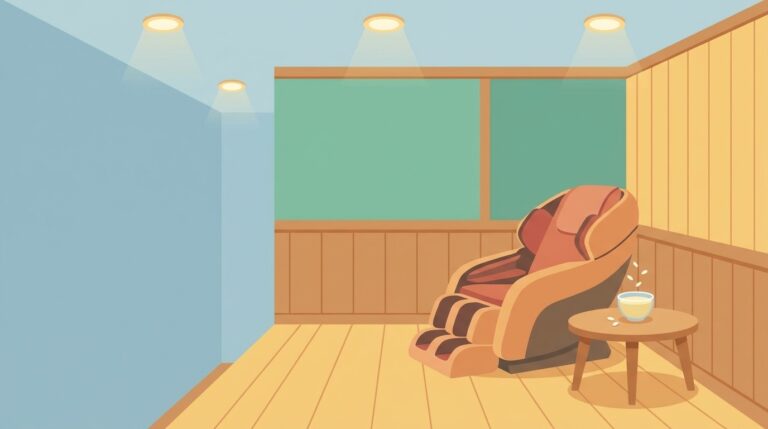
Imagine this: You’ve just spent an hour soaking in a hot herbal bath, sweating out your stress in a yellow-soil dome room (황토방), and eating delicious baked eggs. Your body is beautifully relaxed, but your shoulder muscles are whispering for just a little more attention. Then, you see them—a row of luxurious, high-tech massage chairs (안마 의자) lining the relaxation hall.
You walk over, eager to sink in, but suddenly you freeze. There are no instructions in English. You see a blinking card reader, a coin slot, and a remote control filled with complex Korean buttons like ‘스트레칭’ (stretching) and ‘무중력’ (zero gravity). To make matters worse, other spa-goers are eyeing the empty chair behind you.
Should you tap your locker key? Do you need to run back to the locker room to grab 1,000-won coins? How do you ask the person next to you for help without sounding like an absolute tourist?
Don’t worry! Today, we are going to master the exact, real-life Korean phrases and unspoken cultural manners you need to conquer the Jjimjilbang massage chair like an absolute pro. No more awkward hovering!
Phase 2: Key Expressions Deep Dive (핵심 표현 3선)
1. 이거 어떻게 작동해요? (How do I operate this?)
- Pronunciation: i-geo eo-tteo-ke jak-dong-hae-yo? (Sounds like: “ee-gaw uh-thuh-keh jahk-dong-hae-yo?” — hint: ‘eo-tteo-ke’ sounds close to “auto-care” without the ‘r’ sound!)
- Meaning: “How does this work?” or “How do I operate this?”
- K-Culture Moment: You will hear this constantly in Korean variety shows (like I Live Alone) when celebrities try out new high-tech home appliances or visit futuristic resting zones.
- Editor’s Insight: While 작동하다 (to operate) sounds a bit technical, adding 어떻게 (how) and the polite -요 ending makes it incredibly natural and friendly when asking a nearby local for assistance.
- Situation Spectrum: Casual (⚠️ 이거 어떻게 작동해?) / Semi-formal (✅ 이거 어떻게 작동해요?) / Formal (🚫 이것을 어떻게 작동하십니까? – too robotic!)
- 🤔 Think About It: In your home country, do people easily strike up a conversation with strangers to ask how to use public machines, or do they prefer to search for instructions online first?
2. 동전으로 해야 돼요, 아니면 키로 대야 돼요? (Do I pay with coins, or tap my key tag?)
- Pronunciation: dong-jeon-eu-ro hae-ya dwae-yo, a-ni-myeon ki-ro dae-ya dwae-yo? (Sounds like: “dong-juhn-eu-ro hae-yah dwae-yo, ah-nee-myuhn kee-ro dae-yah dwae-yo?” — hint: ‘ki’ is just like the English word “key”!)
- Meaning: “Do I need to pay with coins, or should I tap my locker key?”
- K-Culture Moment: In older, classic Jjimjilbangs, you needed physical 500-won coins. But in modern mega-spas (like Aquafield or Dragon Hill), you tap your electronic locker wristband (락커키) and pay everything at the reception desk when you check out.
- Editor’s Insight: The verb 대다 means “to touch” or “to tap” (as in tapping a transit card). Using ~어야/아야 돼요 (must do/have to) shows you are seeking the correct rule.
- Situation Spectrum: Casual (⚠️ 동전으로 해야 돼, 아니면 키로 대야 돼?) / Semi-formal (✅ 동전으로 해야 돼요, 아니면 키로 대야 돼요?) / Formal (🚫 동전 혹은 열쇠 중 무엇으로 결제해야 합니까? – too formal!)
- 🤔 Think About It: Korea is rapidly becoming a cashless society. How has payment technology changed the way we experience traditional leisure spaces like spas?
3. 자리가 안 나네요. (The seats aren’t freeing up.)
- Pronunciation: ja-ri-ga an na-ne-yo. (Sounds like: “jah-ree-gah ahn nah-neh-yo.”)
- Meaning: “No seats are opening up.” / “It’s fully occupied.”
- K-Culture Moment: You’ll hear people sighing this soft complaint in crowded cafes, restaurants, or the Jjimjilbang relaxation zone during peak weekend hours.
- Editor’s Insight: 자리가 나다 literally means “a seat appears/opens up.” Adding 안 (not) and the observant ending ~네요 (-ne-yo) conveys a soft, relatable disappointment rather than an angry complaint. It’s perfect for bonding with someone else who is also waiting!
- Situation Spectrum: Casual (✅ 자리 진짜 안 난다.) / Semi-formal (✅ 자리가 안 나네요.) / Formal (🚫 자리가 발생하지 않습니다. – grammatically weird!)
- 🤔 Think About It: Why does expressing shared minor frustrations (like waiting for a seat) help people feel closer to each other in Korean social settings?
Phase 3: Textbook vs. Real Korean (교과서 vs. 진짜 한국어)
Situation 1: Asking if the massage chair is occupied
- 📖 Textbook Korean: “이 자리에 사람이 있습니까?” (i ja-ri-e sa-ram-i it-seup-ni-ka? – “Is there a person in this seat?”)
- 🗣️ Real Korean: “여기 자리 있어요?” (yeo-gi ja-ri it-eo-yo? – “Is this seat taken?”)
- 💡 Why it’s different: The textbook version is grammatically flawless but sounds incredibly stiff—like an officer interviewing a suspect. Real Koreans keep it simple by asking “Is there a seat here?” with a friendly rising intonation.
Situation 2: Expressing deep physical relief
- 📖 Textbook Korean: “매우 안락하고 시원합니다.” (mae-u an-rak-ha-go si-won-ham-ni-da. – “It is very comfortable and refreshing.”)
- 🗣️ Real Korean: “아, 살 것 같다!” (ah, sal geot gat-da! – “Ah, I feel alive!” / “This is heaven!”)
- 💡 Why it’s different: While “시원하다” (refreshing/cool) is great, when Koreans sink into a warm massage chair after a long day, they use the idiomatic phrase “살 것 같다” (literally: “It feels like I will live”). It beautifully captures that instant moment of physical salvation!
Phase 4: K-Culture Deep Dive & Non-verbal Manners (문화 팁)
4-1. Nunchi (눈치) & Massage Chair Etiquette
- The 20-Minute Unspoken Rule: Most massage chairs operate on a 15 to 20-minute cycle per payment. If there is a line of people waiting, it is considered bad Nunchi (lack of social situational awareness) to continuously pay and sit there for hours.
- The “Locker Key Tap” Gesture: When paying with your wristband, do not slam it. Gently tap the circular sensor on the armrest. If it beeps once, it worked!
- The Footwear Rule: You must take off your Jjimjilbang slippers (if you are wearing them in the common hall) before putting your feet inside the massage chair’s foot massager. Slipping in with bare feet or clean socks is the standard polite manner.
4-2. The Holy Trinity of Jjimjilbang Healing
In K-dramas (like Crash Landing on You or Legend of the Blue Sea), the characters always do three things in sequence:
1. Sweating in the hot rooms with sheep-head towels (양머리).
2. Guzzling icy-cold, sweet rice punch (식혜) and eating smoked sauna eggs (맥반석 계란).
3. Sinking into the 안마 의자 (massage chair) to let the rolling nodes work on their softened muscles.
Doing this sequence makes you an honorary Korean local!
Phase 5: Real-life Roleplay Scenario (실전 롤플레이)
- Background: You are at a beautiful spa in Seoul. You want to use the luxury massage chair, but the screen is off and there is no coin slot. A friendly regular local, Minwoo (민우), is relaxing on the floor nearby holding a cup of Sikhye.
-
Characters:
- You (learner)
- 민우 (Minwoo) – The helpful Jjimjilbang regular
[Dialogue]
- You: 저기요, 실례지만… 이거 어떻게 작동해요?
(jeo-gi-yo, sil-rye-ji-man… i-geo eo-tteo-ke jak-dong-hae-yo?)
🎭 (Hesitantly pointing at the blank massage chair screen with a polite smile) -
민우: 아, 그거요? 그거 팔걸이에 있는 동그란 부분에 락커키 대시면 돼요.
(ah, geu-geo-yo? geu-geo pal-geol-i-e in-neun dong-geu-ran bu-bun-e rak-keo-ki dae-si-myeon dwae-yo.)
🎭 (Smiling kindly, gesturing to his own wristband key tag)
(Oh, that? You just need to tap your locker key on the round part of the armrest.) -
You: 아! 동전으로 해야 돼요, 아니면 키로 대야 돼요? 제가 현금이 없어서 걱정했어요.
(ah! dong-jeon-eu-ro hae-ya dwae-yo, a-ni-myeon ki-ro dae-ya dwae-yo? je-ga hyeon-geum-i eop-seo-seo geok-jeong-haet-eo-yo.)
🎭 (Sighing with relief, rubbing the back of your neck) -
민우: 요즘은 다 열쇠 키로 결제해요. 나중에 나갈 때 한 번에 계산하시면 됩니다.
(yo-jeum-eun da yeol-soe ki-ro gyeol-jae-hae-yo. na-jung-e na-gal ttae han beon-e gye-san-ha-si-myeon doem-ni-da.)
🎭 (Nodding reassurance, taking a sip of his sweet rice drink)
(Nowadays, everyone pays with the key. You just pay all at once when you leave later.) -
You: 아, 다행이네요! 감사합니다. 혹시 저기… 여기 자리 있는 건가요?
(ah, da-haeng-i-ne-yo! gam-sa-ham-ni-da. hok-si jeo-gi… yeo-gi ja-ri in-neun geon-ga-yo?)
🎭 (Pointing to the empty chair next to him, making sure no one reserved it with a personal towel) -
민우: 아뇨, 비어 있어요. 그냥 편하게 앉으세요!
(a-nyo, bi-eo it-eo-yo. geu-nyang pyeon-ha-ge an-jeu-se-yo!)
🎭 (Waving his hand to say "go ahead")
(No, it’s empty. Just sit down and make yourself comfortable!) -
You: 정말 감사합니다. 아, 드디어 몸 좀 풀겠네요.
(jeong-mal gam-sa-ham-ni-da. ah, deu-di-eo mom jom pul-get-ne-yo.)
🎭 (Sinking happily into the leather chair and tapping the key tag) -
민우: 하하, 시원하게 마사지 받으세요! 살 것 같으실 거예요.
(ha-ha, si-won-ha-ge ma-sa-ji bat-eu-se-yo! sal geot gat-eu-sil geo-yeo-yo.)
🎭 (Laughing warmly while cracking open a sauna egg)
(Haha, enjoy the refreshing massage! You’re going to feel alive.)
🔀 Interactive Choice Point
After your massage session finishes, you realize your locker key tag didn’t beep correctly to turn off, and the chair is starting a second round. What do you say to Minwoo?
- A. “저기요, 이거 왜 안 꺼져요? 망가졌어요!” (Excuse me, why won’t this turn off? It’s broken!)
- B. “저기 죄송한데, 키가 안 먹혀서 그런데 어떻게 꺼야 되나요?” (Excuse me, sorry to bother you, but the key tag isn’t registering, so how do I turn this off?)
- C. “이거 멈춰 주세요!” (Make this stop!)
💡 Feedback:
- Choice A (Risk): Accusing the machine of being “broken” (망가졌어요) straight away might sound a bit aggressive or overly dramatic in a quiet spa environment.
- Choice B (Best): Soft, polite, and uses ~는데 to gently explain your situation. It will prompt Minwoo or a staff member to immediately show you the power button on the remote screen!
- Choice C (Bad): Too direct and commanding, sounding like you are ordering Minwoo around.
Phase 6: 10-Second Emotion Shadowing Drill (감정 섀도잉)
To sound like a true natural speaker, you need the right intonation and pauses. Practice these aloud with the emotional cues!
- [🥺 Realizing you have no coins/worried]
“동전으로 / 해야 돼요… 아니면 / 키로 대야 돼요?”
(dong-jeon-eu-ro / hae-ya dwae-yo… a-ni-myeon / ki-ro dae-ya dwae-yo?) -
[😊 Deeply relieved and happy]
“아~ / 살 것 같다! / 진짜 시원해요!”
(ah~ / sal geot gat-da! / jin-jja si-won-hae-yo!) -
[😅 Softly disappointed, waiting in line]
“아쉽게도 / 자리가 / 안 나네요.”
(ah-swip-gae-do / ja-ri-ga / an na-ne-yo.)
Phase 7: K-Culture Mini Dictionary (미니 사전)
- 락커키 (rak-keo-ki) | Locker Key Wristband
- The plastic, waterproof digital wristband given at the entrance. It acts as your locker key, Jjimjilbang wallet, and room access card. Never lose it!
- 안마 의자 (an-ma ui-ja) | Massage Chair
- High-end massage recliners found in Korean resting zones. Some models cost up to $10,000 USD and offer full-body air-cell massage and heat therapy.
- 식혜 (sik-hye) | Sweet Rice Punch
- A traditional sweet drink brewed with malt and cooked rice. Drinking this ice-cold drink in a hot room is the peak of Korean spa bliss.
- 찜질복 (jjim-jil-bok) | Spa Uniform
- The matching t-shirt and shorts provided by the Jjimjilbang. Everyone wears them in the common co-ed areas.
Phase 8: Travel Survival Kit (여행자를 위한 생존 키트)
Survival Phrases TOP 3
- “이거 한 판에 얼마예요?” (How much is it for one round?)
- Pro Tip: Use this when there is a small sign with pricing. A “round” is colloquially called “한 판” (han pan).
- “자리 나면 알려주실래요?” (Could you let me know when a seat opens up?)
- Pro Tip: Ask this to a friend you are visiting with so you don’t miss your turn.
- “작동이 안 돼요.” (It’s not working.)
- Pro Tip: Say this to a nearby spa employee if the machine doesn’t respond to your key tap.
📝 Editor’s Travel Note
Before heading out to experience Seoul’s famous spas, make sure to download Korean local maps. Since Google Maps does not always give optimal walking or public transport directions in Korea, we highly recommend using the 네이버 지도 앱 다운로드 (Naver Map app) to find the best local Jjimjilbangs near your hotel.
(Note: Jjimjilbang prices and operating hours may change dynamically post-pandemic, so always double-check recent Naver reviews before visiting!)
Phase 9: Go Deeper – The Beauty of “Shiwonhada” (생각 질문)
In English, “cool” usually refers to physical temperature. But in Korea, when an elderly grandfather steps into a steaming-hot bath, or when a young professional sinks into an intense, muscle-kneading 안마 의자, they both exclaim with absolute delight: “아, 시원하다!” (Ah, it is so refreshing/cool!).
This linguistic phenomenon captures the Korean philosophy of “healing.” True relief is not just cold temperature; it is the physical sensation of tight, blocked energy finally flowing freely through your body. It is a shared emotional language of physical relief.
💬 Your Turn: How does your culture verbally express physical relief or relaxation? Is there a word that means both “refreshing” and “hot/painful in a good way”? Let us know in the comments below!
Phase 10: FAQ & Common Mistakes (자주 묻는 질문)
Q: Can I use my phone’s Samsung Pay or Apple Pay directly on the massage chairs?
A: Generally, no. Most Jjimjilbang massage chairs in Korea are integrated with the spa’s central payment system. You must tap your physical 락커키 (locker key tag) and pay the aggregated bill when checking out at the main reception desk.
Q: Can children use the massage chairs?
A: It is highly discouraged. Korean massage chairs are heavily calibrated for adult bone structures and physical pressure tolerances. Children should avoid using them to prevent growth-plate injuries.
Q: What should I do if the massage chair doesn’t stop and keeps running?
A: Tap your key wristband on the sensor again. If it doesn’t work, look for the red emergency “전원” (Power) button on the manual remote control on the side or ask a staff member nearby.
🚨 Common Mistakes Alert!
- Keeping slippers on: Placing dirty plastic hallway slippers into the clean fabric footwells of the chair.
- Correct Action: Leave your slippers neatly on the floor next to the chair before sitting down.
- Slamming the key tag repeatedly: Tapping the wristband multiple times when the machine doesn’t start instantly.
- Correct Action: Tap once, wait for the chime/beep, and wait 3-5 seconds for the mechanical boots to calibrate around your legs.
- Leaving trash in the cup holders: Leaving empty Sikhye cups or eggshells in the chair’s accessory holders.
- Correct Action: Always throw your trash in the designated recycling bins before leaving the area.
Phase 11: Action Mission (액션 미션)
- 🥉 Bronze Mission: Practice saying “이거 어떻게 작동해요?” aloud in front of your mirror with a friendly, inquiring expression three times.
- 🥈 Silver Mission: Share this post on your social media, tag Daily Hangul, and write down your favorite Jjimjilbang food choice (e.g., 식혜 or 바나나우유).
- 🥇 Gold Mission: Next time you go to a Korean spa (or a Korean supermarket relaxation corner), successfully ask someone nearby “여기 자리 있어요?” before sitting down!
- 🎮 K-Culture Mission: Watch a Jjimjilbang scene in a K-drama (like Legend of the Blue Sea) and spot the characters using the massage chairs or wearing sheep-head towels!
Phase 12: Interactive Quiz (퀴즈 챌린지)
Test your knowledge to see if you are ready for the Korean spa!
- How do you politely ask a stranger if a massage chair is occupied?
- A) 이거 비싸요? (i-geo bi-ssa-yo?)
- B) 여기 자리 있어요? (yeo-gi ja-ri it-eo-yo?)
- C) 저리 가세요. (jeo-ri ga-se-yo.)
- Fill in the blank: When you want to say “I feel alive!” after a wonderful back massage, you shout: “아,
______ 것 같다!” -
True or False: You should always wear your plastic common-area slippers inside the massage chair’s footbeds. (True / False)
🔍 Click here to reveal the Answers & Explanations!
- Correct Answer: B
- Explanation: “여기 자리 있어요?” translates to “Is this seat taken?” A means “Is this expensive?” and C means “Go away” (which is very rude!).
- Correct Answer: 살 (sal)
- Explanation: “살 것 같다” (sal geot gat-da) is the perfect idiomatic phrase meaning “I feel alive!”
- Correct Answer: False
- Explanation: You should always slip off your footwear and place them neatly on the floor next to the machine before using the foot massager to keep the facility hygienic for everyone.
- Explanation: You should always slip off your footwear and place them neatly on the floor next to the machine before using the foot massager to keep the facility hygienic for everyone.







