

Phase 1: Empathy (스토리 몰입형 오프닝)
안녕하세요! Your premium Korean culture guide and best friend from Daily Hangul is back!
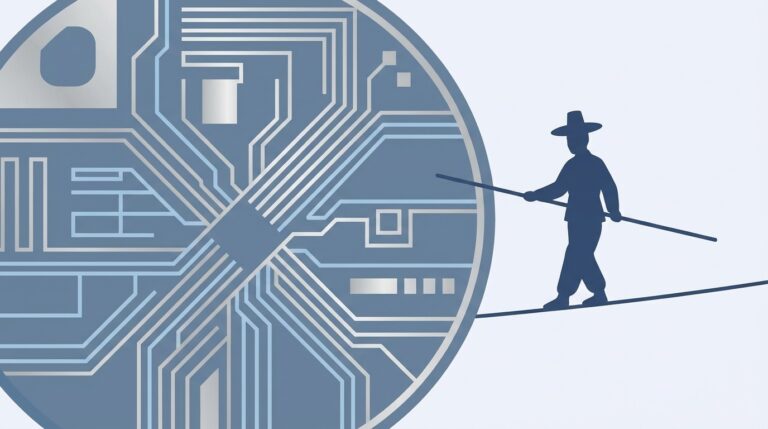
Imagine sitting in a high-end coffee shop in Pangyo (Korea’s Silicon Valley), sipping an iced Americano, when you overhear two tech executives whispering intensely. They aren’t gossiping about K-Drama stars; they are debating Korea’s diplomatic tightrope between the US and China over the Chip 4 Alliance.
As a C2 (Advanced) learner, your goal is no longer just ordering that coffee—it’s actively engaging in, or at least fully understanding, these high-stakes geopolitical debates. Discussions surrounding the “Semiconductor War” (반도체 전쟁) are incredibly nuanced. Many advanced learners tell me, “I know the words ‘semiconductor’ and ‘alliance’, but I don’t know how to express the complex strategic hesitation Koreans feel.”
Don’t worry! This guide is built from real-world business coaching case studies. By the end of this post, you’ll be able to articulate complex foreign policy dilemmas with the precision of a seasoned diplomat.
Phase 2: Core Expressions Deep Dive
1. 셈법이 복잡해지다 (sem-beobi bok-jap-hae-ji-da)
- Pronunciation: Sem-beop-ee bok-jap-hae-jee-da (Sounds like “sem” as in ‘semester’ + “bup” as in ‘bumper’)
- Meaning: Literal: “The calculation method is becoming complicated” ➔ Nuance: One’s strategic calculus/decision-making process is highly entangled due to conflicting interests.
- K-Culture Moment: You will hear this phrase daily on Korean news channels like JTBC or SBS Special when anchors analyze Samsung’s dilemma of choosing between US technology subsidies and China’s massive market share.
- Editor’s Insight: In Korean, “셈” (calculation/counting) represents deep strategic planning. When you say your “셈법” is complex, you imply that simple math won’t solve the problem; there are too many hidden variables.
- Situation Spectrum: Casual (⚠️ – too heavy for trivial choices), Semi-formal (✅), Formal (✅)
- 🤔 Think About It: How does your native language describe the stressful process of weighing geopolitical options where every choice has a major downside?
2. 고래 싸움에 새우 등 터지다 (go-rae ssa-um-e sae-u deung teo-ji-da)
- Pronunciation: Go-rae ssa-oom-eh sae-oo deung tuh-jee-da (Sounds like “go-ray” + “sa-um”)
- Meaning: Literal: “A shrimp’s back bursts during a fight between whales” ➔ Nuance: Innocent bystanders or smaller nations get heavily damaged when superpowers clash.
- K-Culture Moment: This classic Korean proverb is frequently used in political cartoons depicting South Korea squeezed between the US (Uncle Sam) and China (The Red Dragon).
- Editor’s Insight: This phrase highlights Korea’s historical geopolitical psyche. As a peninsula surrounded by major empires, Korea has historically felt like the strategic “shrimp.”
- Situation Spectrum: Casual (✅), Semi-formal (✅), Formal (⚠️ – perfect for speeches, but use sparingly in ultra-formal legal treaties)
- 🤔 Think About It: Does your culture use marine life or other animals to represent power imbalances in global politics?
3. 줄타기 외교 (jul-ta-gi oe-gyo)
- Pronunciation: Jool-tah-ghee weh-gyoh (Sounds like “jool” as in ‘jewel’ + “tah-gi” + “way-gyo”)
- Meaning: Tightrope diplomacy (Balancing act diplomacy)
- K-Culture Moment: Think of historical K-Dramas like Mr. Sunshine where Joseon diplomats try to maintain independence by playing Western powers against each other.
- Editor’s Insight: Derived from Jultagi (줄타기), the traditional Korean tightrope walking performance where the performer balances on a single rope while entertaining a crowd. It implies that foreign policy is an art form of survival.
- Situation Spectrum: Casual (⚠️), Semi-formal (✅), Formal (✅)
- 🤔 Think About It: Is tightrope diplomacy viewed as smart pragmatism or cowardly indecisiveness in your country?
Phase 3: Textbook Korean vs. Real Korean
Let’s compare stiff, academic Korean with natural, high-level native expressions.
Situation 1: Describing Korea’s difficult position between the US and China
- 📖 Textbook Korean: 한국은 미국과 중국 사이에서 중립을 지키기가 어렵습니다.
(Korea finds it difficult to maintain neutrality between the US and China.) - 🗣️ 진짜 한국어: 한국은 미·중 패권 경쟁 속에서 외교적 진퇴양난에 빠졌습니다.
(Korea is caught in a diplomatic catch-22/quagmire amidst the US-China hegemony battle.) - 💡 Why the difference? C2 speakers avoid basic words like “중립” (neutrality) or “어렵습니다” (difficult) and instead use Hanja-based idiomatic terms like 진퇴양난 (進退兩難 – dilemma of whether to advance or retreat) to sound highly professional.
Situation 2: Discussing the US Chip 4 Alliance pressure
- 📖 Textbook Korean: 미국의 반도체 동맹 참여 요구는 한국 기업에 나쁜 영향을 줄 수 있습니다.
(The US request to join the semiconductor alliance can have a bad impact on Korean companies.) - 🗣️ 진짜 한국어: 미국의 칩4 동맹 참여 압박은 우리 기업들에게 양날의 검으로 작용하고 있습니다.
(The US pressure to join the Chip 4 Alliance acts as a double-edged sword for our companies.) - 💡 Why the difference? “양날의 검” (double-edged sword) is a universally understood metaphor that immediately signals you understand both the strategic benefits (tech cooperation) and risks (retaliation from China).
Phase 4: K-Culture Deep Dive & Non-verbal Etiquette
4-1. The Art of “눈치싸움” (Nunchi-ssaum) in Corporate Diplomacy
In high-stakes corporate discussions regarding semiconductors, what is not said is often more important than what is said. When discussing sensitive diplomatic issues with Korean business partners:
* The “Buying-Time” Sigh: A soft, slow exhalation before speaking (often accompanied by adjusting spectacles or taking a slow sip of warm tea) indicates that you recognize the gravity of the 셈법 (calculus). Do not rush to fill this silence.
* Indirect Disagreement: Instead of saying “I disagree” (동의하지 않습니다), Koreans will tilt their head slightly and say, “그 부분은 조금 더 신중하게 검토해 볼 필요가 있겠습니다” (“That part might need to be reviewed a bit more prudently”).
4-2. Cultural Code: The Semiconductor as “국가 안보” (National Security)
To Koreans, semiconductors are not just an export item like cars or cosmetics; they are called “산업의 쌀” (the rice of industry). Having global supremacy in memory chips (DRAM) is viewed as Korea’s ultimate shield against foreign aggression. Losing this edge means losing national sovereignty. This explains why the “Semiconductor War” feels so existential to the Korean public.
Phase 5: Real-World Roleplay Scenario
Background:
Inside a high-tech conference room of a major Korean semiconductor firm in Suwon. Ji-ho (Senior Diplomatic Liaison) and Su-hyun (Global Strategy VP) are strategizing how to respond to the US Department of Commerce’s request for chip manufacturing data.
Ji-ho: 부사장님, 미국 상무부에서 요구한 자료 제출 기한이 코앞으로 다가왔습니다.
(VP, the deadline for submitting the data requested by the US Department of Commerce is just around the corner.)

Su-hyun: 🎭 (미간을 찌푸리며 찻잔을 만지작거린다)
결국 올 것이 왔군요. 우리 기술 기밀이 유출될까 우려되는데, 참 셈법이 복잡합니다.
(🎭 (Frowning slightly while playing with the teacup) What was bound to happen has finally happened. I'm worried our technical secrets might leak; the calculus is incredibly complex.)

Ji-ho: 중국 공장 설비 규제 조항까지 걸려 있어서, 잘못하면 고래 싸움에 새우 등 터지는 격이 될 수 있습니다.
(With the regulations on our Chinese factory facilities tied to this, if we make a wrong move, we might end up like a shrimp whose back breaks in a whale fight.)

Su-hyun: 맞아요. 대중국 수출 비중을 생각하면 미국 요구를 덥석 받아들일 수도 없는 노릇이고요.
(Exactly. Considering our export dependency on China, we can't just blindly accept the US demands either.)

Ji-ho: 🎭 (조심스럽게 목소리를 낮추며)
정부 측과 공조해서 줄타기 외교의 수위를 조절해야 하지 않을까요?
(🎭 (Cautiously lowering his voice) Shouldn't we coordinate with the government to calibrate our tightrope diplomacy?)

Su-hyun: 당연하죠. 일방적으로 한쪽 편을 들기보다는, 우리가 가진 '초격차 기술'을 지렛대로 삼아야 합니다.
(Of course. Rather than unilaterally siding with one party, we must leverage our 'super-gap technology'.)

Ji-ho: 예, 미국도 우리 메모리 반도체 공급 없이는 공급망 안정을 꾀할 수 없다는 점을 강조해야겠습니다.
(Yes, we must emphasize that even the US cannot achieve supply chain stability without our memory semiconductor supply.)

Su-hyun: 좋습니다. 독소 조항은 최대한 걷어내는 방향으로 협상안을 다시 작성해 오세요.
(Excellent. Rewrite the negotiation draft focusing on stripping away the toxic clauses as much as possible.)
🔀 Interactive Choice Points
What should Ji-ho do next to draft the proposal?
* Choice A: “We must fully comply with the US demands to secure early subsidies, even if it means scaling down our Xian plant in China.”
* Feedback: Risk. While this secures American favor, it could trigger immediate Chinese trade retaliation, devastating up to 40% of the company’s current revenue.
* Choice B: “Let’s delay the response indefinitely and maintain strategic ambiguity without talking to either government.”
* Feedback: Bad. In geopolitics, silence is often interpreted as non-compliance. Both sides will increase pressure, leaving the company isolated.
* Choice C (The Native Path): “We should form a joint front with other global tech leaders to demand the removal of ‘toxic clauses’ while offering a modified, non-sensitive dataset.”
* Feedback: Best! You are using “공조” (coordination) and “초격차” (super-gap technology) as leverage. This is the epitome of smart 줄타기 외교 (tightrope diplomacy).
Phase 6: 10-Second Shadowing Drill
Practice speaking like a corporate diplomat. Pay attention to the pauses (/) and the emotional guidance.
[🧐 단호하고 이성적으로 – Firmly and rationally]
“고래 싸움에 / 새우 등 터지는 격이지만, / 우리만의 패를 / 확실히 쥐고 가야 합니다.”
* Pronunciation Guide: Go-rae ssa-oom-eh / sae-oo deung tuh-jee-neun gyeok-ee-jee-man, / oo-ree-man-ui pae-reul / hwak-shil-hee jwi-go gah-yah hap-nee-da.
* Translation: “Though it is like a shrimp’s back breaking in a clash of whales, we must firmly hold onto our own cards.”
Phase 7: K-Culture Mini Dictionary
- 독소 조항 (Dok-so jo-hang) | Toxic clause | Contractual clauses that contain hidden dangers or highly disadvantageous terms for one party.
- Example: 이번 협정서에는 우리 기술을 유출할 수 있는 독소 조항이 숨어 있습니다.
- 안미경중 (An-mi-gyeong-jung) | Security with US, Economy with China | Short for “안보는 미국, 경제는 중국” (Security relies on the US, Economy relies on China). A term summarizing Korea’s long-standing geopolitical doctrine.
- Example: 이제는 안미경중의 시대가 저물고 새로운 생존 전략이 필요한 때입니다.
- 초격차 (Cho-gyeok-cha) | Super-gap | An insurmountable technological lead that competitors cannot easily catch up to (famously coined by Samsung).
- Example: 대만 TSMC를 이기기 위해서는 초격차 기술 확보가 필수적입니다.
- 소부장 (So-bu-jang) | Materials, Parts, and Equipment | Short for 소재 (Materials), 부품 (Parts), 장비 (Equipment). The backbone of the semiconductor supply chain.
- Example: 반도체 독립을 위해 정부는 국내 소부장 기업 육성에 힘쓰고 있습니다.
Phase 8: Survival Kit for Tech Professionals
Survival Expressions TOP 3
- “이 문제는 외교적으로 매우 민감한 사안입니다.”
(ee moon-jae-neun oe-gyo-jeok-eu-ro mae-oo min-gam-han sa-an-im-ni-da.)
➔ “This issue is diplomatically highly sensitive.” (Perfect for politely dodging awkward questions from journalists or foreign partners.) - “상호 호혜적인 관점에서 협상을 진행해야 합니다.”
(sang-ho ho-hye-jeok-in gwan-jeom-e-seo hyeop-sang-eul jin-haeng-hae-ya hap-ni-da.)
➔ “We must conduct negotiations from a mutually beneficial perspective.” - “공급망 다변화가 시급한 과제입니다.”
(gong-geup-mang da-byeon-hwa-ga shi-geup-han gwa-jae-im-ni-da.)
➔ “Diversification of the supply chain is an urgent task.”
📝 Editor’s Travel Note
If you are visiting Korea on a business trip related to technology or corporate policy, download the 네이버 지도 (Naver Map) app immediately. Search for “판교 테크노밸리” (Pangyo Techno Valley) or “삼성전자 평택캠퍼스” (Samsung Electronics Pyeongtaek Campus) to find the epicenters of Korea’s semiconductor empire. Use the subway system; the Shinbundang Line (신분당선) will take you from Gangnam to Pangyo in just 15 minutes! (Please verify current subway fares and schedules locally before traveling).
Phase 9: “한 발 더 깊이” (One Step Deeper)
South Korea’s rapid rise from the ashes of the Korean War to a global semiconductor powerhouse is deeply intertwined with the concept of “빨리빨리” (Pali-Pali / Hurry, Hurry). However, this high-speed development culture has created a society that constantly feels anxious about being left behind.
This anxiety is why geopolitics is not an abstract concept to Koreans—it’s a dinner table conversation. The fear of becoming a “shrimp” again drives the intense national focus on maintaining technological superiority.
💬 Your Turn: Does your country experience similar pressure when global powers conflict? Let’s discuss in the comments below!
Phase 10: FAQ & Common Mistakes
Q: What is the difference between ‘외교’ (oe-gyo) and ‘관계’ (gwan-gye)?
A: ‘외교’ specifically refers to official diplomacy between governments and states. ‘관계’ is a broader term meaning “relationship” or “connection” which can be used for friends, companies, or countries.
Q: Can I use the proverb “고래 싸움에 새우 등 터지다” in a casual friendship conflict?
A: Yes, but it sounds highly dramatic and funny! If two of your friends are fighting and you get caught in the middle, saying “고래 싸움에 새우 등 터졌네!” will make everyone laugh and showcase your high-level Korean wit.
Q: What does ‘칩4 동맹’ (Chip 4 Dong-maeng) actually mean in Korean news?
A: It refers to the US-led semiconductor alliance involving the US, South Korea, Japan, and Taiwan aimed at securing a democratic semiconductor supply chain.
🚨 Common Mistakes Alert!
- Mistake 1: Saying “미국의 압박이 너무 매워요” (The US pressure is too spicy).
- Correction: Use “압박이 거셉니다” (The pressure is intense) or “압박이 심합니다” (The pressure is severe).
- Mistake 2: Translating “double-edged sword” as “두 개의 날을 가진 칼”.
- Correction: Use the idiomatic Hanja-based phrase “양날의 검” (Yang-nal-ui geom).
- Mistake 3: Saying “중간 국가” for a neutral/buffer state.
- Correction: Use “완충국” (Wan-chung-guk – buffer state) or “중립국” (Jung-rip-guk – neutral nation).
Phase 11: Action Mission & K-Culture Challenge
To lock this knowledge into your brain, complete the following three steps:
* Bronze Mission: Write a sentence using “셈법이 복잡하다” in the comments.
* Silver Mission: Record yourself doing the Phase 6 Shadowing Drill and listen to your intonation.
* Gold Mission: Find a news article on NAVER containing the word “줄타기 외교” and try to translate the headline.
🎮 K-Culture Mission
Watch the Korean documentary “다큐인사이트 – 반도체 전쟁” (KBS Documentary on the Semiconductor War) or episodes of the corporate drama “Reborn Rich” (재벌집 막내아들). Note down how characters discuss corporate rivalry and global markets!
Phase 12: Interactive Quiz Challenge
1. Situation Judgment
Q: Your Korean business partner sighs and says, “이번 미국 법안 때문에 참 머리가 아픕니다. 셈법이 복잡해졌어요.” What is the most culturally appropriate response?
* A) “수학 공부를 다시 하셔야겠네요.” (You should study math again.)
* B) “맞습니다. 미·중 갈등 사이에서 우리 기업의 전략적 선택이 참 중요한 시점입니다.” (Indeed. It’s a critical moment for our company’s strategic choices between the US-China conflict.)
* C) “복잡하게 생각하지 말고 그냥 미국 말을 들으세요.” (Don’t think too complexly, just listen to the US.)
👉 Click to reveal Answer & Explanation
Correct Answer: B
Explanation: Option B acknowledges their diplomatic anxiety using high-level terms, whereas Option A is an insulting joke and Option C ignores the deep geopolitical nuance.
2. Fill in the Blank
Q: “미국과 중국의 패권 경쟁 속에서 한국은 마치 ( )에 새우 등 터지는 형국입니다.”
👉 Click to reveal Answer & Explanation
Correct Answer: 고래 싸움 (Go-rae ssa-um)
Explanation: The complete proverb is “고래 싸움에 새우 등 터지다” (The shrimp’s back breaks in a fight between whales).
3. True or False
Q: “초격차” (Super-gap) refers to minimizing the technological gap between Korea and its competitors to maintain peace.
👉 Click to reveal Answer & Explanation
Correct Answer: False
Explanation: “초격차” means creating an insurmountable gap so that competitors cannot even catch up, ensuring total market dominance.







