

Master the Chime: How to Navigate a Korean Bank Waiting Ticket Like a Pro
Phase 1: Empathy (스토리 몰입형 오프닝)
안녕하세요! Your Korean best friend and Daily Hangul Editor is here!
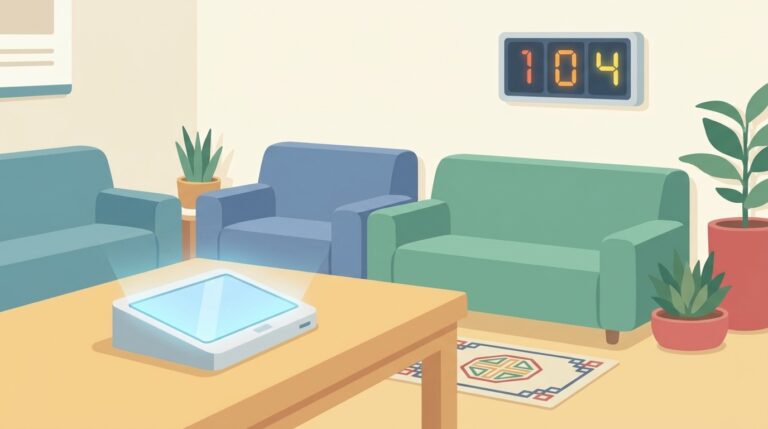
Imagine this: You walk into a sleek, bustling bank in Seoul. Your heart is racing because you need to open a bank account or wire some money. You step through the glass doors, and instead of a friendly human greeter, you are met with a loud, rhythmic “Ding-Dong!” chime echoing every few seconds. In front of you stands a glowing touchscreen kiosk—the gatekeeper of the bank.
Suddenly, your mind goes blank. Which button do you press? What if you pull the wrong ticket and wait an hour in the wrong line?
Don’t worry! This is a classic “foreigner panic” moment that almost every expat in Korea has faced. Today, we are going to conquer the dreaded 번호표 (beon-ho-pyo / waiting ticket) machine together. After reading this guide, you will walk into any Korean bank, pull your ticket with absolute confidence, and understand exactly what to do when your number flashes on the screen. Let’s dive in!
Phase 2: Deep Dive into 3 Key Expressions (핵심 표현 3선 심층 분석)
Let’s master the three most critical expressions you need to survive the waiting game.
1. 번호표를 뽑아야 해요. (Beon-ho-pyo-reul ppob-a-ya hae-yo.)
- Pronunciation Analogies: “Bun-ho-pyo” (sounds like “bun” + “ho” + “pure” without the ‘re’ sound) + “ppob-ah-yah” (double ‘p’ sound, like the ‘p’ in ‘spit’) + “hae-yo”.
- Meaning: “You have to pull/draw a waiting ticket.”
- K-Culture Moment: In K-Dramas, you often see characters rushing into a bank, frantically looking for this machine to grab a ticket before a long line forms.
- Editor’s Insight: The verb 뽑다 (ppob-da) literally means “to pluck,” “to extract,” or “to choose.” In Korea, you “pluck” a ticket just like you pluck a clover or pull a doll from a claw machine.
- Situation Spectrum:
- Casual (to friends): 번호표 뽑아야 돼. (⚠️)
- Semi-formal (to strangers/staff): 번호표를 뽑아야 해요. (✅)
- Formal (official notices): 번호표를 뽑으셔야 합니다. (✅)
- 🤔 Think About It: Why does Korea use physical tickets in such a highly digitized society? It maintains social order and ensures the “first come, first served” (선착순) value is strictly respected.
2. 제 차례인가요? (Je cha-rye-in-ga-yo?)
- Pronunciation Analogies: “Jeh” + “cha-ryeh” (like “charity” without the ‘ity’) + “in-gah-yo”.
- Meaning: “Is it my turn?”
- K-Culture Moment: Imagine sitting in a crowded waiting area. The chime rings, but you missed the number flash on the screen. You walk up to the counter hesitantly and ask this politely.
- Editor’s Insight: 차례 (cha-rye) means “turn” or “order.” Using this with the polite ending “-인가요?” shows you are respectful and polite, avoiding sounding demanding.
- Situation Spectrum:
- Casual: 내 차례야? (⚠️)
- Semi-formal: 제 차례인가요? (✅)
- Formal: 제 차례입니까? (✅)
3. 대기가 얼마나 길어요? (Dae-gi-ga ol-ma-na gir-o-yo?)
- Pronunciation Analogies: “Dae-ghee-gah” (like “day” + “geese”) + “ol-mah-nah” + “gheer-oh-yo” (like “gear” + “oh” + “yo”).
- Meaning: “How long is the wait?”
- K-Culture Moment: Perfect for lunch breaks when bank lobbies turn into chaotic waiting rooms filled with local office workers.
- Editor’s Insight: 대기 (dae-gi) translates to “waiting” or “queue.” In fast-paced Korea, asking this helps you decide whether to grab a quick coffee next door or wait it out.
- Situation Spectrum:
- Casual: 대기 길어? (🚫 too blunt for bank staff)
- Semi-formal: 대기 얼마나 길어요? (✅)
- Formal: 대기 시간이 얼마나 걸립니까? (✅)
Phase 3: Textbook Korean vs. Real-Life Korean (교과서 한국어 vs. 진짜 한국어)
Let’s compare what textbooks teach you versus how Koreans actually speak in the lobby.
Situation 1: Getting a ticket
- 📖 Textbook Style: “대기 번호표를 받으십시오.” (Please receive a waiting number ticket.)
- 🗣️ Real-Life Style: “번호표 먼저 뽑으세요.” (Pull the ticket first.)
- 💡 Why the difference? Textbook Korean uses passive, overly formal instructions. Real-life staff use the active, friendly but polite command “-으세요” to guide you quickly.
Situation 2: Waiting for your turn
- 📖 Textbook Style: “당신의 순서를 기다리십시오.” (Wait for your order.)
- 🗣️ Real-Life Style: “차례 되면 불러드릴게요.” (I’ll call you when it’s your turn.)
- 💡 Why the difference? “순서” is grammatically correct but feels clinical. “차례” sounds warmer and is the go-to word used by tellers to reassure waiting customers.
Phase 4: K-Culture Deep Dive & Non-verbal Manners (비언어적 매너)
4-1. The Art of “Nunchi” (눈치) at the K-Bank
When you enter a Korean bank, take a quick 3-second look around. If you see a security guard (usually wearing a neat uniform), do not try to search for the machine yourself. Approach them, make eye contact, and give a polite nod. They will often press the correct button on the kiosk for you! This is utilizing 눈치 (Nunchi – situational awareness).
4-2. The Digital Chime Ritual
In Korea, banks are incredibly efficient. When your number is called, you will hear a high-pitched “Ding-Dong!” sound, and your number will flash on a large LED screen over the specific counter (창구).
* Manner Tip: Walk quickly to the counter. Do not jog, but maintain a brisk pace. Bow slightly as you sit down, and place your ID card on the counter immediately to show you are ready.
Phase 5: Interactive Roleplay Scenario (실전 롤플레이 시나리오)
Setting: A modern Hana Bank branch in Mapo, Seoul.
Characters:
* 민지 (Min-ji): A friendly bank security officer who loves helping foreigners.
* Alex (You): An expat needing to exchange currency.
1. 민지: (Politely bowing) 안녕하세요! 어떤 업무 때문에 오셨어요?
   (An-nyeong-ha-se-yo! Eo-tteon eob-mu ttae-mun-e o-syeot-seo-yo?)
   "Hello! What brings you to the bank today?"

2. Alex: (Slightly nervous) 아, 환전하려고 하는데요...
   (Ah, hwan-jeon-ha-ryeo-go ha-neun-de-yo...)
   "Ah, I'd like to exchange some money..."

3. 민지: (Smiling, pointing at the kiosk) 아, 그러시면 이 번호표를 뽑으셔야 해요.
   (Ah, geu-reo-si-myeon i beon-ho-pyo-reul ppob-eu-syeo-ya hae-yo.)
   "Ah, in that case, you have to pull this waiting ticket."

4. Alex: (Pressing the button) 감사합니다. 혹시 대기가 얼마나 길어요?
   (Gam-sa-ham-ni-da. Hok-si dae-gi-ga ol-ma-na gir-o-yo?)
   "Thank you. By the way, how long is the wait?"

5. 민지: (Checking the screen) 앞에 세 분 계셔서 한 5분만 기다리시면 돼요.
   (Ap-e se bun gye-seo-seo han o-bun-man gi-da-ri-si-myeon dwae-yo.)
   "There are three people ahead of you, so you only need to wait about 5 minutes."

6. Alex: (Relieved) 다행이네요. 어디서 기다려야 하죠?
   (Da-haeng-i-ne-yo. Eo-di-seo gi-da-ryeo-ya ha-jyo?)
   "That's a relief. Where should I wait?"

7. 민지: (Pointing to the sofa area) 저기 대기실 소파에 앉아 계시면 번호 불러드릴게요.
   (Jeo-gi dae-gi-sil so-pa-e an-ja gye-si-myeon beon-ho bul-leo-deu-ril-ge-yo.)
   "If you sit on the waiting lounge sofa over there, we will call your number."

8. Alex: (Nodding politely) 네, 정말 감사합니다!
   (Ne, jeong-mal gam-sa-ham-ni-da!)
   "Yes, thank you so much!"
🔀 Your Turn: Interactive Choice!
Your number “104” flashes on the screen with a loud chime, but you are in the middle of replying to a text message. What do you do?
* A) Keep texting for 2 minutes, then slowly walk over.
* Feedback (Bad): High risk! If you don’t show up within 15-30 seconds, the teller will hit “Next” and your turn is gone. You will have to pull a new ticket.
* B) Put your phone down immediately, walk briskly to Counter 3, and say “안녕하세요.”
* Feedback (Best): Perfect! This shows you respect the fast-paced Korean banking system and the teller’s time.
* C) Run to the counter while shouting “저요!” (Me!)
* Feedback (Risk): Too loud! While funny, banks are quiet spaces. A brisk walk and a polite smile are enough.
Phase 6: 10-Second Shadowing Drill (10초 감정 섀도잉)
Practice saying these lines with the exact emotional tone a native would use. The / marks represent natural pauses.
- [😊 Confident & Polite]
번호표를 / 어디서 / 뽑아야 해요?
(Beon-ho-pyo-reul / eo-di-seo / ppob-a-ya hae-yo?)
“Where should I pull the waiting ticket?” -
[🥺 Slightly Anxious but Sweet]
혹시 / 제 차례 / 맞나요?
(Hok-si / je cha-rye / man-na-yo?)
“Is it by any chance my turn?”
Phase 7: K-Culture Mini Dictionary (K-Culture 미니 사전)
- 번호표 (Beon-ho-pyo): Literal translation is “number card.” The physical thermal paper slip showing your queue number.
- 대기실 (Dae-gi-sil): Waiting room/lounge. Usually equipped with comfy sofas, water dispensers, and sometimes phone chargers.
- 창구 (Chang-gu): The service counter window where you interact with the bank clerk behind a glass screen.
- 업무 (Eob-mu): Work, business, or task. Clerks will ask what “업무” you have today to route you correctly.
Phase 8: Survival Kit for Travelers (여행자를 위한 생존 키트)
TOP 3 Emergency Phrases
- 이거 어떻게 해요? (I-geo eo-tteo-ke hae-yo?)
- Pro Tip: Use this while pointing at the ticket machine if you are completely lost. Someone will jump in to help!
- 외국인이에요. (Wae-guk-in-i-e-yo.)
- Pro Tip: “I am a foreigner.” Instantly lowers the linguistic pressure and prompts the clerk to speak slower.
- 여권 괜찮아요? (Yeo-gwon gwaen-chan-a-yo?)
- Pro Tip: “Is my passport okay (as ID)?” Essential since expats and tourists use passports instead of a Korean Registration Card.
📝 Editor’s Travel Note
Most major bank branches in tourist areas like Myeongdong, Hongdae, or Gangnam have English-speaking staff. Before you visit a branch, try searching for the bank location on the Naver Map App download to see reviews regarding foreigner-friendliness. Note: Korean banks close early! Standard operating hours are 09:00 AM to 04:00 PM.
Phase 9: “Going Deeper” (한 발 더 깊이)
In western countries, banks might have a single queued line where people stand and wait on their feet. In Korea, the 번호표 (waiting ticket) system is an absolute necessity due to the extreme value placed on efficiency and personal comfort. Koreans dislike wasted time, but they also value structured order. Sitting comfortably on a sofa while a digital board manages the flow allows everyone to maintain personal space and mental peace in crowded city centers. It is a perfect blend of high-tech organization and social comfort.
💬 Your Turn: How does queuing at a bank look in your country? Do you use digital tickets, or do you stand in a physical line? Let me know in the comments below!
Phase 10: FAQ & Common Mistakes (FAQ Schema & 오해 방지)
Q: What should I do if the ticket kiosk has only Korean text?
A: Look for the two most common options on the screen: 입금/출금 (Deposit/Withdrawal) and 개인 업무 (Personal Banking/General inquiries). If you are doing basic things like currency exchange or opening an account, press 개인 업무.
Q: Can I leave the bank and come back if the waiting queue is long?
A: Yes, but keep in mind that if your number is called and you aren’t there, they skip you immediately. A wait of 5-10 people usually takes less than 15 minutes due to fast Korean processing speeds.
Q: Do I need a Korean phone number to get a ticket?
A: No, you just press the physical screen button and a paper ticket pops out instantly. No phone registration is needed.
🚨 Common Mistakes Warning Board
- Mistake 1: Waiting without a ticket. Sitting down on the sofa thinking someone will call you naturally.
- Correct Action: Walk straight to the machine and pull a ticket the second you enter.
- Mistake 2: Missing the counter number. Walking to the wrong counter when your number is called.
- Correct Action: Match the counter number on your paper ticket with the flashing LED light on the screen above the desks.
- Mistake 3: Throwing away the ticket early.
- Correct Action: Keep the ticket in your hand until the teller physically takes it from you to confirm your identity.
Phase 11: Action Missions (액션 미션)
- Bronze Mission: Read the expressions in Phase 2 out loud three times using the pronunciation analogies.
- Silver Mission: Write down “번호표를 뽑아야 해요” on your phone notes app so you can look at it next time you go to a Korean bank.
- Gold Mission: Go to a local Korean bank (or a Korean grocery store with a deli counter if you are abroad) and successfully grab a waiting ticket yourself!
🎮 K-Culture Bonus Mission: Watch any modern slice-of-life K-Drama (like Our Blues or My Mister) and try to spot a scene inside a bank. Listen closely to hear the “Ding-Dong” chime!
Phase 12: Interactive Quiz Challenge (인터랙티브 퀴즈)
Test your knowledge to make sure you’re bank-ready!
- What is the Korean word for a waiting ticket?
- A) 영수증 (Yeong-su-jeung)
- B) 번호표 (Beon-ho-pyo)
- C) 신용카드 (Sin-yong-ka-deu)
- Which verb is used for “pulling/drawing” a ticket?
- A) 먹다 (Meok-da)
- B) 가다 (Ga-da)
- C) 뽑다 (Ppob-da)
- True or False: If you miss your number call, the teller will hold your spot for 10 minutes.
- A) True
- B) False
🔍 Check the Answers & Explanations!
- Correct Answer: B) 번호표 (Beon-ho-pyo). (영수증 means receipt, and 신용카드 means credit card).
- Correct Answer: C) 뽑다 (Ppob-da). We “pluck” or “pull” a ticket in Korean.
- Correct Answer: B) False. Korean banks move fast! If you aren’t there when the chime rings, they move directly to the next person.







