

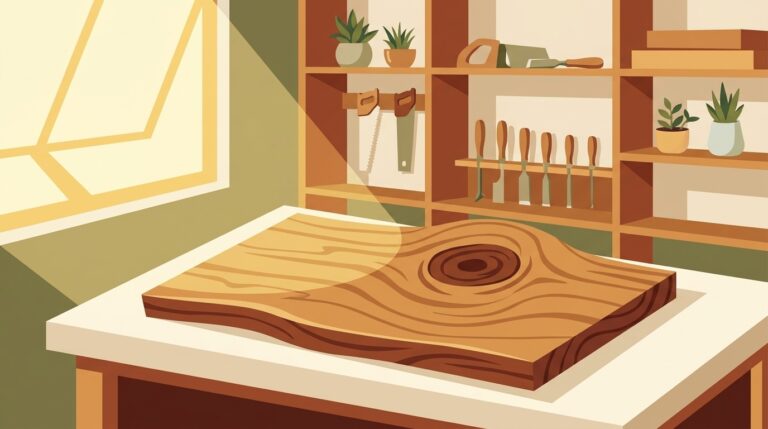
Master Woodworking in Korean: Decoding the Secrets of Solid Wood (원목)
안녕하세요! (Annyeonghaseyo!) I’m your Daily Hangul Chief Editor, and your trusted local culture guide. If you have progressed to the C1 level, you are no longer just ordering food or asking for directions. You are ready to dive deep into highly specialized, hands-on cultural domains.
Today, we are stepping into the aromatic, cozy world of Korean DIY furniture making and woodworking (가구 DIY와 목공).
Have you ever walked into a trendy cafe in Seongsu-dong (성수동) or a serene Hanok (한옥) in Bukchon and felt drawn to the warm, rustic wooden tables? Or perhaps you’ve visited a woodworking workshop (공방 – gong-bang) in Euljiro to craft your own custom piece, only to feel completely lost when the master craftsman starts talking about “수축 (contraction)”, “옹이 (knots)”, or “나무의 결 (wood grain)”?
Many advanced learners face a sudden wall when encountering native technical jargon. Standard dictionary definitions often fail to capture the sensory and aesthetic nuances that Korean artisans use. This guide will elevate your vocabulary, teach you the unspoken etiquette of Korean workshops, and help you speak like a true connoisseur of solid wood (원목 – won-mok).
Phase 2: Core Expressions Deep Dive
1. 나무의 결이 살아있다 (namu-ui gyeol-i sal-a-it-da)
- Pronunciation: [nah-moo-ui gyuhl-ee sahl-ah-eet-dah]
- Meaning: “The wood grain is alive” (The natural grain pattern is vibrant and beautifully preserved).
- K-Culture Moment: You will hear this constantly on Korean interior design YouTube channels (like O-House / 오늘의집) or home-makeover shows when a designer praises a premium raw wood table slab.
- Editor’s Insight: In Korean, 결 (gyeol) refers to a wave, grain, or texture. It represents natural, organic flow. Interestingly, Koreans also apply this to personality: “결이 맞다” (to have matching vibes/wavelengths). When wood grain is “alive” (살아있다), it means it hasn’t been overly artificialized.
- Situation Spectrum: Casual ✅ / Semi-formal ✅ / Formal ✅
- 🤔 Think About It: How does your native language describe the “vibe” of natural wood? Does it use active verbs like “living” (살아있다), or is it more static?
2. 옹이가 멋스럽다 (ong-i-ga meot-sreu-rop-da)
- Pronunciation: [ong-ee-gah mte-seu-rop-dah]
- Meaning: “The knots in the wood look tasteful/artistic.”
- K-Culture Moment: In healing slice-of-life K-dramas, a character building a bookshelf might fondle a rough spot on the wood and remark how the “옹이” gives it character.
- Editor’s Insight: Historically, wood knots (옹이) were sometimes treated as defects. However, modern Korean DIY culture embraces them under the concept of 멋스럽다 (naturally stylish/tasteful—a step above the basic ‘멋있다’). It signifies appreciating natural imperfections.
- Situation Spectrum: Casual ✅ / Semi-formal ✅ / Formal ✅
- 🤔 Think About It: In your culture, are wood knots seen as flaws to be sanded away, or as natural art to be highlighted?
3. 나무가 숨을 쉬다 (namu-ga sum-eul swi-da)
- Pronunciation: [nah-moo-gah soom-eul swee-dah]
- Meaning: “The wood breathes” (referring to solid wood expanding and contracting with humidity).
- K-Culture Moment: Hanok (Korean traditional house) master builders always emphasize that the wooden pillars “breathe” to naturally regulate indoor humidity through Korea’s harsh winters and humid summers.
- Editor’s Insight: Koreans hold an organic view of natural materials. Solid wood (원목), traditional clay pots (옹기), and mulberry paper (한지) are all spoken of as active, living organisms that “breathe” (숨을 쉬다).
- Situation Spectrum: Casual ✅ / Semi-formal ✅ / Formal ✅
- 🤔 Think About It: Why do you think Korean culture places such high value on materials that “breathe” rather than perfectly sealed, non-moving synthetic materials?
Phase 3: Textbook Korean vs. Real Korean
Situation 1: Describing wood that is highly workable for DIY beginners
- 📖 Textbook Korean: “이 목재는 가공이 용이합니다.” (This lumber is easy to process.) – Too clinical, sounds like a factory manual.
- 🗣️ 진짜 (Real) Korean: “이 원목은 손을 덜 타서 초보자가 만지기 딱 좋아요.” (This solid wood is less finicky/requires less delicate care, so it’s perfect for beginners to work with.)
- 💡 Why the difference?: “손을 타다” literally means “to be influenced/worn by hands.” For wood, it means it reacts sensitively to touch or humidity. “만지다” (to touch/handle) is the preferred casual verb for working with wood in workshops.
Situation 2: Warning about wood warping due to humidity
- 📖 Textbook Korean: “습도로 인해 목재가 변형될 수 있습니다.” (Due to humidity, the wood may deform.) – Sounds like a warning label on an imported box.
- 🗣️ 진짜 (Real) Korean: “관리 잘못하면 나무가 울거나 휠 수 있어요.” (If not cared for properly, the wood might ‘cry’ [warp] or bend.)
- 💡 Why the difference?: Artisans rarely use the dry Sino-Korean word “변형 (deformation)”. Instead, they say the wood “cries” (울다 – for surface wrinkling/bubbling) or “bends” (휘다 – for warping).
Phase 4: K-Culture Deep Dive & Non-Verbal Manners
4-1. Touch and Tactile Etiquette (눈치 & 제스처)
When choosing wood in a Korean workshop, don’t just stare. Softly run your flat palm along the grain (결) while nodding slowly. This gesture shows you respect the material.
If you are inspecting a master craftsman’s (목수님 – mok-su-nim) completed work, always ask for permission before touching: “한번 만져봐도 될까요?” (May I touch it?).
4-2. The “Wood-Slab” Cafe Culture (우드슬랩과 떡판)
Walk into any high-end cafe in Seoul, and you will see a massive, single-piece solid wood communal table. In Korea, these are called 우드슬랩 (wood slabs) or colloquially 떡판 (tteok-pan). The term “떡판” comes from the flat, thick wooden boards traditionally used to pound rice cakes (떡). Appreciating these massive slabs is a prominent interior trend in Korea, representing a luxury return to raw nature amidst concrete high-rises.
Phase 5: Real-Life Roleplay Scenario
Setting: A cozy, sawdust-scented woodworking workshop in Euljiro (을지로), Seoul.
Characters:
* 지민 (Jimin): The passionate head artisan of the workshop (공방장).
* Sarah: A design enthusiast (C1 level Korean speaker) looking to select wood for a custom coffee table.
- 지민: 어서 오세요! 어떤 가구 만드시려고요? 사포 소리가 커서 잘 안 들렸죠?
- Sarah: 아, 괜찮습니다! 거실에 둘 작은 커피 테이블을 직접 만들고 싶어서 원목을 좀 보러 왔어요.
- 지민: (구석의 목재 데크를 가리키며) 잘 오셨어요. 여기 소프트우드인 레드파인하고, 저기 하드우드인 월넛, 오크가 있어요. 구상하시는 느낌이 있으신가요?
- Sarah: 저는 인위적인 느낌보다는 나무의 결이 아주 제대로 살아있는 원목이 좋아요. 약간 묵직한 느낌도 좋고요.
- 지민: (미소를 지으며) 그러면 무조건 월넛(호두나무)이죠! 마침 어제 들어온 게 결이 아주 예술이에요. 한번 보실래요?
- Sarah: 와… 진짜네요. 이쪽 구석에 있는 옹이도 정말 멋스럽게 들어갔어요.
- 지민: 안목이 높으시네요! 다만 원목은 계절에 따라 숨을 쉬기 때문에, 겨울엔 수축하고 여름엔 팽창해요. 집안 습도 조절을 잘해주셔야 오래 씁니다.
- Sarah: 네, 알고 있어요. 조금 손이 가더라도 오래 두고 볼 수 있는 튼튼한 놈으로 데려가고 싶어요.
🔀 Interactive Choice Point
How should Sarah respond to finalize her design with Jimin?
- Option A: “그럼 이걸로 결정할게요. 혹시 제가 초보자인데 집성목이 나을까요, 통원목이 나을까요?”
- Option B: “나무가 울면 제가 집에서 다리미로 펴면 되니까 그냥 이 통원목으로 주세요.”
- Option C: “월넛은 너무 비싸니까 대충 가공된 무늬목 합판으로 대치해 주세요.”
🧐 Expert Feedback:
- Best Choice (Option A): Excellent! Asking about 집성목 (glued laminated wood) vs. 통원목 (solid single slab) shows deep knowledge of woodworking and invites the master to give valuable professional advice.
- Risk (Option B): Oh dear! Trying to “iron” (다리미로 펴다) warped wood will ruin the wood’s fibers permanently and puzzle the master craftsman.
- Bad (Option C): Ruining the vibe! Switching abruptly to cheap veneer (무늬목) or plywood (합판) after praising natural wood grain goes against the premium spirit of custom crafting.
Phase 6: 10-Second Emotion Shadowing Drill
Practice saying these like a true native! Focus on the rhythm and emotional markers.
- “원목이라 그런지 / 결이 아주 예술이네요!”
- [🤩 Eyes shining with genuine artistic appreciation]
- Pronunciation: [won-mok-ee-ra geu-reon-ji / gyeol-ee ah-ju ye-sul-ee-ne-yo!]
- “습도 조절 안 하면 / 나무가 울거나 휠 수 있으니까 / 신경 써야겠어요.”
- [😟 Speaking seriously, showing you understand the delicate nature of real wood]
- Pronunciation: [seub-do jo-jeol ahn ha-myeon / nah-moo-gah wool-geo-nah hwi-sul-it-eu-ni-kka / shin-gyeong sseo-yah-get-eo-yo.]
Phase 7: K-Culture Mini Dictionary
- 집성목 (Jipseong-mok) | Glued Laminated Wood
- Smaller pieces of wood bonded together. It warps less and is cheaper than whole slabs, making it highly recommended for DIY beginners.
- 통원목 (Tong-wonmok) | Solid Wood Slab / Live Edge
- A single, undivided piece of wood cut straight from the log. It preserves the natural bark line and is highly prized and expensive.
- 사포질 (Sapo-jil) | Sanding
- The physical act of using sandpaper (사포) to smooth the wood. In Korean culture, intense repetitive work like “사포질” is often compared to clearing one’s mind (spiritual training).
- 마감칠 (Magam-chil) | Finishing/Coating
- Applying oils, wax, or varnish to seal the wood. A good “마감칠” prevents moisture damage and makes the “결” pop.
Phase 8: Traveler’s Survival Kit
Top 3 Woodworking Survival Phrases
- “이 나무는 수축이나 팽창이 심한 편인가요?”
- Is this wood prone to severe contraction or expansion? (Use this to assess wood stability).
- “집성 방식을 핑거조인트(Finger-joint) 말고 솔리드(Solid) 방식으로 구하고 싶어요.”
- I want a solid-joint block instead of a finger-joint block. (An advanced phrase that will instantly earn you the respect of any workshop owner).
- “샌딩기(Sanding machine) 사용법 좀 알려주실 수 있나요?”
- Could you teach me how to use the orbital sander?
Editor’s Travel Note 📌
If you want to experience Korea’s authentic lumber and DIY ecosystem, take the subway to Euljiro 4-ga Station (을지로4가역). Exit toward the Euljiro furniture street. You will find tiny, historic shops selling everything from raw exotic timbers to brass handles. Use Naver Map (네이버 지도 앱 다운로드) to search for “목공방” (woodworking workshops) or “특수목” (exotic wood suppliers) to find hidden gems.
Phase 9: ” 한 발 더 깊이” (Deep Thought Essay)
The Metaphor of “Ong-i” (옹이) in the Korean Soul
In Korean, the wood knot (옹이) is more than just a botanical feature. It is deeply embedded in the Korean psyche as a metaphor for unresolved sorrow or emotional trauma. When Koreans say “가슴에 옹이가 박혔다” (A knot has formed in my heart), they mean they have carried a deep emotional wound for a long time.
Yet, just as a woodworking artisan looks at a gnarled, knotted walnut piece and calls it “멋스럽다” (tasteful), Korean culture deeply values the beauty that comes from surviving hardships. A piece of wood with knots is stronger; a human heart with “옹이” is often deeper and more empathetic.
💬 Your Turn: Have you ever experienced a phase in your life that felt like a painful “옹이” (knot), but eventually made you a more resilient and beautiful person? Share your stories in the comments below!
Phase 10: FAQ & Common Mistakes
Q: What is the difference between 원목 (Won-mok) and MDF/Plywood (합판) in Korea?
A: 원목 is 100% natural solid wood cut directly from trees. MDF is made by breaking down wood residuals into fibers, mixing with wax and resins, and pressing them into panels. Plywood (합판) consists of thin layers of wood veneer glued together. In Korea, while MDF is used for cheap, mass-produced furniture, “원목” is considered a lifetime investment.
Q: Can I bring custom wood items I made in Korea back to my home country?
A: Customs and quarantine laws in many countries (like Australia, the US, or the EU) are extremely strict regarding raw wood. If you plan to export your creation, make sure it is completely sealed with heavy varnish or oil (완전 마감), contains no bark, and is accompanied by a treatment certificate if necessary.
Q: Why does the artisan keep warning me about the winter season in Korea?
A: Korea experiences extreme humidity fluctuations—bone-dry and freezing in winter (due to Siberian winds and indoor floor heating ‘온돌’), but incredibly humid during the summer monsoon season (장마). This extreme shift makes solid wood react violently, meaning poor-quality joins will crack.
🚨 Common Mistakes Board
- Saying “진짜 나무” instead of “원목”: While “진짜 나무” (real wood) is grammatically correct, pros and advanced buyers always use the elegant Sino-Korean word 원목 (Won-mok).
- Ignoring the grain direction (결 방향): When sanding (사포질), always sand along the grain, never across. Sanding across will scar the wood deeply.
- Confusing ‘바니시’ (Varnish) with ‘오일’ (Oil): Varnish forms a plastic-like protective layer on top, while oil penetrates the wood fibers. Mixing them up during







