

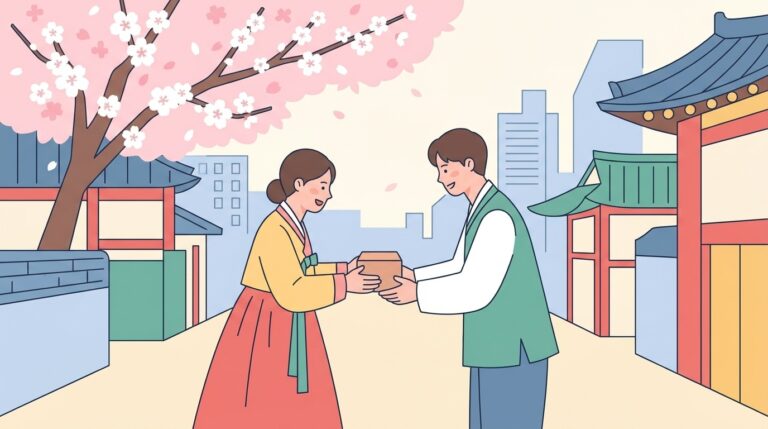
Phase 1: Welcome to the World of Danggeun!
안녕하세요! (An-nyeong-ha-se-yo!) Hello, my lovely language learners! I’m your chief editor at Daily Hangul.
Imagine this: You are living in Seoul, and you spot a gorgeous, retro-style toaster on 당근마켓 (Dang-geun-ma-ket)—Korea’s ultra-popular second-hand neighborhood app. The price is unbelievable! But a tiny seed of worry pops up: Does this thing actually work? Or am I buying a cute piece of junk?
Asking a seller about an item’s condition in a foreign language can feel incredibly nerve-wracking. You don’t want to sound rude or accusatory, but you absolutely need to know the truth! Today, we are going to unlock the magic phrases that will make you sound like a polite, savvy local. By the end of this guide, you will be able to verify if any gadget works perfectly, with zero stress.
Phase 2: The “Golden Three” Expressions
Let’s dive into the three most essential phrases you need for any second-hand transaction in Korea.
1. 작동 잘 돼요? (Jak-dong jal dwae-yo?)
- Pronunciation: Jak-dong jal dwae-yo? (Sounds like: “Jock-dong jahl-dwail-yo?”)
- Meaning: Does it work well?
- K-Culture Moment: You’ll hear this constantly in Korean lifestyle dramas where college students are furnishing their first tiny studio apartments (One-room / 원룸) on a tight budget.
- Editor’s Insight: “작동” (jak-dong) means operation/functioning, and “잘 돼요” (jal dwae-yo) means “goes well.” Put together, it’s the friendliest, most natural way to ask if an electronic device is in working order.
- Situation Spectrum: Casual ✅ | Semi-formal ✅ | Formal ⚠️
- 🤔 Think About It: In English, we often ask “Is it broken?” which focuses on the negative. Koreans prefer to ask “Does it work well?” (작동 잘 돼요?), focusing on the positive functioning. How does this reflect the polite nature of Korean communication?
2. 하자 있어요? (Ha-ja is-seo-yo?)
- Pronunciation: Ha-ja is-seo-yo? (Sounds like: “Ha-jah ees-suh-yo?”)
- Meaning: Are there any defects or flaws?
- K-Culture Moment: Used by smart shoppers buying high-end second-hand clothes or collectibles in Seoul’s trendy vintage shops.
- Editor’s Insight: “하자” (ha-ja) means a defect, flaw, or scratch. This is a very neat, clean word to use instead of long, complicated explanations.
- Situation Spectrum: Casual ✅ | Semi-formal ✅ | Formal 🚫
- 🤔 Think About It: Directly pointing out flaws can sometimes feel harsh. By using the polite sentence ender “~요”, you soften the blow while still getting your answer.
3. 거의 새 거네요 (Geoi sae geo-ne-yo)
- Pronunciation: Geoi sae guh-ne-yo (Sounds like: “Guh-ee sae guh-neh-yo”)
- Meaning: It is almost new!
- K-Culture Moment: What you say when meeting a seller face-to-face and realizing the item looks pristine. It instantly melts any awkwardness between strangers.
- Editor’s Insight: “거의” (geoi) means almost, “새 거” (sae geo) means new item, and the ending “~네요” (ne-yo) expresses a pleasant surprise.
- Situation Spectrum: Casual ✅ | Semi-formal ✅ | Formal ⚠️
- 🤔 Think About It: Complimenting the item is a fantastic way to build rapport (called 정/Jeong in Korea) before completing a transaction.
Phase 3: Textbook Korean vs. Real Korean
Let’s compare the stiff textbook phrases with what Koreans actually type in their chat apps!
Situation 1: Asking if a machine operates
- 📖 Textbook Korean: “이 기계는 정상적으로 작동합니까?” (I gi-gye-neun jeong-sang-jeok-eu-ro jak-dong-hap-ni-ka? – “Does this machine operate normally?”)
- 🗣️ Real Korean: “작동 잘 돼요?” (Jak-dong jal dwae-yo? – “Does it work well?”)
- 💡 Why the difference? The textbook version sounds like a formal quality inspector at a factory. The real version is cozy and friendly, perfect for neighborhood app chatting.
Situation 2: Asking if there are scratches or damages
- 📖 Textbook Korean: “제품에 결함이 존재합니까?” (Je-pum-e gyeol-ham-i jon-jae-hap-ni-ka? – “Does a defect exist in the product?”)
- 🗣️ Real Korean: “자잘한 기스나 하자는 없나요?” (Ja-jal-han gi-seu-na ha-ja-neun eop-na-yo? – “Are there any small scratches or defects?”)
- 💡 Why the difference? “기스” (gi-seu) is a very common Korean slang word for a scratch. Using it makes you sound like a true insider!
Phase 4: K-Culture Deep Dive & Non-verbal Manners
4-1. The Double-Hand Handshake (Nunchi and Hands)
When you meet a seller in person (usually near a subway station exit!), never grab the item with one hand.
* The Gesture: Always receive the item and hand over cash (if not paying via bank transfer) with both hands. It shows immense respect.
* Nunchi (눈치): Read the room. If the seller is in a rush, don’t hold them there testing the machine for 10 minutes. A quick 10-second check and a polite bow is the ultimate golden standard.
4-2. The “Karrot Market” (당근마켓) Phenomenon
In Korea, “Dang-geun” (which literally means carrot) has become a verb! Koreans say, “너 그거 당근했어?” (Did you carrot that?). It is a trust-based app where you only trade with people in a 2 to 6 km radius. Because of this localized closeness, politeness is extremely high.
Phase 5: Real-life Roleplay Scenario
Here is a realistic scenario of you buying a second-hand tablet from Junho (the seller) near Hongik University Station Exit 3.
- Characters:
- You (The Smart Buyer)
- Junho (The Friendly Seller)
- Junho: [😊 Smiling and waving] 안녕하세요! 당근… 맞으시죠?
- (An-nyeong-ha-se-yo! Dang-geun… ma-jeu-si-jyo?)
- “Hello! You are here for the Karrot trade, right?”
- You: [👋 Bowing slightly] 네, 맞아요! 반갑습니다.
- (Ne, ma-ja-yo! Ban-gap-seub-ni-da.)
- “Yes, that’s right! Nice to meet you.”
- Junho: [💼 Carefully taking out the tablet] 여기 제품 있어요. 한번 확인해 보세요.
- (Yeo-gi je-pum is-seo-yo. Han-beon hwa-gin-hae bo-se-yo.)
- “Here is the product. Please take a look and check it.”
- You: [📱 Inspecting the screen] 와, 거의 새 거네요!
- (Wa, geoi sae geo-ne-yo!)
- “Wow, it’s almost new!”
- You: [👉 Pointing to the power button] 이거 작동 잘 돼요?
- (I-geo jak-dong jal dwae-yo?)
- “Does this work well?”
- Junho: [👍 Nodding confidently] 네, 아까 충전도 다 해왔어요. 아주 잘 돼요.
- (Ne, a-kka chung-jeon-do da hae-was-seo-yo. A-ju jal dwae-yo.)
- “Yes, I fully charged it earlier. It works very well.”
- You: [😊 Relieved] 혹시 사용하면서 하자는 없었나요?
- (Hok-si sa-yong-ha-myeon-seo ha-ja-neun eop-was-na-yo?)
- “By any chance, were there any defects while using it?”
- Junho: [🤝 Pointing to a tiny spot] 액정에 아주 미세한 기스 하나 말고는 전혀 없어요!
- (Aek-jeong-e a-ju mi-se-han gi-se ha-na mal-go-neun jeon-hyeop-seo-yo!)
- “Except for one tiny scratch on the screen, none at all!”
🔀 Your Move: What do you say next?
- Choice A: “너무 비싸요. 깎아주세요!” (Neo-mu bi-ssa-yo. Kkak-a-ju-se-yo! – “It’s too expensive. Give me a discount!”)
- Choice B: “확인 감사합니다! 계좌번호 알려주시면 송금해 드릴게요.” (Hwa-gin gam-sa-hap-ni-da! Gye-jwa-beon-ho al-ryeo-ju-si-myeon song-geum-hae deu-ril-ge-yo. – “Thanks for confirming! Please let me know your account number, and I will transfer the money.”)
- Choice C: “이거 고장 나면 환불해 줘요.” (I-geo go-jang na-myeon hwan-bul-hae jwo-yo. – “If this breaks, give me a refund.”)
🧐 Feedback on Your Move:
- Best Choice – Choice B: Excellent! Asking for the bank account details nicely after checking is the standard and polite way to finalize a deal in Korea.
- Risk Choice – Choice A: Asking for a sudden discount (called 네고/Nego) face-to-face without discussing it beforehand on the app is considered bad mannered in Korea. Avoid this!
- Bad Choice – Choice C: This sounds too demanding and suspicious, especially since second-hand trades are usually “as-is” and final once handovers are completed.
Phase 6: 10-Second Shadowing Drill
Let’s practice the natural flow. Pay attention to the pauses (/) and speak with the right emotion!
- [😊 Asking with a bright, curious smile]
- 작동 / 잘 돼요? (Jak-dong / jal dwae-yo?)
- Try raising the pitch slightly at “잘 돼요?” like you are asking a light question.
- [🤩 Expressing genuine, pleasant surprise]
- 와, / 거의 / 새 거네요! (Wa, / geoi / sae geo-ne-yo!)
- Put energy into “와” (Wa) and smoothly slide down on “네요”.
Phase 7: K-Culture Mini Dictionary
- 당근마켓 (Dang-geun-ma-ket) | Karrot Market app. The holy grail of buying cheap and quality second-hand goods in local Korean neighborhoods.
- 네고 (Ne-go) | Short for “negotiation.” Means asking for a price discount. Often used as a verb: “네고 돼요?” (Can I get a discount?).
- 반택 (Ban-taek) | Short for 반값택배 (Half-price delivery). A system where you ship items from one convenience store (like GS25 or CU) to another. It’s super cheap!
- 직거래 (Jik-geo-rae) | Direct, face-to-face transaction. The safest way to trade high-value electronics.
Phase 8: Traveler’s Survival Kit
TOP 3 Survival Phrases
- 혹시 네고 가능한가요? (Hok-si ne-go ga-neung-han-ga-yo?) – “Is negotiations/discount possible by any chance?” (Pro Tip: Ask politely before you meet!)
- 직거래로 원해요. (Jik-geo-rae-ro won-hae-yo.) – “I want a face-to-face deal.”
- 택배비 포함인가요? (Taek-bae-bi po-ham-in-ga-yo?) – “Is the shipping fee included?”
Editor’s Travel Note:
To download the best second-hand platform, search for the 당근마켓 공식 앱 다운로드 on your App Store or Google Play Store. Note: You will need a Korean phone number to verify your account. For payment, online bank transfers (계좌이체) are highly preferred over cash!
Phase 9: One Step Deeper
In many Western cultures, second-hand trade is purely transactional and highly business-like. However, in Korea, there is a distinct undercurrent of 정 (Jeong)—a deep feeling of warm attachment and community. People often give free little gifts (called 덤/Deom or service) when they meet, like sweet treats, face masks, or small keychains. It makes neighborhood trading feel cozy, safe, and deeply human.
💬 Your Turn: Have you ever bought something second-hand in your country? Did the seller give you any free gifts? Let me know in the comments below!
Phase 10: FAQ & Common Mistakes
Q: Can I return the item if it stops working the next day?
A: Generally, no. In Korean second-hand markets, all sales are considered final unless the seller intentionally hid a major defect. This is why asking “작동 잘 돼요?” and inspecting it carefully at the meetup is so crucial!
Q: Is it okay to cancel a meetup at the last minute?
A: Doing a “잠수” (jam-su / ghosting) or canceling last minute ruins your “Manner Temperature” (매너온도) on the app. If you must cancel, message them at least 3 hours in advance.
Q: How do I pay the seller?
A: Most Koreans transfer money on the spot using mobile banking apps (Toss, KakaoPay). Having exact cash ready is also very polite.
🚨 Common Mistakes Alert!
- Saying “이거 고장 났어요?” (Is this broken?)
- Why it’s bad: It sounds aggressive and accusatory.
- Correct Action: Soften it to “혹시 하자가 있나요?” (Are there any defects?).
- Using informal language (Banmal)
- Why it’s bad: Even if the seller looks younger than you, always use polite style (~요 / ~습니다).
- Correct Action: Keep sentences ending in “요”.
- Asking for too much discount (터무니없는 네고)
- Why it’s bad: Offering half the listed price is considered rude and will get you blocked.
- Correct Action: Limit your discount request to around 5-10% max.
Phase 11: Action Mission & K-Culture Challenge
- Bronze Medal: Write the sentence “작동 잘 돼요?” on a piece of paper and say it aloud 5 times while looking at your phone.
- Silver Medal: Find a Korean drama clip on YouTube showing a second-hand trade or market scene, and try to catch if they say “네고” or “감사합니다”.
- Gold Medal: Draft a hypothetical message in Korean to buy a second-hand bicycle. Start with “안녕하세요!” and ask if it works well.
🎮 K-Culture Mission:
Watch an episode of the Korean variety show Hangout with Yoo (놀면 뭐하니?) or I Live Alone (나 혼자 산다) where members buy or sell items on Karrot Market. Observe their body language during the face-to-face meetups!
Phase 12: Interactive Quiz Challenge
Test your skills! Let’s see if you’re ready to trade in Seoul.
Q1. Which phrase means “Is there any defect or flaw?”
- A) 작동 잘 돼요?
- B) 하자 있어요?
- C) 거의 새 거네요
Q2. True or False: It is completely normal and polite to demand a discount face-to-face at the meetup point.
- A) True
- B) False
Q3. What is the standard physical gesture when handing over or receiving an item?
- A) Hand it over with one hand while looking at your phone.
- B) Use both hands and bow your head slightly.
🎉 Click here to reveal the answers and explanations!
- Q1 Answer: B
- Explanation: “하자” (ha-ja) means defect/flaw, and “있어요?” asks if it exists.
- Q2 Answer: B (False)
- Explanation: Face-to-face discount demands are considered very bad manners in Korea. Always negotiate through chat beforehand!
- Q3 Answer: B
- Explanation: Using both hands is a fundamental sign of respect in Korean social culture.







