

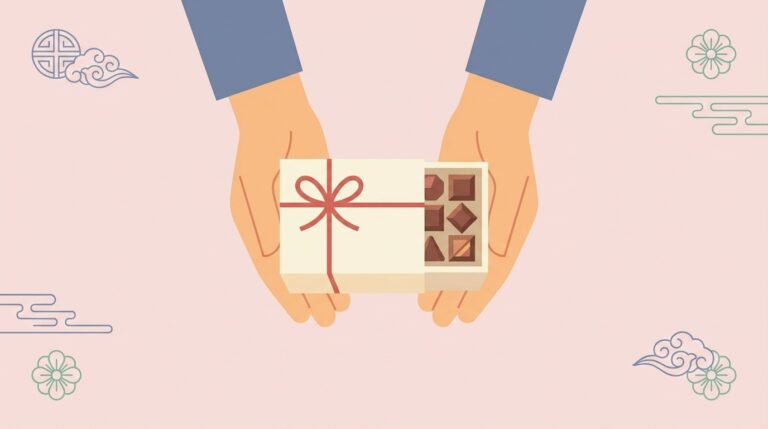
안녕하세요! Welcome back to Daily Hangul! 🍫
I’m your lead editor and your personal Korean culture navigator. Have you ever watched a romantic K-Drama and wondered, “Wait, why is she giving him chocolate on Valentine’s Day? Isn’t it usually the other way around?”
If so, you’ve stumbled upon one of Korea’s most unique, cute, and sometimes confusing romantic traditions! In Korea, Valentine’s Day (February 14th) is specifically the day when women give chocolates to men to express their feelings.
Whether you are planning to confess to your Korean crush, want to join in on the fun with your friends, or are simply curious about how romance works in Seoul, this guide is made just for you! Even if you are a complete beginner (A1), you will walk away with the exact words, manners, and cultural confidence to charm anyone this February 14th. Let’s dive in! 💕
💡 Phase 2: Core Expressive Trio (핵심 표현 3선)
Let’s learn the three most important, beginner-friendly Korean phrases for Valentine’s Day. They are simple to say but carry a lot of heart!
1. 초콜릿 받으세요! (Choko-rit badeuseyo!)
- Pronunciation: Cho-co-lit bah-deu-seh-yo! (Sounds like “Chocolit” + “bah-deu-say-yo”)
- Meaning: “Please accept these chocolates!”
- K-Culture Moment: This is the iconic line you see in high school K-Dramas where a girl shyly slides a box of chocolates onto her crush’s desk during recess.
- Editor’s Insight: This uses the polite ending
-세요(seyo). It is friendly, respectful, and safe to use with classmates, coworkers, or someone you don’t know very well yet. - Situation Spectrum: Casual ⚠️ | Semi-formal ✅ | Formal ✅
- 🤔 Think About It: In your culture, who usually gives gifts on Valentine’s Day? How does it feel to have a designated day where only one side initiates?
2. 제 마음이에요. (Je maeum-ieyo.)
- Pronunciation: Jeh mah-eum-ee-eh-yo. (Pronounce “mae-um” by smoothing “mah” and “um” together, like “may-um”)
- Meaning: “This is my heart.” / “This is a small token of my feelings.”
- K-Culture Moment: Often said while handing over a gift with both hands, looking slightly down with a warm smile.
- Editor’s Insight: This is a beautiful, poetic Korean expression. Instead of focusing on the physical gift, it focuses on the feeling (마음 – maeum) behind it. It’s sweet, sincere, and never fails to touch the recipient’s heart.
- Situation Spectrum: Casual ✅ | Semi-formal ✅ | Formal ⚠️
- 🤔 Think About It: Why do you think Korean culture emphasizes “heart” (마음) over the material value of a gift?
3. 이거 좋아해요? (Igeo joahayo?)
- Pronunciation: Ee-geo joh-ah-hae-yo? (The ‘h’ sound in “jo-ah” is almost silent, sounding like “jo-ah-heh-yo”)
- Meaning: “Do you like this?”
- K-Culture Moment: Asking this right after giving someone a box of their favorite sweet treat at a cozy Hanok cafe.
- Editor’s Insight: As an A1 learner, keep it simple! This is a great conversation starter to see if they like chocolate, candy, or sweet things in general.
- Situation Spectrum: Casual ✅ | Semi-formal ✅ | Formal 🚫
- 🤔 Think About It: How does asking about someone’s preferences show care and attentiveness in Korean relationships?
📖 Textbook vs. 🗣️ Real-Life Korean
Many textbooks teach outdated phrases that sound like Siri trying to celebrate Valentine’s Day. Let’s look at the difference between “Textbook Korean” and “Real-Life Korean.”
Scenario A: Wishing someone a Happy Valentine’s Day
- 📖 Textbook Style: “발렌타인데이를 축하합니다!” (Bael-len-ta-in-de-i-reul chuk-ha-ham-ni-da!)
- Why it’s stiff: It literally means “Congratulations on Valentine’s Day!” It sounds like you are presenting an official award rather than sharing a sweet moment.
- 🗣️ Real-Life Style: “오늘 발렌타인데이잖아! 초콜릿 먹어!” (Oneul bael-len-ta-in-de-i-ja-na! Choko-rit meog-eo!)
- What it means: “It’s Valentine’s Day today! Eat some chocolate!” (Casual, warm, and natural for friends or partners).
Scenario B: Giving a gift (The famous ‘Tsundere’ style!)
- 📖 Textbook Style: “이것은 당신을 위한 선물입니다.” (I-geos-eun dang-sin-eul wi-han seon-mul-im-ni-da.)
- Why it’s stiff: “This is a present for you.” It is grammatically correct but feels cold and unnatural. Plus, Koreans rarely use the word “당신” (you) in spoken conversation.
- 🗣️ Real-Life Style: “오다 주웠다.” (O-da ju-weot-da.)
- What it means: “I picked it up on the way here.”
- 💡 Why it’s amazing: This is the ultimate Tsundere (cold on the outside, warm on the inside) phrase! It’s a playful joke meaning “I didn’t buy this because I like you or anything… I just saw it and brought it.” It is highly popular in K-Dramas and always brings a laugh!
🌸 K-Culture Deep Dive & Non-Verbal Manners
1. The Art of Handing Over a Gift (두 손으로 주기)
In Korea, manners are visual. When handing over your chocolate or gift, always use two hands! Hold the gift with both hands, bow your head slightly, and say “제 마음이에요” (Je maeum-ieyo). This simple gesture shows massive respect and sincerity, turning a simple chocolate bar into a beautiful moment.
2. The 14th Day Fever: The Romantic Calendar
Did you know that in Korea, the 14th of every month is a romantic holiday?
* February 14 (Valentine’s Day): Women give chocolate to men.
* March 14 (White Day): Men give candy/gifts to women to return the favor.
* April 14 (Black Day): Single friends who didn’t receive anything gather to eat 짜장면 (Jajangmyeon – black bean noodles) together. It’s a hilarious and comforting cultural ritual!
🎭 Real-Life Roleplay Scenario
Let’s practice! You are at a beautifully lit cafe in Hongdae. You are meeting Min-jun (민준), your sweet Korean study partner, on February 14th. You brought a small box of chocolates.
🎬 Scene: A Cozy Cafe in Hongdae
Characters:
* You (Excited but a bit nervous)
* Min-jun (Friendly, sipping his iced Americano)
- Min-jun: “오늘 카페 분위기 진짜 좋네요!”
(Oneul ka-pe bun-wi-gi jin-jja joh-ne-yo!)
(The atmosphere of the cafe is really nice today!) -
You: 🎭 [Smiling shyly] “맞아요. 아! 민준 씨, 이거…”
(Ma-ja-yo. Ah! Min-jun ssi, i-geo…)
(That’s right. Ah! Min-jun, this…) -
Min-jun: “어? 그게 뭐예요?”
(Eo? Geu-ge mwo-yeo?)
(Oh? What is that?) -
You: 🎭 [Handing the chocolate box with two hands] “초콜릿 받으세요! 제 마음이에요.”
(Choko-rit badeuseyo! Je maeum-ieyo.)
(Please accept this chocolate! It is my heart.) -
Min-jun: 🎭 [Surprised and smiling widely] “우와, 진짜요? 고마워요! 저 초콜릿 진짜 좋아해요.”
(U-wa, jin-jja-yo? Go-ma-wo-yo! Jeo choko-rit jin-jja jo-ah-hae-yo.)
(Wow, really? Thank you! I really love chocolate.) -
You: “다행이다! 이거 좋아해요?”
(Da-haeng-i-da! Igeo joahayo?)
(What a relief! Do you like this [specific brand]?) -
Min-jun: “네! 제가 제일 좋아하는 브랜드예요. 진짜 감동받았어요!”
(Ne! Je-ga je-il jo-ah-ha-neun beu-raen-deu-yeo. Jin-jja gam-dong-ba-dat-eo-yo!)
(Yes! This is my absolute favorite brand. I’m so touched!) -
You: 🎭 [Winking playfully] “오다 주웠어요! 맛있게 드세요.”
(O-da ju-weot-eo-yo! Mas-it-ge deu-se-yo.)
(I picked it up on the way! Please enjoy eating it.)
🔀 Interactive Choice Point
Now, Min-jun is holding your chocolate. How do you want to respond next to keep the conversation going?
- Option A: “다음 달에 사탕 주세요!” (Give me candy next month!)
- Feedback (Best): Fantastic! This playfully hints at White Day (March 14) and secures a second romantic date with him next month! Highly recommended for a cheeky vibe.
- Option B: “초콜릿 비싸요.” (The chocolate is expensive.)
- Feedback (Risk): Oh no! Saying this might make Min-jun feel burdened or guilty about receiving the gift. Keep the focus on your sweet feelings instead!
- Option C: “맛없으면 버려요.” (If it tastes bad, throw it away.)
- Feedback (Bad): Too aggressive! While trying to sound cool, this can sound hurtful or dismissive. Let’s stick to friendly warmth.
🎧 10-Second Emotion Shadowing Drill
Let’s practice speaking like a native speaker. Pay attention to the pauses (/) and try to express the exact emotion inside the brackets!
[😊 Shy but Sincere]
“제 마음이에요 / 받아주세요.”
(Je mae-um-i-e-yo / ba-da-ju-se-yo.)
(“This is my heart… / Please accept it.”)-
[😜 Playful & Cute]
“이거 / 오다 주웠다!”
(I-geo / o-da ju-weot-da!)
(“This? / I just found it on the street!”)
📚 K-Culture Mini Dictionary
- 고백 (Gobaek) | Confession of love | The legendary moment when you officially tell someone you like them.
- 썸 (Ssom) | The “Some” stage | The sweet, thrilling period before you officially date, when there is “something” going on between you two.
- 짝사랑 (Jjaksarang) | One-sided crush | Loving someone secretly from afar.
- 남친 / 여친 (Namchin / Yeochin) | Boyfriend / Girlfriend | Cute, shortened slang for 남자친구 (nam-ja-chin-gu) and 여자친구 (yeo-ja-chin-gu).
🎒 Survival Kit for Travelers
Survival Phrases TOP 3
- “포장해 주세요.” (Po-jang-hae ju-se-yo.)
- Meaning: “Please wrap it nicely / gift wrap it, please.”
- “이거 2+1(투플러스원) 이에요?” (Igeo to-plus-won i-e-yo?)
- Meaning: “Is this buy-two-get-one-free?” (Essential for buying convenience store chocolates in February!)
- “카드 돼요?” (Ka-deu dwae-yo?)
- Meaning: “Do you accept cards?”
📍 Editor’s Travel Note:
During February in Korea, major convenience stores like CU and GS25 set up massive, colorful outdoor tents filled with chocolate gift sets. To find the nearest convenience store or romantic cafe, make sure to download the Naver Map App instead of using Google Maps, which doesn’t work well in Korea!
🧠 “한 발 더 깊이” (Deep Dive Reflection)
In Western cultures, Valentine’s Day is often a mutual exchange or focused on men pampering women. In Korea, dividing the days into Valentine’s Day (Women to Men) and White Day (Men to Women) showcases the cultural value of ‘Jeong’ (정) and reciprocal relationships. It emphasizes that love is a beautiful dance of giving and returning. This structure reduces the pressure of “who does what” and turns the entire spring season into an interactive celebration of romance.
💬 Your Turn: Would you prefer giving chocolates first on Valentine’s Day, or do you prefer the mutual exchange style? Let us know in the comments below!
❓ FAQ & Common Mistakes
Q: Can men give chocolate to women on February 14th in Korea?
A: Absolutely! While tradition suggests women give to men, modern Korea is very flexible. Giving sweet treats to show your affection is always welcomed, regardless of gender.
Q: What is the best chocolate to buy in Korea for this day?
A: Custom or luxury chocolates are highly valued for crushes, but for casual friends or classmates, buying standard boxes (like Pepero or Ghana chocolate) at a local convenience store is the standard.
Q: Can I give chocolates to my coworkers or friends?
A: Yes! This is called “의리 초콜릿” (Uiri chokolit – duty/friendship chocolate). Just keep the packaging casual so they don’t mistake it for a romantic confession!
🚨 Common Mistakes Alert!
- Mistake 1: Demanding a gift back immediately on Feb 14th. (Remember, you have to wait exactly one month until White Day on March 14th for your turn!)
- Mistake 2: Using the word “당신” (Dangsin) to say “you” in your card. It sounds super robotic or overly dramatic. Just use their name + 씨 (e.g., “민준 씨”).
🏆 Action Mission for Readers
- 🥉 Bronze Mission: Pronounce “제 마음이에요” out loud three times in front of your mirror with a warm smile!
- 🥈 Silver Mission: Write a tiny post-it note saying “초콜릿 받으세요!” and attach it to a sweet treat for a friend or family member today.
- 🥇 Gold Mission: Go to a local Korean mart, buy some chocolate, and practice saying “오다 주웠다!” to someone you care about.
- 🎮 K-Culture Mission: Watch a romance K-Drama this week and spot the exact moment a character gives a gift. Did they use two hands?
🎮 Interactive Quiz Challenge
1. Situation Quiz
You want to give a chocolate bar to your Korean friend in a cool, casual “Tsundere” way. What do you say?
* A) 발렌타인데이를 축하합니다!
* B) 오다 주웠다!
* C) 이것은 당신을 위한 초콜릿입니다.
2. Fill in the Blank
“This is my heart/feelings” in Korean is “제 _______ 이에요.” (Hint: Pronounced mah-eum).
3. True or False
In Korea, March 14th is called “Black Day” and it is when singles eat black bean noodles. (True / False)
👉 Click here to reveal the Answers & Explanations!
- Answer: B) 오다 주웠다! (I picked it up on the way!) This is the ultimate playful, non-cheesy way to give a gift.
- Answer: 마음 (maeum) – “제 마음이에요” (This is my heart) is the perfect phrase.
- Answer: False! March 14th is White Day (candy for women). April 14th is the actual Black Day for singles!
Did you enjoy today’s guide? Share your thoughts in the comments, and don’t forget to practice your Korean with love this season! 다음에 또 만나요! (See you next time!) 👋







