

Mastering Jikgu: The Ultimate Guide to Black Friday and Korean Package Forwarding (배대지)
Phase 1: Empathy (안녕하세요! Welcome to Daily Hangul!)
안녕하세요! It is your ultimate Korean culture navigator and Daily Hangul’s lead editor here! I am absolutely thrilled to have you here today.
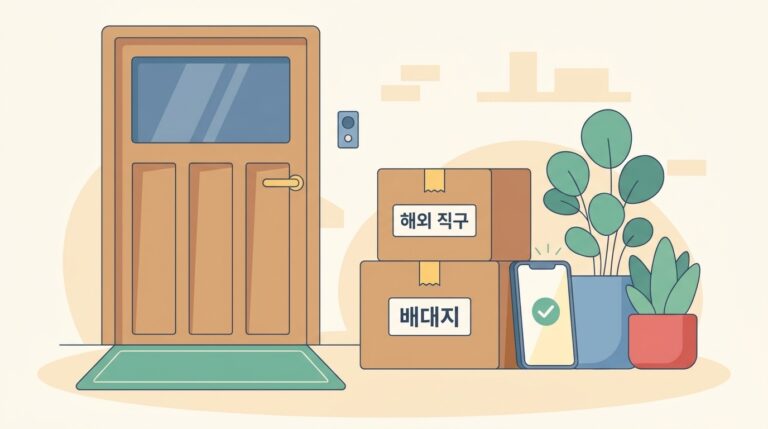
We have all been there: Black Friday is around the corner, your favorite brands are dropping massive discounts, but there is a catch—they do not ship to Korea, or the international shipping fee is absolutely astronomical! You hear your Korean friends talking about doing ‘직구’ (jikgu – direct purchase) and using a mysterious thing called a ‘배대지’ (baedaeji – package forwarder), but navigating these Korean-only platforms feels like scaling a digital Bukhansan.
Perhaps you have struggled to input your Korean address, got confused about the 개인통관고유부호 (Personal Customs Clearance Code), or had your precious package stuck at customs because of a minor typo. Don’t worry! Based on real-life feedback from our advanced learners, this comprehensive guide will transform you into a savvy shopping master. Today, we are diving deep into C2-level, real-world Korean shopping vocabulary, cultural nuances, and logistics hacks that even most textbooks shy away from. Let’s get your virtual carts ready!
Phase 2: Core Expressions Deep Dive
1. 해외 직구 (Haeoe Jikgu) / 직구하다 (Jikguhada)
- Pronunciation: Hae-oe Jik-gu (Sounds like “hea-way jeek-goo”) / Jik-gu-ha-da (Sounds like “jeek-goo-ha-dah”)
- Meaning: Overseas Direct Purchase / To purchase directly from foreign websites.
- K-Culture Moment: You will often hear this in modern lifestyle K-Dramas where a character boasts about their premium interior design items or fashion pieces, saying, “이거 이번에 직구한 거야!” (I got this through direct import this time!).
- Editor’s Insight: 직구 is a portmanteau of 직접 (jikjeop – directly) and 구매 (gumae – purchase). At a C2 level, you should know its antonym: 역직구 (yeok-jikgu), which refers to overseas buyers purchasing Korean goods directly from Korean sites (like buying K-pop merch directly from global shops).
- Situation Spectrum:
- Casual: ✅ (Used daily among friends)
- Semi-formal: ✅ (Used in lifestyle blogs and forums)
- Formal: ✅ (Used in news reports and economic analyses)
- 🤔 Think About It: In many Western countries, “online shopping” covers everything. Why do you think Koreans developed such a specific, culturally prominent term (직구) for buying items overseas? How does this reflect Korea’s tech-savvy, globalized consumer mindset?
2. 배대지 (Baedaeji)
- Pronunciation: Bae-dae-ji (Sounds like “beh-deh-jee”)
- Meaning: Package Forwarding Service / Address (Short for 배송 대행지)
- K-Culture Moment: On popular Korean shopping communities like PPOMPPU (뽐뿌) or Dealbada (딜바다), users constantly share “배대지 추천” (recommendations for forwarding addresses) to find the cheapest and fastest shipping routes during Black Friday.
- Editor’s Insight: Literally, it means “Delivery Agency Location.” A 배대지 acts as your local middleman. You ship your US/Europe purchases to their local warehouse, and they forward it to Korea. At C2, you should understand terms like 합배송 (hap-baesong – consolidated shipping) and 단독배송 (dandok-baesong – single shipment) which are core 배대지 operations.
- Situation Spectrum:
- Casual: ✅ (Highly common)
- Semi-formal: ✅ (Standard term in shopping communities)
- Formal: ⚠️ (Use the full term 배송 대행 서비스 in formal writing)
- 🤔 Think About It: How does the existence of a highly organized, competitive 배대지 industry in Korea compare to your home country’s logistics system?
3. 통관고유부호 (Tonggwan Goyu Buho)
- Pronunciation: Tong-gwan Go-yu Bu-ho (Sounds like “tong-gwan go-you boo-ho”)
- Meaning: Personal Customs Clearance Code (PCCC)
- K-Culture Moment: Whenever you order something from overseas to Korea, you will inevitably receive a KakaoTalk notification from customs or the courier saying, “개인통관고유부호를 입력해주세요.”
- Editor’s Insight: Formally known as 개인통관고유부호, this is a 13-digit code starting with the letter ‘P’. It replaced the resident registration number (주민등록번호) for privacy reasons. Without this, your package will be indefinitely stranded at the port of Incheon!
- Situation Spectrum:
- Casual: ✅ (Often shortened to 통관번호 in daily speech)
- Semi-formal: ✅
- Formal: ✅ (Official government terminology)
- 🤔 Think About It: Why is security and identity verification so deeply integrated into the Korean online ecosystem, and how does this affect foreign residents?
Phase 3: Textbook Korean vs. Real-World Korean
Let’s look at how textbooks teach these situations versus how advanced Korean shoppers actually speak.
Situation 1: Asking where to write the forwarding address
- 📖 Textbook Korean: “해외 배송 대행지의 주소를 어디에 입력해야 합니까?” (Where should I input the address of the overseas delivery agency?)
- 🗣️ Real-World Korean: “배대지 주소는 어디 기재해요?” (Where do I write down the forwarding address?)
- 💡 Why the difference? Textbook Korean uses overly formal, long terms like 배송 대행지 and verbs like 입입해야 합니까. Native speakers prefer the punchy abbreviation 배대지 and the practical verb 기재하다 (to write down/register in a form).
Situation 2: Expressing that a package is delayed at customs
- 📖 Textbook Korean: “세관의 검사 절차로 인해 물건의 배송이 지연되고 있습니다.” (The delivery of the item is being delayed due to customs inspection procedures.)
- 🗣️ Real-World Korean: “제 택배가 통관에 묶였어요.” (My package is tied up/stuck in customs.)
- 💡 Why the difference? The verb 묶이다 (to be tied up) is the ultimate native idiom for packages stuck at customs. Saying “통관에 묶였다” instantly makes you sound like a local who knows the pain of logistics delays.
Phase 4: K-Culture Deep Dive & Non-verbal Etiquette
4-1. Nunchi (눈치) & Digital Etiquette
When dealing with Korean package forwarding customer service, 눈치 (nunchi – situational quick-wittedness) is key. Korean customer service is incredibly fast, but agents appreciate highly structured, polite inquiries. If your package is delayed, do not write a long, emotional story. Instead, use a structured format: [Tracking Number/운송장번호] + [Inquiry/문의사항].
* The Gesture of Urgency: When checking tracking statuses, Koreans do not just wait. They constantly use the 새로고침 (F5 – refresh) gesture—tapping their phones rapidly. Expressing this anxiety playfully in Korean communities (e.g., “새로고침 지옥에 빠졌어요” – I’ve fallen into refresh hell) shows deep cultural alignment.
4-2. The Culture Code: “빨리빨리” (Ppalli-Ppalli) Meets Global Logistics
Korea runs on an ultra-fast logistics infrastructure. With 새벽배송 (dawn delivery) and 로켓배송 (rocket delivery) being the norm, Korean shoppers have extremely low tolerance for shipping delays. When they do 해외 직구, this creates an interesting cultural clash. Online communities have entire subcultures dedicated to tracking cargo planes. They share flight schedules of polar routes from Anchorage to Incheon to predict exactly when their Black Friday haul will land!
Phase 5: Real-world Roleplay Scenario
Meet 민호 (Min-ho), a seasoned 직구 guru who knows every trick in the book, and you, an advanced shopper trying to secure a hot item during the Black Friday madness.
- Characters:
- 민호 (Min-ho): The ultimate Jikgu Master (Warm, highly experienced, speaks in fluid, native Korean slang).
- You: An advanced shopper seeking advice on how to avoid customs issues.
The Conversation
- 민호: 🎭 (눈을 반짝이며) 야, 너 이번 블랙 프라이데이 때 대박 딜 떴는데 해외 직구 도전해 볼 거야?
- (Ya, neo ibeon beul-raek peu-rai-dei ttae dae-bak dil tteot-neun-de hae-oe jik-gu do-jeon-hae bol geo-ya?)
- “Hey, a massive deal just dropped for Black Friday! Are you going to try overseas direct purchasing this time?”
- You: 🎭 (조금 걱정스러운 표정으로) 하고는 싶은데, 배대지 주소 입력하는 것도 복잡하고 무엇보다 통관에서 묶일까 봐 걱정돼.
- (Ha-go-neun sip-eun-de, bae-dae-ji ju-so im-ryeok-ha-neun geot-do bok-jap-ha-go mu-eot-bo-da tong-gwan-e-seo muk-il-kka bwa geok-jeong-dwae.)
- “I want to, but entering the forwarding address is complicated, and more than anything, I’m worried it might get stuck at customs.”
- 민호: 🎭 (손사래를 치며) 에이, 걱정 마! 배대지 사이트 하나 가입하면 개인 사서함 주소 주거든? 그거 그대로 복사해서 붙여넣기만 하면 돼. 관부가세 계산은 해봤어?
- (Ei, geok-jeong ma! Bae-dae-ji sa-i-teu ha-na ga-ip-ha-myeon gae-in sa-seo-ham ju-so ju-geo-dun? Geu-geo geu-dae-ro bok-sa-hae-seo but-yeo-neo-ki-man ha-myeon dwae. Gwan-bu-ga-se gye-san-eun hae-bwat-eo?)
- “Hey, don’t worry! Once you sign up on a forwarding site, they give you a personal mailbox address. You just copy and paste it. Have you calculated the customs duty and tax?”
- You: 🎭 (고개를 갸웃하며) 관부가세? 미화 150달러 넘으면 세금 내야 하는 건 아는데, 일반통관이랑 목록통관 차이를 잘 모르겠어.
- (Gwan-bu-ga-se? Mi-hwa baek-o-sip-dal-reo neo-myeon se-geum nae-ya ha-neun geon a-neun-de, il-ban-tong-gwan-i-rang mok-rok-tong-gwan cha-i-reul jal mo-reu-get-eo.)
- “Customs and taxes? I know I have to pay taxes if it exceeds $150 USD, but I don’t really know the difference between general clearance and list clearance.”
- 민호: 🎭 (손가락으로 콕 짚으며) 오, 역시 고급 어휘 좀 쓰는데? 미국 직구 기준으로 목록통관은 200달러까지 면세야. 하지만 건강기능식품 같은 건 일반통관이라 150달러 넘으면 바로 과세되니까 주의해야 해!
- (O, yeok-si go-geup eo-hwi jom sseu-neun-de? Mi-guk jik-gu gi-jun-eu-ro mok-rok-tong-gwan-eun i-baek-dal-reo-kka-ji myeon-se-ya. Ha-ji-man geon-gang-gi-neung-sik-pum gat-eun geon il-ban-tong-gwan-i-ra baek-o-sip-dal-reo neo-myeon ba-ro gwa-se-doe-ni-kka ju-ui-hae-ya hae!)
- “Oh, look at you using advanced vocabulary! For US direct purchases, list clearance is tax-exempt up to $200. But health supplements fall under general clearance, so if they exceed $150, you’ll be taxed immediately, so watch out!”
- You: 🎭 (메모하는 시늉을 하며) 아하, 영양제는 일반통관이구나! 그럼 내 개인통관고유부호랑 배대지에 입력한 수취인 이름이 정확히 일치해야겠네?
- (A-ha, yeong-yang-je-neun il-ban-tong-gwan-i-gu-na! Geureom nae gae-in-tong-gwan-go-yu-bu-ho-rang bae-dae-ji-e im-ryeok-han su-chwi-in i-reum-i jeong-hwak-hi il-chi-hae-ya-get-ne?)
- “Ah, so supplements are general clearance! Then my PCCC and the recipient’s name entered on the forwarding site must match exactly, right?”
- 민호: 🎭 (박수를 치며) 정답! 그거 불일치하면 통관 지연되고 보류 뜨거든. 진짜 꿀팁 하나 더 주자면, 여러 쇼핑몰에서 산 물건들이 같은 날 입항하면 ‘합산과세’ 물릴 수 있으니 입항일 조절 잘해야 해.
- (Jeong-dap! Geu-geo bur-il-chi-ha-myeon tong-gwan ji-yeon-doe-go bo-ryu tteo-geu-dun. Jin-jja kkul-tip ha-na deo ju-ja-myeon, yeo-reo syo-ping-mol-e-seo san mul-geon-deul-i gat-eun nal ip-hang-ha-myeon ‘hap-san-gwa-se’ mul-ril su isseu-ni ip-hang-il jo-jeol jal-hae-ya hae.)
- “Bingo! If they don’t match, your clearance gets delayed and flagged. One more pro-tip: if items bought from different malls arrive on the same day, you might get hit with ‘combined taxation,’ so make sure to space out their arrival dates.”
- You: 🎭 (자신감 넘치는 미소를 지으며) 고마워, 민호야! 덕분에 이번 블프 해외 직구는 완벽하게 마스터할 수 있을 것 같아. 당장 배대지 가입하러 가야겠다!
- (Go-ma-wo, Min-ho-ya! Deok-bun-e ibeon beul-peu hae-oe jik-gu-neun wan-byeok-ha-ge ma-seo-hal su isseul geot gat-ao. Dang-jang bae-dae-ji ga-ip-ha-reo ga-ya-get-da!)
- “Thanks, Min-ho! Thanks to you, I feel like I can perfectly master this Black Friday’s direct shopping. I should go sign up for a forwarding agent right now!”
🔀 Interactive Choice Point
Your package has been at Incheon Port for 4 days without moving. You want to ask the forwarding agent customer center what is going on. What do you write?
- Option A: “내 물건 왜 안 와요? 빨리 배송해 주세요. 현기증 난단 말이에요!”
- Option B: “안녕하세요. 배송대행 신청번호 [12345] 수취인 정보와 통관번호 일치 여부 확인 부탁드립니다. 현재 통관 보류 상태로 확인되어 문의드립니다.”
- Option C: “세관에 전화해 보니까 처리가 늦어진다는데 배대지 측에서 세관에 압박 좀 넣어주시면 안 되나요?”
💡 Feedback Table
| Choice | Rating | Detailed Feedback |
|---|---|---|
| Option A | ⚠️ Risk | While humorous and highly colloquial (“현기증 난단 말이에요” – I’m getting dizzy waiting), it lacks the essential professional identifiers (application number) needed to solve the issue. |
| Option B | 🌟 Best | Flawless advanced Korean! It provides the crucial tracking/application number, maintains a highly polite semi-formal tone, and clearly identifies the core issue (matching PCCC/recipient information). |
| Option C | 🚫 Bad | Customs (세관) is a government entity. Asking a private forwarding agent to “pressure” customs is culturally inappropriate and logically impossible. |
Phase 6: 10-Second Emotion Shadowing Drill
Let’s practice the realistic stress of a direct shopper waiting for their package! Pay attention to the pauses (/) and really put your soul into the emotions described in the brackets.
- [🥺 Deep anxiety and desperation]
- 아… / 제 블랙 프라이데이 택배가 / 일주일째 / 통관에 묶여 있어요. / 제발 빨리 통과되길…
- A… / je beul-raek peu-rai-dei taek-bae-ga / il-ju-il-jjae / tong-gwan-e muk-yeo isseu-yeo. / Je-bal ppal-ri tong-gwa-doe-gil…
- “Ah… my Black Friday package has been stuck in customs for a week. Please let it clear soon…”
- [😎 Proud, boasting to friends]
- 이거 / 국내에선 / 품절이라 / 못 구하는 건데, / 내가 이번에 / 배대지 써서 / 직구로 건졌잖아!
- I-geo / gung-nae-e-seon / pum-jeol-i-ra / mot gu-ha-neun geon-de, / nae-ga ibeon-e / bae-dae-ji sseo-seo / jik-gu-ro geon-jyeot-ja-na!
- “You can’t get this in Korea because it’s sold out, but I snatched it through direct purchase using a forwarding agent this time!”
Phase 7: K-Culture Mini-Dictionary
- 관부가세 (Gwan-bu-ga-se) | Customs Duties and Taxes
- A combined term for 관세 (customs duty) and 부가세 (value-added tax). Essential for advanced shoppers to compute total cost before clicking ‘buy’.
- 목록통관 (Mok-rok-tong-gwan) | List Clearance
- A simplified clearance process for specific personal-use items (clothing, shoes, books) which allows up to $200 USD tax-exempt from the US.
- 합산과세 (Hap-san-gwa-se) | Combined Taxation
- The painful situation where multiple shipments from different websites arrive at customs on the same day and their values are combined, pushing you over the tax-free limit.
- 가성비 (Ga-seong-bi) | Cost-effectiveness (Value for Money)
- Short for 가격 대비 성능 비율. The absolute guiding philosophy behind why Koreans engage in the complex world of 해외 직구.
Phase 8: The Survival Kit for Global Shoppers
Top 3 Survival Phrases
- “통관고유부호가 불일치한다고 문자 왔는데 어떻게 수정해요?”
- Tong-gwan-go-yu-bu-ho-ga bur-il-chi-han-da-go mun-ja wat-neun-de eo-tteo-ke su-jeong-hae-yo?
- “I got a text saying my PCCC doesn’t match. How do I correct it?”
- Pro Tip: Have your passport name and registered PCCC phone number ready. A mismatch is often caused by a typo in your name (e.g., spacing or order of first/last name).
- “합배송으로 신청했는데 포장 다 뜯어서 박스 제거해 주세요.”
- Hap-baesong-eu-ro sin-cheong-haet-neun-de po-jang da tteut-eo-seo bak-seu je-geo-hae ju-se-yo?
- “I applied for consolidated shipping, please open all packaging and remove the boxes.”
- Pro Tip: Removing heavy shoe boxes or retail boxes is the best way to cut down on international volumetric weight shipping fees.
- “관부가세 납부 고지서 어디서 조회하나요?”
- Gwan-bu-ga-se nap-bu go-ji-seo eo-di-seo jo-hoe-ha-na-yo?
- “Where can I look up the tax payment bill?”
- Pro Tip: You can easily check and pay your customs taxes directly inside major Korean banking apps under the “공과금” (Utility/Taxes) menu!
📝 Editor’s Travel & Shopping Note
If you live in Korea, downloading the right apps is crucial. To generate and manage your PCCC, visit the official Korea Customs Service PCCC Site. For real-time tracking of your ocean/air cargo once it arrives at Incheon Port, use the portal called Koreapost or the Unipass system.
Note: Customs rules, tax limits (such as the $150 standard/$200 US list clearance limit), and logistics fees are subject to change based on government policies. Always verify the latest updates on the official Unipass portal before completing high-value purchases.
Phase 9: “Going One Step Deeper” (Cultural Reflection)
In many countries, purchasing products from abroad is seen as a luxury or a niche hobby. In South Korea, however, 해외 직구 has become a highly democratized, mainstream consumer movement. Why? It traces back to Korea’s hyper-compressed economic growth and the collective demand for premium quality at logical prices.
Historically, domestic markets in Korea were dominated by large conglomerates (Chaebols), which occasionally led to domestic pricing being higher than overseas export pricing for the exact same Korean-made products! This ironic economic reality birthed the modern “smart consumer” (똑똑한 소비자) who bypassed domestic distributors entirely. The PCCC (개인통관고유부호) itself is a testament to this—a national, digitized infrastructure created purely to streamline millions of individual overseas purchases safely. It shows how Korean society adapts its digital governance at lightning speed to match consumer behavior.
💬 Your Turn!
Have you ever purchased items from overseas to Korea, or used a forwarding service in your own country? What was your biggest logistics nightmare? Drop your stories in the comments below! Let’s swap some shopping battle scars! 🛍️
Phase 10: FAQ & Common Mistakes
Q: Can I use my foreign passport number instead of a PCCC (개인통관고유부호)?
A: Yes! Registered foreign residents in Korea can use their Foreigner Registration Number (외국인등록번호), and temporary tourists can use their Passport Number (여권번호) when filling out customs documents at the 배대지. However, having a PCCC makes the process much faster and smoother.
Q: What happens if my name on the shopping site is “John Doe” but on my PCCC registration it is “DOE JOHN”?
A: This is the #1 cause of customs delays! The name registered with your PCCC must match the recipient (수취인) name on your shipping document character-for-character. If they mismatch, you will have to manually submit a correction form (사유서) and identity proof, delaying your delivery by days.
Q: What is the absolute limit to avoid paying taxes on US purchases?
A: Under the KOR-US FTA, if the items are for personal use and classified as 목록통관 (List Clearance), the limit is $200 USD (including the item price and domestic shipping within the US, but excluding international shipping to Korea). For 일반통관 (General Clearance), the limit is $150 USD globally.
🚨 The “Oops!” Board: Common Foreigner Mistakes
- Mistake: Buying 10 bottles of vitamins in one shipment.
- Why it’s wrong: Korean customs has a strict limit of 6 bottles of health supplements per day per person. Anything exceeding 6 bottles will be confiscated or destroyed at your expense!
- Correct Action: Keep vitamin purchases to a maximum of 6 bottles per shipment.
- Mistake: Consolidating shipments from different countries that arrive on the same day.
- Why it’s wrong: Even if you bought them at different times, if a package from the US and a package from Japan hit Incheon customs on the exact same calendar day, their values are added together (합산과세), easily pushing you into the tax zone.
- Correct Action: Instruct your 배대지 to hold the second package until the first one has completely cleared customs.
- Mistake: Putting a Korean phone number that is not registered under your legal name.
- Why it’s wrong: The phone number linked to the PCCC must match the phone number of the recipient. If you are using a prepaid SIM card or a family member’s phone, the customs system will flag it as a mismatch.
- Correct Action: Ensure your phone carrier subscription name matches your customs registration name exactly.
Phase 11: Action Mission & Engagement
Ready to put your knowledge to the test? Complete these three levels of missions!
- 🥉 Bronze Mission (Solo Practice): Go to the official Korea Customs Unipass website, sign up, and successfully issue your own 개인통관고유부호 (PCCC). Take a screenshot of your code card (hide the numbers!) as proof.
- 🥈 Silver Mission (Social Share): Share this guide on your Instagram or Twitter with the hashtag
#DailyHanguland write down one thing you want to 직구 this winter in perfect Korean (e.g., “이번 겨울에는 패딩을 직구하고 싶어요!”). - 🥇 Gold Mission (Real World Master): The next time you order an international package, trace its steps on Unipass and share a screenshot of the phrase “통관목록접수” or “반입” in your study group!
🎮 K-Culture Mission of the Week
Listen to any urban K-Indie song or watch a vlog on YouTube. Count how many times they use the words 택배 (delivery/package), 가성비 (cost-effectiveness), or 지름신 (the shopping god/impulse buying)! You’ll be surprised how deeply ingrained shopping terminology is in modern Korean lifestyle content.
Phase 12: Interactive Quiz Challenge
Test your advanced shopping intelligence below!
1. Which of the following items is exempt from taxes up to $200 USD when imported from the US?
- A) Vitamin C Supplements
- B) A pair of leather boots
- C) Honey
Click for the Answer & Explanation
Correct Answer: B) A pair of leather boots
Supplements (A) and food items like honey (C) fall under 일반통관 (General Clearance), which has a strict tax-free limit of $150 USD. Clothing and shoes (B) fall under 목록통관 (List Clearance), allowing up to $200 USD tax-free from the US.
2. Fill in the blank: “이번에 산 코트가 일주일 넘게 인천 세관에 _________ 있어서 미치겠어요.”
- A) 기재되어
- B) 묶여
- C) 합산되어
Click for the Answer & Explanation
Correct Answer: B) 묶여 (muk-yeo)
묶여 (from 묶이다, to be tied up) is the authentic colloquial verb used when packages are stuck at customs. “인천 세관에 묶여 있어서…” translates to “Because it’s stuck in Incheon customs, I’m going crazy.”
3. [True or False] If I buy an item from a German website and ship it through a US-based forwarding agent (배대지), my tax-free limit is determined by the European Union tax rules ($150) rather than the US tax rules ($200).
Click for the Answer & Explanation
Correct Answer: True
Tax limits and clearance criteria are determined by the country of export/shipment origin. Since the package is physically exported to Korea from the US forwarding warehouse, US FTA rules apply, but if it directly ships from Germany, EU limits apply. Understanding this distinction is pure C2 mastery!
Keep shopping smart, keep studying beautifully, and see you in the next Daily Hangul Masterclass! 안녕!







