

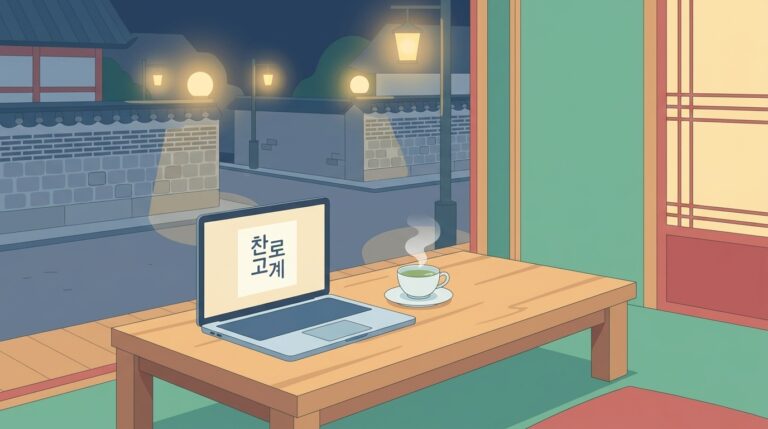
안녕하세요! Hello, fellow wordsmiths and language lovers! Your trusty Korean best friend and editor from Daily Hangul (매일한글) is back!
Today, we are taking a massive, thrilling leap into the deepest waters of the Korean language. If you are reading this, you’ve likely scaled the mountains of intermediate grammar, mastered daily conversational nuances, and are now looking for a challenge that truly tests your soul as a writer.
We are talking about “브런치 작가 신청” (Applying to become an official writer on Kakao Brunch).
For those who might not know, Brunch (브런치) is South Korea’s premier, curated publishing platform. It’s not just a blog; it’s an elite digital salon. Because of its notoriously low acceptance rate, Koreans affectionately (and painfully) call the application process “브런치고시” (The Brunch State Exam). Passing it is a true badge of honor that can lead to actual book publishing deals!
Many of our advanced learners have told us: “My Korean is fluent, but my writing still lacks that literary ‘soul’ that moves Korean editors.” Today, we are going to fix that. Let’s transform your writing from “grammatically correct” to “heart-stirringly exquisite.”
1. 일필휘지하다 (一筆揮之–) [Il-pil-hwi-ji-ha-da]
- Pronunciation: [eel-peel-hwee-jee-ha-da] (Think of drawing a single, uninterrupted stroke of paint across a canvas with absolute confidence)
- Meaning: To write down a piece of prose in one swift, flawless, and inspired breath.
- K-Culture Moment: You’ll often see this in historical K-dramas (Sageuk) when a brilliant scholar dipping a brush in ink drafts a nation-changing petition in mere seconds without pausing. In modern times, it’s used to describe a genius writer who gets struck by a sudden muse.
- Editor’s Insight: C2 writers often overthink and over-edit, leading to stiff, robotic sentences. In Korean literary culture, there is immense beauty in natural flow. Use this expression when you want to praise someone’s raw, unfiltered, yet perfectly structured writing.
- Situation Spectrum: Casual (🚫) / Semi-formal (✅) / Formal (✅)
- 🤔 Think About It: Does your native culture value “perfecting through endless drafting” or the spark of “writing in one breath”? Why do you think Korean literature values the spiritual connection of Il-pil-hwi-ji?
2. 독자의 심금을 울리다 [Dok-ja-ui sim-geum-eul ul-ri-da]
- Pronunciation: [dok-ja-uy seem-geum-eul ool-ree-da] (Think of plucking the delicate, invisible lute strings inside someone’s chest)
- Meaning: To deeply strike a chord with the reader; to move a reader’s heart to its core.
- K-Culture Moment: This is the ultimate praise given to screenwriters of legendary emotional dramas like My Mister (나의 아저씨) or Our Blues (우리들의 블루스).
- Editor’s Insight: Simgeum (심금/琴) literally means the “heart-lute.” When you write an essay for Brunch, you aren’t just presenting information; you are playing an instrument inside the reader’s heart. This phrase is perfect for your cover letter to prove you understand the emotional resonance required of a true essayist.
- Situation Spectrum: Casual (⚠️) / Semi-formal (✅) / Formal (✅)
- 🤔 Think About It: What was the last piece of writing (or K-drama) that truly strung your heart-lute? How would you translate this visceral feeling in your own native tongue?
3. 날 선 감각 [Nal seon gam-gak]
- Pronunciation: [nal seon gahm-gahk] (Imagine a knife-edge so sharp it can slice through the air with a crisp whisper)
- Meaning: Highly sharp, keen, and sensitive perception; a razor-sharp artistic sensibility.
- K-Culture Moment: Widely used by cultural critics, fashion directors, and literary judges to describe someone who captures microscopic societal trends before anyone else.
- Editor’s Insight: To stand out in the sea of Brunch applications, you cannot write cliché, generic motivational posts. You need a nal seon gam-gak—a sharp, unique angle on everyday life. Using this in your bio shows you aren’t just a writer; you are an acute observer.
- Situation Spectrum: Casual (✅) / Semi-formal (✅) / Formal (✅)
- 🤔 Think About It: What is a daily habit or cultural quirk you’ve observed in Korea that requires a “sharp sensory edge” to truly notice and write about?
Let’s compare the textbook Korean that keeps you in the “foreigner” category with the high-society, literary Korean that gets you accepted to Brunch.
Situation 1: Pitching your writing theme in your introduction
- 📖 Textbook Korean: 저는 한국 문화에 대한 글을 쓰고 싶습니다.
- (“I want to write essays about Korean culture.”)
- 🗣️ Real Literary Korean: K-컬처의 이면을 날카로운 시선으로 파헤치는 에세이를 연재하고자 합니다.
- (“I wish to serialize essays that dissect the flip side of K-culture with a sharp, keen eye.”)
- 💡 Why the difference? Brunch editors read thousands of applications. Saying “I want to write about culture” is a quick ticket to rejection. Using words like “파헤치다” (to dissect/dig deep) and “연재하고자 합니다” (wish to serialize) signals professional intent.
Situation 2: Expressing your attitude toward reader feedback
- 📖 Textbook Korean: 제 글은 아직 완벽하지 않지만 피드백을 주면 고치겠습니다.
- (“My writing is not perfect yet, but if you give me feedback, I will fix it.”)
- 🗣️ Real Literary Korean: 독자들의 따끔한 피드백을 자양분 삼아 끊임없이 제 세계를 확장해 나가겠습니다.
- (“Using the sharp feedback of my readers as nourishment, I will endlessly expand my creative world.”)
- 💡 Why the difference? C2 Korean utilizes organic metaphors. Jayangbun (자양분/nourishment) turns criticism into growth, and “expanding one’s world” (세계를 확장하다) is a premium literary trope that sounds infinitely more mature.
4-1. The Art of Literary 겸손 (Humility) and Confidence
When submitting a pitch in Korea, modesty (겸손) is highly valued, but it must not look like insecurity. The perfect non-verbal posture of your writing should feel like a bow: head tilted down slightly in respect, but eyes looking straight ahead with absolute clarity. Structurally, make sure to use clean paragraph breaks (the “Brunch aesthetic”). Long, clumped blocks of text are considered lazy. A sleek, airy layout with thoughtful spacing mimics the calm breathing of a confident writer.
4-2. The “Brunch-gosie” (브런치고시) Craze
Why are Koreans so obsessed with this platform? In a hyper-competitive, high-stress society, writing has transitioned from a hobby into a form of active therapy and social mobility. To become a “Brunch Writer” is to be recognized as an intellectual whose voice matters. It represents the dream of “덕업일치” (Deok-eob-il-chi): aligning your deep passion (덕질) with your professional career (업).
Let’s step into a high-stakes scenario. You are meeting Jiyoung (지영), a legendary Brunch writer who has published three bestsellers. She is reviewing your application draft over a cup of green tea in a quiet Hanok cafe in Samcheong-dong.
- Context: Jiyoung is looking over your draft with a warm but critical eye.
- NPC Character: Jiyoung (지영) – Encouraging but incredibly sharp-witted. She hates clichés.
-
지영: 율리아 씨, 글의 문장력은 참 훌륭해요. 그런데 한 끗이 부족하네요. 독자의 마음을 단번에 사로잡아야 하거든요.
- (Yulia, your sentence structure is truly wonderful. But it’s missing that final ‘one percent.’ You have to capture the reader’s heart instantly.)
- 율리아:
🎭 (긴장하며 차를 마신다)역시 그렇군요. 제가 제 생각을 한글로 완벽하게 쏟아내는 게 아직 서툴러서 그런가 봐요.- (I knew it. Maybe it’s because I’m still clumsy at pouring my thoughts perfectly into Korean.)
- 지영: 아니요, 언어의 문제가 아니에요. 글에서 율리아 씨만의 ‘날 선 감각’이 안 보여요. 너무 정석대로만 쓰려고 하지 마세요.
- (No, it’s not a language issue. I don’t see your unique ‘sharp edge’ in the text. Don’t just try to write by the textbook.)
- 율리아:
🎭 (생각에 잠긴 채)아… 그렇다면 제 글이 너무 밋밋하다는 말씀이시죠?- (Ah… so you mean my writing is too flat?)
- 지영: 맞아요. 독자의 심금을 울리는 글은 화려한 단어가 아니라, 아주 사소한 일상에서 길어 올린 날카로운 성찰에서 나오거든요.
- (Exactly. Writing that strikes a chord with the reader doesn’t come from flashy words, but from sharp reflections drawn from the most mundane daily life.)
- 율리아:
🎭 (눈이 번쩍 뜨이며)일상에서 길어 올린 성찰… 무릎을 탁 치게 만드는 그런 포인트가 필요하겠네요!- (Reflections drawn from daily life… I need that ‘slap-your-knee’ moment of realization, then!)
- 지영: 그렇죠! 다음 초안은 진짜 본인의 날것의 감정을 담아 일필휘지로 써 내려가 보세요. 제가 다시 봐 드릴게요.
- (Right! For your next draft, try to write in one swift, passionate breath, capturing your raw emotions. I will look over it again.)
- 율리아:
🎭 (밝게 웃으며 수첩을 꺼낸다)지영 씨 덕분에 안개가 걷히는 기분이에요. 당장 오늘 밤에 다시 도전해 보겠습니다!- (Thanks to you, Jiyoung, I feel like the fog is clearing. I’ll challenge it again tonight!)
🔀 Your Interactive Decision Point!
Jiyoung asks you: “What is the ultimate goal of your Brunch channel?” How do you reply?
- Option A: “그냥 제 일기장처럼 편하게 일상을 기록해서 사람들과 나누고 싶어요.”
- Feedback (Bad): Too casual! Brunch is looking for curated content creators, not private diaries. Jiyoung might sigh and tell you to stick to Instagram.
- Option B: “외국인의 시선에서 바라본 한국 직장 생활의 애환을 날카롭고도 유쾌하게 풀어내고 싶습니다.”
- Feedback (Best!): Brilliant! You’ve identified your unique niche (foreign perspective on Korean work culture) and used advanced nuance (“애환” – joys and sorrows, “날카롭고도 유쾌하게” – sharply yet humorously).
- Option C: “엄청나게 유명한 작가가 되어서 책을 많이 팔아 부자가 되고 싶어요!”
- Feedback (Risk): Honest, but overly commercial. Korean literary circles prize artistic integrity and emotional connection over raw commercialism in early pitches.
Speak these sentences aloud with deep emotional investment. Focus on the flow / points.
[🔥 With fiery determination and speed]
머릿속에 맴돌던 생각들을 / 마침내 오늘 밤, / 일필휘지로 / 다 쏟아냈습니다.- (The thoughts swirling in my head… I finally poured them all out tonight in one swift breath.)
[🥺 Tenderly, with deep emotional resonance]
비록 화려하지 않은 문장이지만, / 누군가의 심금을 울리는 / 따뜻한 위로가 되길 바랍니다.- (Though these sentences are not flashy, I hope they strike a chord and become a warm comfort to someone.)
[😎 Confidently, with intellectual poise]
평범한 일상을 / 조금 더 날 선 감각으로 / 관찰하고 기록하려고 합니다.- (I intend to observe and record ordinary daily life with a slightly sharper sensibility.)
- 브런치고시 (Brunch-gosi) | The nickname for the difficult writer screening process on the Brunch app.
- 출간 작가 (Chul-gan Jak-ga) | A published author. The holy grail for online bloggers in Korea.
- 페르소나 (Persona) | The specific literary/social alter ego a writer adopts for their columns.
- 덕업일치 (Deok-eob-il-chi) | The state of holy harmony where your hobby (덕질) becomes your full-time job (업).
- ** survival expression 1:** “이 책방만의 베스트셀러는 무엇인가요?” (What is this specific bookstore’s independent bestseller?)
- ** survival expression 2:** “조용히 글을 쓸 수 있는 콘센트 자리가 있을까요?” (Would there be a seat with an outlet where I can quietly write?)
- ** survival expression 3:** “독립출판 코너는 어디에 있나요?” (Where is the independent publishing section?)
📝 Editor’s Travel Note:
If you are looking for creative inspiration, skip the crowded chain bookstores in Gwanghwamun. Head straight to the cozy, narrow alleys of Yeonhui-dong (연희동) or Mangwon-dong (망원동). Look up independent bookstores like Your Mind (유어마인드). Download the Brunch Story App (브런치스토리 앱) to read articles on your phone during your subway commute; it is the absolute best way to absorb natural, modern Korean literary sentence structures.
In Western creative writing programs, students are often taught to “Show, don’t tell” through heavy active verbs. However, in Korean essay writing, there is a profound cultural weight placed on “여백의 미” (The Beauty of Empty Space).
Korean readers love to read between the lines. It’s not about writing more; it’s about leaving just enough unsaid so that the reader can fill the silence with their own memories and feelings. This is why high-level Korean prose feels incredibly atmospheric. As a C2 learner, your challenge is to stop over-explaining and trust your reader’s intuition.
💬 Your Turn: Have you ever tried writing a journal or essay in Korean? What is the hardest part of expressing your deep, authentic self in another language? Share your thoughts below!
Q: Is it really impossible for a foreigner to pass the Brunch application?
A: Absolutely not! In fact, Brunch editors love unique cultural perspectives. The key is avoiding machine-translation style sentences (번역투) and showing that you can write with a deep emotional understanding of the Korean audience.
Q: Should my writing sample be extremely formal (합쇼체) or conversational (해요체)?
A: For essays, a mix of 해라체 (the plain diary style: ~다, ~했다) or a very polished 해요체 is highly recommended. Avoid the stiff military-style ~하십시오 unless you are writing a technical academic paper.
Q: What is the most common reason for rejection?
A: Lack of clarity in your theme. If your profile says you want to write about “food, travel, language, daily thoughts, and business,” the editors will reject you. Focus on one sharp niche (날 선 감각).
🚨 Common Mistakes Warning Board
- Overusing Hanja idioms incorrectly: Don’t throw in advanced words just to look smart. If it doesn’t fit the context, it feels incredibly awkward.
- Translating English idioms literally: Phrases like “She is blue” translated as “그녀는 파랗다” will instantly disqualify your application. Use “그늘이 지다” (to be shadowed/gloomy) instead.
- Being overly self-deprecating: Saying “I am a foreigner so my Korean is bad” doesn’t work. Stand tall in your identity!
- 🥉 Bronze: Open a notebook and write exactly three sentences describing your morning using the word 날 선 감각.
- 🥈 Silver: Take a picture of your favorite writing spot, post it on Instagram, and caption it with your resolution to write 일필휘지로.
- 🥇 Gold: Draft a 300-character bio for your dream Korean blog using all three core expressions and share it with us in the comments!
- 🎮 K-Culture Mission: Watch an episode of a healing K-drama (like Summer Strike or Run On) and write down one sentence that truly 심금을 울렸어요 (struck your heartstrings).
Part 1: Contextual Judgment
Which of the following is the most appropriate literary response to a reader who left a beautiful comment on your post?
* A) 댓글 고맙습니다. 다음에도 좋은 글을 올리겠습니다.
* B) 독자님의 따뜻한 말씀 한마디가 제 마음에 잔잔한 파동을 일으키네요. 깊이 감사드립니다.
* C) 진짜 대박이네요! 완전 기분 째집니다!
Part 2: Fill in the Blanks
Complete the sentence using the correct form of the core expression:
어젯밤, 영감이 솟구쳐서 원고지 열 장을 단숨에 ( ) 내려갔다.
Part 3: True or False?
- Brunch is a platform where anyone can write immediately upon signing up without any screening process. (T / F)
🔍 Click here to reveal the answers and explanations!
- Part 1 Answer: B
- Explanation: While A is polite, B uses gorgeous literary prose (“잔잔한 파동을 일으키네요” – causes a gentle wave in my heart) which perfectly fits the C2 essayist aesthetic. C is too slangy.
- Part 2 Answer: 일필휘지로 써
- Explanation: “일필휘지로 써 내려가다” is the perfect collocate for writing something down in one brilliant, continuous flow.
- Part 3 Answer: False
- Explanation: Brunch requires you to pass the “Brunch writer screening” (브런치 작가 심사) before you are granted publishing rights!
- Explanation: Brunch requires you to pass the “Brunch writer screening” (브런치 작가 심사) before you are granted publishing rights!







