

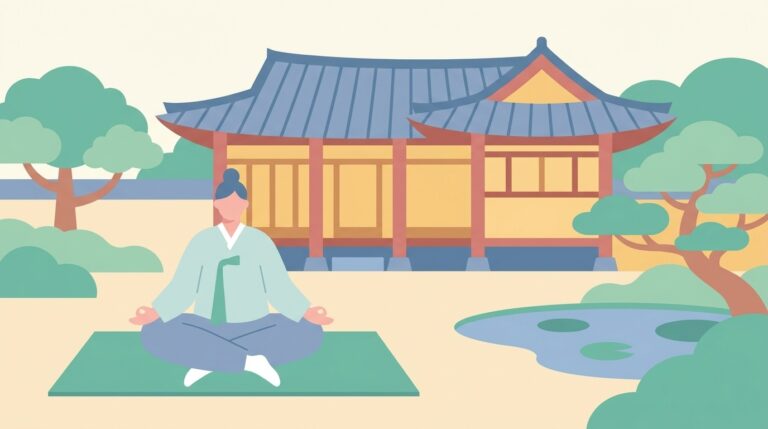
Master Your Mind: Navigating High-Stakes Anger & Impulse Control in Korean Culture
안녕하세요! Welcome back to Daily Hangul, your premium cultural navigator. I’m your senior editor, and today we are venturing into the complex, often intense world of emotional self-regulation.
Imagine this scenario, a classic K-Drama setup: An ambitious project hits a massive roadblock. The director’s face turns bright red, his hand trembles, and he grips the back of his neck as if his blood pressure is skyrocketing. In Korean, this is the boiling point of emotional dysregulation. But in a real-world Korean corporate or social setting, how do you express intense frustration, de-escalate explosive situations, and practice impulse control without breaking crucial social hierarchies? Today, we will decode the vocabulary of anger management, psychological resilience, and emotional mastery at the C2 (Advanced) level. This guide is built upon years of coaching foreign executives and diplomats who had to navigate high-pressure Korean environments without losing their composure.
Phase 2: Deep Dive into 3 Sophisticated Emotional Expressions
1. 울화통이 터지다 (Urhwatongi teojida)
- Pronunciation: Ool-hwa-tong-i teo-ji-da (Imagine the sound of deep, boiling water suddenly breaking through a sealed vessel: “Ool-Hwa” mimics the rising heat, while “Teojida” is the sudden pop.)
- Meaning: Lit. “For the volcanic chamber of pent-up anger to burst.” Fig. To explode with long-suppressed rage or deep frustration.
- K-Culture Moment: You will see this expression in high-stakes family or corporate dramas where a character has endured years of unfair treatment (such as a dedicated daughter-in-law or a scapegoated employee) and finally reaches their absolute limit.
- Editor’s Insight: This phrase is directly tied to Hwabyeong (화병), Korea’s culturally bound syndrome of suppressed anger. Unlike a simple “화가 나다” (to be angry), “울화통이 터지다” implies a rich history of endurance (Innae, 인내) that has finally reached its breaking point.
- Situation Spectrum: Casual (⚠️) | Semi-formal (✅) | Formal (✅ – in descriptive psychological or narrative contexts)
- 🤔 Think About It: How does your native language describe the physical sensation of long-suppressed anger? Is it localized in the head, the heart, or the stomach, like the Korean Hwa (화/火 – fire) in the chest?
2. 욱하는 성질을 죽이다 (Ukhaneun seongjireul jugida)
- Pronunciation: Ook-ha-neun seong-ji-reul joo-gi-da (The word “Ook” is short, sharp, and explosive, sounding like a sudden cough. “Jugida” sounds like “joo-gee-dah” and means “to kill/suppress.”)
- Meaning: Lit. “To kill one’s hot-headed, impulsive temper.” Fig. To actively suppress a sudden urge to react in anger.
- K-Culture Moment: Often used in counseling shows or reality programs where hot-tempered individuals are taught how to count to ten before speaking to their partners or coworkers.
- Editor’s Insight: “욱하다” is the sudden, explosive impulse that leads to regrettable actions. By combining it with “죽이다” (to kill), Korean emphasizes the active, almost violent effort required to conquer one’s own impulsive nature.
- Situation Spectrum: Casual (✅) | Semi-formal (✅) | Formal (⚠️ – instead, use “충동을 억제하다” in official settings)
- 🤔 Think About It: In Korea, letting your “욱” show is often viewed as a lack of self-cultivation. How is sudden, passionate outbursts of anger viewed in your culture? Is it seen as honesty or weakness?
3. 평정심을 유지하다 (Pyeongjeongsimeul yujihada)
- Pronunciation: Pyung-jung-shim-eul yoo-jee-hah-dah (Smooth, flowing sounds with soft nasal transitions. It sounds like a calm lake returning to stillness.)
- Meaning: Lit. “To maintain a calm and tranquil mind.” Fig. To keep one’s composure; to stay centered amidst chaos.
- K-Culture Moment: This is the ultimate goal of corporate leaders, high-ranking officials, and historical figures in epic sageuk (historical dramas) when facing betrayal or crises.
- Editor’s Insight: This Sino-Korean expression (平靜心) carries Zen-like philosophical undertones. It’s not just about hiding your anger; it is about actively restoring inner peace and intellectual clarity.
- Situation Spectrum: Casual (⚠️) | Semi-formal (✅) | Formal (✅)
- 🤔 Think About It: To maintain composure under fire is universally respected, but the linguistic weight of “평정심” implies an active alignment of your heart and mind. How do you center yourself when your composure is threatened?
Phase 3: Textbook Korean vs. Real-World Advanced Korean
Situation 1: Expressing extreme, boiling frustration without screaming
- 📖 Textbook Korean: “저는 지금 매우 화가 나서 참을 수가 없습니다.” (I am currently very angry and cannot bear it.)
- 🗣️ Real-World Advanced Korean: “말씀을 듣고 보니 속에서 정말 천불이 나고 피가 거꾸로 솟는 기분입니다.” (Hearing that, I feel like a thousand fires are lighting up inside me and my blood is rushing backward.)
- 💡 Why the difference? C2-level Korean relies heavily on somatic idioms (body-related metaphors). Saying “피가 거꾸로 솟다” (blood rushing backward) and “천불이 나다” (a thousand fires burning inside) conveys a visceral, highly sophisticated level of distress while avoiding raw, childish swearing.
Situation 2: Advising a highly stressed colleague to calm down and not act impulsively
- 📖 Textbook Korean: “화를 가라앉히고 진정하십시오.” (Please calm your anger down and compose yourself.)
- 🗣️ Real-World Advanced Korean: “부장님, 지금 욱해서 결정하시면 후회하십니다. 일단 숨 고르기 하시고 다시 생각하시죠.” (Director, if you make a decision impulsively right now, you will regret it. Let’s take a breather first and then reconsider.)
- 💡 Why the difference? Advanced speakers use active metaphorical nouns like “숨 고르기” (lit. smoothing out one’s breath) instead of clinical commands like “진정하다” (to calm down), which can sometimes sound patronizing during a heated moment.
Phase 4: K-Culture Deep Dive & Non-Verbal De-escalation
4-1. Nunchi & Non-Verbal De-escalation
When someone in a senior position is experiencing an emotional breakdown or severe impulse-control issues, physical gestures speak louder than words.
* Deep Breath / Deep Sigh (한숨): In Western cultures, heavy sighing can be perceived as rude, dismissive, or passive-aggressive. In Korea, however, a deep sigh from a stressed person is often recognized as a vital physiological release—literally “letting out the hot air (화)” to prevent their blood pressure from spiking. If you are trying to de-escalate, mirroring this by softly lowering your head and slowly breathing out shows profound empathy.
* Chest Pressing (가슴 치기): You will often see Koreans literally thumping or rubbing their sternum when frustrated. This physically stimulates the acupuncture points associated with Hwabyeong. To show you understand their pain, you might say, “얼마나 속이 답답하시면 가슴을 치시겠습니까” (How frustrated must you be to strike your own chest).
4-2. The Cultural Underpinnings: Hwabyeong (화병) & Healing Shows
For decades, Korean society operated under the strict Confucian virtue of endurance: * 참는 것이 미덕이다 (Patience/enduring is a virtue). This cultural expectation of swallowing one’s anger (참다) led directly to the clinical recognition of Hwabyeong (suppressed anger syndrome) in international psychiatric manuals.
Today, Korea is undergoing an emotional revolution. Modern K-Culture is obsessed with mental health clinics, “mind management” (마음 챙김), and psychological counseling reality shows such as Dr. Oh Eun-young’s Golden Clinic (오은영의 금쪽 상담소). There is a collective social effort to transition from toxic suppression to healthy expression and impulse regulation.
Phase 5: High-Stakes Roleplay: De-escalating Director Kang
- Context: It’s 8:00 PM, the night before a multi-million dollar corporate presentation. Director Kang (강 부장), highly stressed and sleep-deprived, discovers a data error made by a junior staff member. He is on the verge of a massive impulsive outburst.
🎭 [Setting: The brightly lit conference room strewn with papers. Director Kang is pacing back and forth, holding his neck.]
- Director Kang: (Slapping the documents onto the table, voice trembling) 아니, 민준 씨! 이 보고서 데이터가 왜 이 모양이에요? 당장 내일 아침이 프리젠테이션인데, 일을 이따위로 처리합니까?!
(No, Min-jun! Why are these report figures like this? The presentation is tomorrow morning, and you handle things like this?!) -
Min-jun: (Stepping forward slowly, lowering his shoulders to project calm) 죄송합니다, 부장님. 방금 수정본과 대조하면서 마크업 오류를 확인했습니다. 제 불찰입니다.
(I apologize, Director. I just cross-referenced the revised version and confirmed the markup error. It is my oversight.) -
Director Kang: 제 불찰? 그 소리 한 마디로 끝나요?! 정말 속에서 울화통이 터져서 미치겠네! 내가 지금 욱하는 성질을 못 참아서 소리라도 질러야 속이 시원하겠습니까?!
(Your oversight? Does it end with that single phrase?! My chest is bursting with rage, it’s driving me crazy! Do I need to scream my head off because I can’t suppress my impulsive temper to feel relieved?!) -
Min-jun: (Nodding deeply, validating the emotion) 부장님께서 그렇게 진노하시는 것이 당연합니다. 밤낮없이 고생하신 결과를 제가 망칠 뻔했으니, 천불이 나시는 게 당연합니다.
(It is only natural that you are this furious. I almost ruined the results of your day-and-night hard work, so it is natural that a thousand fires are burning inside you.) -
Director Kang: (Breathing heavily, sitting down and pressing his temples) 하아… 진짜 머리가 다 아프네. 이걸 밤새워서라도 고쳐 오란 말입니다! 대안은 있습니까?
(Sigh… my head is pounding. I mean, rewrite this even if you have to stay up all night! Do you even have an alternative?) -
Min-jun: 네, 부장님. 이미 원본 데이터를 확보하여 수정 작업에 착수했습니다. 제가 먼저 평정심을 유지하고 확실하게 수습하겠습니다.
(Yes, Director. I have already secured the raw data and initiated the correction. I will keep my composure and resolve this without fail.) -
Director Kang: (Taking a deep, long sigh) 휴… 내가 너무 흥분해서 심하게 말했군요. 아무튼 완벽하게 수정해 와요.
(Phew… I got too excited and spoke too harshly. In any case, make sure it’s corrected perfectly.) -
Min-jun: 아닙니다, 부장님. 부장님께서 매서운 눈으로 짚어주신 덕분에 실수를 바로잡을 골든타임을 확보했습니다. 신속히 완료하겠습니다.
(Not at all, Director. Thanks to your sharp eye in pointing this out, we secured the golden hour to fix the mistake. I will complete it swiftly.)
🔀 Interactive Choice Point
How would you respond to Director Kang at his most volatile moment? Choose your path:
- Option A: “부장님, 그렇게 소리 지르시면 제 멘탈이 붕괴됩니다. 일단 진정하세요.”
- Option B: “부장님, 욱하시는 마음은 이해하지만 소통 방식을 조금 부드럽게 해 주십시오.”
- Option C: “부장님, 저 역시 지금 상황의 심각성을 뼈저리게 느끼고 있습니다. 바로 평정심을 찾고 밤을 새워서라도 바로잡겠습니다.”
💡 Feedback:
- Option A (Bad): Mentions “mental collapse” (멘붕) and directly tells a superior to “calm down” (진정하세요). This will sound highly insolent and will likely aggravate his Hwabyeong.
- Option B (Risk): Criticizing a superior’s communication style (“소통 방식을 부드럽게 해 주십시오”) during their emotional crisis is socially risky and shifts the blame from the error to their reaction.
- Option C (Best): Validates the urgency, promises swift action, and elegantly uses C2-level framing (“평정심을 찾고”, “뼈저리게 느끼고”) to show mature accountability. This instantly lowers the temperature in the room.
Phase 6: 10-Second Emotional Shadowing Drill
To master C2 level Korean, you must master the prosody—the pauses and emotional undertones. Practice these sentences with the indicated pauses (/) and emotional cues.
[😤 Clenching teeth, holding back intense frustration]
“아니, / 내가 진짜 / 속에서 울화통이 터져서 / 더는 말을 못 하겠네!”
(No, / I really / because my chest is bursting with rage / can’t say another word!)-
[🧘♂️ Softly, calmly, lowering the pitch to de-escalate]
“갑작스러운 일로 / 당황스럽겠지만, / 일단 평정심을 유지하는 게 / 급선무입니다.”
(Though this sudden event / is shocking, / maintaining our composure / is our absolute priority.)
Phase 7: K-Culture Mini-Dictionary
- 화병 (Hwabyeong | Anger-illness): A somatization disorder recognized in DSM-4, caused by suppressing anger over long periods.
- 욱하다 (Ukhada | To surge with rage): The sudden, impulsive upward surge of temper.
- 극대노 (Geukdaeno | Extreme fury): Internet slang combining Extreme (극/極), Big (대/大), and Anger (노/怒) to describe comedic yet colossal rage.
- 멘탈 관리 (Mental Gwanri | Mental management): The modern art of emotional self-regulation, mindfulness, and resilience.
Phase 8: The Mindful Traveler’s Survival Kit
Survival Expressions for High-Stress Moments:
- “잠시 숨 좀 돌리고 오겠습니다.” (Let me step out to catch my breath for a moment.)
- Use this when you feel yourself or someone else on the verge of “욱하다.”
- “제가 지금 감정이 조금 격해져서, 나중에 다시 이야기 나누시죠.” (My emotions are running a bit high right now, let’s talk about this later.)
- The most polite, professional way to request a pause in a heated discussion.
- “일단 심호흡부터 같이 하시죠.” (Let’s take a deep breath together first.)
- Used to gently ground a friend or close colleague who is hyperventilating from stress.
Editor’s Travel Note:
If you ever find your stress levels peaking while navigating the dense urban streets of Seoul, seek immediate refuge in a “Temple Stay” program or utilize the 네이버 지도 (Naver Map) to find quiet, forested urban healing spaces like the Seoul Forest (서울숲) or search for nearby tea houses (전통 찻집) to sip calming green tea and restore your inner peace.
Phase 9: “Going Deeper” — The Transformation of Endurance
Historically, the Korean Peninsula endured countless invasions, poverty, and rapid modernization. In this high-pressure environment, “참는 자에게 복이 있느니라” (Blessings come to those who endure) was the ultimate social glue. However, this silent endurance often extracted a heavy psychological toll.
In contemporary Korea, the narrative has shifted from “unconditional endurance” to “healthy emotional boundary-setting.” Expressing anger is no longer just viewed as a lack of manners; it is studied as a clinical signal that needs professional care. Knowing how to articulate your mental state with precision is now viewed as the ultimate mark of a sophisticated, emotionally intelligent individual.
💬 Your Turn: How do you balance emotional honesty with professional etiquette in your country? Let’s discuss in the comments below!
Phase 10: FAQ & Common Mistakes
Q: Can I tell my Korean boss “화 풀세요” (Release your anger) when they are angry?
A: Absolutely not. While it translates to “Please don’t be angry,” telling a superior to “release their anger” can sound patronizing, as if you are managing their emotions. Instead, apologize for the root cause and promise to correct it by saying, “염려를 끼쳐드려 송구스럽습니다. 신속히 해결하겠습니다.” (I am deeply sorry for causing you concern. I will resolve this immediately.)
Q: What is the difference between “화가 나다” and “울화통이 터지다”?
A: “화가 나다” is a general state of being angry due to an external trigger. “울화통이 터지다” implies a deep-seated, chronic buildup of injustice or frustration that has suddenly erupted. Use the latter only for extreme, long-term situations.
Q: Is “욱하다” always a negative trait in Korea?
A: Yes, in social and professional contexts, “욱하다” is almost universally viewed as a lack of emotional maturity. Those who frequently show “욱하는 성질” are considered high-risk team members in corporate settings.
| 🚨 Common Mistake | ❌ What Not to Say | ✅ Correct Action / Expression |
|---|---|---|
| Telling an angry elder to calm down | “진정하세요” (Too direct) | “제가 미처 살피지 못했습니다. 마음 푸시기 바랍니다.” |
| Blaming your own mistakes on stress | “스트레스 때문에 욱했습니다” | “제 불찰로 평정심을 잃고 실수를 범했습니다.” |
| Using slang for anger with bosses | “부장님 완전 극대노하셨어” (In front of them) | “부장님께서 대단히 진노하셨습니다.” (Formal) |
Phase 11: Action Mission & K-Culture Challenge
- Bronze Mission: Read the two emotional shadowing sentences in Phase 6 aloud 5 times, focusing on mimicking the deep sighs and pauses.
- Silver Mission: Write a comment below using “평정심을 유지하다” in a sentence describing how you handle stress.
- Gold Mission: Watch a modern Korean drama (like My Mister or Daily Dose of Sunshine). Identify a scene where a character experiences a emotional breakdown, and note how they express their physical symptoms of anger.
Phase 12: Interactive Quiz Challenge
Take this quick quiz to see if you have mastered C2-level emotional regulation in Korean!
1. Which expression best fits the blank?
“프로젝트 취소 소식을 듣고 너무 화가 나서 속에서 정말
__________.”
* A) 평정심을 유지했다
* B) 울화통이 터졌다
* C) 숨 고르기를 했다
👀 Show Answer & Explanation
Correct Answer: B
* Explanation: “울화통이 터졌다” represents the sudden explosion of deep disappointment and anger upon hearing devastating news like a project cancellation. Options A and C represent calming techniques, which contradict “너무 화가 나서” (because I was so angry).
2. True or False?
In Korean culture, heavy sighing (한숨) is always considered extremely rude and dismissive, even when used as a self-soothing mechanism.
👀 Show Answer & Explanation
Correct Answer: False
* Explanation: While sighing at someone can be rude, a self-directed deep sigh (한숨) is widely recognized as a natural somatic response to release physical stress and prevent “Hwabyeong.”






