

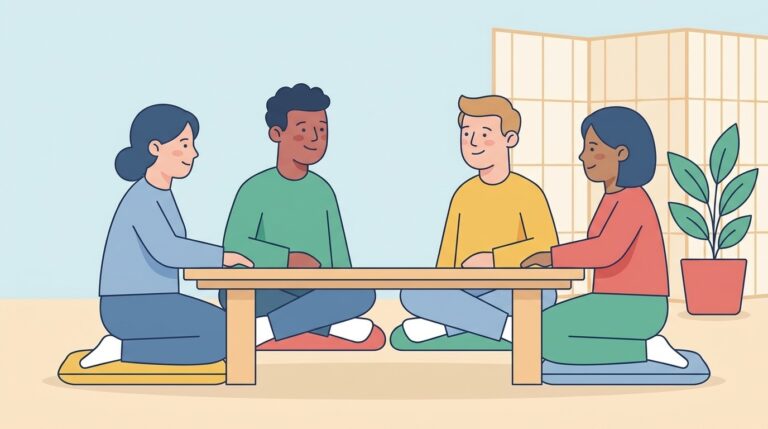
Surviving Your First Korean Apartment Meeting: Speak Like a Warm Neighbor
안녕하세요! Hello there, my dear Daily Hangul friend! It’s your favorite Korean bestie and Lead Editor here.
Imagine this: You’ve finally settled into your beautiful high-rise apartment (아파트) in Seoul. The view is gorgeous, the convenience stores are just steps away, and everything is perfect. But one evening, you spot a notice in the elevator: “입주민 대표 회의” (Resident Representative Meeting).
You decide to go to be a good neighbor, but as you walk into the community room, you’re hit with a wave of fast-talking residents discussing recycling schedules, building renovations, and the ultimate nemesis of Korean apartment life—층간소음 (floor noise). Your heart starts racing. How do you voice your opinions without sounding rude or out of place?
Today, we are going to dive deep into the unique culture of Korean apartment meetings and equip you with B1-level expressions that will make you sound polite, community-oriented, and perfectly integrated into Korean society. Let’s get started!
Phase 2: Key Expressions Deep Dive
1. 건의하다 (geon-ui-hada)
- Pronunciation: Geon-ui-hada (Sounds like “gun-we-hah-dah”)
- Meaning: To formally propose or suggest an idea/improvement for the collective good.
- K-Culture Moment: You will often hear this in modern apartment dramas or community office scenes. A resident raises their hand and politely says, “제가 한 가지 건의할 게 있습니다” (I have a suggestion to make).
- Editor’s Insight: While ‘제안하다’ (to suggest) is general, 건의하다 is specifically used when suggesting an improvement to an organization, community leader, or administrative office. It shows you respect the formal structure of the meeting.
- Situation Spectrum: Casual 🚫 / Semi-formal ⚠️ / Formal ✅
- 🤔 Think About It: In Korea, raising a community issue is done with careful consideration for collective harmony. How do people usually make public suggestions in your home country?
2. 층간소음 (cheung-gan-so-eum)
- Pronunciation: Cheung-gan-so-eum (“Cheung” like lung + “gahn” + “so” + “eum”)
- Meaning: Inter-floor noise (literally, “noise between floors”).
- K-Culture Moment: This is a major social topic in Korea, where over 60% of people live in apartments. It’s so common that there are specialized “anti-noise slippers” (층간소음 실내화) sold in almost every home mart!
- Editor’s Insight: Talking about noise can be highly sensitive. Using the scientific term 층간소음 instead of saying “You’re making too much noise!” keeps the conversation neutral and objective.
- Situation Spectrum: Casual ✅ / Semi-formal ✅ / Formal ✅
- 🤔 Think About It: Living in close proximity means small sounds carry. Why do you think peace and quiet are so highly valued in Korean high-rises?
3. 양해를 구하다 (yang-hae-reul gu-hada)
- Pronunciation: Yang-hae-reul gu-hada (“Yang” + “hae” like head + “reul” + “goo-hah-dah”)
- Meaning: To seek someone’s understanding or indulgence.
- K-Culture Moment: Before starting apartment remodeling, Koreans will put up sticky notes in the elevator saying, “소음으로 인해 주민 여러분의 양해를 구합니다” (We ask for the residents’ understanding regarding the construction noise) along with a small gift like trash bags for neighbors.
- Editor’s Insight: This is the ultimate “harmony saver” expression. Asking for understanding before an issue arises or acknowledging an inconvenience instantly defuses potential anger.
- Situation Spectrum: Casual ⚠️ / Semi-formal ✅ / Formal ✅
- 🤔 Think About It: How does proactively asking for “understanding” change the atmosphere of a community dispute?
Phase 3: Textbook Korean vs. Real Korean
Let’s compare stiff, textbook expressions with what modern, polite Koreans actually say in real apartment meetings.
Situation 1: Raising an issue about noise
- 📖 Textbook: “위층이 시끄러우니까 조용히 하라고 하세요.” (Tell the upstairs neighbor to be quiet because they are loud.)
- 🗣️ Real: “늦은 시간이라 조금만 주의해 주시면 감사하겠습니다.” (Since it’s late, I would appreciate it if everyone could be slightly mindful/cautious.)
- 💡 Why the difference? Directly telling someone to “be quiet” sounds aggressive. Phrasing it as “asking for mindfulness” (주의해 주시면) keeps the mood friendly and cooperative.
Situation 2: Suggesting better recycling practices
- 📖 Textbook: “쓰레기 분리수거를 잘 하세요.” (Do your recycling well.)
- 🗣️ Real: “분리수거 규칙을 다 같이 잘 지켰으면 좋겠습니다.” (I hope we can all follow the recycling rules together.)
- 💡 Why the difference? Using “~했으면 좋겠습니다” (I hope we can…) turns a direct order into a shared community goal, which aligns perfectly with Korea’s community-first mindset.
Phase 4: K-Culture Deep Dive & Non-verbal Manners
4-1. 눈치 (Nunchi) & Polite Gestures
During an apartment meeting, keeping proper body language is crucial:
* The Two-Handed Nod: When an elder or the building rep (동대표) is speaking, nod your head gently while holding your hands together in front of your body (공수 자세). This shows respect.
* Soft Eye Contact: Avoid glaring or staring too intensely when expressing a complaint. Instead, look slightly down or maintain a soft, pleading gaze to show that you are seeking cooperation, not looking for a fight.
4-2. The Culture of ‘정’ (Jeong) in Concrete Walls
Although Korean apartments look like cold concrete towers, the culture of 정 (Jeong – warm social bonding) is still alive. Many apartments organize community flea markets, sharing food programs, and even children’s events. Participating in these meetings is considered a way to maintain this warmth.
Phase 5: Real Roleplay Scenario
Setting: The community center room (주민공동시설) on a Tuesday night. You are sitting next to 지원 (Ji-won), your friendly next-door neighbor, and 김 동대표 (Mr. Kim), the passionate senior building representative.
- 김 동대표: 자, 이번 달 입주민 회의를 시작합시다. 먼저 건의 사항 있으신 분 계십니까?
(Now, let’s start this month’s resident meeting. Is there anyone with a suggestion first?) - 나 (Me): 🎭 (Raising hand politely) 저… 103동 502호에 사는 민우인데요, 요즘 밤마다 층간소음이 좀 심해서요.
(Um… I’m Min-woo from Building 103, unit 502. Lately, the floor noise has been quite severe at night.) - 지원: 🎭 (Nodding in agreement) 맞아요, 저희 집도 위층에서 쿵쿵거리는 소리 때문에 요즘 잠을 좀 설쳐요.
(That’s right, our household has been losing sleep lately because of the thumping sounds from upstairs.) - 김 동대표: 아, 역시 층간소음이 문제군요. 아파트 전체 게시판이랑 엘리베이터에 주의문을 붙이겠습니다.
(Ah, as expected, floor noise is the issue. I will post warning notices on the main bulletin boards and elevators.) - 나: 감사합니다. 서로 조금씩만 양해를 구하고 배려했으면 좋겠습니다.
(Thank you. I hope we can all seek each other’s understanding and show a little consideration.) - 김 동대표: 좋은 의견입니다. 다 같이 노력합시다.
(Great opinion. Let’s all work together on this.)
🔀 Choose Your Response! What would you say next?
- A) “당장 그 윗집에 가서 따져야겠어요!” (I should go upstairs and argue with them right now!)
- 🚫 Feedback (Bad): Going directly to a neighbor’s door is highly discouraged in Korea and can lead to legal issues or major verbal fights. Let the security office handle it.
- B) “관리실에서 밤 10시 이후에는 안내 방송을 한번 해주시면 좋겠습니다.” (I think it would be good if the management office made an announcement after 10 PM.)
- ✅ Feedback (Best): Practical, polite, and uses formal community channels! This is an excellent B1-level contribution.
- C) “소리 지르는 건 괜찮은데, 발소리만 안 나게 해주세요.” (Yelling is fine, just make sure there are no footsteps.)
- ⚠️ Feedback (Risk): A bit confusing and unrealistic. Yelling also causes noise complaints!
Phase 6: 10-Second Emotion Shadowing Drill
Practice saying these with the correct cultural rhythm and emotion!
- “늦은 시간이니까 / 조금만 주의해 주시면 / 감사하겠습니다.”
- Emotion: [🥺 Requesting politely with soft eyes]
- Pause points: Pause slightly at the slash
/marks.
- “서로 조금씩만 / 양해를 구하고 / 배려했으면 좋겠습니다.”
- Emotion: [😊 Warm, cooperative community tone]
Phase 7: K-Culture Mini Dictionary
- 동대표 (Dong-daepyo) | Building Representative (Elected resident who represents a specific building block)
- 반상회 (Bansanghoe) | Neighborhood meeting (Historically a monthly meeting of neighborhood households)
- 분리수거 (Bunrisugeo) | Recycling/Waste separation (Extremely strict in Korea, involving separate bags for food waste, plastics, and general waste)
- 관리사무소 (Gwallisamuso) | Management Office (The place that runs the apartment complex logistics)
Phase 8: Survival Kit for Expats
Survival Phrases TOP 3
- “층간소음 때문에 연락드렸습니다.” (I am calling regarding the floor noise.) – Use this when speaking to the guard office (경비실).
- “공사 양해 부탁드립니다.” (We ask for your understanding regarding the construction/remodeling.)
- “쓰레기 배출 요일이 언제인가요?” (Which days are trash disposal days?)
💡 Editor’s Travel Note:
To manage your apartment life seamlessly in Korea, consider using the 아파트아이 (Apartment I) mobile app. It allows you to check your utility bills, view announcements, and check official notices without having to translate physical papers on the notice boards!
Phase 9: “One Step Deeper” (Thinking Points)
Korea is often dubbed the “Republic of Apartments” (아파트 공화국). While high-rises offer amazing modern conveniences, they also force millions of people to live stacked on top of each other. This physical layout shaped modern Korean manners—where avoiding inconvenience to others (민폐 끼치지 않기) is a core social value. The 입주민 대표 회의 is a fascinating democratic space where these collective agreements are continuously negotiated.
💬 Your Turn: How does your country handle neighborhood disputes or community decisions? Let us know in the comments below!
Phase 10: FAQ & Common Mistakes
Q: Can I knock on my upstairs neighbor’s door directly if they are too loud?
A: Absolutely not! In Korea, going directly to a neighbor’s flat to complain can be legally classified as trespassing or harassment. Always contact the 관리사무소 (Management Office) or the 경비실 (Security Office) and ask them to make a polite call or visit.
Q: What is the difference between 반상회 and 입주민 대표 회의?
A: 반상회 is a small, casual gathering of residents in a local block to share news. 입주민 대표 회의 is an official council meeting with elected representatives who make legal and financial decisions for the entire apartment complex.
Q: Do I have to join these meetings as a foreign tenant?
A: It is not mandatory, but attending shows great civic responsibility and is the fastest way to make friends with your local elders!
🚨 Common Mistakes Alert!
- Mistake 1: Dumping general trash in food waste bins. (Correct action: Buy dedicated food waste bags/stickers or use the apartment RFID card system).
- Mistake 2: Complaining loudly during the meeting without offering solutions. (Correct action: Use the polite constructive verb 건의하다).
Phase 11: Action Mission
- Bronze: Walk up to your apartment elevator today and read one keyword from the printed notice board (공지사항).
- Silver: Practice saying “양해해 주셔서 감사합니다” (Thank you for your understanding) to a security guard or delivery driver today with a 15-degree bow.
- Gold: Write down a mock message you would post in an elevator if you were planning to host a weekend housewarming party, using 양해를 구합니다.
Phase 12: Interactive Quiz Challenge
Test your skills! Click the details to see the answers.
- Which term is best used when suggesting a collective community improvement?
- A) 요구하다
- B) 건의하다
Click to reveal Answer!
Answer: B) 건의하다
Explanation: 요구하다 means to demand, which is too aggressive. 건의하다 is the correct polite, formal term for suggestions in a community setting.
-
Fill in the blank: “이웃 사이에 서로 조금씩 ___를 구합시다.” (Let’s seek each other’s understanding as neighbors.)
Click to reveal Answer!
Answer: 양해 (yang-hae)
Explanation: “양해를 구하다” is the set expression for asking for understanding/cooperation.







