

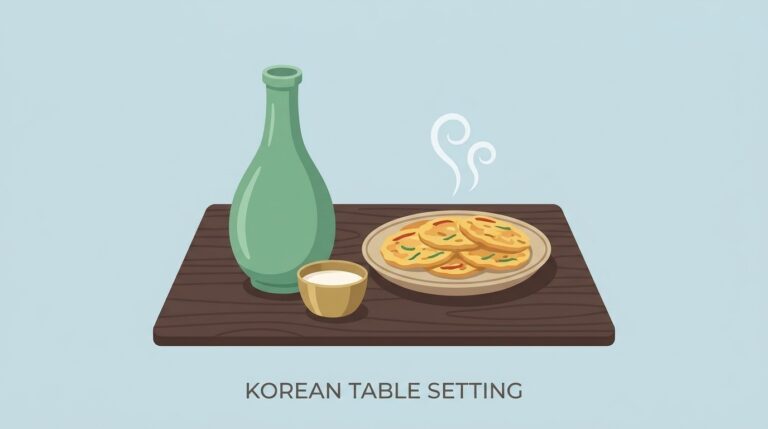
Sip Like a Local: Mastering the Art and Language of Korea’s Makgeolli Renaissance
안녕하세요! Welcome back to another premium edition of Daily Hangul (매일한글). I’m your resident senior editor and local culture navigator.
If you’ve spent any time wandering through the trendy alleys of Euljiro (을지로) or the sophisticated dining districts of Sinsa-dong (신사동) lately, you might have noticed a quiet revolution brewing. Literally. The dusty, plastic bottles of sweet, mass-produced Makgeolli (막걸리)—once relegated to mountain-climbers’ trail endings—have been replaced by elegant, champagne-corked craft traditional alcohols (전통주 – Jeontongju).
As a C1-level learner, you are well beyond basic sentences like “막걸리 맛있어요” (Makgeolli is delicious). To truly immerse yourself in Korea’s dynamic culinary and gastronomy culture (요리와 미식 문화), you need the sophisticated vocabulary to describe complex flavor profiles, appreciate artisanal fermentation, and command the table with effortless drinking etiquette.
Whether you are watching a sleek tasting scene in a trendy K-Drama, dining at a Michelin-starred modern Korean restaurant, or hanging out at an artisanal taproom, this guide is your key to sounding like a true connoisseur.
Phase 2: Deep Dive into 3 Core Tasting Expressions
To talk about premium traditional alcohol, you need to move past simple taste descriptors. Here are three sophisticated expressions that will instantly elevate your Korean gastronomy game.
1. 탄산이 톡 쏘다 (Tansani tok ssoda)
- Pronunciation: [tan-san-i tok sso-da] / tahn-sahn-ee tohk ssoh-dah (Sound analogy: Think of the “tok” as the crisp pop of a bubble, and “sso-da” like the sharp sting of a tiny needle).
- Meaning: “The carbonation is delightfully fizzy/sparkling.”
- K-Culture Moment: You open a bottle of artisanal sparkling Makgeolli (like the famous Boksoondoga – 복순도가), and a natural geyser of micro-bubbles rises elegantly without you even shaking it.
- Editor’s Insight: While “탄산이 있다” simply states the presence of carbonation, “톡 쏘다” vividly describes the sensory experience of natural, active fermentation dancing on your tongue.
- Situation Spectrum:
- Friends & Casual: ✅
- Colleagues & Semi-formal: ✅
- Bosses & Formal: ✅ (Use “탄산이 톡 쏩니다” or “톡 쏘는 탄산이 매력적입니다”)
- 🤔 Think About It: Korean cuisine relies heavily on texture and kinetic sensations (식감 – sik-gam). Why do you think onomatopoeic verbs like “톡 쏘다” are so central to high-end food evaluations in Korea?
2. 텁텁하지 않고 깔끔하다 (Teopteophaji anko kkalppeumhada)
- Pronunciation: [teop-teop-ha-ji an-go kkal-kkeum-ha-da] / tup-tup-hah-jee ahn-goh kkal-kkeum-hah-dah (Sound analogy: “Teop-teop” has a heavy, flat sound matching the dry feeling it describes; “kkal-kkeum” sounds sharp and clean).
- Meaning: “Not dry or chalky, but exceptionally clean/crisp.”
- K-Culture Moment: Tasting a high-end, pure Takju (탁주 – unfiltered rice wine) that has been fermented multiple times (such as Samyangju – 삼양주) and finding that it leaves no unpleasant, chalky residue in your mouth.
- Editor’s Insight: “텁텁하다” describes that sticky, dry, or powdery coating left by lower-quality starches or artificial sweeteners. Calling a drink “깔끔하다” after noting it is “not 텁텁하다” is the ultimate praise for a brewer.
- Situation Spectrum:
- Friends & Casual: ✅
- Colleagues & Semi-formal: ✅
- Bosses & Formal: ✅ (Use “텁텁하지 않고 깔끔합니다”)
- 🤔 Think About It: Traditional Korean dining values harmony and balance. How does a “clean finish” (깔끔한 뒷맛) in a drink help cleanse the palate during a multi-course Korean meal?
3. 달짝지근하면서도 시큼하다 (Daljjakjigeunhamyeonseodo sikeumhada)
- Pronunciation: [dal-jjak-ji-geun-ha-myeon-seo-do si-keum-ha-da] / dahl-jyahk-jee-geun-hah-myun-suh-doh shee-keum-hah-dah.
- Meaning: “Pleasantly sweetish yet delightfully tart/sour.”
- K-Culture Moment: Swirling a glass of premium, additive-free Makgeolli and realizing the sweetness isn’t artificial sugar, but the natural saccharification of rice balanced perfectly by lactic acid fermentation.
- Editor’s Insight: “달다” (sweet) and “시다” (sour) are too basic. “달짝지근하다” indicates a subtle, lingering, sophisticated sweetness, while “시큼하다” suggests a refreshing acidity rather than a harsh sourness.
- Situation Spectrum:
- Friends & Casual: ✅
- Colleagues & Semi-formal: ✅
- Bosses & Formal: ✅ (Use “달짝지근하면서도 시큼합니다”)
- 🤔 Think About It: How does the linguistic nuance of having multiple words for “sweetness” (e.g., 달콤하다, 달달하다, 달짝지근하다) reflect the historic depth of Korean agricultural and culinary appreciation?
Phase 3: Textbook Korean vs. Real Korean Showcase
Let’s look at how textbook phrases pale in comparison to what modern Korean gourmands actually say at the table.
Situation 1: Inquiring about the acidity balance of a drink
- 📖 Textbook Korean: 이 막걸리는 단맛이 납니까, 아니면 신맛이 납니까? (Does this Makgeolli taste sweet, or does it taste sour?)
- 🗣️ Real Korean: 이거 단맛보다 산미가 좀 더 도는 편인가요? (Does this one lean more toward the acidic/tart side than sweetness?)
- 💡 Why it matters: Advanced speakers use the culinary term “산미” (酸味 – acidity) instead of the basic “신맛”. The verb “돌다” (to circulate/hover) elegantly describes how a flavor note subtly manifests on the palate.
Situation 2: Praising the incredibly smooth texture of the drink
- 📖 Textbook Korean: 이 술은 아주 부드럽게 마실 수 있습니다. (I can drink this alcohol very softly.)
- 🗣️ Real Korean: 우와, 이거 목넘김이 진짜 예술이네요! (Wow, the throat-feel of this is truly an art form!)
- 💡 Why it matters: “목넘김” (the sensation of swallowing/throat-feel) is a vital concept in Korean drinking culture. Calling something “예술” (art) is a highly natural, native-level exclamation used to praise superb quality.
Phase 4: K-Culture Deep Dive & Non-verbal Manners
4-1. Nunchi & The Art of the Pour (비언어적 매너)
Drinking traditional alcohol in Korea is a highly ritualistic, communal activity. To display true cultural fluency, master these non-verbal gestures:
- The Double-Handed Respect (두 손 예절): When receiving or pouring alcohol, never use just one hand. Support your pouring hand’s wrist gently with your left hand, or place your left hand flat against your chest. It shows deep respect to your dining companions.
- The Sediment Strategy (지게미 조절): Modern craft Makgeolli contains sediment called 지게미 (jigemi). Some people love it mixed (흔들어 마시기), which yields a creamy body. Others prefer drinking just the clear top layer (청주 – Cheongju style) first. Always ask your companions: “섞어 마실까요, 아니면 그냥 맑게 마실까요?” (Shall we shake it, or drink it clear?). It shows incredible consideration and deep culinary knowledge.
4-2. Cultural Code: The Gen Z & Millennial Traditional Brew Craze
For decades, traditional liquors were perceived as outdated. However, with the rise of small-batch boutique breweries and the convenience of ordering traditional spirits online (the only alcohol class legally allowed to be shipped directly to homes in Korea!), traditional alcohol has become incredibly chic. Today’s youth pair Makgeolli not just with greasy pancakes, but with premium cheese platters, charcuterie, and dry-aged beef, blending heritage with modern luxury.
Phase 5: The Ultimate Gastronomy Roleplay
Setting: A dimly lit, Hanok-style boutique bar in Ikseon-dong. Outside, a gentle summer rain is pattering against the roof tiles (비 오는 날 – the legendary pairing weather for Makgeolli). You are sitting with 민우 (Minwoo), a passionate local foodie friend.
- 민우: (빗소리를 들으며 미소를 지으며) 와, 오늘 비도 오는데 막걸리 한잔하기 딱 좋은 날씨네요! 그렇지 않아요?
(Wow, listening to the rain, it’s the perfect weather for a glass of Makgeolli! Don’t you think?) - You: (🎭 Nodding enthusiastically) 맞아요. 이런 날에는 전통주가 생각나죠. 오늘 여기 시그니처 전통주 리스트가 엄청나네요.
(Exactly. On a day like this, you crave traditional alcohol. The signature drink list here is incredible today.) - 민우: (메뉴판을 보여주며) 여긴 아스파탐 같은 인공 감미료를 안 쓰는 무감미료 막걸리만 취급해요. 어떤 스타일 좋아하세요?
(They only handle additive-free Makgeolli without artificial sweeteners like aspartame. What style do you like?) - You: (🎭 Inspecting the tasting notes closely) 음, 저는 인공적인 단맛보다는, 효모가 살아있어서 탄산이 톡 쏘는 스타일이 당겨요.
(Hmm, rather than artificial sweetness, I’m craving a style with natural carbonation because the yeast is alive.) - 민우: (손가락으로 한 메뉴를 가리키며) 오, 그럼 이 울산 전통 도가에서 만든 스파클링 막걸리 어때요? 진짜 샴페인 같아요!
(Oh, then how about this sparkling Makgeolli made by a traditional brewery in Ulsan? It’s like real champagne!) - You: (🎭 Intrigued) 좋아요! 목넘김이 부드러우면서도 끝맛이 깔끔한 지 확인해보고 싶네요. 안주는 모둠전으로 할까요?
(Great! I want to see if the throat-feel is smooth and the finish is clean. Shall we get the assorted pancakes for the food pairing?) - 민우: (박수를 치며) 역시 미식가시네요! 막걸리에 전은 절대 실패하지 않는 꿀조합이죠. 사장님, 여기 주문할게요!
(As expected of a gourmet! Makgeolli and Jeon is a sweet combination that never fails. Owner, we are ready to order here!)
🔀 Decision Point: The Bottle Arrives!
Minwoo pours you a glass of the freshly opened sparkling Makgeolli. The sediment is gently mixed. What is your response to show your advanced cultural and linguistic sophistication?
- Option A: “이거 너무 달아요. 다른 거 시킵시다.”
- Option B: “와, 탄산이 정말 활발해서 톡 쏘네요! 단맛이 과하지 않고 끝맛이 텁텁하지 않아서 아주 깔끔해요.”
- Option C: “술 맛이 좀 이상해요. 상한 것 아닌가요?”
🏆 Best Choice Analysis:
- Option B is the absolute winner! It utilizes sophisticated vocabulary (탄산이 톡 쏘다, 텁텁하지 않다, 깔끔하다) to evaluate the structure of the drink like a trained sommelier. This will deeply impress any Korean companion.
- Option A is too blunt and lacks descriptive nuance.
- Option C shows a lack of understanding of natural fermentation acids (which can taste sour to the untrained palate) and might sound accidentally rude to the host or establishment.
Phase 6: 10-Second Emotion Shadowing Drill
Bring your Korean to life by practicing these sentences with natural rhythm, pauses (/), and emotional expression.
- [😊 Highly Impressed & Excited]
“와! / 이 막걸리 / 탄산이 진짜 / 장난 아니네요! / 목넘김이 / 예술이에요!”
(Wah! / I mak-geol-li / tan-san-i jin-jja / jang-nan a-ni-ne-yo! / mok-neom-gim-i / ye-sul-i-e-yo!) -
[🤔 Discerning & Sophisticated]
“인공 감미료가 / 안 들어가서 그런지, / 뒷맛이 / 전혀 텁텁하지 않고 / 깔끔하네요.”
(In-gong gam-mi-ryo-ga / an deol-eo-ga-seo geu-reon-ji, / dwit-mat-i / jeon-hyeo teop-teop-ha-ji an-ko / kkal-kkeum-ha-ne-yo.)
Phase 7: K-Culture Mini Dictionary
- 지게미 (Jigemi): The rice sediment left after brewing traditional rice wine. It contains proteins and yeast, giving the drink its rich, milky texture.
- 모둠전 (Modum-jeon): A platter of assorted pan-fried delicacies (meat, zucchini, mushrooms, fish). It is the undisputed legendary culinary pairing (안주 – Anju) for Makgeolli.
- 도가 (Doga / 양조장 – Yangjojang): A traditional sake/rice wine brewery. Many premium dogas have operated for generations.
- 아스파탐 (Aspartame): An artificial sweetener widely used in commercial, cheap Makgeolli to mimic sweetness. Premium traditional alcohols pride themselves on being “무아스파탐” (aspartame-free).
Phase 8: Traveler’s Survival Kit
Emergency Expressions for the Craft Bar Explorer
| Korean (Hangul) | Romanization | English Translation | Pro Tip |
|---|---|---|---|
| 이거 탄산 세게 터지나요? | I-geo tan-san se-ge teo-ji-na-yo? | “Does this carbonation erupt strongly?” | Ask this for craft brands like Boksoondoga so you don’t accidentally spray it everywhere when opening! |
| 인공 감미료 없는 걸로 추천해 주세요. | In-gong gam-mi-ryo eop-neun geol-lo chu-cheon-hae ju-se-yo. | “Please recommend one without artificial sweeteners.” | Use this to instantly signal you want high-quality, craft-level traditional alcohol. |
| 이 술이랑 가장 잘 어울리는 안주가 뭐예요? | I sul-i-rang ga-jang jal eo-ul-li-neun an-ju-ga mwo-yeo-yo? | “What is the best food pairing for this alcohol?” | Perfect for getting the chef’s curated pairing recommendation. |
📌 Editor’s Travel Note: To locate the absolute best craft traditional breweries and modern bars, skip Google Maps, which often lacks updated local spots. Download the Naver Map Application and search for terms like “전통주 바” (Traditional Alcohol Bar) or “바틀샵” (Bottle Shop) to find hidden gems in Seoul.
Phase 9: Going Deeper —
Frequently Asked Questions (FAQ)
Q: What does "탄산이 톡 쏘다 (Tansani tok ssoda)" mean in Korean and how do you pronounce it?
A: In Korean, "탄산이 톡 쏘다 (Tansani tok ssoda)" is pronounced [tan-san-i tok sso-da] and means: "The carbonation is delightfully fizzy/sparkling."
Q: What does "텁텁하지 않고 깔끔하다 (Teopteophaji anko kkalppeumhada)" mean in Korean and how do you pronounce it?
A: In Korean, "텁텁하지 않고 깔끔하다 (Teopteophaji anko kkalppeumhada)" is pronounced [teop-teop-ha-ji an-go kkal-kkeum-ha-da] and means: "Not dry or chalky, but exceptionally clean/crisp."
Q: What does "달짝지근하면서도 시큼하다 (Daljjakjigeunhamyeonseodo sikeumhada)" mean in Korean and how do you pronounce it?
A: In Korean, "달짝지근하면서도 시큼하다 (Daljjakjigeunhamyeonseodo sikeumhada)" is pronounced [dal-jjak-ji-geun-ha-myeon-seo-do si-keum-ha-da] and means: "Pleasantly sweetish yet delightfully tart/sour."







