

Canceled or Redeemed? Navigating the Complex World of Korean Celebrity ‘Hakpok’ Scandals and Comebacks
안녕하세요! 매일한글 수석 에디터이자 여러분의 단짝 친구입니다.
Have you ever been binge-watching a K-Drama, only to find out the lead actor suddenly disappeared from the casting lineup overnight? Or perhaps your favorite K-Pop idol went on an indefinite hiatus following anonymous online allegations?
In the high-stakes world of Korean entertainment, nothing shifts the ground quicker than ‘학폭 미투’ (hak-pok mi-too)—the school violence MeToo movement. For advanced C2 learners, understanding this topic isn’t just about vocabulary; it’s a deep window into Korea’s unique collective psychology, the weight of public morality, and the intricate dance of social redemption.
Today, we aren’t just looking at words in a dictionary. We are diving deep into the actual cultural ecosystem of celebrity self-reflection, public backlash, and the calculated timing of their eventual comebacks. Let’s get started!
Phase 2: Core Expressions Deep Dive
To talk like a true cultural insider, you need to master these three highly sophisticated, emotionally charged expressions.
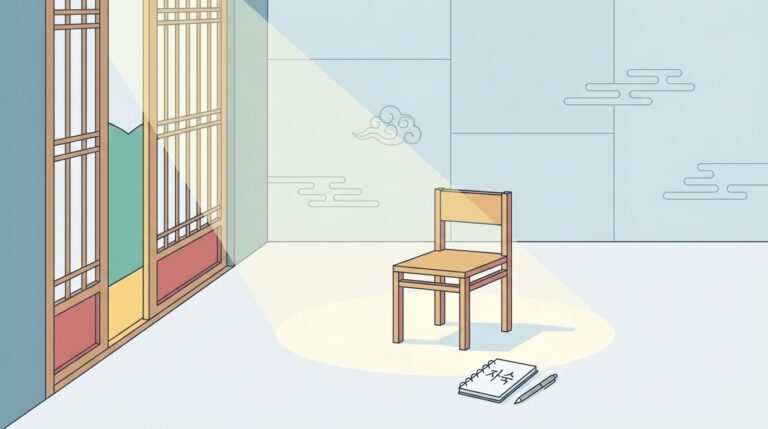
1. 자숙의 시간을 가지다 (jasuk-ui sigan-eul gajida)
- Pronunciation: [ja-sung-ui si-gan-eul ga-ji-da] (Sounds like “jah-soog-euhee she-gahn-eul gah-jee-dah”)
- Meaning: Lit. “To have a time of self-reflection” | Fig. To go into voluntary/forced social exile or hiatus to show remorse.
- K-Culture Moment: This is the ultimate phrase found in every official entertainment agency press release. When a scandal breaks, the agency writes: “OOO 배우는 깊이 반성하며 자숙의 시간을 가질 예정입니다.” (Actor OOO deeply reflects and plans to take time for self-reflection.)
- Editor’s Insight: ‘자숙’ is not just staying home; it is a highly ritualistic cultural performance of remorse. During this time, the celebrity must not post on social media, must not be seen drinking in public, and must completely disappear from the public eye. Breaking ‘자숙’ too early is considered a career-ending offense.
- Situation Spectrum: Casual (⚠️) | Semi-formal (✅) | Formal (✅)
- 🤔 Think About It: Does your culture have a formal, recognized equivalent of ‘자숙’, or does the public prefer immediate legal resolution over performative remorse?
2. 여론의 뭇매를 맞다 (yeolon-ui musmae-leul majda)
- Pronunciation: [yeo-ron-ui mun-mae-reul mat-da] (Sounds like “yuh-ron-euhee moot-mae-reul maht-dah”)
- Meaning: Lit. “To be hit by public opinion’s multiple clubs” | Fig. To face severe, relentless public backlash or cancel culture.
- K-Culture Moment: This phrase is used heavily in investigative journalism and culture columns to describe a public figure receiving a massive wave of criticism on forums like Nate Pann, Naver, and Instagram.
- Editor’s Insight: In Korea, the court of public opinion (여론) often holds more power than the actual court of law. When a celebrity is caught in a lie or tries to minimize their school bullying history, they will 여론의 뭇매를 맞다 until they completely submit and withdraw from their projects.
- Situation Spectrum: Casual (⚠️) | Semi-formal (✅) | Formal (✅)
- 🤔 Think About It: Why do you think Korean public opinion is exceptionally unforgiving toward moral slip-ups compared to artistic or professional achievements?
3. 복귀 각을 재다 (bokgwi gag-eul jaeda)
- Pronunciation: [bok-gwi ga-geul jae-da] (Sounds like “boke-gwee gah-geul jae-dah”)
- Meaning: Lit. “To measure the angle for a comeback” | Fig. To slyly test the waters to see if the public is ready to accept one’s return.
- K-Culture Moment: Used by netizens, entertainment reporters, and culture critics when a disgraced celebrity starts uploading subtle scenery photos on Instagram or gets spotted doing charity work.
- Editor’s Insight: This is a fantastic C2-level colloquialism. The word ‘각’ (angle/opportunity) combined with ‘재다’ (to measure) implies a highly strategic, calculating move. It suggests the celebrity is not returning out of pure passion, but is carefully calculating whether the public’s anger has cooled down.
- Situation Spectrum: Casual (✅) | Semi-formal (⚠️) | Formal (🚫)
- 🤔 Think About It: What subtle signs do celebrities in your country show when they are “measuring the angle” for a comeback after a major scandal?
Phase 3: Textbook Korean vs. Real Korean
Let’s elevate your natural speaking flow by comparing sterile textbook grammar with the vivid phrasing Koreans actually use.
Situation 1: Describing a celebrity who is currently in hiding due to a scandal.
- 📖 Textbook Korean: 그 연예인은 지금 잘못을 뉘우치며 쉬고 있습니다.
(That celebrity is currently resting while repenting for their mistake.) - 🗣️ 진짜 한국어: 그 사람 지금 자숙 들어갔어요. 언제 나올지는 아무도 모르죠.
(That person went into self-reflection. No one knows when they’ll come back.) - 💡 왜 다를까?: Native speakers rarely use formal words like ‘뉘우치며’ in daily conversation. Instead, ‘자숙에 들어가다’ (to enter self-reflection) is the standard, active idiom used to describe this phase of career freeze.
Situation 2: Explaining that the public reaction is completely negative and unforgiving.
- 📖 Textbook Korean: 대중들이 매우 화가 나서 그 배우를 싫어합니다.
(The public is very angry and dislikes that actor.) - 🗣️ 진짜 한국어: 학폭 폭로 터지자마자 여론이 완전히 돌아섰어요. 복귀는 꿈도 못 꾸죠.
(As soon as the school violence exposure broke, public opinion completely turned its back. A comeback is out of the question.) - 💡 왜 다를까?: Saying “대중들이 화가 났다” is grammatically correct but lacks punch. “여론이 돌아서다” (public opinion turned its back) is the exact, high-level metaphor used to describe the cold, irreversible shift in public sentiment.
Phase 4: K-Culture Deep-Dive & Non-verbal Manners
4-1. The Body Language of Apology: 폴더 인사 (Folder Bow) & 자필 사과문 (Handwritten Apology)
When an allegation breaks, the physical response of the celebrity is analyzed under a microscope. If they hold a press conference, they must perform a 90-degree bow, colloquially known as 폴더 인사 (Folder Bow), holding it for at least 3 to 5 seconds to show absolute submission to the public’s judgment.
Furthermore, posting a typed statement is seen as cold and insincere. True remorse must be shown through a 자필 사과문 (handwritten apology letter) posted on Instagram. Netizens will literally analyze the handwriting, word choice, and even the type of paper used to judge if the apology is genuine or written by a public relations firm.
4-2. Why is ‘학폭’ (School Bullying) the Ultimate Taboo?
In Western media, celebrity scandals often involve substance abuse, legal issues, or relationship drama. However, in Korea, 학폭 (school violence) is treated as an unforgivable moral crime.
Why? Because South Korea’s education system is incredibly intense, and school is a collective memory shared by everyone. For Koreans, school should be a safe space, and targeting the vulnerable triggers deep, collective societal trauma. While people might forgive an adult’s mistake (like a DUI, though still heavily criticized), they rarely forgive someone who ruined another child’s youth while climbing their way to fame.
Phase 5: Real-Life Roleplay Scenario
The Setting
The production office of a highly anticipated Netflix-original K-Drama, “The Retribution”. The lead actor was accused of school bullying mid-production. 지지원 (Ji-won, Executive Producer) and 김민우 (Min-woo, PR Specialist) are debating whether to risk keeping the actor or replace them entirely.
지지원: 민우 씨, 이번에 터진 김 배우 학폭 폭로 건 어떻게 생각해요? 지금 촬영이 절반이나 끝났는데...
       (Min-woo, what do you think about Actor Kim's school bullying allegation? We're halfway through filming...)

김민우: 🎭 (한숨을 쉬며 이마를 짚는다) 여론이 완전히 돌아섰습니다. 지금 인터넷 커뮤니티마다 하차 요구가 빗발치고 있어요.
       (Sighs and touches his forehead) Public opinion has completely turned. Every online community is flooded with demands for his removal.

지지원: 김 배우 본인은 그냥 철없던 시절의 다툼이었다는데, 그냥 자숙의 시간을 조금 가지면 안 될까요?
       (Actor Kim says it was just a childhood fight. Can't we just have him take some time for self-reflection?)

김민우: 🎭 (단호하게 고개를 저으며) 절대 안 됩니다. 요즘 학폭 이슈는 역풍이 엄청납니다. 자숙 정도로 넘어갈 수 있는 수준이 아니에요. 당장 계약 해지하고 배우 교체하셔야 합니다.
       (Shakes his head firmly) Absolutely not. These days, the backlash on school violence is massive. It's not something we can get past with just 'self-reflection.' You need to terminate his contract and replace the actor immediately.

지지원: 하아... 주연 교체하면 손해액이 어마어마한데... 혹시 조금 더 지켜보면서 복귀 각을 잴 수는 없을까요?
       (Sigh... if we replace the lead, the financial loss will be astronomical... Can't we wait a bit and test the waters for a comeback?)

김민우: 지금 복귀 각을 쟀다가는 드라마 자체가 영구 퇴출당합니다. 빠른 손절이 답입니다.
       (If we try to test the waters now, the drama itself will be permanently boycotted. A quick cut-off is the only answer.)
🔀 Interactive Choice Point: How should Producer Ji-won respond?
- Choice A: “그래요, 손해를 보더라도 여론의 뜻에 따라 배우 교체로 가죠.”
(Alright, even if we take a loss, let’s follow public opinion and replace the actor.) - Choice B: “아직 진위 여부가 가려지지 않았으니, 공식 입장 발표를 미루고 촬영을 강행합시다.”
(Since the truth hasn’t been verified yet, let’s delay the official statement and push ahead with filming.) - Choice C: “기자회견을 열어서 김 배우가 직접 대중 앞에서 90도 사과를 하게 만들면 어떨까요?”
(How about we hold a press conference and make Actor Kim do a 90-degree apology directly in front of the public?)
💡 Feedback on Your Choice:
- Best Choice (A): Congratulations! You understand the gravity of Korean public sentiment. Immediate replacement, though financially painful, is the only way to save the project from a total public boycott.
- Risk Choice (C): A classic crisis management move, but risky. If the victim releases more evidence after the apology, the “fake remorse” backlash will double the damage.
- Bad Choice (B): Disaster! In Korea, pushing ahead while ignoring public outcry is seen as extreme arrogance. The drama will likely face sponsor boycotts, zero viewership, and severe reputational damage.
Phase 6: 10-Second Emotion Shadowing Drill
Practice speaking with the exact emotional weight, pauses (/), and tone of a native speaker discussing media scandals.
- [🥺 Deeply Concerned & Solemn]
“아무리 / 연기를 잘해도 / 국민 정서상 / 학폭 가해자가 / 주연으로 나오는 건 / 용납하기 어렵죠.”
(A-mu-ri / yeon-gi-reul jal-hae-do / gung-min jeong-seo-sang / hak-pok ga-hae-ja-ga / ju-yeon-eu-ro na-o-neun geon / yong-nap-ha-gi eo-ryeop-jyo.)
No matter how good their acting is, due to national sentiment, it’s hard to tolerate a school bully appearing as the lead. -
[😒 Skeptical & Sarcastic]
“자숙한 지 / 겨우 세 달 만에 / 복귀 각을 재는 건 / 대중을 / 너무 기만하는 행동이에요.”
(Ja-suk-han ji / gyeo-u se dal man-e / bok-gwi ga-geul jae-neun geon / dae-jung-eul / neo-mu gi-man-ha-neun haeng-dong-i-e-yo.)
Trying to measure the angle for a comeback after only three months of self-reflection is extremely deceitful to the public.
Phase 7: K-Culture Mini-Dictionary
- 학폭 미투 (hak-pok mi-too) | Noun | The school violence exposure movement where former victims expose the past cruelties of celebrities.
- 자숙 (ja-suk) | Noun | Self-reflection/remorse period during which one voluntarily refrains from public activities.
- 여론 (yeo-lon) | Noun | Public opinion; the collective moral consensus of the nation.
- 하차 (ha-cha) | Noun/Verb | Lit. “Getting off a vehicle” | Fig. Stepping down or being removed from a drama, movie, or variety show.
Phase 8: Survival Kit for Travelers & K-Culture Followers
Survival Expressions TOP 3
- “너 그 뉴스 봤어?” (Neo geu nyu-seu bwas-seo?)
- Meaning: Did you see that news? (Perfect way to start a juicy gossip session with your Korean friends.)
- “결국 하차했대.” (Gyeol-guk ha-cha-haet-dae.)
- Meaning: They said he/she eventually stepped down from the show.
- “진짜 쉴드 불가다.” (Jin-jja swil-deu bul-ga-da.)
- Meaning: This is truly indefensible. (Lit. “Shield impossible”—a popular netizen term for when a scandal is too bad to defend.)
📝 Editor’s Note: If you want to see raw, unedited public opinion on celebrity scandals in real-time, skip global SNS and check out the 네이트판 (Nate Pann) or the entertainment section of 네이버 뉴스 (Naver News). Use search terms like “학폭 폭로” or “자숙 복귀” to see what real Korean netizens are saying! (Note: Online trends change rapidly; stay updated with the latest community guidelines).
Phase 9: “한 발 더 깊이” (Go One Step Deeper)
In the West, justice is often viewed through a legal lens: “Did they serve their sentence or pay the fine?” If yes, they are technically cleared to work. In Korea, however, justice is deeply tied to joint community responsibility and moral purity.
A celebrity is not just an entertainer; they are viewed as a role model who enjoys public love and financial success funded directly by the citizens. Therefore, when they violate community ethics—especially by hurting the weak—they lose their moral right to stand in the spotlight. This is why “국민 정서” (national sentiment) is often more powerful than legal statutes of limitations.
💬 Your Turn: What do you think? Should a celebrity’s past behavior as a teenager permanently end their career as an adult, or should they be allowed a second chance after sincere 자숙? Let me know in the comments below!
Phase 10: FAQ & Common Mistakes
Q: Can a celebrity ever fully recover from a ‘학폭’ scandal in Korea?
A: It is extremely difficult. While some actors and singers return after several years of absolute silence and consistent charity work, they are almost always labeled with the tag “학폭 꼬리표” (the school bully tag) for the rest of their careers. Any new project they release will face critical comments.
Q: What is the difference between ‘컴백’ (comeback) and ‘복귀’ (bokgwi)?
A: ‘컴백’ is a positive term used when an idol releases a new album (e.g., “아이브 컴백!”). ‘복귀’ is used when a celebrity returns to the industry after a long hiatus, especially one caused by retirement, injury, or a scandal.
Q: Does ‘자숙’ have a legal timeframe?
A: No. There is no law dictating how long a celebrity must reflect. It is determined entirely by public sentiment. Returning too early triggers a massive secondary backlash, while waiting too long might make the public completely forget about them.
🚨 Common Mistakes Alert!
- Mistake 1: Saying “그 배우는 컴백했어요” after a scandal.
- Correction: Use “그 배우는 자숙을 마치고 복귀했어요” (That actor completed self-reflection and returned).
- Mistake 2: Translating “canceled” directly as “취소되다”.
- Correction: In Korean entertainment, say “매장당하다” (to be buried alive metaphorically) or “영구 퇴출당하다” (to be permanently banished).
- Mistake 3: Thinking a simple “미안해요” (Sorry) on Instagram is enough.
- Correction: The public expects formal, honorific remorse: “머리 숙여 사죄드립니다” (I bow my head and apologize deeply).
Phase 11: Action Mission & Engagement
- 🥉 Bronze Mission: Write a 1-sentence comment below using the phrase “자숙의 시간을 가지다” in the past tense.
- 🥈 Silver Mission: Share this post on your SNS with your opinion on celebrity cancel culture in Korea, using the tag #DailyHangul_C2.
- 🥇 Gold Mission: Watch a current K-drama or read a Korean entertainment news article. Identify if any actor has previously gone through 자숙, and discuss it with a language exchange partner using the phrase “여론의 뭇매”.
- 🎮 K-Culture Mission: Find a real-life “자필 사과문” (handwritten apology letter) of any Korean celebrity online. Try to spot how many times they use honorifics and words expressing deep shame.
Phase 12: Interactive Quiz Challenge
Test your knowledge of high-level Korean entertainment terms and cultural nuances!
1. Which phrase best describes a celebrity who is quietly checking social media and news to see if the public is ready for their return?
- A) 눈치 게임을 하다 (nunchi geim-eul hada)
- B) 복귀 각을 재다 (bokgwi gag-eul jaeda)
- C) 여론을 이끌다 (yeolon-eul ikkeulda)
See Answer & Explanation
Correct Answer: B
Explanation: ‘복귀 각을 재다’ literally means to measure the angle of a comeback, signifying the strategic testing of public sentiment before returning.
2. Fill in the blank with the correct form of the word:
“그 가수는 학폭 폭로가 터진 후, 모든 활동을 중단하고 현재 ___________ 시간을 보내고 있다.”
* Hint: Self-reflection time.
See Answer & Explanation
Correct Answer: 자숙의 (jasuk-ui)
Explanation: ‘자숙의 시간’ is the standard noun phrase for a period of self-reflection and voluntary hiatus.
3. True or False: In Korea, a written apology typed on a notepad app and posted on Instagram is considered the most sincere form of apology.
- True / False
See Answer & Explanation
Correct Answer: False
Explanation: Typed apologies are often criticized as lazy or written by PR teams. A ‘자필 사과문’ (handwritten apology letter) is culturally expected to show authentic remorse.







