

How to Say Someone is Lazy in Korean (Without Sounding Rude!)
Phase 1: Empathy (Your Cozy Opening)
안녕하세요! (An-nyeong-ha-se-yo!) Welcome back to Daily Hangul, your cozy corner for learning real, breathing Korean. I’m your head editor and local culture navigator.
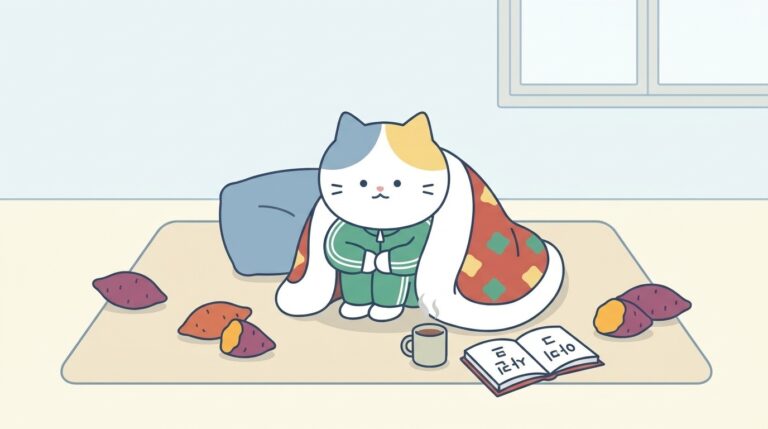
Imagine this: It’s a rainy Sunday afternoon in Seoul. You’ve spent the whole week studying or working. You’re wrapped in a warm blanket, a half-eaten bag of sweet potato chips by your side, watching your favorite K-Drama, Our Beloved Summer. Your phone buzzes. It’s your Korean friend asking, “오늘 뭐 해?” (What are you doing today?)
You want to say, “I’m feeling so lazy today, I just want to stay in bed.”
You open your translation app, search for “lazy,” and find the word 게으르다 (ge-eu-reu-da). You proudly text back: “저는 게으릅니다.” (Jeo-neun ge-eu-reup-ni-da.)
Oh no! 😱 There is a sudden, awkward silence on the other end.
Why? Because in Korean, calling yourself or someone else 게으르다 sounds incredibly harsh, almost like a serious moral flaw! It sounds like you are confessing to being an unproductive member of society.
Today, we are going to fix that. You will learn how to describe that cozy, lazy feeling like a real Seoulite, keeping your friendships warm and your Korean sounding perfectly natural.
Phase 2: The Core 3 Lazy Phrases Deep Dive
Here are the top three expressions locals actually use to describe being lazy, without any of the harsh judgment.
1. 귀찮아 (Gwi-chan-ah)
- Pronunciation: [Gwi-chan-ah] / Sounds like “Gwee-chan-ah” with a soft, sighing ‘ah’ at the end.
- Meaning: Literally “It is a hassle,” but used as “I don’t feel like it” or “I’m too lazy to do this.”
- K-Culture Moment: This is the ultimate lazy anthem. You will hear K-Drama characters whine this while melting into the couch after a long day of work.
- Editor’s Insight: It’s not an aggressive refusal. It’s a soft, relatable confession of low energy. Everyone in Korea understands this feeling!
- Situation Spectrum:
- Friends & Casual: ✅ (Perfect!)
- Co-workers (Semi-formal): ⚠️ (Use “귀찮네요” with caution)
- Bosses & Elders (Formal): 🚫 (Never use this!)
- 🤔 Think About It: Why does Korean use an adjective about the situation (“It is a hassle”) instead of directly labeling the person (“I am lazy”)? How does this protect people’s feelings in your culture?
2. 귀차니스트 (Gwi-chan-is-teu)
- Pronunciation: [Gwi-chan-is-teu] / Sounds like “Gwee-chan-east” with a light “eu” sound at the very end.
- Meaning: A blend of 귀찮다 (hassle) and the English suffix -ist (as in artist). It translates to “a professional slacker” or “lazybones.”
- K-Culture Moment: Many K-Pop idols jokingly call themselves a “귀차니스트” during behind-the-scenes vlogs when they show their messy rooms or simple rest days.
- Editor’s Insight: This is a very playful, trendy noun. By turning laziness into a “hobby” or “profession,” it becomes cute and endearing.
- Situation Spectrum:
- Friends & Casual: ✅ (Super cute and funny)
- Co-workers (Semi-formal): ⚠️ (Only if you are close)
- Bosses & Elders (Formal): 🚫 (Too casual)
- 🤔 Think About It: Mixing Korean roots with English suffixes (like -ist) is a huge part of modern Korean youth slang. What other blended words have you heard?
3. 눕방하다 (Nup-bang-ha-da)
- Pronunciation: [Noop-bang-ha-da] / Sounds like “Noop-bahng-hah-dah”.
- Meaning: Literally “to do a lying-down broadcast,” but casually used to mean “lying down doing absolutely nothing.”
- K-Culture Moment: This originated from K-Pop idols doing live broadcasts directly from their beds (called 눕방). Now, normal people use it to describe their lazy weekends.
- Editor’s Insight: Use this when you want to brag about your legendary laziness over the weekend.
- Situation Spectrum:
- Friends & Casual: ✅ (Highly relatable)
- Co-workers (Semi-formal): 🚫 (Too informal)
- Bosses & Elders (Formal): 🚫 (Do not use)
- 🤔 Think About It: How does technology change our vocabulary? In your native language, is there a word that came from live-streaming or social media to describe relaxing?
Phase 3: Textbook Korean vs. Real Korean
Let’s look at how the textbooks teach you to speak, versus how real Koreans actually talk on the streets of Mapo-gu.
Scenario 1: When a friend asks you to go hiking on Saturday morning
- 📖 Textbook Korean: “저는 등산하기 싫습니다. 게으르기 때문입니다.” (I do not want to hike. It is because I am lazy.) – Sounds like a robot confessing its programming error!
- 🗣️ Real Korean: “아, 등산은 너무 귀찮아. 그냥 누워 있을래.” (Ah, hiking is such a hassle. I just want to lie down.)
- 💡 Why it’s different: Koreans prefer expressing their physical state (“just wanting to lie down”) over labeling themselves with negative traits.
Scenario 2: Explaining why your room is messy
- 📖 Textbook Korean: “저는 청소를 안 했습니다. 게으른 사람입니다.” (I did not clean. I am a lazy person.) – Sounds way too self-critical!
- 🗣️ Real Korean: “아, 청소해야 하는데… 만사 귀찮네.” (Ah, I need to clean… but everything is such a hassle.)
- 💡 Why it’s different: Adding “해야 하는데” (I should do it, but…) shows you know your responsibility, making your laziness seem temporary and relatable.
Phase 4: K-Culture Deep Dive & Non-Verbal Manners
4-1. The Art of the “Lazy Sigh” (비언어적 매너)
In Korea, expressing laziness isn’t just about words; it’s an entire physical performance! To truly deliver “귀찮아” naturally, you need the following:
1. The Melt: Let your shoulders drop completely, as if your bones have turned to jelly.
2. The Soft Sigh: Exhale a soft “아이고…” (Ai-go…) before you speak. This instantly signals to your friend that your battery is at 1%.
4-2. The “Blanket Danger” Culture Code
Koreans have a famous saying: “이불 밖은 위험해” (Ibul bakkeun wiheomhae), which means “It’s dangerous outside the blanket.” Because Korean winters are freezing and summers are humid, home relaxation is highly romanticized. Being lazy inside your room with floor heating (온돌 – ondol) is considered the ultimate self-care, not a bad habit!
Phase 5: Interactive Roleplay Scenario
Setting: It is 2:00 PM on a Saturday. Sunlight is streaming into Yumi’s cozy apartment in Hongdae. Yumi is wearing a giant green tracksuit, lying on the floor.
Characters:
* Yumi (유미): Your energetic but currently unmotivated Korean friend.
* You (A2 Learner): Ready to practice your new casual vocabulary.
(The scene begins with Yumi staring at her phone.)
Yumi: (🎭 Groaning softly while rolling over the floor)
아… 오늘 날씨 진짜 좋다.
(Ah… Oneul nal-ssi jin-jja jo-ta.)
“Ah… The weather is so nice today.”
You: (🎭 Sitting cross-legged next to her)
맞아. 우리 밖에 나갈까?
(Ma-ja. Uri bak-ke na-gal-kka?)
“Right. Shall we go outside?”
Yumi: (🎭 Pulling her blanket up to her chin)
아니… 나 오늘 완전 귀차니스트 모드야.
(A-ni… Na o-neul wan-jeon gwi-cha-nis-teu mo-deu-ya.)
“No… I am in total ‘lazybones’ mode today.”
You: (🎭 Smiling)
진짜? 뭐 하고 싶은데?
(Jin-jja? Mwo ha-go sip-eun-de?)
“Really? What do you want to do?”
Yumi: (🎭 Pointing at the TV)
그냥 하루 종일 눕방하고 싶어. 너는?
(Geu-nyang ha-ru jong-il nup-bang-ha-go sip-eo. Neo-neun?)
“I just want to lie down all day. What about you?”
🔀 Decision Point: What do you say next?
- Option A: “저도 게으른 사람이에요. 같이 누워요!” (Jeo-do ge-eu-reun sa-ram-i-e-yo. Gat-i nu-weo-yo!)
- Option B: “나도 오늘 다 귀찮아. 배달 시키자!” (Na-do o-neul da gwi-chan-ah. Bae-dal si-ki-ja!)
- Option C: “일어나세요! 등산 갑시다!” (I-reo-na-se-yo! Deung-san gap-si-da!)
🏆 Best Choice: Option B
Why? Saying “나도 오늘 다 귀찮아” (I’m also too lazy for everything today) matches Yumi’s energy perfectly! Suggesting “배달 시키자” (Let’s order delivery) is the ultimate Korean way to bond over a lazy day.
⚠️ Risk Choice: Option A
Why? Calling yourself “게으른 사람” (a lazy person) makes the mood unnecessarily heavy and formal. Keep it light with “귀찮아”!
Phase 6: 10-Second Shadowing Drill
Let’s practice speaking with local emotion! Read these out loud, pausing at the slashes (/).
- [😤 Exhausted & Whiny]
“아… / 오늘 진짜 / 귀찮다…”
(Ah… / o-neul jin-jja / gwi-chan-da…)
“Ah… today is such a hassle…” -
[🥺 Soft & Cute Cozy Voice]
“이불 밖은 / 위험해! / 누워 있자.”
(I-bul bak-keun / wi-heom-hae! / nu-weo it-ja.)
“It’s dangerous outside the blanket! Let’s just lie here.”
Phase 7: K-Culture Mini Dictionary
| Word (Korean) | Romanization | English Meaning | Cultural Context |
|---|---|---|---|
| 귀차니즘 | Gwi-chan-i-zeu-m | The Lazy Disease | A playful diagnosis for when you physically cannot move due to laziness. |
| 방콕 | Bang-kok | Home Vacation | Playful slang that sounds like “Bangkok, Thailand,” but actually means “stuck in my room” (방 – room + 콕 – stuck). |
| 집순이 / 집돌이 | Jip-sun-i / Jip-dol-i | Homebody | A girl (순이) or boy (돌이) who loves staying home more than anything. |
| 귀찮아서 | Gwi-chan-a-seo | Because I was lazy | The absolute best, most accepted excuse for not replying to a text quickly. |
Phase 8: Traveler’s Survival Kit
Even when you are traveling, laziness strikes! Here are three survival sentences for your cozy days in Korea.
Survival Cards
- “배달 돼요?” (Bae-dal dwae-yo?)
- Meaning: “Do you deliver?”
- Pro Tip: Use this when you are too lazy to dress up and go to a restaurant.
- “하루 종일 쉴래요.” (Ha-ru jong-il swil-rae-yo.)
- Meaning: “I want to rest all day.”
- Pro Tip: Say this to your travel partner when your feet hurt from exploring Seoul.
- “움직이기 싫어요.” (Um-jik-i-gi sil-eo-yo.)
- Meaning: “I don’t want to move.”
- Pro Tip: Perfect for when you are melting under the floor heating.
📌 Editor’s Travel Note:
If you are having a lazy day in your Seoul hotel or Airbnb, don’t worry about going out! Download the Naver Map App to find the nearest convenience store, or use local delivery apps to bring hot food right to your doorstep. It’s cheap, incredibly fast, and requires zero social interaction!
Phase 9: Deep Thoughts — “One Step Deeper”
Korea is globally famous for its “빨리빨리” (palli-palli / hurry-hurry) culture. Everything moves fast: high-speed internet, overnight delivery, and quick meals.
Because of this high-pressure lifestyle, words like 귀차니즘 (gwichanizeum) are not seen as lazy flaws anymore. Instead, they are celebrated as a necessary psychological escape valve. When a Korean says “귀찮아,” they are giving themselves permission to pause in a world that never stops running.
💬 Your Turn: How does your culture view lazy days? Do you have a special word for relaxing at home? Let me know in the comments below!
Phase 10: FAQ & Avoiding Misunderstandings
Q: Can I use “게으르다” to describe my pets?
A: Yes! Calling your dog or cat “게으르다” (lazy) is perfectly fine and cute. It is only when you apply it to humans (especially adults) that it carries a harsh, critical tone.
Q: How do I tell my boss I can’t finish something because I’m tired, without saying “귀찮아”?
A: Never say “귀찮아” to a boss. Instead, say: “오늘 몸 컨디션이 조금 안 좋습니다.” (My body’s condition is not very good today.) This sounds professional and polite.
Q: Is “귀차니스트” gender-neutral?
A: Yes, absolutely! Anyone of any gender can proudly call themselves a “귀차니스트.”
🚨 Common Mistakes Alert!
- Mistake 1: Saying “너 참 게으르다” (You are so lazy) to a friend.
- Fix: Say “오늘 움직이기 싫구나?” (You don’t want to move today, huh?) instead.
- Mistake 2: Using “귀찮아” to decline a formal dinner invitation.
- Fix: Say “선약이 있어서 어렵습니다” (It’s difficult because I have a prior engagement) to stay polite.
Phase 11: Action Missions
- 🥉 Bronze (At-Home Challenge): Record your voice saying: “아… 만사 귀찮다…” with the perfect “Lazy Sigh” we practiced in Phase 4.
- 🥈 Silver (Social Challenge): Post a picture of your cozy bed or couch on social media and caption it: “이불 밖은 위험해” (It’s dangerous outside the blanket!).
- 🥇 Gold (Real-Life Challenge): Next time a Korean friend asks you to meet up but you want to stay home, text them: “나 오늘 너무 귀찮아서 방콕할래!” (I’m too lazy today, so I’m going to vacuum-vacation at home!).
Phase 12: Interactive Quiz Challenge
Test your new skills! Click the boxes below to check your answers.
1. Which word is the friendliest way to say you are too lazy to do chores?
- A) 게으르다 (ge-eu-reu-da)
- B) 귀찮다 (gwi-chan-da)
- C) 피곤하다 (pi-gon-ha-da)
Click to see the Answer!
Correct Answer: B) 귀찮다!
A is too harsh, and C just means tired, not necessarily unmotivated.
2. True or False: You can say “귀찮아” to your Korean language teacher when they give you homework.
Click to see the Answer!
Correct Answer: False!
Saying “귀찮아” to a teacher is considered very rude. Instead, just smile, sigh internally, and say “네, 알겠습니다” (Yes, I understand).







