

How to Say “Really?!” in Korean Like a True K-Drama Star
Phase 1: Welcome to the K-Drama Reaction Club!
안녕하세요! (Annyeonghaseyo!) Hello, my dear friend! I am your lead editor at Daily Hangul, your cozy guide to the colorful world of Korean language and culture.
Have you ever been watching your favorite K-Drama, munching on delicious Korean fried chicken, when suddenly the main character gasps, opens their eyes wide, and shouts: “Jinjja?!” (진짜?)
Maybe they looked shocked, maybe they looked incredibly happy, or maybe they looked downright suspicious. But one thing is for sure: they use this word all the time.
If you have ever felt confused about how to say “really” without sounding like a stiff grammar textbook, you are in the right place! Today, we are going to unlock the magic of 진짜 (Jinjja). By the end of this guide, you will be reacting to your Korean friends just like a native K-Drama star, making them smile and say, “Wow, your Korean is so natural!”
This guide is packed with real-life secrets gathered from hundreds of beginner students just like you who wanted to sound less like a translation app and more like a warm, expressive friend. Let’s dive in!
Phase 2: The Three Faces of “Jinjja” (진짜)
Let’s break down the three most common ways you can use this super-expressive word in your daily life.
1. 진짜? (Jinjja?)
- Pronunciation: jin-jja / Sounds like “jean-jah?” with a little bounce on the second syllable.
- Meaning: “Really?” or “Is that true?” (Casual/Informal)
- K-Culture Moment: Think of a cozy late-night convenience store scene where two best friends are gossiping about a secret office crush.
- Editor’s Insight: The secret is all in your pitch! If you want to ask a question, slide your voice upward at the end (jin-JJA?). If you are just agreeing, let your voice drop (jin-jja.).
- Situation Spectrum:
- Close Friends & Casual settings: ✅ (Perfect!)
- Co-workers & Semi-formal settings: ⚠️ (Use with caution)
- Bosses, Elders, & Formal settings: 🚫 (Too casual!)
- 🤔 Think About It: In many Western cultures, we show we are listening by nodding or saying “Uh-huh.” Why do you think Korean culture loves active, expressive verbal reactions so much?
2. 진짜요? (Jinjja-yo?)
- Pronunciation: jin-jja-yo / Sounds like “jean-jah-yo?”
- Meaning: “Really?” or “Are you serious?” (Polite/Semi-Formal)
- K-Culture Moment: You are dining with your polite Korean coworker, and they offer to buy you another round of delicious Korean BBQ pork belly (삼겹살 – samgyeopsal).
- Editor’s Insight: This is your safety net! By simply adding 요 (-yo) at the end, you turn this casual word into a polite reaction you can use with anyone—from taxi drivers to your friendly local barista.
- Situation Spectrum:
- Close Friends & Casual settings: ⚠️ (A bit too polite, might sound distant)
- Co-workers & Semi-formal settings: ✅ (Highly recommended!)
- Bosses, Elders, & Formal settings: ✅ (Safe and respectful)
- 🤔 Think About It: How amazing is it that adding just one tiny syllable (요) can transform a word from casual to respectful? It shows how deeply Korean culture values respect for others.
3. 진짜… (Jinjja + Adjective)
- Pronunciation: jin-jja
- Meaning: “Seriously,” “Very,” or “So”
- K-Culture Moment: Walking through a bustling street market in Seoul, smelling fresh hotteok (sweet pancakes), and sighing with pure happiness.
- Editor’s Insight: You can place “진짜” right before any adjective to boost its power. For example, instead of just saying “It is delicious,” say: 진짜 맛있어요! (Jinjja masisseoyo!)
- Situation Spectrum:
- Close Friends & Casual settings: ✅
- Co-workers & Semi-formal settings: ✅
- Bosses, Elders, & Formal settings: ✅
- 🤔 Think About It: When you want to emphasize something in your native language, what word do you use the most? Is it “seriously,” “literally,” or “so”?
Phase 3: Textbook Korean vs. Real-Life Korean
Let’s look at how textbooks sometimes teach us to sound like polite robots, and how real Koreans actually speak on the streets of Seoul!
Situation 1: Expressing surprise when a friend shares big news
- 📖 Textbook Korean: 정말입니까? (Jeongmal-imnikka? – “Is that a fact?”)
- 🗣️ Real-Life Korean: 진짜? (Jinjja? – “Really?!”) or 진짜로? (Jinjja-ro? – “For real?”)
- 💡 Why is it different? While the textbook version is grammatically perfect, it sounds like a news anchor reporting the evening news. Real friends use short, punchy words to match each other’s emotional energy.
Situation 2: Telling someone the food is super delicious
- 📖 Textbook Korean: 매우 맛있습니다. (Maeu masit-seumnida. – “It is highly delectable.”)
- 🗣️ Real-Life Korean: 진짜 맛있어요! (Jinjja masisseoyo! – “This is seriously so good!”)
- 💡 Why is it different? The word “매우” (maeu) is mostly used in written books or formal speeches. In casual cafes and restaurants, “진짜” (jinjja) brings life, warmth, and genuine appreciation to the table.
Phase 4: K-Culture Deep Dive & Body Language
To truly master “진짜,” you need to know the secret non-verbal ingredients that make it work!
4-1. The Art of the K-Reaction (리액션)
In Korea, being a good conversationalist is not just about talking; it is about reacting! This is called 리액션 (ri-aek-seon). When someone is speaking to you, saying “진짜요?” while nodding your head slightly is a beautiful way to show that you are fully present and deeply interested in their story.
- The Head Tilt: When asking “진짜?” in surprise, tilt your head slightly to the side. It adds a cute, friendly vibe!
- The Hand Clap: If you hear something shocking or hilarious, clap your hands once while saying “진짜?!” This is the ultimate K-Drama comedy reaction.
4-2. The Cozy Café Culture
In K-Dramas, “진짜” is the soundtrack of warm cafes. Whether drinking an Iced Americano in a trendy Hongdae coffee shop or sipping traditional plum tea in a quiet Insadong Hanok, you will hear waves of “진짜~” rolling from every table. It is the sound of people connecting, sharing secrets, and bonding.
Phase 5: Cozy Hanok Café Roleplay
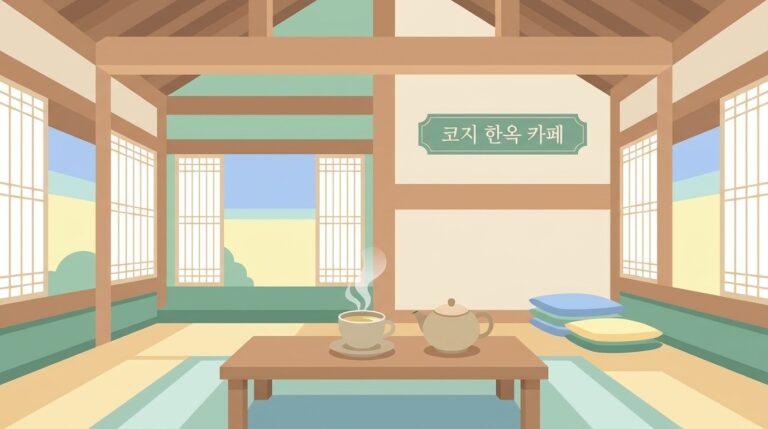
Let’s pretend we are sitting in a beautiful, warm wooden Hanok café in Seoul. The sweet smell of ginger tea fills the air, and soft acoustic music plays in the background. You are chatting with Minho, your friendly Korean local guide!
Characters:
- Minho: A warm, energetic Korean friend who loves sharing local spots.
- You: A curious traveler eager to practice natural Korean!
- Minho (🎭 smiling widely): 여기 전통 대추차 진짜 맛있어요! (Yeogi jeontong daechucha jinjja masisseoyo! / This traditional jujube tea is really delicious!)
- You (🎭 eyes wide open): 진짜요? 저도 마시고 싶어요! (Jinjja-yo? Jeodo masigo sipeoyo! / Really? I want to drink it too!)
- Minho (🎭 waving hand happily): 네, 제가 하나 더 주문해 줄게요. (Ne, jega hana deo jumunhae julgeyo. / Yes, I will order one more for you.)
- You (🎭 bowing head slightly): 우와, 진짜 감사합니다! (Uwa, jinjja gamsahamnida! / Wow, thank you so much, seriously!)
- Minho (🎭 taking a sip of tea): 한국 여행은 어때요? 재미있어요? (Hanguk yeohengeun eotteoyo? Jaemi-isseoyo? / How is your Korea trip? Is it fun?)
- You (🎭 nodding enthusiastically): 네! 서울은 진짜 예뻐요. (Ne! Seoureun jinjja yeoppoyo. / Yes! Seoul is seriously beautiful.)
- Minho (🎭 laughing warmly): 다행이네요! 참, 내일 K-Pop 콘서트 티켓 있어요? (Dahaeng-ineyo! Cham, naeil K-Pop konseoteu tiket isseoyo? / I am glad! By the way, do you have tickets for the K-Pop concert tomorrow?)
- You (🎭 looking sad): 아니요, 티켓이 없어요. 너무 비싸요. (Aniyo, tiketi eopseoyo. Neomu bissayo. / No, I do not have tickets. They are too expensive.)
- Minho (🎭 whispering secretly): 사실… 저한테 남는 티켓이 하나 있어요. 같이 갈래요? (Sasil… jeohante namneun tiketi hana isseoyo. Gachi gallaeyo? / Actually… I have an extra ticket. Do you want to go together?)
- You (🎭 gasping in complete shock): 진짜요?! 거짓말 아니죠?! (Jinjja-yo?! Geojitmal anijo?! / Seriously?! You are not lying, right?!)
🔀 Decision Point!
Minho just offered you a free ticket to a massive K-Pop concert! How do you react to show your ultimate excitement?
- Choice A: “정말입니까?” (Jeongmal-imnikka?)
- Choice B: “진짜요?! 대박!” (Jinjja-yo?! Daebak!)
- Choice C: “진짜.” (Jinjja.)
💡 Action Analysis:
- If you chose Choice A: It is grammatically correct, but it sounds like you are a police officer interrogating Minho. He might feel a bit awkward!
- If you chose Choice B (Best Choice!): You nailed it! Adding 대박 (Daebak – Awesome!) after “진짜요?!” shows high energy, respect, and pure joy. Minho will be thrilled to take you!
- If you chose Choice C: Saying “진짜” without “요” to Minho (unless you are incredibly close childhood friends) might sound a bit too blunt and informal. Keep that “요” handy!
Phase 6: The 10-Second Emotion Shadowing Drill
Let’s train your mouth and emotions! Say these aloud, matching the feeling in the bracket. The slash / means a tiny pause.
- [😊 Excited & Shocked]
- “진/짜요?!” (Jin/jja-yo?!)
- Keep the “jja” high-pitched and bright!
- [🥺 Soft & Comforting]
- “진~짜요?” (Jin~jja-yo?)
- Stretch out the “jin” to show you deeply care about their story.
- [😤 Agreeing firmly]
- “진/짜/ 맛있어요!” (Jin/jja/ masisseoyo!)
- Punch each syllable with confidence!
Phase 7: Your K-Culture Mini Dictionary
Here are four golden reaction words that go hand-in-hand with 진짜:
- 대박 (Daebak)
- Meaning: “Awesome!” or “No way!”
- How to use: Use it when something incredibly cool or surprising happens. Pair it: “진짜 대박!”
- 헐 (Heol)
- Meaning: “OMG” or “What on earth…”
- How to use: Use this casual slang when you hear shocking, slightly negative, or unbelievable news. “헐, 진짜?”
- 아싸 (Assa)
- Meaning: “Yay!” or “Oh yeah!”
- How to use: Shout this when you get good news or win a game. “아싸! 진짜 좋다!” (Yay! This is seriously great!)
- 거짓말 (Geojitmal)
- Meaning: “Lying” or “No way (literal: lie)”
- How to use: When a friend tells you something hard to believe, say: “거짓말! 진짜요?” (No way! For real?)
Phase 8: Traveler’s Survival Kit
Even as a beginner, these three quick phrases will save your day in Korea!
| Expression | Romanization | Best Situation |
|---|---|---|
| 진짜 맛있어요! | Jinjja masisseoyo! | When a restaurant owner asks how the food is. (They will love you!) |
| 진짜 괜찮아요. | Jinjja gwenchanayo. | When someone offers help but you are perfectly fine. |
| 이거 진짜 예뻐요. | Igeo jinjja yeoppoyo. | When shopping for cute souvenirs in Myeongdong. |
📌 Editor’s Travel Note: When navigating the bustling streets of Seoul, Google Maps can sometimes get lost! To find the absolute best local cafes and eateries, make sure to download the Naver Map App Download Page before your trip. It is the real-life map app used by every local!
Phase 9: One Step Deeper — The Spirit of “Jeong” (정)
In Western cultures, conversations are often about exchanging clear facts. But in Korea, conversations are about weaving a warm blanket of shared feelings. This deep, unspoken emotional connection is called 정 (Jeong).
When you use warm, active reactions like “진짜요?”, you are telling the other person: “I am not just hearing your words; I am feeling your heart.” It is a beautiful way to build fast friendships and show deep empathy.
💬 Your Turn: How do people in your home country show that they are actively listening and caring? Do you have a word like “진짜”? Let us know in the comments below!
Phase 10: FAQ & Avoiding Common Mistakes
Q: Can I use “진짜” to my teacher or a business client?
A: No, it is better to avoid it in highly formal business meetings. Instead, use the more formal word 정말 (Jeongmal) or 정말입니다 (Jeongmal-imnida).
Q: Is “진짜” considered bad slang?
A: Not at all! It is a very natural, standard dictionary word. It is just casual. As long as you add “요” (yo) at the end, it is polite enough for daily life.
Q: How do I sound less like a robot when saying it?
A: Do not say it in a flat tone. Put some air in your cheeks, open your eyes wide, and let your voice match your emotion!
🚨 The 3 Most Common Beginner Mistakes:
- Saying “진짜” to elders without “요”: This is a big social slip-up! Always use 진짜요 with people older than you.
- Overusing it in every sentence: If you say “진짜” ten times in one minute, you might sound like a dramatic reality TV show.
- Whispering it flatly: Korean reactions are powered by breath and energy. Let it out!
Phase 11: Your Weekly Action Mission!
Are you ready to take action? Choose your challenge level below!
- 🥉 Bronze (The Mirror Challenge): Stand in front of your mirror. Practice saying “진짜요?” with three emotions: Shocked 😮, Happy 😄, and Sympathetic 🥺.
- 🥈 Silver (The Social Media Hunt): Watch one episode of a K-Drama today. Every time a character says “진짜”, write down what emotion they were feeling!
- 🥇 Gold (The Real-World Quest): The next time you order food from a Korean restaurant or speak with a Korean friend, smile and say: “진짜 맛있어요!” or “진짜요?” and watch their face light up!
Phase 12: Interactive Quiz Challenge
Test your skills and unlock your inner K-Drama star!
1. Which reaction is the most polite and natural to use with a friendly taxi driver?
- A) 진짜?
- B) 진짜요?
- C) 정말입니까?
🔍 Click here to check the Answer!
Correct Answer: B
Explanation: “진짜요?” is the perfect balance of friendly, natural, and polite. “진짜?” is too casual, and “정말입니까?” sounds like a formal news broadcast!
2. True or False: You should say “진짜” in a flat, monotone voice.
- A) True
- B) False
🔍 Click here to check the Answer!
Correct Answer: B (False)
Explanation: “진짜” is a word fueled by emotion! Your pitch should rise or fall depending on whether you are asking a question or agreeing.
3. Translate this sentence: “This is seriously beautiful!”
- A) 이거 매우 아름답습니다.
- B) 이거 진짜 예뻐요!
🔍 Click here to check the Answer!
Correct Answer: B
Explanation: While A is grammatically correct, B is the warm, natural, and beautiful way real locals express admiration in daily life!






