

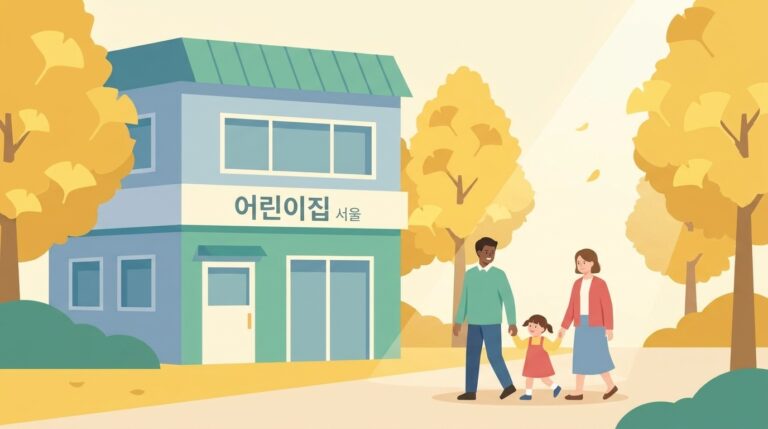
Why Korean Parents Chase the Lucky Star: The Advanced Guide to the Childcare Crisis and State-Run Daycares
안녕하세요! Welcome back to another masterclass with Daily Hangul. I’m your chief editor and resident Seoul culture navigator. Over the years, I’ve walked alongside countless expats, diplomats, and international professionals settling in Korea. Today, we are diving deep into a topic that is not just a policy headline, but a daily, high-stakes reality for millions of Korean households: the childcare crisis (보육 대란) and the fierce scramble for state-run daycares (국공립 어린이집).
If you’ve watched K-dramas like Birthcare Center (산후조리원) or Green Mothers’ Club (그린마더스클럽), you’ve seen the sheer intensity of Korean parenting culture. But beyond the dramatic screenplays lies a complex socio-economic landscape of welfare, gender dynamics, and community care. Today, we’ll equip you with C2-level sociopolitical Korean vocabulary and deep cultural insights so you can dissect, discuss, and navigate this system like a true policy expert.
Phase 1: The Seoul Morning Rush (An Empathetic Cold Open)
Imagine this: It’s 7:45 AM in Mapo-gu, Seoul. A dual-income couple (맞벌이 부부 – mat-beori bubu) is running on three hours of sleep. The mother is finalizing a corporate presentation on her phone, while the father is frantically packing a tiny backpack with formula, organic purees, and a change of clothes. They are racing against the clock—not just to catch the crowded Subway Line 5, but to drop their two-year-old off at the neighborhood daycare (어린이집 – eorinijip).
But here is the catch: they had to wait eighteen months on a state-run daycare waiting list (국공립 대기 순번 – gukgongnip daegi sunbeon) just to secure this spot.
For expats and global citizens living in Korea, understanding this welfare battleground is the ultimate key to understanding modern Korean family dynamics, corporate work culture, and the government’s desperate struggle to reverse the low birth rate (저출생 – jeochulsaeng). Let’s dive into the core linguistic tools you need to analyze this phenomenon.
Phase 2: Core Policy & Socio-Cultural Expressions
To discuss high-level welfare and social issues in Korean, you need more than simple vocabulary. You need the idiomatic phrases and sociopolitical shorthand that locals use to express their collective anxiety and hope.
1. 독박 육아 (Dogbak Yuga)
- Pronunciation: [dok-bak yu-ga] / Sound-alike: “Doke-bahk yoo-gah”
- Meaning: Solo parenting; bearing the entire burden of childcare alone (often due to a spouse’s long working hours or lack of institutional support).
- K-Culture Moment: You’ll hear this constantly in modern lifestyle vlogs and family-centric K-dramas. When a character’s husband works until midnight every night, she sighs over a glass of beer, whispering about her endless “독박 육아.”
- Editor’s Insight: “독박” comes from a slang term in the game of Go-Stop (a Korean card game), meaning to take all the losses/penalties on behalf of everyone else. Pairing it with “육아” (childcare) highlights how emotionally isolating and exhausting solo parenting is viewed in Korea’s intense corporate environment.
- Situation Spectrum:
- Friends & Casual settings: ✅ (Highly expressive and common)
- Semi-formal/Workplace: ⚠️ (Use cautiously; it’s slightly colloquial but widely understood)
- Formal Policy Discussions: 🚫 (Instead, use “독자적 육아 부담” or “양육 독점 현상”)
- 🤔 Think About It: Does your native language have a term that compares parenting to taking a financial or gaming penalty? What does the term 독박 육아 reveal about Korean societal expectations of fatherhood and corporate culture?
2. 하늘의 별 따기 (Haneurui Byeol Ttagi)
- Pronunciation: [ha-neu-rui byeol tta-gi] / Sound-alike: “Hah-neul-wee byul ttah-gee”
- Meaning: “Plucking a star from the sky.” Used to describe something practically impossible or extraordinarily difficult to achieve.
- K-Culture Moment: This is the go-to phrase when discussing getting your child into a highly coveted state-run daycare (국공립 어린이집) in a densely populated apartment complex in Seoul.
- Editor’s Insight: While this is a classic idiom used for getting a job at Samsung or securing tickets to a BTS concert, its application to infant daycare slots shows just how competitive basic social welfare can feel for young parents.
- Situation Spectrum:
- Friends & Casual: ✅
- Semi-formal/Workplace: ✅
- Formal Policy Discussions: ⚠️ (Can be used as a rhetorical device to emphasize severity, but formal terms like “극심한 입소 경쟁” are preferred)
- 🤔 Think About It: When basic social welfare like public childcare is described as “plucking a star from the sky,” how does that impact a citizen’s trust in the state’s social safety net?
3. 보육 대란 (Boyuk Daeran)
- Pronunciation: [bo-yuk dae-ran] / Sound-alike: “Boh-yook dae-rahn”
- Meaning: Childcare crisis; childcare chaos/catastrophe.
- K-Culture Moment: This term headlines the evening news every spring during the academic enrollment season, highlighting the severe shortage of affordable, high-quality public nurseries.
- Editor’s Insight: “대란” (大亂) translates to a massive riot, upheaval, or catastrophe. Using this to describe childcare underscores that this is not merely an inconvenience, but a structural crisis threatening the very fabric of the nation’s economy.
- Situation Spectrum:
- Friends & Casual: ✅
- Semi-formal/Workplace: ✅
- Formal Policy Discussions: ✅ (Highly appropriate for sociological and policy debates)
- 🤔 Think About It: Why do you think the expansion of public daycares is framed as the ultimate solution to the 보육 대란 in Korea, rather than simply increasing private daycare subsidies?
Phase 3: Textbook Korean vs. Real-World Korean
When you study from academic welfare textbooks, the language is incredibly dry and passive. On the streets of Seoul and in corporate offices, however, the language is sharp, metaphorical, and deeply emotional.
Situation 1: Expressing the difficulty of registering for a daycare
- 📖 Textbook Korean: “국공립 어린이집에 등록하기는 매우 어렵습니다.” (It is very difficult to register for a public daycare.)
- 🗣️ Real-World Korean: “국공립 들어가기는 진짜 하늘의 별 따기예요. 대기번호만 몇 백 번대라니까요!” (Getting into a public one is truly like plucking a star from the sky. I’m telling you, my waitlist number is in the hundreds!)
- 💡 Why the Difference? Real Korean speakers rely heavily on emphasizing numbers (“몇 백 번대” – in the hundreds) and vivid idioms to convey their personal frustration and the systemic bottleneck.
Situation 2: Discussing the stress of balancing work and parenting
- 📖 Textbook Korean: “맞벌이 부부는 일과 육아를 병행하는 데 어려움을 겪고 있습니다.” (Dual-income couples experience difficulties balancing work and childcare.)
- 🗣️ Real-World Korean: “애 키우면서 회사 다니다 보니 진짜 영혼이 탈탈 털리는 기분이에요. 매일매일이 전쟁터라니까요.” (Between raising a kid and working, I feel like my soul is being completely dusted out. I’m telling you, every single day is a battlefield.)
- 💡 Why the Difference? “영혼이 탈탈 털리다” (one’s soul being thoroughly shaken out) is a vivid modern colloquialism for absolute mental and physical exhaustion. It beautifully captures the desperate reality of modern parenting far better than the dry clinical term “병행하는 데 어려움” (difficulty in balancing).
Phase 4: K-Culture Deep-Dive & Non-Verbal Manners
4-1. The Subtle Art of “Nunchi” (눈치) at the Daycare Center
If you ever have to visit a Korean daycare or consult with local welfare coordinators (사회복지사 – sahoe-bokjisa), your non-verbal communication speaks louder than your vocabulary.
1. The Double-Handed Handover: When presenting official documents (such as resident registration forms, 주민등록등본), always present them with both hands, accompanied by a slight, respectful head tilt. This shows you recognize their administrative authority and value their help.
2. The Humble Posture: When discussing waitlist priority, avoid coming across as demanding. Instead, adopt an air of earnest appeal. Emphasizing your situation as a “working parent” (맞벌이 가정) with a soft, slightly lowered tone of voice triggers a cultural desire to assist.
4-2. The Reality Check: K-Drama vs. Real-Life Policy
In K-dramas like Green Mothers’ Club, childcare is portrayed as a highly competitive social arena where mothers form cliques to secure elite academic tutoring. While the academic pressure is real, the welfare reality is much more cooperative and institutional.
To combat the low birth rate, the Korean government has rapidly expanded 국공립 어린이집 (State-run daycares) because they are highly trusted, highly regulated, and extremely affordable. Unlike private nurseries (민간 어린이집), state-run facilities have stricter teacher-to-child ratios, government-vetted curricula, and impeccable safety standards. The struggle to secure a spot is not about vanity; it is a quest for emotional peace of mind in a high-stress society.
Phase 5: The Interactive Roleplay Scenario
The Setting
You are Ji-an (지안), a senior marketing manager returning from parental leave. You are visiting the local Dong Community Center (주민센터 – jumin-senteo) in Mapo-gu to inquire about public daycare options. You meet Officer Kim (김 주무관), an experienced but overworked civil servant.
[Scene: Inside a bustling, brightly lit Mapo-gu Jumin-center.
The sound of printers, stampers, and low chatter fills the air.
Ji-an sits nervously at Counter No. 4, clutching her baby's registration file.]
- Turn 1 (Ji-an):
안녕하세요, 주무관님. 다름이 아니라 아이 어린이집 입소 신청 때문에 여쭤볼 게 있어서 왔어요.
(Annyeonghaseyo, jumugwannim. Dareumi anira ai eorinijip ipso sincheong ttaemune yeojjwobol ge isseoseo wasseoyo.)
“Hello, Officer. Actually, I came by because I have some questions regarding my child’s daycare admission application.” -
Turn 2 (Officer Kim):
(🎭 Sighing gently while adjusting his glasses)
아, 네. 안 그래도 요즘 학기 초라 문의가 정말 많습니다. 혹시 원하시는 어린이집 유형이 있으신가요?
(Ah, ne. An geuraedo yojeum hakgi chora munuiga jeongmal manhseumnida. Hoksi wonhasineun eorinijip yuhyeongi isseusingayo?)
“Ah, yes. As expected, we have a ton of inquiries lately since it’s the start of the academic cycle. Do you have a specific type of daycare in mind?” -
Turn 3 (Ji-an):
집 근처에 있는 국공립 어린이집으로 알아보고 있어요. 아무래도 믿고 보낼 수 있는 곳이 좋으니까요.
(Jip geuncheoe inneun gukgongnip eorinijip-euro arabogo isseoyo. Amuraedo mitgo bonael su inneun gosi joeunikkayo.)
“I’m looking into the state-run daycares near my house. Naturally, somewhere trustworthy would be best.” -
Turn 4 (Officer Kim):
(🎭 Shaking his head in sympathy)
아시겠지만, 관내 국공립은 지금 대기 인원이 원체 밀려 있어서요. 들어가기가 정말 하늘의 별 따기입니다. 맞벌이 가정이신가요?
(Asigetjiman, gwannae gukgongnibeun jigeum daegi inwoni wonche millyeo isseoseoyo. Deoreogagiga jeongmal haneurui byeol ttagi-imnida. Matbeori gajeong-isingayo?)
“As you may know, the waiting list for state-run facilities in our district is severely backed up. Getting in is truly like plucking a star from the sky. Are you a dual-income household?” -
Turn 5 (Ji-an):
네, 맞아요. 저희 부부 둘 다 직장인이라서요. 제가 곧 복직을 앞두고 있거든요.
(Ne, majayo. Jeohui bubu dul da jikjang-iniraseoyo. Jega got bokjigeul apdugo itgeodeunyo.)
“Yes, that’s correct. Both my husband and I are corporate employees. I have my return to work coming up very soon.” -
Turn 6 (Officer Kim):
(🎭 Nabbing a document from his desk)
다행히 맞벌이 가정이시면 우선순위 점수가 부여됩니다. 증빙 서류로 재직증명서랑 원천징수영수증을 제출해 주셔야 해요.
(Dahaeng-i matbeori gajeong-isimyeon useonsunwi jeomsuga buyeodoemnida. Jeungbing seoryuro jaejikjeungmyeongseorang woncheonjingsuyeongsujeungeul jaechulhae jusyeoya haeyo.)
“Fortunately, if you are a dual-income family, you will be granted priority points. You will need to submit a certificate of employment and tax withholding receipts as proof.” -
Turn 7 (Ji-an):
네, 서류는 여기 다 준비해 왔습니다. 혹시 지금 접수하면 대기가 대략 어느 정도 걸릴지 알 수 있을까요?
(Ne, seoryuneun yeogi da junbihae wasseumnida. Hoksi jigeum jeopsuhamyeon daegiga daeryak eoneu jeongdo geollilji al su isseulkkayo?)
“Yes, I have prepared all the documents here. If I register now, is there any way to know approximately how long the wait will be?” -
Turn 8 (Officer Kim):
(🎭 Looking closely at the system monitor)
보자… 현재 대기 번호가 150번대네요. 솔직히 말씀드리면, 이번 분기 내 입소는 현실적으로 조금 힘드실 수도 있어요.
(Boja… hyeonjae daegi beonhoga baek-osip-beondaenayeo. Soljiki malsseumdeurimyeon, ibeon bungi nae ipsoneun hyeonsiljeokeuro jogeum himdeusil sudo isseoyo.)
“Let’s see… currently, the waiting list number is in the 150s. To be completely honest with you, admission within this quarter might be realistically difficult.” -
Turn 9 (Ji-an):
(🎭 Gasping slightly, looking distressed)
어머, 150번이요? 복직 날짜는 다가오는데 큰일이네요. 진짜 보육 대란이라는 말이 남 일이 아니었네요…
(Eomeo, baek-osip-beon-iyo? Bokjik naljjaneun dagaoneunde keunirineyeo. Jinja boyuk daeran-iraneun mari nam iri anieotneyo…)
“Oh my, 150? My return date is approaching, this is terrible. The phrase ‘childcare crisis’ is truly not someone else’s problem anymore…” -
Turn 10 (Officer Kim):
너무 걱정 마세요. 우선 대기 신청해 두시고, 차선책으로 시간제 보육 서비스나 구립 아이돌봄 서비스를 연계해 드릴게요.
(Neomu geokjeong maseoyo. Useon daegi sincheonghae dusigo, chaseonchaegeuro siganje boyuk seobiseuna gurip aidolbom seobiseureul yeongyehae deurilgeyo.)
“Please don’t worry too much. First, register for the waiting list, and as a backup plan, I will connect you to part-time childcare services or district-run babysitting services.”
🔀 Decision Point
How should Ji-an respond to secure the best advice and local administrative support?
- Option A: “아니, 맞벌이 부부인데도 150번이면 도대체 누가 먼저 들어가는 건가요? 시스템이 너무 불합리하네요!”
(Aggressive/Demanding: “No, even for dual-income couples it’s 150? Who on earth gets in first then? The system is so unreasonable!”) - Option B (The Best Choice): “아… 그렇군요. 상황이 참 쉽지 않네요. 그럼 주무관님 말씀대로 시간제 보육이나 구립 서비스 신청서도 같이 작성할 수 있을까요? 도움 주셔서 정말 감사합니다.”
(Empathetic/Cooperative: “Ah… I see. The situation is indeed not easy. Then, as you suggested, could I also fill out the application for part-time care or district services? Thank you so much for your help.”) - Option C: “그럼 어쩔 수 없네요. 그냥 사설 비싼 곳 알아볼 테니 취소해 주세요.”
(Defeatist/Passive: “Then it can’t be helped. I will just look for an expensive private place, so please cancel it.”)
🕵️ Editor’s Choice Analysis
- Why Option B is the absolute gold standard: In Korea’s bureaucratic culture, civil servants are plagued by complaints and verbal abuse regarding childcare shortages. By acknowledging the difficult situation calmly and showing cooperative trust in the officer’s recommendation (“주무관님 말씀대로”), you immediately gain an ally. Officer Kim will be far more motivated to look up hidden slots, cancellation spots, or alternative government programs for you.
- Why Option A fails: Blaming the system directly to the frontline worker creates instant defensive barriers. It gets you categorized as a demanding resident (민원인 – minwon-in), limiting their willingness to offer alternative resources.
Phase 6: 10-Second Emotion Shadowing Drill
Let’s practice speaking like a native Korean parent experiencing the pressure of this welfare crisis. Focus on the emotional cues and natural pauses (/).
Sentence 1: Expressing the absolute difficulty of enrollment
- Emotion: [🥺 Worried and pleading]
- Korean: 국공립 / 들어가기가 / 진짜 / 하늘의 별 따기네요. / 어떡하죠?
- Pronunciation: Gukgongnip / deoreogagiga / jinjja / haneurui byeol ttagineyo. / Eotteokhajo?
- English: “Getting into a state-run daycare / is truly / like plucking a star from the sky. / What should I do?”
Sentence 2: Realizing the gravity of the childcare crisis
- Emotion: [😤 Determined yet deeply frustrated]
- Korean: 맞벌이 부부한테 / 보육 대란은 / 이제 / 정말 / 생존의 문제예요.
- Pronunciation: Matbeori bubu-hante / boyuk daeraneun / ije / jeongmal / saengjonui munje-yeyo.
- English: “For dual-income couples, / the childcare crisis / is now / truly / a matter of survival.”
Phase 7: K-Culture Mini Dictionary
| Word (Hangul / Romanization) | English Meaning | Cultural & Practical Context |
|---|---|---|
| 맞벌이 (Mat-beori) | Dual-income | A compound word combining “맞-” (mutual/facing) and “벌이” (earning). It reflects the economic shift in Korea where dual income is no longer a choice, but a necessity for urban survival. |
| 돌봄 공백 (Dolbom Gongbaek) | Care gap | The critical, anxiety-inducing window of time (usually between 2:00 PM and 7:00 PM) when school/daycare ends but working parents have not yet returned home. |
| 등하원 도우미 (Deunghawon Doumi) | Drop-off/Pick-up helper | A rapidly growing profession in Korea. These are trusted local helpers (often middle-aged women) hired by busy parents specifically to walk children to and from daycare. |
| 육아휴직 (Yuga Hyujik) | Parental leave | Legally mandated parental leave. Although guaranteed by law, taking it fully still requires navigating office politics and peer dynamics in traditional corporate hierarchies. |
Phase 8: Expat & Traveler’s Childcare Survival Kit
Even if you are in Korea on a temporary visa, navigating these local networks can be incredibly beneficial. Here is your pocket survival kit:
Survival Phrases
- “가까운 주민센터가 어디에 있나요?” (Gakkaun jumin-senteo-ga eodie innayo?)
- Use case: Finding your local community hub for welfare inquiries, certificates, and community support.
- “외국인도 어린이집 보육료 지원을 받을 수 있나요?” (Oegugindo eorinijip boyungnyo jiwoneul badeul su innayo?)
- Use case: Inquiring at the center if foreign residents qualify for national daycare subsidies (some local governments offer partial or full support depending on your visa type).
- “아이돌봄 서비스 신청하고 싶어요.” (Aidolbom seobiseu sincheonghago sipeoyo.)
- Use case: Requesting the government-subsidized in-home babysitting service during a sudden 돌봄 공백 (care gap).
📌 Editor’s Travel & Residing Note
If you are living in Korea with children, do not rely on Google Maps to find childcare centers; it is highly outdated. Instead, use the Naver Map Application or KakaoMap Application and search for the terms “어린이집” (Daycare) or “국공립 어린이집” (State-run Daycare) directly to find real-time locations, phone numbers, and official government ratings in your neighborhood.
Phase 9: Deep Philosophical Dive — “한 발 더 깊이” (A Step Deeper)
Historically, South Korea was a deeply family-centric society bound by Confucian traditions. Childcare was viewed as a private duty, almost exclusively falling upon the shoulders of mothers, grandmothers, and daughters-in-law.
However, Korea’s rapid economic ascent created a fascinating sociological paradox. Today’s highly educated, ambitious young women are key drivers of the national workforce. Yet, corporate cultures still often expect grueling hours that clash with the demands of parenting. The shift in demand from traditional family-based care to institutional state-run care (국공립 어린이집) represents a profound modern consensus: childcare is no longer a private burden; it is a collective national responsibility.
When we discuss the 보육 대란 (childcare crisis), we are not just talking about waitlists. We are witnessing a society transitioning, seeking to build a robust social safety net that preserves both economic productivity and family happiness.
💬 Your Turn: How does your home country handle the balance between high-demand careers and early childhood care? Are public nurseries coveted, or is private/family care more common? Let us know in the comments below!
Phase 10: FAQ & Mitigating Misunderstandings (FAQ Schema Optimized)
Q: Can non-Korean citizens (foreign residents) register their children for public daycares in South Korea?
A: Yes, but with caveats. While foreigners with valid registration cards (ARC) can theoretically enroll their children in 국공립 어린이집, priority points are heavily weighted toward tax-paying, dual-income citizens with multiple children. Furthermore, government subsidies for daycare tuition vary by municipal district (구). It is highly recommended to visit your local 주민센터 (Community Center) directly to check your eligibility and priority score.
Q: What is the difference between an 어린이집 (Eorinijip) and a 유치원 (Yuchiwon)?
A: This is a very common point of confusion. An 어린이집 (Daycare/Nursery) is under the jurisdiction of the Ministry of Health and Welfare, catering to infants and toddlers from 0 to 5 years old, with focus on daily care and early development. A 유치원 (Kindergarten) falls under the Ministry of Education, serving children from ages 3 to 5, focusing strictly on pre-school academic preparation.
Q: Are private daycares (민간 어린이집) considered vastly inferior to public ones?
A: Not necessarily. While public daycares are highly sought after due to lower costs, stricter vetting, and transparency, many private nurseries offer fantastic, intimate care, specialized English/art programs, and more flexible drop-off/pick-up hours tailored to working parents.
🚨 Common Pitfalls: The “Culture Shock” Warnings
- The Standard Birthday Confusion: In Korea, the registration system uses official Western/legal age (만 나이). Double-check your child’s legal age on your ARC card before applying, as waitlist brackets are strictly age-segregated.
- The Mandatory “Lunchbox” Routine: Many Korean daycares require parents to wash and send a sterilized set of stainless steel food trays (식판 – sikpan) with their children daily. Forgetting this can cause embarrassment for your child.
- Overstepping “Nunchi” during consultations: Never ask daycare directors direct questions about







