

Mind Your Language: The Ultimate Guide to Korean Slang and Swearing Etiquette
안녕하세요! Welcome back to Daily Hangul, your premium guide to mastering not just textbook Korean, but the living, breathing language spoken on the streets of Seoul. I’m your senior editor and resident K-Culture navigator.
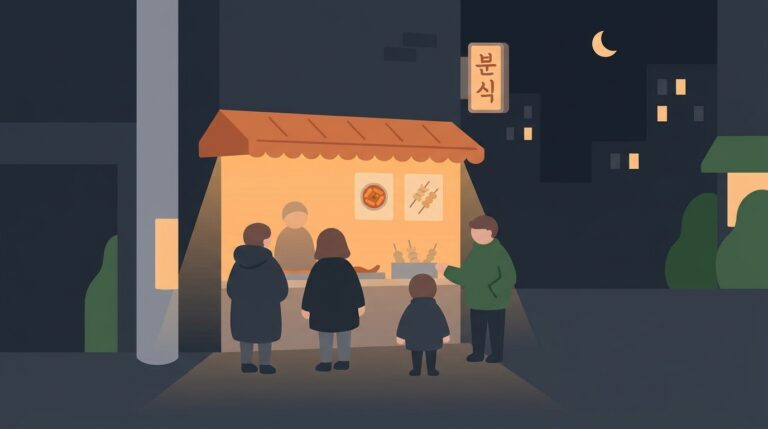
Imagine this: You’re sitting in a lively, neon-lit Pocha (포차 – street food tent) in Mapo, sharing a plate of spicy rice cakes with your new Korean coworkers. The atmosphere is warm, the Soju (소주) is flowing, and you want to express how incredibly delicious the food is. You recall a slang word you heard in a gritty K-Drama like Itaewon Class and loudly exclaim, “이거 존나 맛있어!” (Igeo jonna masisseo!).
Suddenly, a brief, awkward silence falls over the table. Your coworker chuckles nervously, while the elderly shop owner gives you a sharp side-eye.
What went wrong? You used a word that translates to “incredibly delicious,” but the social register was completely off. Korean slang and swear words (비속어 – bisogeo) are highly contextual. Mastering them isn’t about memorizing lists of bad words; it’s about understanding when, where, and with whom to use them. Today, we’re going to dive deep into the delicate boundary between being “incomparably cool” and “incredibly rude.”
Phase 2: Deep Dive into 3 Core Slang Expressions
Let’s analyze three highly common Korean slang expressions that range from harmless intensifiers to words that require absolute caution.
1. 개- (Gae-)
- Pronunciation: [Gae] / Sounds like the English word “get” without the ‘t’ sound.
- Meaning: Literally means “dog” (개), but used as a prefix, it functions as an intensifier meaning “extremely,” “super,” or “very.”
- K-Culture Moment: You will hear this constantly in modern K-Dramas like Our Beloved Summer. Friends complain about university exams saying, “시험 개어려웠어” (Si-heom gae-eoryeowosseo – The exam was super hard).
- Editor’s Insight: While incredibly common among Gen Z and Millennials, using “개-” transforms any adjective into low-register slang. It is highly expressive, but can sound unrefined if overused.
- Situation Spectrum:
- Friends & Close Peers (Casual): ✅
- Coworkers (Semi-formal): ⚠️ (Only with peers of the same rank in casual settings)
- Bosses & Elders (Formal): 🚫 (Absolutely inappropriate)
- 🤔 Think About It: Why does Korean culture use “dog” (개) as an intensifier? In traditional Korea, dogs were seen as common, lowly animals. Prefixing words with “개” historically demeaned them, but over time, youth culture adopted it as a raw, unfiltered way to multiply the intensity of an emotion. How does your native language use animal terms to alter meaning?
2. 빡치다 (Ppak-chida)
- Pronunciation: [Ppak-chi-da] / Say “pack” with a very tense, explosive ‘P’, followed by “chee-da”.
- Meaning: Literally “to hit the head repeatedly,” but used to mean “to be extremely pissed off” or “highly frustrated.”
- K-Culture Moment: In K-Dramas, characters often mutter this under their breath when dealing with a toxic boss or an unfair situation. “아, 진짜 빡치네” (Ah, jinjja ppak-chine – Ah, I’m seriously pissed off).
- Editor’s Insight: This word perfectly captures a physical sensation of anger rising to your head. It is much more colorful than the standard “화나다” (hwanada – to be angry), but it carries a sharp, aggressive edge.
- Situation Spectrum:
- Friends & Close Peers (Casual): ✅
- Coworkers (Semi-formal): ⚠️ (Only when venting about an external situation, never to them)
- Bosses & Elders (Formal): 🚫
- 🤔 Think About It: “빡치다” targets a physical, bodily reaction to anger. Notice how Korean slang often links emotional states to physical symptoms (e.g., 속 터지다 – stomach exploding from frustration). What physical metaphors does your language use for anger?
3. 존나 (Jonna)
- Pronunciation: [Jon-na] / Sounds like “John-nah” with a sharp emphasis on the double ‘n’.
- Meaning: A highly vulgar intensifier similar to the English “f***ing” or “damn.”
- K-Culture Moment: Frequently bleeped out in Korean variety shows but heavily featured in dark crime thrillers like The Glory to denote raw, unpolished, or aggressive characters.
- Editor’s Insight: Never use this in any polite or professional context. While young Koreans use it casually as a filler word, it originates from a highly vulgar anatomical reference. Hearing a foreigner say this can either be shocking or unintentionally hilarious, but rarely polite.
- Situation Spectrum:
- Friends & Close Peers (Casual): ⚠️ (Only among very close, same-age friends)
- Coworkers (Semi-formal): 🚫
- Bosses & Elders (Formal): 🚫
- 🤔 Think About It: Just like the “F-word” in English, “존나” has lost much of its literal anatomical meaning for younger speakers, serving merely as an exclamation. However, the generational gap in Korea is vast. Older generations still view this word as highly offensive trash-talk.
Phase 3: Textbook Korean vs. Real Korean
Let’s look at how textbook language compares to the organic phrases Koreans use to express heightened emotions.
Scenario 1: Expressing Extreme Fatigue After a Long Day
- 📖 Textbook Korean: “오늘 업무가 많아서 매우 피곤합니다.” (Oneul eommu-ga manaseo maeu pigonhamnida.) / “I am very tired because I had a lot of work today.”
- 🗣️ Real Korean: “오늘 진짜 개피곤해, 넉다운이야.” (Oneul jinjja gae-pigon-hae, neok-da-un-iya.) / “I’m super tired today, I’m knocked out.”
- 💡 Why is it different? Textbook Korean relies on passive, formal descriptors. Real-life Korean merges colloquial intensifiers (“개-“) with imported Konglish loanwords (“knockdown” -> “넉다운”) to dynamically express physical exhaustion.
Scenario 2: Reacting to an Unbelievable, Amazing Situation
- 📖 Textbook Korean: “이 음식은 아주 맛이 있어서 기쁩니다.” (I eumsig-eun aju masi isseo-seo gippeumnida.) / “I am glad because this food is very delicious.”
- 🗣️ Real Korean: “와, 이거 미쳤다! 존맛탱인데?” (Wa, igeo michyeotda! Jon-mat-taeng-inde?) / “Wow, this is crazy! It’s delicious as hell!”
- 💡 Why is it different? Koreans rarely use formal declarative sentences to praise food. Instead, they use active exclamations like “미쳤다” (michyeotda – It’s crazy/insane) and the compound slang “존맛탱” (Jon-mat-taeng – extremely delicious) to show instant, emotional appreciation.
Phase 4: K-Culture Deep Dive & Non-Verbal Manners
4-1. Nunchi (눈치) and Body Language
In Korea, communication is only 30% verbal. The remaining 70% relies on Nunchi (눈치 – the art of reading the room) and body language.
When casual slang or mild swear words slip out in a semi-casual setting, your physical posture determines how it is received:
* The Eye Contact Shift: If you use a slang word like “빡치다” to vent to a coworker, slightly lower your gaze and shake your head gently. This signals that you are frustrated with the situation, not directing anger at them.
* The Hand Barrier: When laughing or using a slightly vulgar slang word like “존맛탱”, lightly cover your mouth. This traditional gesture softens the impact of modern, edgy language.
4-2. The Hierarchy of Language in K-Drama vs. Reality
K-Dramas often romanticize the raw, casual banter between high school friends or passionate lovers. However, real Korean society is deeply hierarchical, structured around age and social status.
In dramas, you might see a protagonist sass their boss with clever wordplay. Do not try this in real life. In a Korean workplace, using even mild slang in front of a senior manager (부장님 – bujangnim) can be interpreted as a direct challenge to their authority. Keep your language pristine and polite in professional settings, and save the colorful slang for late-night fried chicken sessions with peers.
Phase 5: Interactive Roleplay Scenario
The Setting: You are sitting in a cozy, noisy tent restaurant (실내포차) in Hongdae. Rain is pattering against the plastic walls, and the smell of grilled pork fills the air. You are with Ji-su (지수), a Korean coworker of the same age with whom you’ve worked for six months. You are both venting after a grueling week of overtime.
Characters:
* You (민우 / Min-woo): An intermediate Korean learner trying to connect on a deeper level.
* Ji-su (지수): Your friendly, hard-working Korean colleague.
The Dialogue
- 지수: (🎭 Sighs deeply and pours a shot of Soju) “민우 씨, 이번 주 진짜 야근 때문에 죽는 줄 알았어요.”
(Min-woo ssi, ibeon ju jinjja yageun ttaemune jungneun jul arasseoyo.)
“Min-woo, I seriously thought I was going to die from all the overtime this week.” -
민우: (🎭 Clinking glasses) “진짜요. 저도 온몸이 다 쑤셔요. 짠합시다!”
(Jinjjayo. Jeodo onmomi da ssusyeoyo. Jjan-hapsida!)
“Seriously. My whole body is aching too. Cheers!” -
지수: (🎭 Drinks the shot, eyes lighting up) “크으! 역시 퇴근 후 소주가 최고예요. 우리 이제 사석인데 말 편하게 할까요?”
(Keuu! Yeoksi toegeun hu soju-ga choego-yeyo. Uri ije saseog-inde mal pyeonhage halkkayo?)
“Ahh! As expected, Soju after work is the best. Since we’re off-duty now, shall we speak casually?” -
민우: (🎭 Smiling warmly) “좋아! 지수야, 나 반말 쓰는 거 어색해도 이해해 줘.”
(Joah! Ji-su-ya, na banmal sseuneun geo eosaek-haedo ihaehae jwo.)
“Great! Ji-su, please understand if my casual speech sounds a bit awkward.” -
지수: (🎭 Waving her hand) “에이, 전혀 안 어색해! 야, 근데 솔직히 이번에 김 부장님 업무 지시 진짜 너무하지 않았냐?”
(Ei, jeonhyeo an eosaek-hae! Ya, geunde soljighi ibeone Kim bujangnim eommu jisi jinjja neomuhaji anatnya?)
“No way, not awkward at all! Hey, but honestly, wasn’t Manager Kim’s work direction this time really too much?” -
민우: (🎭 Leaning in closer) “맞아. 매일 퇴근 직전에 피드백 주시는 거 보고 진짜…”
(Maja. Maeil toegeun jikjeone pideubaek jusineun geo bogo jinjja…)
“Right. Seeing him give feedback right before clock-out every single day, seriously…” -
지수: (🎭 Frustratedly tearing a piece of chicken) “나 진짜 그 자리에서 소리 지를 뻔했다니까!”
(Na jinjja geu jarieseo sori jireul ppeonhaetdanikka!)
“I seriously almost screamed right on the spot!”
🔀 Decision Point: How do you respond to Ji-su’s frustration?
Choose your response to show empathy while matching her level of casual intimacy:
- Option A: “김 부장님은 정말 존나 나쁜 사람이야!”
(Kim bujangnim-eun jeongmal jonna nappeun saram-iya!)
“Manager Kim is a f***ing bad person!” - Option B: “아, 진짜 빡쳤겠다. 나라도 그랬을 거야.”
(Ah, jinjja ppak-chyetgetda. Narado geuraesseul geoya.)
“Ah, you must have been so pissed off. I would have felt the same way.” - Option C: “화가 나시는 것은 지당한 일입니다.”
(Hwa-ga nasineun geos-eun jidanghan il-imnida.)
“It is entirely reasonable that you are angry.”
Choice Analysis
- 🏆 Best Choice: Option B
Using “빡쳤겠다” (You must have been pissed off) perfectly matches the emotional intensity of venting with a close coworker. It shows high-level empathy and uses a common, slightly edgy but acceptable slang word that builds camaraderie without crossing into vulgarity. -
⚠️ Bad/Risk Choice: Option A
Even in a casual setting, using “존나” (f***ing) to insult a mutual company manager is highly risky. It sounds overly aggressive, unpolished, and might make Ji-su feel uncomfortable about your professionalism, even during casual drinks. -
🚫 Awkward Choice: Option C
This sentence uses archaic, highly formal grammar (“지당한 일입니다”). It sounds like a medieval royal court official replying to a peasant. It instantly breaks the casual, intimate vibe you and Ji-su just established.
Phase 6: 10-Second Emotion Shadowing Drill
To sound natural, you must master the rhythm and pitch of Korean emotional exclamations. Practice these out loud, mimicking the tone markers!
- [😤 Frustrated & Venting]
“아 / 진짜 / 빡치네!”
(Ah / jinjja / ppak-chine!)
Intonation guide: Keep “아” low and heavy, raise the pitch sharply on “빡”, and let it drop on “치네”. -
[😊 Amazed & Drooling]
“와 / 이거 / 존맛탱!”
(Wa / igeo / jon-mat-taeng!)
Intonation guide: Elongate the “와~~” (Waaa), pause slightly, then say “존맛탱” rapidly with a bounce at the end.
Phase 7: K-Culture Mini Dictionary
| Word | Pronunciation | Translation | Cultural Context & Usage |
|---|---|---|---|
| 야자타임 | Yaja Time | Informal Speech Time | A structured game or social agreement where hierarchical rules are temporarily suspended, allowing juniors to speak casually (반말) to seniors. |
| 꼰대 | Kkondae | Boomer / Preachy person | A slang term used to describe an older person or manager who constantly lectures others, demanding absolute respect based solely on age or rank. |
| 내돈내산 | Nae-don-nae-san | My money, my purchase | Literally “Bought with my own money.” A popular internet slang used to prove a review is genuine and not sponsored by a brand. |
| 현타 | Hyeon-ta | Reality Check / Epiphany | Short for 현실 타격 (Reality Hit). The feeling of sudden emptiness or clarity after a period of intense delusion, daydreaming, or overindulging. |
Phase 8: Traveler’s Survival Kit
Even if you’re not planning on using slang, knowing these survival phrases will help you navigate dynamic, fast-paced situations in Korea!
Survival Expressions
- “혹시 실례지만…” (Hoksi sillyejiman…)
- Meaning: “Excuse me, but…”
- Pro Tip: The ultimate shield. Put this before any request to instantly disarm the other person with politeness.
- “천천히 말씀해 주세요.” (Cheoncheonhi malsseumhae juseyo.)
- Meaning: “Please speak slowly.”
- Pro Tip: If a taxi driver or restaurant server uses fast street dialect, this polite request will save you from confusion.
- “이거 엄청 매워요?” (Igeo eomcheong maewoyo?)
- Meaning: “Is this super spicy?”
- Pro Tip: “엄청” (eomcheong) is a safe, polite slang-adjacent intensifier to ask about spice levels before ordering.
📌 Editor’s Travel Note
When traveling around Seoul, Google Maps can be highly inaccurate. For seamless navigation to hidden alleyway restaurants and trendy hip spots, download the Naver Map App Download Page or KakaoMap. These are the absolute lifesavers of Korean local travel.
Phase 9: Deep Think — “한 발 더 깊이” (A Step Deeper)
Language is a mirror of a society’s soul. Korean’s complex system of honorifics (높임말) and casual language (반말) reflects a culture deeply rooted in Neo-Confucian respect for hierarchy, age, and social roles.
Because polite language is so tightly structured, Korean slang serves as a vital safety valve. It allows younger generations to break free from rigid social expectations and create intimate bonds. When a Korean friend invites you to speak casually, they aren’t just changing their verb endings—they are inviting you inside their personal circle of trust.
💬 Your Turn: How does your native language negotiate social distance? Do you have specific words or slang that you only use with peers to signal closeness? Let us know in the comments below!
Phase 10: FAQ & Avoiding Misunderstandings
Q: Can I use “존맛탱” (Jon-mat-taeng) in front of elderly restaurant owners to show I love the food?
A: It depends, but generally no. While younger restaurant owners might find it trendy and endearing, older generation owners may recognize the root word “존” (which is highly vulgar) and find it disrespectful. Instead, use polite, enthusiastic phrases like “진짜 너무 맛있어요!” (Jinjja neomu masisseoyo!).
Q: What should I do if I accidentally use a rude slang word in front of someone senior?
A: Apologize immediately and switch to formal honorifics. You can say: “아, 제가 한국어를 잘 못해서 실수를 했습니다. 죄송합니다.” (Ah, jega hangugeo-reul jal mot-haeseo silsu-reul haessumnida. Joesonghamnida – Ah, I made a mistake because my Korean is not perfect. I am sorry.) Koreans are incredibly forgiving of language learners who show sincere effort to respect etiquette.
Q: Is “개-” (Gae-) acceptable to use in a job interview if I want to say “super passionate”?
A: Absolutely not. Never use “개-” in any professional, written, or evaluative context. It will make you sound highly unprofessional and uneducated. Instead, use professional intensifiers like “대단히” (daedanhi) or “매우” (maeu).
🚨 Common Mistakes Warning Board
- Using “너” (Neo – You) with older people: “너” is only used with same-age or younger friends. Calling an elder or boss “너” while using slang is a major cultural taboo.
- Copying K-Drama villains: Villains in Korean dramas speak with captivating charisma, but their language is designed to be offensive. Avoid repeating dramatic swearing like “지랄” (jiral) or “닥쳐” (dakchyeo – shut up).
- Mumbling slang: If you are going to use casual slang with friends, say it confidently. Mumbling it under your breath can make it sound like a passive-aggressive insult.
Phase 11: Action Missions
- 🥉 Bronze (Room Challenge): Record yourself saying “오늘 진짜 개피곤해” (Today I’m super tired) using the intonation guides from Phase 6. Listen to your pitch shift.
- 🥈 Silver (Network Challenge): Share your favorite K-Drama quote that contains a mild slang word on your social media, explaining its real-world nuance.
- 🥇 Gold (Real-world Challenge): Next time you eat a mouth-watering meal at a casual diner with Korean peers, confidently exclaim, “대박, 이거 진짜 존맛탱!” (Daebak, igeo jinjja jon-mat-taeng!) and watch their eyes light up in surprise.
- 🎮 K-Culture Mission: Watch an episode of a casual Korean variety show (like Running Man or Workman) and count how many times they use the caption “현타” (Hyeon-ta) or “킹받네” (King-badne – frustratingly annoying). Notice the context!
Phase 12: Interactive Quiz Challenge
Test your situational intuition with this cultural etiquette quiz!
1. Situational Judgment
Q: You are having lunch with your company’s Department Director (부장님). He asks you how the soup tastes. Which response is appropriate?
* A) “부장님, 이거 진짜 개맛있습니다!”
* B) “국물이 아주 시원하고 맛있습니다!”
* C) “와, 이거 완전 존맛탱인데요?”
Reveal Answer & Explanation
Correct Answer: B
In a formal setting with a superior, you must use standard, polite language. “시원하다” (siwonhada – literally cool, but used to describe deep, refreshing hot soup) is the ultimate mature way to compliment food. Options A and C contain low-register slang that would shock your director.
2. Fill in the Blanks
Q: Fill in the blank to express that you are highly frustrated about your broken phone in a conversation with a close friend.
“아, 핸드폰 고장 나서 진짜 ________.” (Ah, haendeupon gojang naseo jinjja ________.)
* Hint: It literally means “getting hit in the head repeatedly.”
Reveal Answer & Explanation
Correct Answer: 빡쳐 (ppak-chyeo) / 빡치네 (ppak-chi-ne)
This expression perfectly fits a frustrating situation when talking to a same-age friend casually.
3. True or False
Q: It is culturally acceptable to use “존나” (jonna) in front of young children or elderly people as long as you say it with a smile.
* True / False
Reveal Answer & Explanation
Correct Answer: False
“존나” is a vulgar swear word in origin. Smiling does not soften its offensive nature. Avoid using it in front of children, elders, or in any public space where you want to maintain a respectful reputation.







