

Surviving the dreaded ‘Gas Bill Bomb’: The Expat Guide to Managing Bills in Korea
안녕하세요! Welcome back to Daily Hangul, your premium guide to living and speaking like a true Seoulite. I\’m your senior editor, and today we are tackling one of the most practical, yet surprisingly stressful, aspects of living in Korea: Korean housing, maintenance fees (관리비), and utility bills (공과금).
Phase 1: The Reality Check (An Immersive Opening)
Picture this: You are watching a classic K-Drama. The lead character lives in a gorgeous, sunlit rooftop room (옥탑방 – oktapbang) overlooking the glittering Seoul skyline. They drink beer on the deck, feeling romantic. But cut to real life: It is late January. Seoul\’s winter wind is biting, and you have kept your underfloor heating (ondol – 온돌) running 24/7.
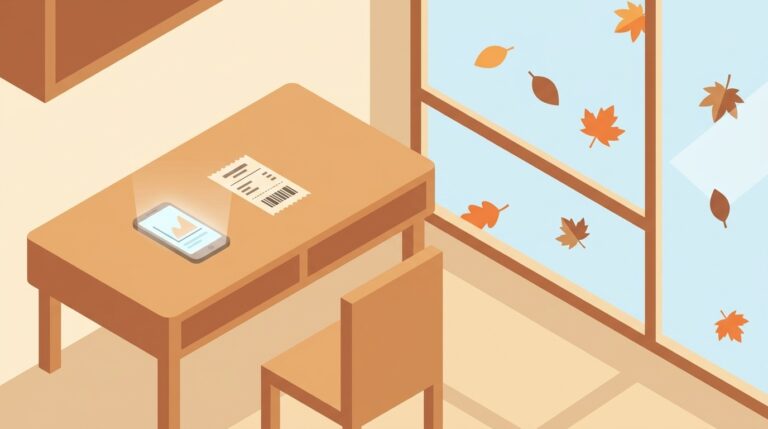
Suddenly, a small piece of paper slips through your door. It\’s the dreaded gwanribi (관리비) statement. You look at the total, and your jaw drops. You\’ve just experienced what Koreans call a 요금 폭탄 (yo-geum pok-tan)—literally, a \’bill bomb.\’
If you\’re living, studying, or working in Korea, managing your apartment\’s bills can feel like a maze of bank transfers, translation apps, and awkward conversations with your building manager. Don\’t worry! We are going to break down the exact vocabulary, cultural rules, and real-world expressions you need to handle this like a local. This post is crafted from real questions sent in by our B2-level students who transitioned from temporary stays to signing their very first Korean rental contracts.
Phase 2: Core Expressions Deep Dive
Let\’s master the 3 most essential terms you\’ll encounter on your housing journey.
1. 관리비 (Gwan-ri-bi)
- Pronunciation: [gwan-ri-bi] / Sounds like “gwan-ree-bee”
- Meaning: Maintenance Fee / Building Service Fee
- K-Culture Moment: In Korean apartments (특히 아파트나 오피스텔), you pay a monthly maintenance fee separate from your rent. This covers elevator maintenance, security (경비), cleaning of common areas, and sometimes water or internet. If your building has a cool security guard (gyeongbi-ajeossi – 경비아저씨) who helps sort the recycling, his salary comes from this!
- Editor\’s Insight: When looking for a room, always ask if the gwanribi includes internet (인터넷) and water (수도세). If it does, you\’re saving a lot of hassle!
- Situation Spectrum:
- Casual: ✅
- Semi-formal: ✅
- Formal: ✅
- 🤔 Think About It: Why do you think Korea separates gwanribi so strictly from the monthly rent (wolse – 월세)? How does this affect the way tenants view shared community spaces?
2. 공과금 (Gong-gwa-geum)
- Pronunciation: [gong-gwa-geum] / Sounds like “gong-gwah-geum”
- Meaning: Utility Bills (specifically electricity, gas, and water)
- K-Culture Moment: Unlike some Western countries where utilities might be bundled, in Korea, you typically receive separate bills for electricity (전기세 – jeon-gi-se) and heating/gas (가스비 – ga-se-bi). In the winter, gas bills skyrocket because of the underfloor heating.
- Editor\’s Insight: Gong-gwa-geum is the formal term. In daily life, Koreans just say “가스비” (gas bill) or “전기세” (electricity tax/bill).
- Situation Spectrum:
- Casual: ✅
- Semi-formal: ✅
- Formal: ✅
- 🤔 Think About It: Koreans use the word \’세\’ (tax) colloquially for electricity (전기세) and water (수도세) instead of \’요금\’ (fee). What does this tell us about how utility services are perceived historically in Korean society?
3. 고지서 (Go-ji-seo)
- Pronunciation: [go-ji-seo] / Sounds like “go-jee-suh”
- Meaning: Bill / Billing Statement (Paper notification)
- K-Culture Moment: Even in this high-tech era, you will still find paper gojiseo slipped into your mailbox or taped to your door. They usually have a QR code or an “allocated virtual bank account” (가상계좌) printed on them for easy mobile transfer.
- Editor\’s Insight: Don\’t throw these away! If you struggle with online banking, you can actually take this paper to any convenience store or ATM to pay directly.
- Situation Spectrum:
- Casual: ✅
- Semi-formal: ✅
- Formal: ✅
- 🤔 Think About It: Having a \’virtual account\’ (가상계좌) unique to your bill is incredibly common in Korea. How does this reflect Korea\’s highly efficient, digital-first banking culture?
Phase 3: Textbook vs. Real Korean
Let\’s compare how a classic textbook teaches you to talk about bills versus how Koreans actually talk over coffee.
- Paying Bills
- 📖 Textbook: “공과금을 납부하고 싶습니다.” (I would like to pay the utility bills.)
- 🗣️ Real Korean: “공과금 이체했어요.” (I transferred the utility money.) or “관리비 냈어요.” (I paid the maintenance fee.)
- 💡 Why it\’s different: “납부” is highly formal and mostly used in written documents or by automated machines. Real humans use “내다” (to pay/give) or “이체하다” (to transfer electronically).
- Expensive Bills
- 📖 Textbook: “이번 달 가스 요금이 매우 많이 청구되었습니다.” (This month\’s gas bill has been charged very highly.)
- 🗣️ Real Korean: “이번 달 가스비 폭탄 맞았어!” (I got hit by a gas bill bomb this month!)
- 💡 Why it\’s different: “폭탄 맞다” (to get bombed) is the ultimate everyday idiom for any unexpectedly massive bill. It conveys the sheer shock of winter heating costs perfectly.
- Setting up Auto-Pay
- 📖 Textbook: “자동 납부 서비스를 신청하십시오.” (Please apply for the automatic payment service.)
- 🗣️ Real Korean: “자동이체 걸어두세요.” (Set up auto-transfer.)
- 💡 Why it\’s different: “걸어두다” (literally, to hang something up) is used casually in banking to mean \’setting up a recurring system\’ so you don\’t have to think about it.
Phase 4: Cultural Context — K-Culture Deep Dive
4-1. The Non-Verbal Art of “Elevator Notices” and “Nunchi”
In Korean apartment complexes (아파트) or studio buildings (원룸텔/오피스텔), the elevator is the community bulletin board. This is where the building management posts warnings about recycling rules, noise complaints, or upcoming utility maintenance.
Paying your bills on time and sorting your trash correctly is a huge part of 눈치 (Nunchi)—having the social awareness to keep the communal harmony. If you pay late, you might find a polite but pointed neon-colored sticky note on your mailbox. To avoid this passive-aggressive stress, most Koreans set up 자동이체 (automatic transfer) immediately upon moving in.
4-2. K-Drama Trope: The Rooftop Room Reality
Think of dramas like Fight for My Way or Because This Is My First Life. The characters struggle with bills, renting, and deposit money (보증금). In reality, older Korean houses (주택) or rooftop rooms (옥탑방) have terrible insulation. If you rent one of these because it looks romantic, your winter heating bill (난방비) might end up costing almost as much as your rent! Expats often switch to “Officetels” (modern studio buildings) because they have better insulation, even if the gwanribi is slightly higher.
Phase 5: Interactive Real-Life Roleplay
Scenario A: Speaking with the Building Admin (관리실)
- Setting: Monday morning, 10:00 AM. You are standing outside the management office (관리실) of your officetel in Mapo. You received a paper bill, but you don\’t understand why the heating fee is so high.
- Characters:
- YOU: An intermediate-level expat renting a studio.
- 민수 (Minsu): The friendly, slightly busy building manager (관리소장님), aged 45.
Dialogue:
민수: 어서 오세요! 무슨 일로 오셨어요? 🤝
(Eoseo oseyo! Museun illo osyeosseoyo?)
“Welcome! What brings you here?”
YOU: 안녕하세요, 소장님. 이번 달 관리비 고지서를 받았는데요. 📄
(Annyeonghaseyo, sojangnim. Ibeon dal gwanribi gojiseoreul badassneundeyo.)
“Hello, manager. I received this month\’s maintenance bill, but…”
민수: 아, 관리비에 무슨 문제라도 있어요?
(Ah, gwanribie museun munjerado isseoyo?)
“Ah, is there some problem with the maintenance fee?”
YOU: 가스비가 생각보다 너무 많이 나와서요. 혹시 제가 뭘 잘못 썼나요? 😭
(Gaseubiga saenggakboda neomu mani nawaseoyo. Hoksi jaega mwol jalmot sseonnayo?)
“The gas bill came out much higher than I expected. Did I perhaps use something incorrectly?”
민수: 아~ 겨울이라 그래요. 보일러를 외출 모드로 안 해놓으셨나 보네.
(Ah~ gyeoulira geuraeyo. Boilloreul oechul modeuro an haenohusyeonna bone.)
“Ah~ it\’s because it\’s winter. Looks like you didn\’t set the boiler to \’away\’ (oechul) mode when going out.”
🔀 YOUR TURN! How do you respond?
* A) “외출 모드가 뭐예요?” (What is ‘away’ mode? – Simple and direct)
* B) “아! 외출로 안 해놓으면 돈이 더 많이 나와요?” (Ah! If I don\’t set it to \’away\’, does it cost more? – Natural deduction)
* C) “너무 비싸요. 깎아주세요!” (It\’s too expensive. Give me a discount! – Highly inappropriate for utility fees!)
✅ Best Choice: B — This shows you understand the cultural context of Korean floor boilers (bo-il-ler). Leaving the boiler completely off in winter and then turning it back on to heat up cold floors uses way more gas than leaving it on “외출” (away/standby) mode.
Dialogue Continues (Choosing B):
민수: 맞아요! 완전히 껐다가 다시 켜면 바닥 데우는 데 가스가 훨씬 더 많이 들어요. 평소에는 그냥 외출로 두고 다니세요.
(Majayo! Wanjeonhi kkeotdaga dasi kyeomeon badak deuneunde gaseuga hwolssin deo mani deureoyo. Pyeongsoeneun geunyang oechulro dugo daniseyo.)
“Exactly! If you turn it completely off and then on again, it takes way more gas to heat up the floor. Usually, just leave it on \’away\’ mode when you go out.”
YOU: 아, 그렇군요! 알려주셔서 감사합니다. 그럼 이번 고지서는 어떻게 납부하면 되나요?
(Ah, geureohgunyo! Allyeojusyeoseo gamsahabnida. Geureom ibeon gojiseoneun eotteohge nabbuhamyeon doenayo?)
“Ah, I see! Thank you for letting me know. Then, how should I pay this bill?”
민수: 고지서 맨 밑에 있는 가상계좌로 이체하시면 돼요.
(Gojiseo maen mite inneun gasanggyejwaro ichesihamyeon doeyo.)
“You can just transfer it to the virtual account written at the very bottom of the bill.”
Scenario B: Bonus K-Culture Roleplay (At the Convenience Store)
If you can\’t do bank transfers yet, you can pay your bills at any GS25, CU, or Seven-Eleven!
YOU: 저기요, 이거 편의점에서 납부할 수 있어요? 💳
(Jeogiyo, igeo pyeonijeomeseo nabbu-hal su isseoyo?)
“Excuse me, can I pay this at the convenience store?”
Clerk: 네, 바코드 찍어드릴게요. 현금으로 하실 건가요, 카드로 하실 건가요?
(Ne, bakodeu jjigeodeurilgeyo. Hyeongeumeuro hasil geongayo, kadeuro hasil geongayo?)
“Yes, I\’ll scan the barcode. Will you pay with cash or card?”
Phase 6: 10-Second Shadowing Drill
Practice saying this natural, emotional phrase to sound like an absolute local. Pay attention to the pauses (/) and the emotion!
😤 Frustrated / Shocked:
이번 달 / 가스비가 / 완전히 / 폭탄 맞았어요!
(Ibeon dal / gaseubiga / wanjeonhi / poktan majasseoyo!)
“This month… the gas bill… was literally a bomb!”
Phase 7: K-Culture Mini Dictionary
- 가상계좌 (Gasang-gye-jwa)
- Romanization: gasang-gyejwa
- English: Virtual Bank Account
- Explanation: A temporary bank account number created specifically for you/your bill. Transferring money to this account instantly marks your specific bill as “paid.”
- 외출 모드 (Oechul Mode)
- Romanization: oechul modeu
- English: Away Mode (Boiler)
- Explanation: The standby setting on Korean floor boilers. Essential for keeping utility bills low during freezing winters.
- 경비실 (Gyeong-bi-sil)
- Romanization: gyeongbi-sil
- English: Security / Guard Office
- Explanation: The office at the entrance of apartment buildings. Often where packages (택배) are held if you aren\’t home.
- 자동이체 (Ja-dong-i-che)
- Romanization: jadong-iche
- English: Automatic Debit / Auto-Pay
- Explanation: The easiest way to pay bills in Korea directly from your Korean bank account.
Phase 8: Traveler\’s Survival Kit
If you are renting an Airbnb or doing a mid-term stay, here are the top 3 expressions you\’ll need:
🆘 Survival Expression #1
– 🇰🇷 “관리비 포함인가요?” (Gwanribi pohamingayo?)
– 🗣️ English Guide: “Is the maintenance fee included (in the rent)?”
– 📍 Where to use: Texting your Airbnb host or real estate agent.🆘 Survival Expression #2
– 🇰🇷 “보일러 어떻게 켜요?” (Boiller eotteohge kyeoyo?)
– 🗣️ English Guide: “How do I turn on the boiler/heater?”
– 📍 Where to use: Asking your landlord on the first day of moving in.🆘 Survival Expression #3
– 🇰🇷 “영수증 발급해 주세요.” (Yeongsujeung balgeubhae juseyo.)
– 🗣️ English Guide: “Please issue a receipt.”
– 📍 Where to use: When paying cash at a local management office.
📌 Editor\’s Travel Note:
Most modern Korean rentals use smart locks instead of keys. Your utility status is sometimes checked digitally. Always download KakaoPay or keep your Korean banking app ready, as paying bills via QR code scanning is incredibly fast and standard now!
Phase 9: Critical Thinking — “One Step Deeper”
In many Western countries, renting an apartment means having a fixed utility budget or paying a flat rate. In Korea, however, the dynamic pricing of gwanribi (maintenance) and utility usage places high personal responsibility on the individual tenant.
This reflects a deeper societal value of shared responsibility and conservation. Because resource-scarce Korea imports most of its energy, public campaigns constantly remind citizens to conserve heat and electricity. The phrase “폭탄 맞다” (to get bombed) isn\’t just a joke; it\’s a cultural warning to remain conscious of one\’s footprint on the shared ecosystem of the building and the nation.
💬 Your Turn: How are utilities managed in your home country? Do you pay a flat rate, or do you have to deal with different bills every month? Share your experiences in the comments!
Phase 10: FAQ & Common Mistakes
- Q: Can I pay Korean utility bills with a foreign credit card?
- A: Generally, no. Most online portals and virtual accounts require a domestic Korean bank account or a domestic card. If you don\’t have one, take the paper gojiseo to a convenience store and pay with cash!
- Q: What happens if I pay my bills late?
- A: Korea is relatively forgiving. You will get a small late fee (연체료 – yeon-che-ryeo), usually around 2-5% of the bill, added to the next month\’s statement. But don\’t let it slide for over 3 months, or they might turn off your gas!
- ❌ Common Mistake: Calling the security guard “야!” (Hey!) or addressing them without honorifics.
- ✅ How to do it right: Always call him “경비아저씨” (Gyeongbi-ajeossi) or “소장님” (Sojangnim – if he manages the office). Politeness goes an incredibly long way in Korea!
Phase 11: Summary & Action Mission
- Today\’s One-Liner: Manage your winter boiler settings, set up jadong-iche (자동이체), and never fear the gwanribi (관리비) again!
Your 3-Step Action Mission:
* 🥉 Bronze: Find a picture of a Korean boiler controller online and locate the 외출 (Away) button.
* 🥈 Silver: Practice saying “이번 달 가스비 폭탄 맞았어” out loud until you can say it smoothly in under 3 seconds.
* 🥇 Gold: If you are in Korea, check your mailbox today, find a 고지서 (Bill), and locate the 가상계좌 (Virtual Account) details at the bottom!
Phase 12: Interactive Challenge (Quiz)
1. If you want to say “I got hit with a huge bill shock” in casual Korean, which phrase is correct?
– A) 가스비 받았어요.
– B) 전기세 폭탄 맞았어요.
– C) 고지서 보냈어요.
2. True or False: You can pay your Korean housing utility bills with cash at a local convenience store like GS25.
– (True / False)
3. Fill in the blank: “I set up auto-pay to avoid forgetting my bills” -> “_______ 이체 신청했어요.”
[Answers]
1. B (폭탄 맞았어요 is the perfect idiom for a bill bomb!)
2. True (Just hand the paper bill barcode to the cashier!)
3. 자동 (자동이체 means auto-pay/transfer).
Frequently Asked Questions (FAQ)
Q: What does "관리비 (Gwan-ri-bi)" mean in Korean and how do you pronounce it?
A: In Korean, "관리비 (Gwan-ri-bi)" is pronounced [gwan-ri-bi] and means: Maintenance Fee / Building Service Fee
Q: What does "공과금 (Gong-gwa-geum)" mean in Korean and how do you pronounce it?
A: In Korean, "공과금 (Gong-gwa-geum)" is pronounced [gong-gwa-geum] and means: Utility Bills (specifically electricity, gas, and water)
Q: What does "고지서 (Go-ji-seo)" mean in Korean and how do you pronounce it?
A: In Korean, "고지서 (Go-ji-seo)" is pronounced [go-ji-seo] and means: Bill / Billing Statement (Paper notification)







