

Clean Your Room the Korean Way: Essential Phrases for Tidying Up Your Space
안녕하세요! (An-nyeong-ha-se-yo!) Welcome back to Daily Hangul, your premium Korean tutoring guide. I’m your lead editor and your friendly Seoul-based guide.
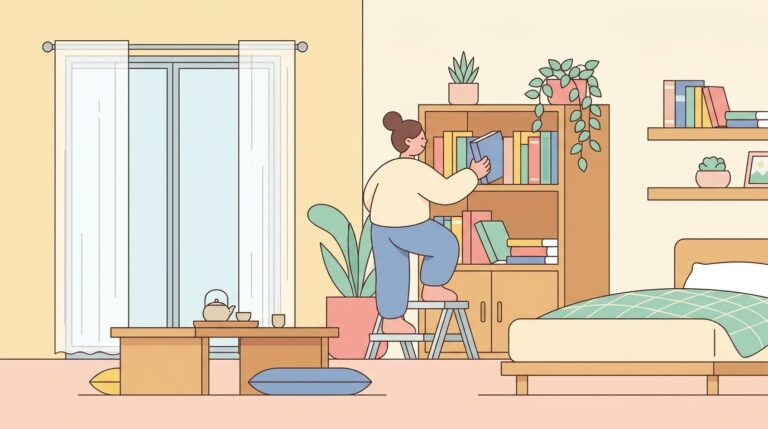
If you’ve watched more than a handful of K-Dramas, you definitely know this classic scene: the main character is living in a cozy but chaotic studio apartment (원룸 – won-rum). Suddenly, their mother makes a surprise visit. She gasps, dramatically clutches her chest, and immediately starts cleaning up while muttering affectionately angry complaints.
In Korea, cleaning isn’t just about physical chores—it’s about clearing your mind and showing respect for shared spaces. Whether you’re staying at a cozy Airbnb in Mapo, living with a Korean roommate, or just trying to survive your first homestay, knowing how to talk about cleaning in Korean will instantly make you look thoughtful, respectful, and incredibly savvy. Let’s learn how to tidy up your space like a true Seoulite!
Phase 2: Essential Expressions for Tidying Up
Here are three beginner-friendly phrases you can use right away. Let’s master them step-by-step!
1. 방 청소해요
- Pronunciation: [bang cheong-so-hae-yo]
- Sound-alike guide: “Bang” (like a drum) + “Chung-so” (sounds like ‘chung’ in chunga) + “hae-yo” (like ‘hey-yo’ but softer).
- Meaning: I clean the room / Let’s clean the room.
- K-Culture Moment: This is the universal phrase for cleaning. If you want to suggest cleaning the house together with your roommate before a friend’s visit, you say this with a bright smile!
- Editor’s Insight: This uses the basic verb 청소하다 (to clean). In Korean, subjects like “I” or “We” are often dropped. Just saying “방 청소해요” gets the point across perfectly without sounding robotic.
- Situation Spectrum:
- Friends (Casual): ✅ (Change to “방 청소하자!” – bang cheong-so-ha-ja!)
- Coworkers / Roommates (Semi-formal): ✅
- Elders / Bosses (Formal): 🚫 (Use “방 청소하겠습니다” – bang cheong-so-ha-get-seum-ni-da)
- 🤔 Think About It: In English, we almost always specify who is cleaning (“I am cleaning” or “We should clean”). Why do you think Korean naturally drops the subject? What does this tell us about the shared perspective in Korean culture?
2. 방 좀 치워주세요
- Pronunciation: [bang jom chi-wo-ju-se-yo]
- Sound-alike guide: “Bang” + “jom” (rhymes with ‘home’ but with a ‘j’ sound) + “chee-wo-joo-seh-yo”.
- Meaning: Please tidy up the room.
- K-Culture Moment: You’ll hear this from guesthouse hosts, older siblings, or parents. The word 좀 (jom) literally means “a little,” but it acts as a magical softener to make requests sound polite instead of bossy.
- Editor’s Insight: If you just say “방 치워요” (Clean the room), it sounds like an angry command. Adding 좀 (jom) and ~주세요 (~ju-se-yo: please do it for me) turns it into a respectful request.
- Situation Spectrum:
- Friends (Casual): ⚠️ (Too polite; just say “방 좀 치워줘”)
- Guesthouse Host / Service contexts: ✅
- Polite Request to roommate: ✅
- 🤔 Think About It: Why does adding a word meaning “a little” (좀) make a request sound polite? Do you have a similar “softener” word in your native language?
3. 이거 버려요?
- Pronunciation: [i-geo beo-ryeo-yo?]
- Sound-alike guide: “Ee-guh” + “buh-ryuh-yo?”
- Meaning: Do I throw this away? / Should we throw this away?
- K-Culture Moment: Korea has an incredibly strict recycling system. If you are cleaning with a Korean friend, always ask this before tossing anything in the bin, or you might get a gentle lecture on recycling rules!
- Editor’s Insight: 이거 (i-geo) means “this.” 버리다 (beo-ri-da) means “to throw away.” Raise your intonation at the end to make it a question.
- Situation Spectrum:
- Friends (Casual): ✅ (Say “이거 버려?”)
- Roommates / Hosts (Semi-formal): ✅
- Elders (Formal): 🚫 (Use “이것 버릴까요?” – i-geot beo-ril-kka-yo?)
- 🤔 Think About It: Asking “Do I throw this away?” focuses on your action. In Korean, it’s more about confirming the state of the object. How does this subtle shift reduce personal confrontation?
Phase 3: Textbook vs. Real Korean
Let’s compare stiff textbook sentences with what Koreans actually say in everyday life:
- 📖 Textbook Korean: “방을 정리정돈하십시오.” (bang-eul jeong-ri-jeong-don-ha-sip-si-o)
- 🗣️ Real Korean: “방 좀 치우자!” (bang jom chi-u-ja!)
- 💡 Why is it different?: Textbooks use extreme formal honorifics that sound like military announcements. In real life, even when being polite, Koreans prefer conversational, natural phrasing that builds connection.
-
📖 Textbook Korean: “쓰레기를 배출하겠습니다.” (sseu-re-gi-reul bae-chul-ha-get-seum-ni-da)
- 🗣️ Real Korean: “쓰레기 버리고 올게요.” (sseu-re-gi beo-ri-go ol-ge-yo)
- 💡 Why is it different?: “배출하다” is a highly administrative term (to discharge waste). Real people simply say “버리고 올게요” (I’ll go throw away the trash and come back).
Phase 4: Cultural Context — K-Culture Deep Dive
4-1. The Art of Nunchi (눈치) and Trash Disposal
When you clean a room in Korea, especially in a shared house or guesthouse, pay attention to the trash bins. Korea uses a strict 분리수거 (bun-ri-su-geo: separate trash disposal) system. Food waste (음식물 쓰레기), recyclables (재활용품), and general waste (일반 쓰레기) must go into designated bags.
Using your Nunchi (눈치 – situational awareness) means noticing when the trash bag is full and taking it out before your roommate or host has to ask you. Doing this without being asked is the ultimate sign of a respectful and helpful housemate!
4-2. The “Clean-up” Trope in K-Dramas
In dramas, cleaning scenes are highly symbolic. Think of Crash Landing on You or Because This Is My First Life—cleaning together is often used as a bonding tool to build romantic tension! If you want to recreate these cozy domestic vibes, putting on some soft K-Indie music while organizing your room is the perfect way to spend a rainy afternoon in Seoul.
Phase 5: Practical Roleplay Scenario
Scenario A: Cleaning with your Roommate, Ji-hoon
- Setting: Saturday morning, 11:00 AM. Your shared apartment in Sinchon, Seoul. The living room is messy after a Friday night snack party. You and your Korean roommate, Ji-hoon, are standing in the middle of the mess.
지훈: 와, 어제 진짜 재밌었는데… 방이 너무 더럽네요. 😅
(Wa, eo-je jin-짜 jae-mit-eon-nund-de… bang-i neo-mu deo-reop-nae-yo.)
“Wow, yesterday was so fun… but the room is so dirty.”
YOU: 맞아요. 우리 오늘 방 청소해요! 🧹
(Ma-ja-yo. U-ri o-neul bang cheong-so-hae-yo!)
“That’s right. Let’s clean the room today!”
지훈: 좋아요! 제가 청소기 돌릴게요.
(Jo-a-yo! Jae-ga cheong-so-gi dol-ril-ge-yo.)
“Great! I will run the vacuum cleaner.”
(🎭 Stage Direction: Ji-hoon grabs the vacuum cleaner, and you start picking up empty boxes from the table.)
YOU: 지훈 씨, 이거 버려요? 📦
(Ji-hoon ssi, i-geo beo-ryeo-yo?)
“Ji-hoon, do I throw this away?”
지훈: 아, 그건 상자니까 재활용에 버려주세요.
(Ah, geu-geon sang-ja-ni-kka jae-hwal-yong-e beo-ryeo-ju-se-yo.)
“Ah, that’s a box, so please throw it in the recycling.”
YOU: 네, 알겠습니다! 그럼 이 쓰레기 봉투는 어디에 있어요?
(Ne, al-get-seum-ni-da! Geu-reom i sseu-re-gi bong-tu-neun eo-di-e is-seo-yo?)
“Okay, got it! Then where are the trash bags?”
지훈: 싱크대 밑에 있어요.
(Sing-keu-dae mit-e is-seo-yo.)
“They are under the kitchen sink.”
YOU: 찾았어요! 쓰레기 다 모았어요.
(Cha-jas-seo-yo! Sseu-re-gi da mo-as-seo-yo.)
“Found them! I gathered all the trash.”
지훈: 최고예요! 이제 방이 진짜 깨끗하네요.
(Choe-go-ye-yo! I-je bang-i jin-jja kkae-kkeut-ha-nae-yo.)
“You’re the best! The room is really clean now.”
YOU: 기분 좋아요! 우리 이제 커피 마셔요. ☕
(Gi-bun jo-a-yo! U-ri i-je keo-pi ma-syeo-yo.)
“I feel good! Let’s drink some coffee now.”
—
🔀 Your Turn! How would you respond if Ji-hoon asks you to help clean?
* A) “싫어요, 내일 해요.” (Si-reo-yo, nae-il hae-yo – I don’t want to, let’s do it tomorrow.)
* B) “네, 같이 청소해요!” (Ne, ga-chi cheong-so-hae-yo! – Yes, let’s clean together!)
* C) “청소 안 해요.” (Cheong-so an hae-yo – I don’t clean.)✅ Best Choice: B — It shows a cooperative attitude, which is highly valued in Korean community living!
⚠️ Choice A & C Warning: These can sound very blunt and rude to a roommate, especially in Korean cultural contexts.
Scenario B: Checking out of an Airbnb
- You are checking out, and you want to ask the host where to leave the trash.
YOU: 사장님, 이거 어디에 버려요?
(Sa-jang-nim, i-geo eo-di-e beo-ryeo-yo?)
“Host, where do I throw this away?”
호스트: 건물 밖에 분리수거함이 있습니다. 거기에 두시면 돼요!
(Geon-mul bak-ke bun-ri-su-geo-ham-i is-seum-ni-da. Geo-gi-e du-si-myeon dwae-yo!)
“There is a recycling bin outside the building. You can just leave it there!”
YOU: 감사합니다! 방 정리 다 했어요.
(Gam-sa-ham-ni-da! Bang jeong-ri da haes-seo-yo.)
“Thank you! I finished organizing the room.”
Phase 6: 10-Second Shadowing Drill
Practice speaking with natural Korean rhythm! Try to copy the emotion tag.
- 😊 밝게 (Brightly):
우리 / 방 청소해요! / 기분 좋아요!- (U-ri / bang cheong-so-hae-yo! / gi-bun jo-a-yo!)
- “Let’s clean the room! I feel good!”
- 🥺 부탁하듯이 (Asking politely):
방 좀 / 치워주세요. / 부탁해요!- (Bang jom / chi-wo-ju-se-yo. / bu-tak-hae-yo!)
- “Please tidy up the room. I beg you!”
Phase 7: K-Culture Mini-Dictionary
- 원룸 (won-rum)
- English: Studio apartment / One-room flat.
- Context: The most common housing style for university students and young workers in Seoul.
- 분리수거 (bun-ri-su-geo)
- English: Trash separation / Recycling system.
- Context: The highly organized system in Korea where trash must be sorted strictly by material.
- 일반 쓰레기 (il-ban sseu-re-gi)
- English: General waste.
- Context: Non-recyclable daily waste that goes into official paid trash bags.
- 종량제 봉투 (jong-ryang-je bong-tu)
- English: Government-regulated paid garbage bag.
- Context: You must buy these at local convenience stores to throw away general garbage. Standard plastic bags cannot be used!
Phase 8: Traveler’s Survival Kit
If you are traveling in Korea, these expressions will save your life in Airbnbs, hostels, or hotels!
🆘 Survival Expression #1
* 🇰🇷 “쓰레기통 어디에 있어요?” (Sseu-re-gi-tong eo-di-e is-seo-yo?)
* 🗣️ English Guide: “Where is the trash can?”
* 📍 Where to use: Cafes, subway stations, guesthouses.🆘 Survival Expression #2
* 🇰🇷 “수건 더 필요해요.” (Su-geon deo pi-ryo-hae-yo.)
* 🗣️ English Guide: “I need more towels.”
* 📍 Where to use: Hotel front desk, hostel lobby.📌 Editor’s Travel Note
* Useful App: Download 오늘의집 (O-neul-ui Jip: Today’s House) for interior and cleaning inspiration if you plan to stay long-term. It’s the absolute favorite app for Korean youths decorating their room!
* Tipping Culture: No tipping is required or expected in Korea for cleaning services or hotel staff. A polite “감사합니다” (Thank you) is the best reward!
Phase 9: Critical Thinking Corner — “One Step Deeper”
In many Western cultures, general garbage and recycling are simply tossed into separate bins provided by the city. In Korea, however, the process of 분리수거 (recycling) is highly meticulous, requiring citizens to clean food containers before recycling and purchase specific government-regulated bags for general waste. This reflects Korea’s high population density and deep-seated social responsibility—the belief that one’s personal space (one’s room) directly impacts the public collective space.
🧠 Think Deeper:
How does your home country handle waste management and cleaning? Do you think the Korean system reflects a more community-oriented mindset compared to your culture?💬 Your Turn: “Do you enjoy cleaning your room, or do you wait until the very last minute? Let me know in the comments below!”
Phase 10: FAQ & Common Mistakes
- Q: Can I use any plastic bag for trash in Korea?
- A: Absolutely NOT. You must buy the official 종량제 봉투 (paid waste bag) from a convenience store or mart in your specific district. Throwing away general trash in a regular grocery bag can result in a heavy fine!
- ❌ Common Mistake: Saying “방을 씻어요” (bang-eul ssi-seo-yo).
- ✅ How to say it right: “방을 청소해요” (bang-eul cheong-so-hae-yo). “씻다” (ssit-da) is only used for washing parts of your body or items with water (like hands or dishes). For rooms, always use “청소하다”!
Phase 11: Summary & Action Items
-
One-Liner Summary: To have a pleasant stay in Korea, remember “방 청소해요” (Let’s clean the room) and always ask “이거 버려요?” (Do I throw this away?) to show your respect for Korean recycling habits!
-
Action Mission:
- 🥉 Bronze: Say “방 청소해요!” out loud in front of your mirror 3 times.
- 🥈 Silver: Clean one corner of your desk today while listening to your favorite K-Pop playlist!
- 🥇 Gold: Use “이거 버려요?” to ask a family member or friend before disposing of an item today.
Phase 12: Interactive Challenge Quiz
Let’s test your knowledge! (Scroll down for answers)
- Which phrase is the most natural way to ask “Do I throw this away?”
- A) 이거 버려요?
- B) 방 치워요.
- C) 쓰레기통 있어요?
- True or False: In Korea, you can use any plastic grocery bag to throw away general trash.
- (T / F)
- Complete the blank: “방 좀
______주세요” (Please tidy up the room).- A) 청소
- B) 치워
- C) 버려
🔑 Quiz Answers
- A (이거 버려요? is the direct equivalent of “Do I throw this away?”)
- False (You must use government-regulated 종량제 봉투 bags!)
- B (치워주세요 translates to “Please tidy up/clear up for me”).
Frequently Asked Questions (FAQ)
Q: What does "방 청소해요" mean in Korean and how do you pronounce it?
A: In Korean, "방 청소해요" is pronounced [bang cheong-so-hae-yo] and means: I clean the room / Let's clean the room.
Q: What does "방 좀 치워주세요" mean in Korean and how do you pronounce it?
A: In Korean, "방 좀 치워주세요" is pronounced [bang jom chi-wo-ju-se-yo] and means: Please tidy up the room.
Q: What does "이거 버려요?" mean in Korean and how do you pronounce it?
A: In Korean, "이거 버려요?" is pronounced [i-geo beo-ryeo-yo?] and means: Do I throw this away? / Should we throw this away?






