

Phase 1: Empathy (The K-Drama Office Crisis)
Hello! I’m your lead editor and tutor at Daily Hangul.
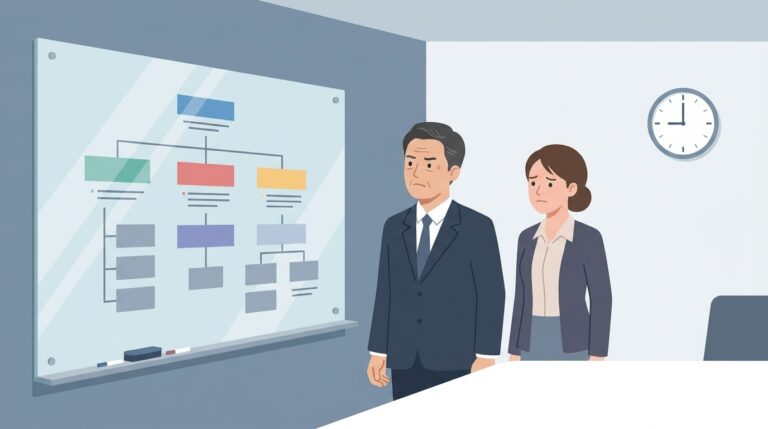
Imagine this: You are watching a K-Drama like Misaeng (Incomplete Life) or Start-Up. The background music suddenly stops. The camera zooms in on the Team Leader’s face. He slams a folder on the glass table. The project deadline is missed. The air is so thick you could cut it with a knife.
If you find yourself in a real Korean office, whether in Seoul’s bustling Gangnam district or Pangyo’s tech hub, project delays are inevitable. But here is the secret: in a Korean corporate setting, simply saying “I’m sorry” (미안합니다) is the fastest way to lose trust.
Korean workplace culture values accountability, Nunchi (reading the room), and immediate action. If you don’t know the right expressions for a ‘schedule delay crisis meeting’ (일정 지연 대책 회의), you might come across as irresponsible. But if you master today’s B2-level expressions, you won’t just survive the meeting—you’ll earn the respect of your Korean colleagues as a true professional. Let’s dive in!
Phase 2: Core Expressions Deep Dive
Here are the top 3 expressions you need to pull out of your professional toolkit when things go wrong.
1. 일정이 지연되었습니다. / 딜레이되었습니다.
- Pronunciation: [iljeong-i jiyeondoeeotseumnida / dilleidoeeotseumnida]
- Sound-alike: eel-jeong-ee jee-yeon-dway-ot-seum-nee-da
- Meaning: (Literal) The schedule has been delayed. / (Real nuance) We have a delay, and I am formally reporting it.
- K-Culture Moment: You are standing in front of the whiteboard. The whole team is looking at you. You bow your head slightly, lower your voice a register, and deliver this line. Using the Konglish word “딜레이” (delay) is extremely common in Korean IT and marketing companies.
- Editor’s Insight: Notice how it’s in the passive voice? Instead of saying “I delayed the project,” saying “The schedule became delayed” sounds more objective and professional while you are reporting the status.
- Situation Spectrum:
- Friends (Casual): 🚫 (Too formal! Just say “나 늦어!” – I’m late!)
- Co-workers (Semi-formal): ⚠️ (Use ~지연됐어요)
- Boss/Clients (Formal): ✅ (Perfect)
- 🤔 Think About It: Why do Koreans use so many English words (Konglish) like ‘delay’, ‘fix’, or ‘confirm’ in business settings instead of pure Korean words? How does this compare to corporate jargon in your country?
2. 바로 대안을 마련했습니다. (플랜 B가 있습니다.)
- Pronunciation: [baro daeaneul maryeonhaetseumnida / peullaen biga itseumnida]
- Sound-alike: ba-ro dae-an-eul ma-ryeon-hat-seum-nee-da
- Meaning: (Literal) I have prepared an alternative immediately. / (Real nuance) Yes, we messed up, but don’t panic, I already fixed it!
- K-Culture Moment: In Korea’s Ppalli-ppalli (Hurry up) culture, bringing a problem without a solution is a cardinal sin. You must present the bad news in one hand and the ‘Plan B’ in the other.
- Editor’s Insight: The word ‘바로’ (immediately/right away) is magical in Korea. It shows eagerness and agility.
- Situation Spectrum:
- Friends (Casual): 🚫
- Co-workers (Semi-formal): ✅
- Boss/Clients (Formal): ✅
- 🤔 Think About It: Does your workplace culture prioritize finding who is at fault first, or finding the alternative (대안) first?
3. 일정에 차질이 없도록 하겠습니다.
- Pronunciation: [iljeonge chajiri eopdorok hagetseumnida]
- Sound-alike: eel-jeong-eh cha-jeel-ee op-do-rok ha-get-seum-nee-da
- Meaning: (Literal) I will ensure there is no setback in the schedule. / (Real nuance) I will do whatever it takes (even overtime) to meet the final deadline.
- K-Culture Moment: This is the ultimate closing statement of a crisis meeting. It’s a verbal vow. When a K-Drama protagonist says this, you know a montage of them drinking energy drinks and typing furiously all night is coming up next.
- Editor’s Insight: ‘차질’ means a setback or glitch. Saying “차질이 없도록” is the most polite, professional way to reassure an anxious client or boss.
- Situation Spectrum:
- Friends (Casual): 🚫
- Co-workers (Semi-formal): ⚠️ (A bit stiff, but okay for serious emails)
- Boss/Clients (Formal): ✅
- 🤔 Think About It: This phrase implies taking personal responsibility for external factors. Is this level of personal guarantee common in your culture’s business language?
Phase 3: Textbook vs. Real Korean
Let’s upgrade your textbook Korean to what we actually use in the meeting rooms of Seoul.
[Situation 1: Explaining a minor delay]
* 📖 Textbook: 프로젝트가 늦어졌습니다. 죄송합니다. (The project is late. Sorry.)
* 🗣️ Real Korean: 팀장님, 오픈 일정이 살짝 딜레이될 것 같습니다. (Team Leader, it looks like the launch schedule will be slightly delayed.)
* 💡 Why the difference?: Softening the blow with “살짝” (slightly) and “~될 것 같습니다” (It seems it will be) makes the bad news less jarring, giving the boss time to process it mentally.
[Situation 2: Proposing to work overtime to fix it]
* 📖 Textbook: 밤에 일해서 끝내겠습니다. (I will work at night to finish it.)
* 🗣️ Real Korean: 야근을 해서라도 이번 주까지 꼭 맞추겠습니다! (Even if I have to work overtime, I will make sure to meet the deadline by this week!)
* 💡 Why the difference?: “~해서라도” (Even if I have to…) shows deep dedication, which is highly respected in traditional Korean corporate culture.
Bottom Note: At a B2 level, avoid using overly dramatic apologies unless it’s a critical failure. Professionalism in Korean is about calm, solution-oriented language combined with polite grammar.
Phase 4: Cultural Context — K-Culture Deep Dive
4-1. Non-Verbal Cues: The Art of Corporate ‘Nunchi’
Language is only 50% of the game. When delivering bad news about a schedule in Korea:
– Do not smile nervously. In some cultures, a small smile breaks the tension. In a Korean meeting, smiling during bad news implies you don’t take the situation seriously.
– The Posture: Sit up straight, lean slightly forward. Keep your hands visible on the table.
– Eye Contact: Look at your boss when reporting the problem, but it’s polite to slightly lower your gaze when apologizing. Do not stare defiantly!
4-2. K-Drama Connection: The “Rooftop Coffee” Scene
Have you noticed in K-Dramas like Search: WWW or Agency, after a disastrous meeting, the characters always go to the rooftop of the company building to drink canned coffee or iced americanos?
This is a real cultural staple. The tension inside the meeting room is strictly professional. Once outside, co-workers gather to sigh, vent, and say, “아, 오늘 진짜 힘들다” (Ah, today is really tough). The intense formality of the meeting room completely contrasts with the bonded solidarity outside of it.
Phase 5: Real-World Roleplay Scenario
Setting: 4:00 PM on a Thursday. A glass-walled meeting room in a Gangnam IT company. The air conditioner is humming, but everyone is sweating. The design team just announced a critical error.
Characters:
– YOU: The foreign Project Manager. You need to inform your boss.
– Park Timjang (Team Leader Park, 45): Strict, results-oriented, hates excuses.
– Minji (28): Your supportive Korean teammate.
Dialogue:
Team Leader Park: 내일이 최종 마감인데, 개발팀 진행 상황 어때요? 다 됐죠?
(naeil-i choejong magam-inde, gaebaltim jinhaeng sanghwang eottaeyo? da dwaetjyo?)
[Tomorrow is the final deadline. How is the development team’s progress? It’s all done, right?]
(Stage Direction: Park crosses his arms, expecting a “Yes”)
YOU: 팀장님, 죄송합니다.
(timjangnim, joesonghamnida.)
[Team Leader, I apologize.]
YOU: 예상치 못한 버그가 발생해서, 일정이 조금 지연되었습니다.
(yesangchi mothan beogeuga balsaenghaeseo, iljeongi jogeum jiyeondoeeotseumnida.)
[An unexpected bug occurred, so the schedule has been delayed slightly.]
Team Leader Park: 지연이요? 내일이 클라이언트 미팅인데 지금 지연됐다고 하면 어떡합니까?!
(jiyeo-niyo? naeil-i keullaieonteu miting-inde jigeum jiyeondwaetdago hamyeon eotteokhamnikka?!)
[A delay? Tomorrow is the client meeting. What are we supposed to do if you say it’s delayed now?!]
Minji: 팀장님, 저희가 방금 전까지 확인을 해봤는데요…
(timjangnim, jeohuiga banggeum jeonkkaji hwagineul haebwatneundeyo…)
[Team Leader, we were checking it up until just now…]
🔀 YOUR TURN! How should you respond to save the meeting?
– A) “개발팀 잘못입니다. 제가 한 게 아니에요.” (It’s the dev team’s fault. I didn’t do it.)
– B) “바로 대안을 마련했습니다. 플랜 B로 진행하면 내일 아침까지 맞출 수 있습니다.” (I have prepared an alternative immediately. If we proceed with Plan B, we can meet the deadline by tomorrow morning.)
– C) “진짜 미안해요. 다음에는 잘할게요.” (Really sorry. I’ll do better next time.)✅ Best Choice: B — Reason: Never pass the blame directly (Choice A makes you look like a bad leader), and Choice C is way too casual and lacks a solution. Presenting Plan B immediately (B) shows accountability and action.
Team Leader Park: 하… 플랜 B가 뭡니까. 확실히 내일 아침까지 되는 거 맞아요?
(ha… peullaen bi-ga mwomnikka. hwaksilhi naeil achimkkaji doeneun geo majayo?)
[Sigh… What is Plan B? Are you sure it will be done by tomorrow morning?]
YOU: 네, 야근을 해서라도 일정에 차질이 없도록 하겠습니다.
(ne, yageuneul haeseorado iljeonge chajiri eopdorok hagetseumnida.)
[Yes, even if we have to work overtime, I will ensure there is no setback in the schedule.]
Team Leader Park: 알겠습니다. 내일 아침 8시에 다시 보고하세요.
(algetseumnida. naeil achim yeodeolsie dasi bogohaseyo.)
[Understood. Report to me again at 8 AM tomorrow.]
Bonus K-Culture Roleplay: The Aftermath
(Meeting ends. You and Minji step into the hallway.)
Minji: 와, 진짜 심장 떨렸어요. 우리 오늘 야근 확정이네요.
(wa, jinjja simjang tteollyeosseoyo. uri oneul yageun hwakjeong-ineyo.)
[Wow, my heart was shaking. We are confirmed for overtime today.]
YOU: 그러니까요. 제가 커피 쏠게요. 아아 투샷 추가로 마실래요?
(geureonikkayo. jaega keopi ssolgeyo. a-a tusyat chugaro masillaeyo?)
[Tell me about it. I’ll treat us to coffee. Do you want an iced americano with an extra shot?]
Minji: 대박! 당연하죠. 카페인 수혈이 시급해요!
(daebak! dangyeonhajyo. kapein suhyeoli sigeuphaeyo!)
[Awesome! Of course. I desperately need a caffeine blood transfusion!]
Phase 6: 10-Second Shadowing Drill
Practice this until it flows naturally. Pay attention to the pauses (/) to sound like a native Korean professional.
😔 팀장님, 죄송합니다. (timjangnim / joesonghamnida)
😥 예상치 못한 문제로 / 일정이 / 조금 지연되었습니다. (yesangchi mothan munjero / iljeongi / jogeum jiyeondoeeotseumnida)
😤 하지만! / 바로 대안을 / 마련했습니다. (hajiman! / baro daeaneul / maryeonhaetseumnida)
💪 일정에 / 차질이 없도록 하겠습니다. (iljeonge / chajiri eopdorok hagetseumnida)
Phase 7: K-Culture Mini Dictionary
1. 눈치
* Romanization: nunchi
* English: Reading the room / Social situational awareness
* Context: In a crisis meeting, having good nunchi means knowing exactly when to stay quiet, when to apologize, and when to speak up with a solution.
2. 야근
* Romanization: yageun
* English: Night work / Overtime
* Context: A historic staple of Korean corporate life. While the culture is changing and work-life balance is improving, proposing yageun during a crisis still shows ultimate dedication.
3. 회식
* Romanization: hoesik
* English: Company dinner
* Context: Often, after a delayed project is finally completed through intense teamwork, the boss will treat the team to a hoesik (usually Korean BBQ and Soju) to relieve stress and rebuild team morale.
4. 빨리빨리
* Romanization: ppalli-ppalli
* English: Hurry, hurry / Speed-oriented
* Context: The driving force of Korea’s rapid development. In project management, this means speed is often valued just as highly as perfection.
Phase 8: Traveler Survival Kit (When Your Travel Schedule is Delayed!)
Project delays don’t just happen in the office. What if you are traveling in Korea and your schedule gets messed up?
🆘 Survival Expressions: Travel Delay Edition
– 🇰🇷 “기차가 지연됐어요. 예약 시간을 미룰 수 있을까요?”
– (gichaga jiyeondwaesseoyo. yeyak siganeul mirul su isseulkkayo?)
– [The train is delayed. Can I push back the reservation time?]
– 🇰🇷 “길이 너무 막혀서 10분 정도 늦을 것 같아요.”
– (gili neomu makhyeoseo sipbun jeongdo neujeul geot gatayo.)
– [The traffic is so bad, I think I will be about 10 minutes late.]
– 📍 Where to use: Calling a restaurant you booked, talking to a tour guide, or messaging an Airbnb host.📌 Editor’s Travel Note
– Transit Apps: Use KakaoMetro or Naver Map. They update train and bus delays in real-time.
– KTX Delays: Korea’s bullet trains (KTX/SRT) are rarely delayed. But if they are delayed by more than 20 minutes, you are actually entitled to a partial refund! Always check the Korail app.
Phase 9: Critical Thinking Corner — “One Step Deeper”
🧠 Think Deeper: Language & Power (언어와 권력)
In Korean, the way you handle a crisis is heavily dictated by the power dynamic and honorifics (높임말). If a manager makes a mistake, they might say to the team, “일정이 좀 밀렸네. 다들 수고 좀 해줘” (The schedule got pushed back. Everyone, put in some effort). But if a junior employee makes a mistake, they must use maximum formal language: “죄송합니다. 제 불찰로 일정이 지연되었습니다.” (I apologize. Due to my negligence, the schedule is delayed). The language literally forces you to acknowledge your rank in the hierarchy before you even state the problem.💬 Your Turn: Does your native language have different vocabulary for apologizing to a boss versus apologizing to a subordinate? Share in the comments!
Phase 10: FAQ & Mistake Prevention
Q: Can I just say “미안해요(Mianhaeyo)” when I delay a project?
A: NO! “미안해요” is for friends or very close colleagues of the same age. In a business setting, especially for a mistake, you must use “죄송합니다 (Joesonghamnida)”.
Q: What if the delay actually WAS someone else’s fault? Should I say it?
A: Maybe, but be careful. Korean workplaces value collective responsibility. Throwing a teammate under the bus publicly (“지민 씨가 늦게 줘서요” – Because Jimin gave it to me late) makes you look like a poor team player. Use passive voice instead: “디자인 팀의 파일 전달이 지연되어서…” (Because the delivery of the file from the design team was delayed…)
❌ Common Mistake #1: Saying “제가 안 했어요” (I didn’t do it) to avoid blame.
✅ Do this instead: Say “상황을 파악해 보겠습니다” (I will figure out the situation). It buys you time and sounds infinitely more professional.
Phase 11: Summary & Action Items
- One-Liner Summary: In a Korean business crisis, pair your formal apology (죄송합니다) immediately with an objective report of the delay (지연되었습니다) and a concrete Plan B (대안).
🎯 Action Mission:
– 🥉 Bronze (Solo): Stand in front of the mirror, cross your hands professionally, and practice the shadowing drill 3 times.
– 🥈 Silver (Online): Write a mock “Delay Report” email in Korean using today’s vocabulary and post it in your learning community.
– 🥇 Gold (Real-world): Next time you are late for a class or a meetup with a Korean friend, jokingly use the formal “일정이 지연되었습니다” to make them laugh!
🎥 K-Culture Mission:
Watch one episode of a Korean office drama (like Misaeng). Every time they gather in a meeting room looking stressed, listen closely. Can you hear the words “딜레이” (delay), “대안” (alternative), or “야근” (overtime)?
Phase 12: Quiz — Interactive Challenge
1. Situational Judgment: Your team missed the deadline for a client presentation. The angry client asks why. Which is the MOST professional B2-level response?
– A) 우리가 너무 바빴어요. (We were too busy.)
– B) 예상치 못한 문제가 발생해 일정이 지연되었습니다. 죄송합니다. (An unexpected problem occurred, so the schedule was delayed. We apologize.)
– C) 미안합니다. 내일까지 할게요. (Sorry. I’ll do it by tomorrow.)
2. Fill in the Blank:
“팀장님, 일정이 딜레이되어서 죄송합니다. 하지만 바로 [ ________ ]을/를 마련했습니다.”
(Hint: Plan B / Alternative)
3. True or False – K-Culture Edition:
In a Korean corporate meeting, smiling brightly while reporting a schedule delay is a good way to keep the mood positive and show confidence.
👉 Click here for Answers!
1. B (A is an excuse, C is too casual and lacks professional structure.)
2. 대안 (dae-an)
3. False. Smiling during a crisis report in Korea suggests a lack of seriousness (눈치 없음). Maintain a serious, apologetic, yet confident demeanor.
Frequently Asked Questions (FAQ)
Q: What does "일정이 지연되었습니다. / 딜레이되었습니다." mean in Korean and how do you pronounce it?
A: In Korean, "일정이 지연되었습니다. / 딜레이되었습니다." is pronounced [iljeong-i jiyeondoeeotseumnida / dilleidoeeotseumnida] and means: (Literal) The schedule has been delayed. / (Real nuance) We have a delay, and I am formally reporting it.
Q: What does "바로 대안을 마련했습니다. (플랜 B가 있습니다.)" mean in Korean and how do you pronounce it?
A: In Korean, "바로 대안을 마련했습니다. (플랜 B가 있습니다.)" is pronounced [baro daeaneul maryeonhaetseumnida / peullaen biga itseumnida] and means: (Literal) I have prepared an alternative immediately. / (Real nuance) Yes, we messed up, but don't panic, I already fixed it!
Q: What does "일정에 차질이 없도록 하겠습니다." mean in Korean and how do you pronounce it?
A: In Korean, "일정에 차질이 없도록 하겠습니다." is pronounced [iljeonge chajiri eopdorok hagetseumnida] and means: (Literal) I will ensure there is no setback in the schedule. / (Real nuance) I will do whatever it takes (even overtime) to meet the final deadline.







