

Phase 1: Empathy (Welcome to the Trend)
Hello! This is the Daily Hangul Editor.
Imagine this: It’s 1 AM. You’re lying in bed, mindlessly scrolling through YouTube or TikTok. Suddenly, a Korean vlogger appears on your screen, dramatically tearing open a massive “Yonsei University Matcha Cream Bread” or taking a crunchy bite of the viral “Dubai Chocolate.” The ASMR is perfect, the cream is overflowing, and you suddenly feel an intense craving. You throw on your hoodie, run down to the CU or GS25 on the corner, and confidently march to the dessert aisle… only to find it completely empty.
Why? Because you didn’t know the secret language and strategy of the Korean convenience store “New Item Raid” (편의점 신상 털기).
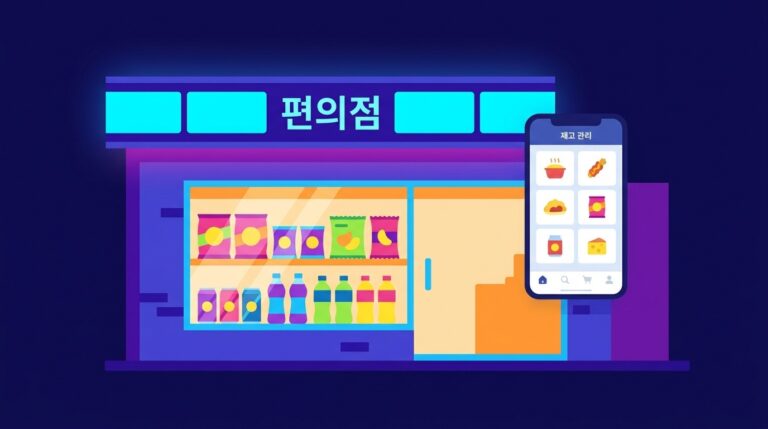
For advanced (C2) Korean learners, surviving in Korea isn’t just about ordering an Americano; it’s about understanding the hyper-fast trend cycle. Convenience stores (편의점) in Korea aren’t just places to buy water; they are ground zero for massive culinary trends. Today, we’re going to dive deep into the vocabulary, cultural nuances, and hidden apps that will turn you from a confused tourist into a “Convenience Store Insider” (편의점 인싸).
Phase 2: Core Expressions Deep Dive
1. 신상을 털다
- Pronunciation: Sinsang-eul teolda [Shin-sang-eul tuhl-da]
- Meaning: (Literal) To rob/dust off new products. / (Real Nuance) To enthusiastically buy and try all the newest convenience store releases.
- K-Culture Moment: You’ll see this in every Korean YouTuber’s title: “CU 편의점 신상 다 털어왔습니다!” (I raided all the new CU convenience store items!). It sets an enthusiastic, almost aggressive tone of a foodie conqueror.
- Editor’s Insight: The verb ‘털다’ literally means ‘to rob’ or ‘to dust off.’ Using it for shopping implies that you bought so much, you basically emptied the store’s shelves. It’s highly colloquial and sounds incredibly native.
- Situation Spectrum:
- Friends (Casual): ✅
- Close Colleagues (Semi-formal): ⚠️ (Only if they share your foodie passion)
- Boss/Elders (Formal): 🚫
- 🤔 Think About It: Why does Korean internet culture use aggressive verbs like “털다” (to rob) or “부수다” (to destroy, as in ‘맛집을 부수다’) for eating and shopping? Does it reflect the highly competitive, fast-paced nature of modern Korean consumerism?
2. 품절대란템
- Pronunciation: Pumjeol-daeran-tem [Poom-jeol-dae-ran-tem]
- Meaning: (Literal) Sold-out crisis item. / (Real Nuance) A highly coveted, viral product that is sold out everywhere.
- K-Culture Moment: Think of the Honey Butter Chip craze in 2014, or the recent Dubai Chocolate trend. News anchors might say “인기 상품” (popular product), but on Instagram and in real life, everyone calls it a “품절대란템.”
- Editor’s Insight: This is a fantastic compound word: 품절 (Sold out) + 대란 (Great chaos/crisis) + 템 (Item, from English). If you drop this word casually to a Korean friend, they will definitely widen their eyes and ask, “How do you know that word?!”
- Situation Spectrum:
- Friends (Casual): ✅
- Co-workers (Semi-formal): ✅
- Formal Presentations: ⚠️ (A bit too internet-slangy for a boardroom, but fine for a marketing pitch!)
- 🤔 Think About It: The word “대란” means crisis or rebellion. Applying it to a sold-out snack is an extreme hyperbole. How does this reflect the media-driven “FOMO” (Fear Of Missing Out) culture in Korean society?
3. 입고런 (or 물류차 기다리기)
- Pronunciation: Ipgo-reon [Ip-go-run]
- Meaning: (Literal) Stocking-run. / (Real Nuance) Waiting at the convenience store exactly when the delivery truck arrives to snatch the viral item before anyone else.
- K-Culture Moment: You’re in a convenience store at 11 PM. A massive logistics truck (물류차) pulls up. Suddenly, three people step out of the shadows, eyes locked on the plastic crates the driver is carrying. That is an ‘입고런’.
- Editor’s Insight: Derived from “Open-run” (lining up before a store opens), “입고런” takes it a step further. You need to know the exact time the delivery truck (물류차) comes to your specific neighborhood store.
- Situation Spectrum:
- Friends (Casual): ✅
- Co-workers (Semi-formal): ✅
- Boss/Elders (Formal): 🚫
- 🤔 Think About It: Time is money. Why are young Koreans willing to spend hours waiting for a $3 bread? What does “소확행” (small but certain happiness) mean to the younger generation facing economic pressures?
Phase 3: Textbook vs. Real Korean
Here is how you upgrade from intermediate to C2 mastery in the convenience store!
[Scenario 1: Asking if it’s a new product]
* 📖 Textbook Korean: “이것은 새로 나온 과자입니까?” (Is this a newly released snack?)
* 🗣️ Real Korean: “요즘 핫한 편의점 신상이에요?” (Is this the trending convenience store new release lately?)
* 💡 Why the difference?: Koreans rarely use the formal “-입니까?” in casual settings, and “신상” completely replaces “새로 나온 물건” for efficiency and trendiness.
[Scenario 2: When the shelf is empty]
* 📖 Textbook Korean: “다 팔렸습니다. 없습니다.” (It is all sold out. We don’t have it.)
* 🗣️ Real Korean: “방금 전 타임에 다 나갔어요.” or “순삭당했어요.” (It all went out during the last shift / It got deleted in an instant.)
* 💡 Why the difference?: Workers measure time in “shifts” (타임). “순삭” (순식간에 삭제) shows how internet gaming terminology has seamlessly blended into everyday reality.
[Scenario 3: Trying to find an item you saw online]
* 📖 Textbook Korean: “인터넷에서 본 초콜릿을 찾고 있습니다.” (I am looking for the chocolate I saw on the internet.)
* 🗣️ Real Korean: “혹시 어플에 재고 있다고 뜨던데, 어디 있나요?” (By the way, the app says there is inventory, where is it?)
* 💡 Why the difference?: Advanced hunters don’t wander aimlessly; they use the store’s dedicated app (어플) to check real-time stock (재고) before speaking to the staff.
Phase 4: Cultural Context — K-Culture Deep Dive
4-1. Non-verbal Nunchi (눈치) in the Store
When hunting for a 품절대란템, Nunchi is everything. Part-timers (알바생) get asked about the viral item hundreds of times a day. If you burst in yelling, “두바이 초콜릿 있어요?!” you might get a tired, automatic “No.”
Pro-Move: Walk in quietly, do a quick visual sweep of the dessert fridge. If it’s not there, make eye contact with the part-timer, smile empathetically (acknowledging their pain), and softly ask: “혹시… (item) 다 나갔죠?” (By any chance… [item] is all gone, right?). This softens the blow and sometimes, if they have one hidden in the back, your politeness might earn it!
4-2. The “App” Culture (K-Tech meets K-Food)
In K-Dramas, people sit outside convenience stores drinking Soju to mourn a breakup. But in 2024 reality, the real drama happens on the “Pocket CU” (포켓CU) or “Our Neighborhood GS” (우리동네GS) apps. Korean tech infrastructure is so advanced that you can check the exact inventory of a specific chocolate bar at a store 50 meters away in real-time. Knowing how to say “어플로 재고 조회해 볼게요” (I’ll check the stock via the app) is the ultimate flex for a foreigner. It shows you aren’t just visiting Korea; you are living in its matrix.
Phase 5: Real-Life Roleplay Scenario
Setting: Friday night, 11:15 PM. A brightly lit GS25 in Hongdae. The background music is a trendy K-Pop song. You just checked the app, and it said there is exactly ONE viral “Dubai Pistachio Chocolate” left here.
Characters:
– YOU: A K-Culture enthusiast who has been hunting this chocolate for 3 days.
– Ji-hoon (21): The night-shift part-timer (알바생). He looks like he’s running on an energy drink and just finished unpacking boxes.
Dialogue:
YOU: 안녕하세요! 저… 혹시 두바이 초콜릿 다 나갔나요? 👀
(Annyeonghaseyo! Jeo… hoksi Dubai chokollit da nagannayo?)
[Hello! Um… is the Dubai chocolate all gone by any chance?]
(🎭 Stage Direction: You peek towards the empty dessert shelf.)
Ji-hoon: 아, 네. 그거 아까 저녁에 다 털렸어요.
(A, ne. Geugeo akka jeonyeoge da teollyeosseoyo.)
[Ah, yes. That got completely wiped out earlier this evening.]
YOU: 헐… 어플 보니까 재고 1개 남았다고 떠서 뛰어왔는데… 허탕 쳤네요.
(Heol… eopeul bonikka jaego 1gae namatdago tteoseo ttwieowanneunde… heotang chyeonneyo.)
[OMG… I ran here because the app said there was 1 left in stock… I made a trip for nothing.]
Ji-hoon: 아! 그거 아마 누가 지금 결제하려고 바구니에 담아둔 걸 거예요. 전산 반영이 좀 느려서요.
(A! Geugeo ama nuga jigeum gyeoljeharyeogo bagunie damadun geol geoyeyo. Jeonsan banyeong-i jom neuryeoseoyo.)
[Ah! Someone probably put it in their basket to pay right now. The system update is a bit slow.]
YOU: 아쉽네요 ㅠㅠ 보통 며칠에 한 번 발주 넣으세요?
(Aswimneyo ㅠㅠ Botong myeochire han beon balju neouseyo?)
[What a shame ㅠㅠ How often do you usually place an order for stock?]
(Editor’s Note: “발주 넣다” is C2 level retail vocabulary!)
Ji-hoon: 매일 밤에 발주 넣긴 하는데, 워낙 구하기 빡세서 들어오는 대로 순삭이에요.
(Maeil bame balju neokkin haneunde, wonak guhagi ppakseseo deureooneun daero sunsagieyo.)
[We order every night, but it’s so intensely hard to get that it gets wiped out the moment it comes in.]
YOU: 그렇구나… 그럼 물류차 들어오는 시간이 보통 언제쯤이에요?
(Geureokuna… geureom mullyucha deureooneun sigani botong eonjejjeumieyo?)
[I see… Then what time does the delivery truck usually arrive?]
Ji-hoon: 밤 11시 반쯤이요. 어? 방금 차 밖에서 소리 났는데… 잠시만요.
(Bam 11si banjjeumiyo. Eo? Banggeum cha bakkeseo sori nanneunde… jamsimanyo.)
[Around 11:30 PM. Huh? I just heard the truck outside… hold on.]
(🎭 Stage Direction: Ji-hoon looks out the window. The truck is here!)
🔀 Your Turn! How do you react?
– A) “기다리겠습니다. 하나 빼주세요.” (I will wait. Please set one aside for me.) -> A bit too commanding and robotic.
– B) “대박! 저 이거 박스 깔 때까지 여기서 조금만 기다려도 될까요?” (Jackpot! Can I wait here just a bit until you open the boxes?) -> Friendly, shows you understand the process (박스 까다 – opening boxes).
– C) “빨리 초콜릿부터 꺼내주세요!” (Take the chocolate out first, hurry!) -> Rude 진상 (Karen) behavior. Immediate ban.✅ Best Choice: B — Reason: It uses very natural slang (“대박”, “박스 깔 때까지”) and politely asks for permission to loiter.
YOU: 대박! 저 그럼 상자 푸실 때까지 조금만 기다려도 될까요?
(Daebak! Jeo geureom sangja pusil ttaekkaji jogeumman gidaryeodo doelkkayo?)
[Jackpot! Then is it okay if I wait just a little bit until you unpack the boxes?]
Ji-hoon: 네, 편하게 구경하고 계세요. 나오면 바로 알려드릴게요.
(Ne, pyeonhage gugyeonghago gyeseyo. Naomyeon baro allyeodeurilgeyo.)
[Yes, feel free to look around. I’ll let you know right away when it comes out.]
Phase 6: 10-Second Shadowing Drill
Master this sentence to sound like a true Korean trend-chaser. Pay attention to the pauses (/) and the emotion!
🥺 저기요... / 혹시 어플에서 / 재고 1개 있는 거 / 보고 왔는데, / 싹 다 털렸나요?
(jeogiyo… / hoksi eopeureseo / jaego hangae inneun geo / bogo wanneunde, / ssak da teollyeonnayo?)
[Excuse me… / I came after seeing / there was 1 left in stock / on the app, / is it completely wiped out?]
Pro-Tip: Elongate the “싹~” (ssak) slightly to emphasize how completely empty the shelf is. Make your voice sound genuinely heartbroken.
Phase 7: K-Culture Mini Dictionary
1. 득템
* Romanization: deuk-tem
* English: Getting a rare item / Score!
* Context: A blend of “득” (Hanja for ‘obtain’) and “템” (Item). You yell this when you finally secure that sold-out cream bread.
2. 순삭
* Romanization: sun-sak
* English: Deleted in an instant / Wiped out
* Context: Short for 순식간에 삭제. Used when a new product sells out immediately, or when food is so delicious you ate it in three seconds.
3. 당충전
* Romanization: dang-chung-jeon
* English: Sugar recharge
* Context: The main reason Koreans go to the convenience store at 3 PM. “당 떨어졌다” (My sugar dropped) is the universal excuse for eating chocolate.
4. 알바생 / 점주님
* Romanization: alba-saeng / jeom-ju-nim
* English: Part-time worker / Store owner (Franchisee)
* Context: Knowing who you are talking to changes everything. A 점주님 has the power to order more stock (발주) specifically for you if you become a regular!
Phase 8: Traveler Survival Kit
Even if you aren’t hunting for viral items, these survival expressions are lifesavers when navigating Korean convenience stores.
🆘 Survival Expression #1: The 1+1 Confusion
– 🇰🇷 “이거 1+1 맞나요? 교차 증정 되나요?”
(igeo won-ppeulleoseu-won mannayo? gyocha jeungjeong doenayo?)
– 🗣️ English: “Is this 1+1? Can I mix and match flavors?”
– 📍 Where to use: GS25, CU, 7-Eleven, E-Mart 24
– 💡 Pro Tip: In Korea, 2+1 or 1+1 usually allows “교차 증정” (Cross-gifting), meaning you can pick different flavors of the same brand!🆘 Survival Expression #2: The App Check
– 🇰🇷 “어플엔 있다고 뜨는데, 혹시 창고에 있나요?”
(eopeuren itdago tteuneunde, hoksi changgo-e innayo?)
– 🗣️ English: “The app says you have it, is it in the storage room by any chance?”
– 💡 Pro Tip: Don’t be too pushy with this. Sometimes the inventory system takes 30 minutes to update after someone buys it.📌 Editor’s Travel Note
– Must-Have Apps: Download Pocket CU (포켓CU) and Our Neighborhood GS (우리동네GS) before you visit. You can change the language settings, and they feature a “Stock Map” (재고지도).
– Eating Inside: Yes, you can eat ramyeon and drink beer at the tables outside or inside! But remember to clean up and throw away your trash at the designated recycling bins inside the store.
Phase 9: Critical Thinking Corner — “한 발 더 깊이”
Media vs. Reality: The Hyper-Curated Convenience Store
🧠 Think Deeper:
If you watch Korean YouTube, you might think Koreans eat 2,000-calorie cream breads and spicy Buldak noodles every single day. The media portrays the “편의점 신상” (convenience store new arrivals) as the pinnacle of Korean culinary culture. However, in reality, this is a hyper-curated internet phenomenon. For the average Korean office worker, the convenience store is simply a place to grab a quick Triangle Kimbap (삼각김밥) and an Americano to survive the morning commute. The obsession with “limited edition” convenience store items actually highlights a socio-economic trend called “소확행” (small but certain happiness). When buying a house or a luxury car feels impossible in a tough economy, spending $3 on a rare, viral chocolate provides a massive, immediate psychological reward. It’s the democratization of luxury, localized in your neighborhood GS25.💬 Your Turn: Does your country have “viral” grocery or convenience store items? Do people line up for them? Share your culture’s version of “소확행” in the comments!
Phase 10: FAQ & Avoiding Common Mistakes
Q: “Can I ask the part-timer to hide a viral item for me behind the counter?”
A: NO. Unless you are best friends with them or a legendary regular who spends a lot of money every day, this is considered a nuisance (민폐).
Q: “Why do they give me a weird look when I give them cash?”
A: Korea is practically a cashless society. While they accept cash, counting change slows them down. Tap your credit card or use T-Money/Apple Pay!
❌ Common Mistake #1: Bringing 1 item to the counter when there is a “1+1” (One plus One) tag.
✅ Do this instead: The cashier will usually ask “하나 더 가져오세요” (Please bring one more). If you don’t want it, say “그냥 이것만 결제할게요” (I’ll just pay for this one). But why miss out on free stuff? Take two!❌ Common Mistake #2: Opening the item before paying for it.
✅ Do this instead: Even if you just ran an “입고런” and you are starving, never eat the item before paying. Bring it to the counter, say “결제 먼저 할게요” (I’ll pay first), and then devour it.
Phase 11: Summary & Action Items
One-Liner Summary: Mastering the K-convenience store requires app skills, strategic timing (입고런), and advanced vocabulary like 신상, 품절대란, and 득템.
Action Mission:
– 🥉 Bronze (Solo): Stand in front of your mirror and practice the tragic phrase: “방금 다 털렸나요…?” with real sadness in your eyes.
– 🥈 Silver (Online): Look up “편의점 신상” on YouTube and leave a Korean comment saying: “저도 이거 먹어보고 싶은데 다 품절대란이에요ㅠㅠ” (I want to try this too but it’s totally sold out everywhereㅠㅠ).
– 🥇 Gold (Real Life): Next time you are in Korea, download the CU or GS app, locate a sold-out item, and do a real-life “입고런”!
🎯 K-Culture Mission:
Go to Google Maps or Naver Map, drop a Street View pin anywhere in Seoul (like Hongdae or Gangnam), locate the nearest convenience store, and imagine yourself walking in to ask: “요즘 핫한 신상템 들어왔나요?”
Engagement: Have you ever successfully hunted down a viral item? What was it? Let me know in the comments below! 👇
Phase 12: Quiz — Interactive Challenge
1. Situational Judgment: You want to ask if a specific newly released snack is completely sold out. What is the most natural, native-sounding way to ask?
– A) “새로운 물건 다 팔렸습니까?”
– B) “혹시 신상 다 털렸나요?”
– C) “재고가 파괴되었나요?”
Click for Answer
Answer: B. “신상 다 털렸나요?” uses the exact colloquial slang (신상, 털다) that a young Korean would use. A is too robotic, and C literally means “Is the inventory destroyed?” which sounds like a sci-fi movie.
2. True or False – K-Culture Edition: “It is perfectly acceptable to reserve highly sought-after convenience store items by calling the store in advance.”
Click for Answer
Answer: FALSE. Most stores will not hold viral items over the phone. You either have to reserve them via the official App (if the feature is open) or run there physically (입고런)!
3. Fill in the Blank:
“The delivery truck just came! Let’s do an ____________ to get the viral chocolate!”
– A) 신상런 (Sinsang-run)
– B) 득템런 (Deuktem-run)
– C) 입고런 (Ipgo-run)
Click for Answer
Answer: C (입고런). Waiting for the exact stocking time is called an Ipgo-run.
Frequently Asked Questions (FAQ)
Q: What does "신상을 털다" mean in Korean and how do you pronounce it?
A: In Korean, "신상을 털다" is pronounced [Sinsang-eul teolda [Shin-sang-eul tuhl-da] and means: (Literal) To rob/dust off new products. / (Real Nuance) To enthusiastically buy and try all the newest convenience store releases.
Q: What does "품절대란템" mean in Korean and how do you pronounce it?
A: In Korean, "품절대란템" is pronounced [Pumjeol-daeran-tem [Poom-jeol-dae-ran-tem] and means: (Literal) Sold-out crisis item. / (Real Nuance) A highly coveted, viral product that is sold out everywhere.
Q: What does "입고런 (or 물류차 기다리기)" mean in Korean and how do you pronounce it?
A: In Korean, "입고런 (or 물류차 기다리기)" is pronounced [Ipgo-reon [Ip-go-run] and means: (Literal) Stocking-run. / (Real Nuance) Waiting at the convenience store exactly when the delivery truck arrives to snatch the viral item before anyone else.







